• KGS/USD = 0.01144 0%
  • KZT/USD = 0.00218 0%
  • TJS/USD = 0.10663 0%
  • UZS/USD = 0.00008 0%
  • TMT/USD = 0.28530 0%
  • KGS/USD = 0.01144 0%
  • KZT/USD = 0.00218 0%
  • TJS/USD = 0.10663 0%
  • UZS/USD = 0.00008 0%
  • TMT/USD = 0.28530 0%
  • KGS/USD = 0.01144 0%
  • KZT/USD = 0.00218 0%
  • TJS/USD = 0.10663 0%
  • UZS/USD = 0.00008 0%
  • TMT/USD = 0.28530 0%
  • KGS/USD = 0.01144 0%
  • KZT/USD = 0.00218 0%
  • TJS/USD = 0.10663 0%
  • UZS/USD = 0.00008 0%
  • TMT/USD = 0.28530 0%
  • KGS/USD = 0.01144 0%
  • KZT/USD = 0.00218 0%
  • TJS/USD = 0.10663 0%
  • UZS/USD = 0.00008 0%
  • TMT/USD = 0.28530 0%
  • KGS/USD = 0.01144 0%
  • KZT/USD = 0.00218 0%
  • TJS/USD = 0.10663 0%
  • UZS/USD = 0.00008 0%
  • TMT/USD = 0.28530 0%
  • KGS/USD = 0.01144 0%
  • KZT/USD = 0.00218 0%
  • TJS/USD = 0.10663 0%
  • UZS/USD = 0.00008 0%
  • TMT/USD = 0.28530 0%
  • KGS/USD = 0.01144 0%
  • KZT/USD = 0.00218 0%
  • TJS/USD = 0.10663 0%
  • UZS/USD = 0.00008 0%
  • TMT/USD = 0.28530 0%

Viewing results 13 - 18 of 65

Kazakhstan Cancer Drug Could Hit the Market This Year

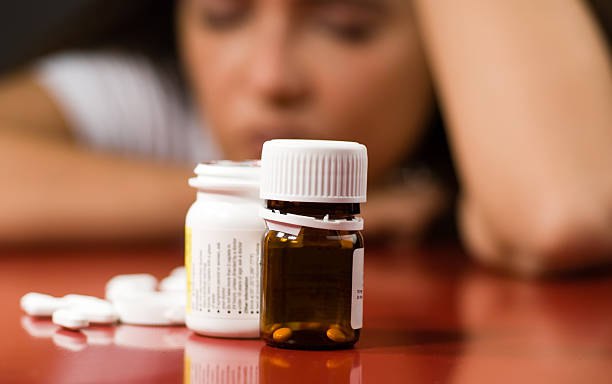
Kazakhstan’s Minister of Science and Higher Education, Sayasat Nurbek, has announced the development of a domestic anti-cancer drug currently undergoing clinical trials. According to Nurbek, Phase II clinical trials were completed in 2023, and the number of patients participating in the testing has since been significantly expanded. "At the moment, the drug is being tested on different types of cancer. Last year, trials were conducted exclusively on patients with colorectal cancer. By the end of 2024, we expect the drug to be officially registered and introduced to the market. Preliminary results indicate stable positive dynamics," the minister stated. He noted that patients in clinical trials have experienced remissions, with tumor sizes decreasing by an average of 30%. "By the end of the year, we plan to hold a conference to present the results. The Ministry of Health has been highly supportive, and we have optimized the registration process without violating regulations," Nurbek added. The official registration of the drug is expected to be finalized as soon as possible. Kazakhstan's development of its first domestically produced anti-cancer drug was first reported in January 2024. Later, Nurbek provided updates on the trial progress and expressed confidence in the drug’s effectiveness.

Kazakh Researchers Uncover Important Step Towards Treating Parkinson’s Disease

Kazakhstan’s reputation in the global scientific community is evolving, thanks to research conducted by local scientists. Aizhan Ahmadi, a doctoral graduate from Nazarbayev University’s (NU) School of Natural, Social, and Human Sciences, and her team have made a discovery that could pave the way for future treatments for Parkinson’s disease. TCA: Tell us about your research. Aizhan: I recently completed my doctoral studies, defended my dissertation, and earned my PhD. Before that, I worked at a university for five years. During my research, I focused on a mutated protein called DJ-1, which is found in patients with Parkinson’s and Alzheimer’s diseases. More than 20 years ago, European scientists identified mutations in DJ-1 in some patients suffering from these diseases. Despite extensive research in dozens of laboratories, the protein’s exact role remained unclear. While analyzing previous studies, we came across a large European research project with an interesting hypothesis about DJ-1. We decided to explore this direction further and we succeeded in proving that DJ-1 has a previously unknown function. Understanding how DJ-1 protects biomolecules is not only crucial for developing new treatment methods for Parkinson’s disease but also for explaining cell aging. This discovery is vital for pharmacologists, as they cannot develop effective drugs without fully understanding a protein’s function. For the first time, we have proven a new function of DJ-1. I believe this is a fundamental breakthrough for both global science and Kazakhstan’s scientific community. We submitted our findings to Nature Communications, a leading scientific journal. After a rigorous eight-month review process, our research was accepted. This was a difficult but rewarding journey. Our study is the first from independent Kazakhstan to be published in such a prestigious journal, making it a landmark achievement for our country. TCA: What challenges come with studying biology in Kazakhstan? Aizhan: Basic biological research is extremely resource-intensive. It takes time, energy, and has no guaranteed results. We invested grant funding and used millions of dollars’ worth of equipment. However, when a discovery is made, its contribution to science and medicine is invaluable. Our study was conducted entirely within Kazakhstan, without relying on foreign laboratories. This is particularly significant because many still doubt whether serious scientific breakthroughs can come from Kazakhstan, especially in biochemistry. Alongside me, my supervisor, Darkhan Utepbergenov, and several undergraduate students participated in the research. Professor Utepbergenov, a Kazakhstani scientist, graduated from Novosibirsk State University, worked in Germany and the U.S. for nearly 20 years, and then returned to Kazakhstan as a professor. He has said that this is his most significant work to date, and even he still finds it hard to believe that such a discovery was made in Kazakhstan. His contribution to both research and teaching at Nazarbayev University has been immense. TCA: As a young woman in science, what motivated you to pursue this path? How can Kazakhstan raise the status of scientists? Aizhan: First and foremost, better financial support is essential. Salary structures need improvement, bureaucratic obstacles must be reduced, and science communication should be...

Proposal to Ban Sex Change Operations in Kazakhstan

Kazakhstan's Mazhilis (Parliament) Deputy Magerram Magerramov has proposed a ban on sex change operations, arguing that such procedures contradict national culture, traditions, and common sense. Magerramov stressed the need to preserve traditional family values and questioned Kazakhstan’s legal framework, which currently allows gender reassignment for individuals diagnosed with gender dysphoria. “According to the Code of the Republic of Kazakhstan ‘On the Health of the People and the Health Care System’, citizens over 21 years old who do not have mental or behavioral disorders can change their gender identity. However, the very term ‘gender identity disorder’ already implies the presence of a certain deviation,” he said. The deputy argued that if a person has no physical abnormality but is diagnosed with an identity disorder, it should be classified as a mental or behavioral condition rather than grounds for medical intervention. “Interfering with a healthy body through hormone therapy and surgical procedures cannot be justified when it comes to mental or behavioral disorders. It is an attempt to bring the body in line with the subjective perception of reality, which, in my opinion, is unacceptable,” he added. Magerramov also expressed concerns about the impact on social norms, saying that gender transition was influenced by ideas unacceptable to Kazakh culture. The World Health Organization (WHO), however, removed transgender identity from the list of mental illnesses in its International Classification of Diseases (ICD-11) in 2019. Magerramov’s speech is not the first time he has criticized what he refers to as "Western values." Earlier, he accused foreign sponsors, particularly USAID, of funding women’s marches and LGBT events in Almaty. In addition, his colleague from the People’s Party of Kazakhstan, MP Irina Smirnova, has proposed a law on foreign agents, which would require media and NGOs to disclose sources of foreign funding.

Kazakhstan Expands Invataxi Services with Taxi Aggregator Partnership

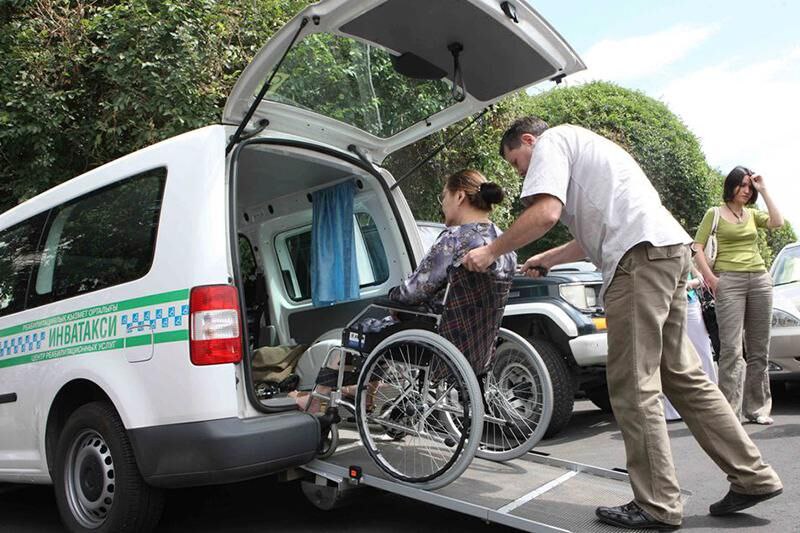
Kazakhstan is expanding its efforts to provide accessible transportation for people with disabilities through the Invataxi project, which offers specially adapted minivans for travelers with mobility challenges. In a significant step forward, the Ministry of Labor and Social Protection of the Population has partnered with a taxi aggregator to enhance and streamline the service, making it more accessible and efficient. As part of a pilot project launched in 2024, people with disabilities in Astana and Almaty used Invataxi services via the Yandex Go mobile application more than 207,000 times. This marks a dramatic increase compared to 2023 when the service was used 53,900 times. The pilot project introduced the use of passenger cars alongside the adapted minivans, significantly broadening the availability of transportation options. Previously, users had to book Invataxi rides by phone at least a day in advance. Now, thanks to Yandex's integration, users can request rides instantly via the mobile app, making the process faster and more convenient. A critical aspect of the pilot was that Yandex waived any commission on payments for these rides, ensuring affordability for passengers. The Yandex Go application includes a special feature that allows passengers with disabilities to notify drivers of any specific requests for the trip. Additionally, drivers have been trained to assist passengers with disabilities in entering and exiting the vehicle, further enhancing the service's accessibility. The pilot project initially operated in Astana and Almaty but will now be expanded to other regions across the country in 2025, as part of the government’s plan to replicate its success nationwide. In parallel with the Invataxi project, Kazakhstan is also investing in other accessible transportation initiatives, including the expansion of its fleet of Invacarriages specially adapted train carriages designed to accommodate people with disabilities. These efforts underscore the country’s commitment to improving mobility and inclusivity for all its citizens.

Uzbekistan Evacuates 100 Injured Palestinians for Treatment and Care

Uzbekistan has evacuated 100 injured Palestinian women and children, along with their guardians, from Rafah to provide medical treatment and care. Uzbekistan’s ambassador to Egypt, Mansurbek Kilichev, shared the details with the Egyptian Ahram portal. The evacuation was initiated by President Shavkat Mirziyoyev in collaboration with the health ministries of Uzbekistan and Egypt. According to Kilichev, the evacuees will remain in Uzbekistan until it is safe enough for them to return to their homeland. Currently, they are being housed in rehabilitation centers and hospitals, where they are receiving medical care and recovery support. The Uzbek government is ensuring that the evacuees have access to housing, food, medical assistance, and education for the children during their stay. Kilichev affirmed that they are living in comfortable conditions. This initiative reflects Uzbekistan’s broader humanitarian efforts. In November, President Mirziyoyev addressed an Arab-Islamic summit on the issue of Palestine, calling for an end to military actions in Palestinian territories and the establishment of humanitarian corridors. He also expressed Uzbekistan’s readiness to host injured women and children for treatment and rehabilitation. Uzbekistan’s assistance to Palestinians is part of a sustained effort. Last year, President Mirziyoyev allocated $1.5 million to the United Nations Relief and Works Agency (UNRWA) to support Palestinian refugees in Gaza. This recent evacuation demonstrates Uzbekistan’s commitment to providing humanitarian aid while encouraging stability in the region.

Justice for Veterans: U.S. Acknowledges Cancer Cases Tied to Service at Uzbekistan’s K2 Base

Thousands of American veterans who served at Uzbekistan’s K2 airbase have reported rare cancers and diseases - but only now, more than two decades later, is the U.S. government taking steps to address their dire situation. The U.S. Department of Veterans Affairs (VA) has announced plans to include bladder, urinary tract, and genitourinary cancers as conditions presumed to be linked to service at Uzbekistan’s Karshi-Khanabad airbase, known as K2. In 2001, the U.S. military moved into K2, a former Soviet airbase, to support a series of operations named “Enduring Freedom” which were purportedly aimed at tackling terrorism and Al-Qaeda in the wake of 9/11. However, in addition to the threat of terrorism, the troops faced another danger: the toxic environment. Reports from the base describe exposure to chemicals and radioactive materials. Soldiers recalled an underground “black bubble,” glowing lakes, and a chemical odor lingering in the air. [caption id="attachment_26149" align="aligncenter" width="634"] Image: Stronghold Freedom Foundation[/caption] The Karshi-Khanabad airbase was heavily used by the Soviet military during its operations in Afghanistan from 1979 to 1989, when it served as a site for producing, storing, and testing various weapons, including chemical weapons. The base also stored fuel, solvents, and other harmful substances. Additionally, it became a dumping ground for toxic waste, asbestos, enriched uranium, and other hazardous materials. Spills of these substances were frequent, leaving lasting environmental damage. Before the U.S. occupied K2, the destruction of Soviet-era missiles left some soil contaminated with low-level radioactive depleted uranium. The destruction of Soviet missiles was part of disarmament obligations under the 1987 Intermediate-Range Nuclear Forces (INF) Treaty. A 2001 survey found traces that could be harmful if inhaled, and a 2002 assessment confirmed small amounts of uranium, identified as non-U.S. depleted uranium, outside Camp Stronghold Freedom’s perimeter. The affected area was covered with clean soil, fenced off, and marked as off-limits in November 2001. Furthermore, approximately 392 chemical compounds were found at the K2 Air Base. Thousands of military personnel who served in K2 suffered from severe illnesses, including rare forms of cancer, associated with their time at the base. However, over the years, the U.S. government and the VA have delayed recognition of the link between service in K2 and these health issues, leaving many veterans without adequate support. [caption id="attachment_26150" align="aligncenter" width="1140"] Image: Stronghold Freedom Foundation[/caption] According to the Stronghold Freedom Foundation, K2 veterans are 500% more likely to get cancer than other veterans - 75% of U.S. service members deployed to Uzbekistan alone have developed at least one type of K2-related illness. On November 11, President Joe Biden announced an expansion of the PACT Act (Promise to Address Comprehensive Toxics Act), a law he signed in August 2022 to improve healthcare for veterans exposed to toxins. President Biden stated that the act has already helped over a million veterans and their families access benefits. Under new efforts, the VA will add bladder cancer, ureter cancer, multiple myeloma, and certain types of leukemia to the list of presumptive conditions. This expansion applies...