• KGS/USD = 0.01144 0%
  • KZT/USD = 0.00193 -0%
  • TJS/USD = 0.10858 0.09%
  • UZS/USD = 0.00008 0%
  • TMT/USD = 0.28571 0%
  • KGS/USD = 0.01144 0%
  • KZT/USD = 0.00193 -0%
  • TJS/USD = 0.10858 0.09%
  • UZS/USD = 0.00008 0%
  • TMT/USD = 0.28571 0%
  • KGS/USD = 0.01144 0%
  • KZT/USD = 0.00193 -0%
  • TJS/USD = 0.10858 0.09%
  • UZS/USD = 0.00008 0%
  • TMT/USD = 0.28571 0%
  • KGS/USD = 0.01144 0%
  • KZT/USD = 0.00193 -0%
  • TJS/USD = 0.10858 0.09%
  • UZS/USD = 0.00008 0%
  • TMT/USD = 0.28571 0%
  • KGS/USD = 0.01144 0%
  • KZT/USD = 0.00193 -0%
  • TJS/USD = 0.10858 0.09%
  • UZS/USD = 0.00008 0%
  • TMT/USD = 0.28571 0%
  • KGS/USD = 0.01144 0%
  • KZT/USD = 0.00193 -0%
  • TJS/USD = 0.10858 0.09%
  • UZS/USD = 0.00008 0%
  • TMT/USD = 0.28571 0%
  • KGS/USD = 0.01144 0%
  • KZT/USD = 0.00193 -0%
  • TJS/USD = 0.10858 0.09%
  • UZS/USD = 0.00008 0%
  • TMT/USD = 0.28571 0%
  • KGS/USD = 0.01144 0%
  • KZT/USD = 0.00193 -0%
  • TJS/USD = 0.10858 0.09%
  • UZS/USD = 0.00008 0%
  • TMT/USD = 0.28571 0%
22 December 2025

Viewing results 1327 - 1332 of 2401

National Bank of Kyrgyzstan Announces 2027 Launch for Digital Som

Kyrgyzstan plans to introduce the digital som by 2027, with the National Bank proposing amendments to the Constitutional Law "On the National Bank" to facilitate this. The proposal includes creating a legal framework and outlining the National Bank's new functions and powers, focusing on issuing and managing the digital som. This digital currency aims to enhance the financial sector, improve public administration, and foster innovation in payment systems, offering benefits like more transparent and secure transactions, reduced bureaucratic obstacles, and convenient access to financial services through mobile applications.

U.S. Company to Support Kazakhstan’s Production of Sustainable Aviation Fuel

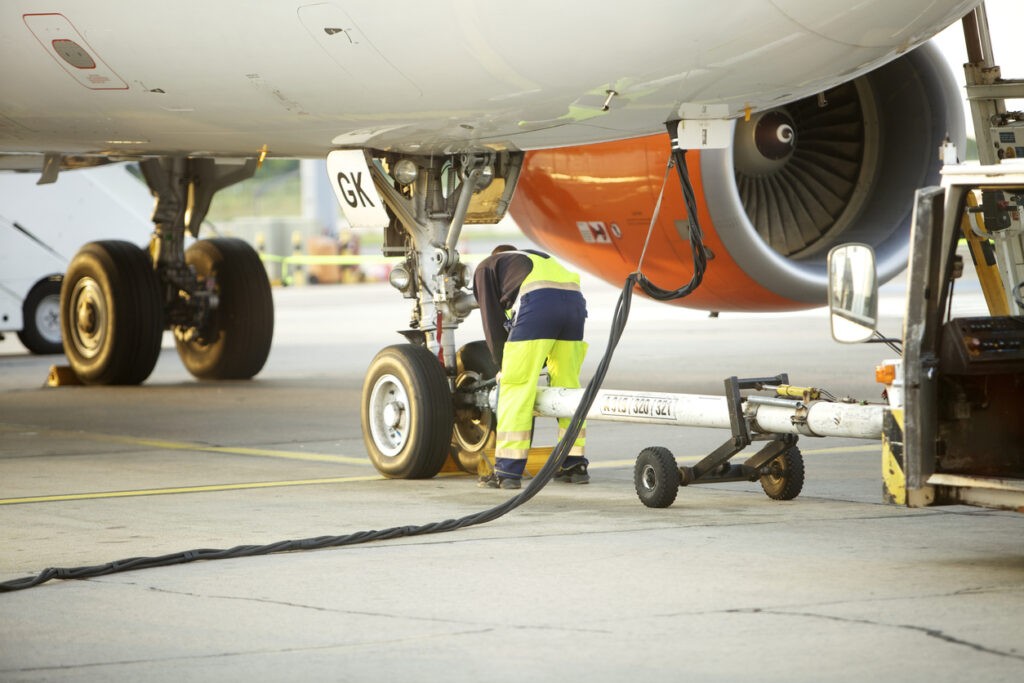
Kazakhstan’s national oil and gas company KazMunayGas (KMG) and the American technology company LanzaJet have signed a memorandum of cooperation for a strategic partnership in the production of environmentally sustainable aviation fuel (SAF) in Kazakhstan. While in the United States from August 5-7, KMG Chairman of the Board Askhat Khassenov visited the American company’s laboratory in Chicago and met with LanzaJet CEO Jimmy Samartzis. Khassenov noted that KMG aims to reduce its carbon footprint by 15% by 2031, compared to 2019 levels, and developing the country's biofuels market will support Kazakhstan's goal of carbon neutrality. He then stated that in response to the current rise in the global demand for SAF, his company is considering its production in Kazakhstan. LanzaJet CEO, Jimmy Samartzis, emphasized the importance of Kazakhstan's initial steps towards producing environmentally friendly jet fuel and expressed readiness to provide full technological support. LanzaJet specializes in SAF production technology from ethanol (ethanol-to-jet or alcohol-to-jet) and has long-term off-take agreements with major airlines. In January 2024, the company launched the world's first commercial-scale LanzaJet Freedom Pines Fuels plant for SAF production from ethanol. KMG earlier said that a preliminary feasibility study for the possible construction of a SAF production facility in Kazakhstan had already been completed by KMG and Air Astana with financial assistance from the European Bank for Reconstruction and Development (EBRD). SAF (Sustainable Aviation Fuel), an alternative to conventional jet fuel, represents a promising tool for decarbonizing the aviation industry. SAF can be derived from bioethanol (ethanol) produced from plants and other renewable sources, and compared to traditional jet fuel, reduces carbon emissions by 80%. In Europe, all jet fuel must contain 2% SAF from 2025 onwards, and the use of eco-friendly jet fuel must rise to 63% by 2050.

Uzbekistan Plans to Export Electricity to Europe by 2030

The first meeting of energy ministers was held as part of the sixth consultative meeting of the leaders of the Central Asian nations. At the meeting in Astana, Uzbekistan announced that it could begin exporting excess electricity to Europe by 2030. According to the Minister of Energy of Uzbekistan, Jorabek Mirzamahmudov, if the tripartite project of Kazakhstan, Uzbekistan and Azerbaijan on the transmission of the cable along the bottom of the Caspian Sea is successfully implemented, Uzbekistan will be able to transfer excess electricity. “By the end of this year, we will increase the total energy capacity obtained from renewable energy sources to the level of more than 4 GW. By 2030, this indicator will exceed 20 GW, of which 2–5 GW of energy will be exported to Europe,” the minister said. According to Mirzamahmudov, the exact volume of exports will depend on the electricity transmission system's capacity and European buyers' needs. Mirzamahmudov also stated that Uzbekistan’s electricity would pass through Kazakhstan through the unified energy system of Central Asia, through the Caspian Sea to Azerbaijan, from there to Georgia, and then through the Black Sea to Romania, Hungary, and Bulgaria. Following Uzbekistan's development strategy, the total generation capacity will be increased by 2.4 times (44.9 GW) by 2030. At the same time, the share of renewable energy sources will be increased to 40%. For this purpose, solar and wind energy production projects with a total capacity of 18.8 GW (8.6 GW solar, 10.2 GW wind) will be implemented.

Uzbekistan and Kazakhstan Sign $5 Billion in Agreements at Business Forum

On August 7, a joint business forum was held in Astana with more than 300 representatives from business circles of Uzbekistan and Kazakhstan in attendance. At the forum, joint projects involving automotive engineering, electrical engineering, pharmaceuticals, the chemical and logistics industries were discussed, and a set of agreements with a total value of $5 billion were adopted, according to the Agency for the Development of the Pharmaceutical Network. A memorandum of understanding was signed between Kazakhstan’s JV KAZ AMT and Uzbekistan’s Estess Atraumatic Sterile Surgical Threads LLC, Kazakhstan’s Dolche LLC and Uzbekistan’s Medproject Technology LLC. The President of the Republic of Uzbekistan, Shavkat Mirziyoyev, arrived in Astana on August 7 at the invitation of the President of Kazakhstan. Within the framework of the visit, Mirziyoyev will participate in the consultative meeting of the leaders of the Central Asian countries and the dialogue in the format Central Asia + Japan. President Mirziyoyev signed the decision to establish a free economic zone of the Central Asia International Industrial Cooperation Center on August 6. The zone will be organized in the Syr Darya region. Industrial cooperation will be expanded by involving enterprises in the production process in the center's territory and establishing the production of import-substituting products. Only products manufactured in Uzbekistan and Kazakhstan are sold in the center's territory under the control of a production certificate. According to the decision, Kazakhstani and foreign citizens can enter the center's territory without a visa through a special checkpoint with an identity document, and stay in the territory for 15 days.

Inland Water Transportation in Kazakhstan

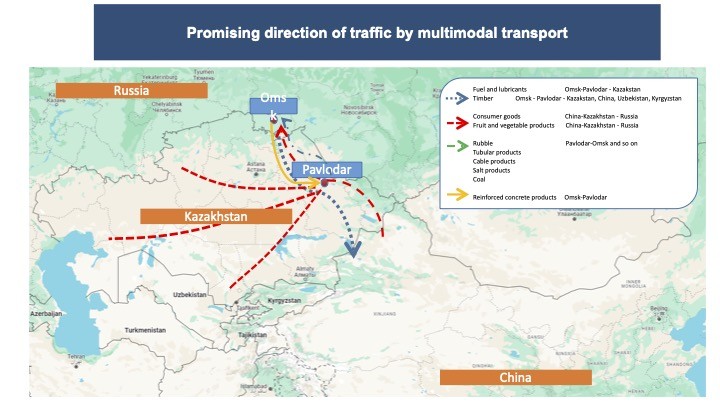
Kazakhstan’s inland waterways run to 4,302 km with an infrastructure that includes inland ports in Atyrau and Pavlodar, along with small cargo wharves and docks with access roads and ferry lines. Inland navigation is concentrated in the Ural-Caspian, Ili-Balkhash, and Irtysh river basins, and the Irtysh River is navigated via three locks at Bukhtarma, Ust-Kamenogorsk, and Shulbinsk. As such, Kazakhstan's inland waterways have great potential. Transporting cargo and passengers by ship is cheaper and more environmentally friendly than overland alternatives and has a significant multiplier effect on the development of  recreation and tourism in surrounding areas. However, there are a number of challenges to realizing this potential, including the unsatisfactory condition of navigable routes, an insufficient amount and high wear of coastal infrastructure, the state of the inland fleet and waterway locks, and a shortage of specialists. Over time, the Kazakh government's lack of proper attention to developing inland waterways has translated into falling transportation volumes along the country’s main navigable rivers. In turn, the lower handling volumes have led to a dearth of funds to update and repair port facilities, along with a deterioration of coastal infrastructure on navigable waterways, industrial ships, and waterway locks. In the last five years, Kazakhstan’s inland waterway fleet has decreased from 171 to 150 vessels. Meanwhile, 70% of those in operation are past their service life, while the existing coastal infrastructure is unable to process modern types of cargo at the pace required by the market. As reported by  Kazakhstan’s statistics agency, in the first half of 2024, 156,300 tons of cargo and 74,200 passengers travelled  on inland waterways, down 40.8% and 40.1%, respectively, from the same period last year. A key problem lies in the lack of a comprehensive analysis of the classification and volume of cargo carried through inland waterways. Current developments in shipping are focused around the Irtysh, home to the inland fleet and the main cargo base from which crushed stone is exported to Russia. On the Russian side, plans are in place to further increase shipped imports of both stone and other inert materials, alongside a proposal to import timber to Kazakhstan from Khanty-Mansiysk. The shipment of petroleum products to Chinese refineries from Kazakh and Russian plants is also being explored in tandem with the Chinese side sending back construction materials and consumer goods. At the initial stage, the volume of cargo transportation along the Irtysh is estimated at 350,000-400,000 tons a year, which could be ramped up to 1.5 million tons in the future. Experts note the important role of a strategic task set by the government to develop the transit logistics of integrating inland waterways into the multimodal logistics chain. This is especially relevant amid congestion on Kazakhstan’s railways and roads, the gravitation of export-import cargo to the transport system, and energetic discussions on developing the Russia-Kazakhstan-China transit corridor using the Irtysh. The project entails shipping cargo via the river to Lake Zaysan where reloaded onto trains, it continues its journey through a new Maykapshagay–Jeminay border...

Drones, Armored Vehicles, and Planes: Kazakhstan Announces Large-Scale Rearmament

The Defense Department of Kazakhstan has provided a report on its work for the first half of this year, documenting that the Kazakh army intends to update its weaponry. The geography of supplies is extensive, from Chinese quadcopters to European heavy transport aircraft. In 2024, the delivery of the armored wheeled vehicles Arlan (produced by Kazakhstan Paramount Engineering) and COBRA II (Turkish Otocar) is expected. By the end of the year, the department plans to purchase complex tactical unmanned systems (SUNQAR) and mini unmanned systems (EVOMax). Experts believe that the decision to buy drones was dictated by the mass use of such systems in the Russian-Ukrainian conflict. These hostilities have convincingly proved that quadcopters are an effective type of weaponry. The Defense Ministry reports that the "Armed Forces continue rearming with modern equipment models, including domestically produced ones. More than equipment was received this year, 50 units were overhauled." Five hundred units of new fighter jets and anti-aircraft missile systems formed of high-precision weapons classes are being purchased for the Air Defense Forces. According to Orda.kz, the choice was made to favor the Russian Su-30SM aircraft. Earlier, there was information about the possible purchase of French Rafale fighters. "In December last year, the Defense Ministry noted that given the high cost of French Rafale aircraft, the purchase of Russian planes is being considered. The Su-30SM is a multi-role fighter, and, logically, the Defense Ministry does not advertise that it will buy planes, and possibly SAMs, from a 'sub-sanctioned ally,'" the publication noted. In addition, the ANKA heavy-class unmanned aerial vehicle system is undergoing experimental military operations. The Turkish strike UAV entered service with four countries in 2023. This year, production of the ANKA will begin in Kazakhstan. The report indicates that the European Union is expected to deliver the first A400M heavy-lift military transport aircraft and an anti-diversion boat for the Navy. The department stated, "Shops have been launched to repair armored and automotive equipment, troop air defense, anti-tank systems, artillery, and small arms. So far, more than 1.5 thousand military equipment units have been repaired." In the annual rating of countries based on their level of military power Global Firepower-2024, Kazakhstan was placed 58th out of 145. Kazakhstan's armed forces are recognized as being the strongest in Central Asia.