• KGS/USD = 0.01144 0%
  • KZT/USD = 0.00216 0%
  • TJS/USD = 0.10456 0%
  • UZS/USD = 0.00008 0%
  • TMT/USD = 0.28571 0%
  • KGS/USD = 0.01144 0%
  • KZT/USD = 0.00216 0%
  • TJS/USD = 0.10456 0%
  • UZS/USD = 0.00008 0%
  • TMT/USD = 0.28571 0%
  • KGS/USD = 0.01144 0%
  • KZT/USD = 0.00216 0%
  • TJS/USD = 0.10456 0%
  • UZS/USD = 0.00008 0%
  • TMT/USD = 0.28571 0%
  • KGS/USD = 0.01144 0%
  • KZT/USD = 0.00216 0%
  • TJS/USD = 0.10456 0%
  • UZS/USD = 0.00008 0%
  • TMT/USD = 0.28571 0%
  • KGS/USD = 0.01144 0%
  • KZT/USD = 0.00216 0%
  • TJS/USD = 0.10456 0%
  • UZS/USD = 0.00008 0%
  • TMT/USD = 0.28571 0%
  • KGS/USD = 0.01144 0%
  • KZT/USD = 0.00216 0%
  • TJS/USD = 0.10456 0%
  • UZS/USD = 0.00008 0%
  • TMT/USD = 0.28571 0%
  • KGS/USD = 0.01144 0%
  • KZT/USD = 0.00216 0%
  • TJS/USD = 0.10456 0%
  • UZS/USD = 0.00008 0%
  • TMT/USD = 0.28571 0%
  • KGS/USD = 0.01144 0%
  • KZT/USD = 0.00216 0%
  • TJS/USD = 0.10456 0%
  • UZS/USD = 0.00008 0%
  • TMT/USD = 0.28571 0%

Viewing results 1777 - 1782 of 3223

Kazakh MP Accuses Nazarbayev’s Relatives of Raiding

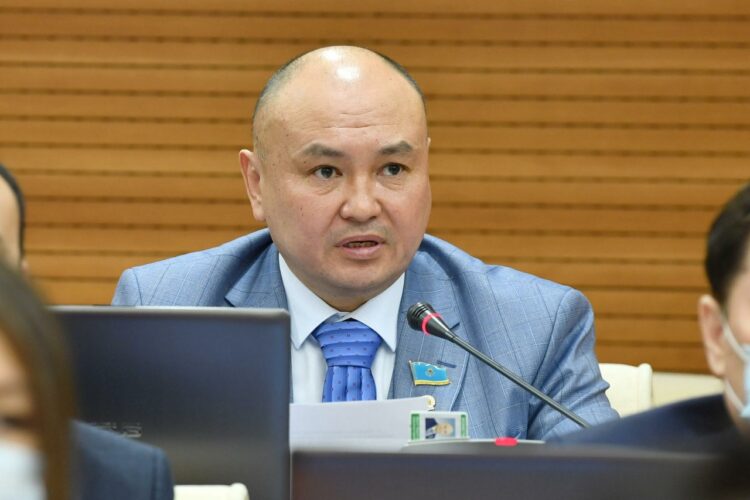
MP Yerlan Sairov believes that relatives of former president Nursultan Nazarbayev, Rakhat Aliyev and Kairat Satybaldy are involved in a business seizure. The parliamentarian demanded that the General Prosecutor's Office return the property to the affected businessmen, Kursiv has reported. During a meeting of the Mazhilis, the deputy stated that representatives of the Old Kazakhstan, taking advantage of their impunity, had initiated a series of business takeovers. "Such a system was formed by Rakhat Aliyev (Nazarbayev's former son-in-law) and his supporters," Sairov stated. Now, the victims have begun demanding the return of seized property. According to him, Nurlan Bimurzin and Megdat Kaliyev lost their oil business worth 170 million tenge ($369,000) in 2003. Zharkyn Kurentayev and Sholpan Karaneeva also "fell victim to the greed of the above-mentioned persons. The same group selected several vacation spots in the town of Konaev and the Altyn Bulak sanatorium in the Turkestan region," Sairov specified. Referring to the victims' posts on social networks, Sairov said that a group linked to Nazarbayev's nephew, Kairat Satybaldy, and his former sister-in-law, Gulmira, allegedly annexed the Hilton Hotel in Almaty and German citizen Robert Schumacher's construction company. The latter is now considered bankrupt. "The Prosecutor General's Office needs to take steps to protect the economic interests of the victims from representatives of the Old Kazakhstan and return the property," added Sairov. Rakhat Aliyev, the husband of Dariga Nazarbayeva from 1983 to 2007, was one of the most influential people in Kazakhstan in the early 2000s. In 2007, he was charged with kidnapping and preparation for a coup d'état and sentenced in absentia to 40 years; Aliyev fled to Austria, where he was arrested in 2014, and found hanged in a cell in Vienna in 2015. The official cause of death was suicide. In late February 2024, businessmen Bimurzin and Kaliyev announced that they had applied with the Prosecutor General's Office to reclaim assets they claimed to have transferred under duress to the former president's daughter, Aliya Nazarbayeva, in 2003. Nazarbayeva sued them for libel and lost Furthermore, earlier this year, businesswoman Sholpan Karaneeva reported that the Hilton Hotel was taken by Kairat Satybaldy and his supporters in 2021. After the nephew of the former president was behind bars, the transfer of his assets to the state, among them the hotel, was initiated. Kairat Satybaldy and his former wife, Gulmira Satybaldy, have been sentenced under articles on laundering money and the embezzlement of others property.
Rosatom Begins Construction of NPP in Uzbekistan

Construction of a nuclear power plant has begun in Uzbekistan, 55 km from the border with Kazakhstan, near Tuzkon Lake in the Jizzakh region. The main contractor for this project is Rosatom, Russia's state-owned nuclear energy company. Uzbek companies are also participating. More than three million residents of Turkestan and Shymkent live near the planned site of the nuclear power plant. “The Russian reactor RITM-200N will be used at the new power plant," the Ministry of Energy of Kazakhstan stated. "The reactor, an adaptation of marine technology for land-based use, has a thermal output of 190 MW and an electrical output of 55 MW with a lifespan of up to 60 years. RITM-200 reactors are used on Russian icebreakers. Reactor safety is ensured by multi-level protection systems that prevent accidents.” Uzbekistan and Russia have been holding discussions on the NPP project since 2017. In 2019, a site near Tuzkon Lake was chosen for its development. In addition to a large nuclear power plant, there are plans to build small modular reactors with a total capacity of 330 MW.

Kyrgyzstan to Take Chinese Loan to Build Railroad

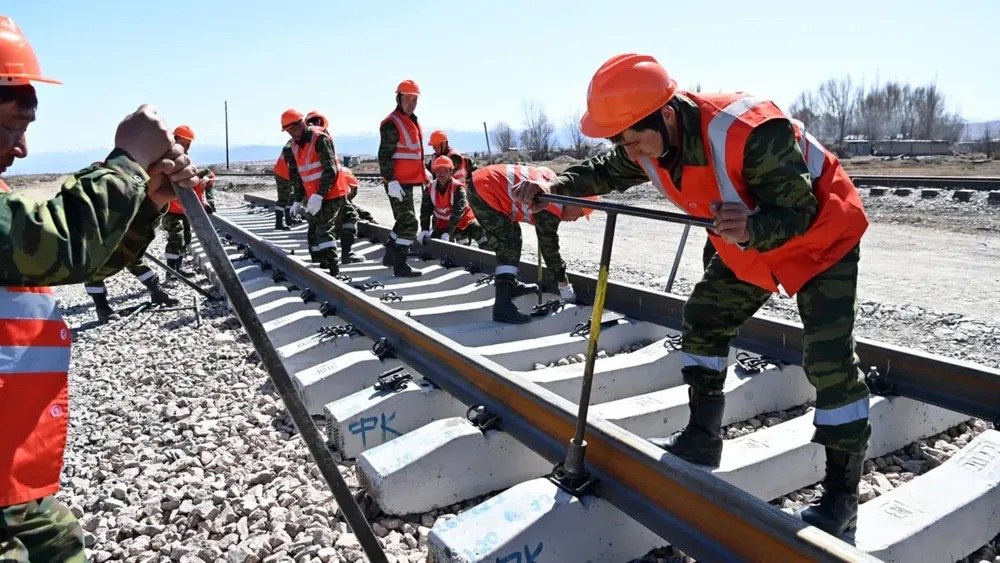
Kyrgyzstan intends to take a loan from China to construct the China-Kyrgyzstan-Uzbekistan railroad. Azamat Sakiyev, the General Director of Kyrgyz Temir Jolu NC, stated at the Parliamentary Committee on Transport, Communications, Architecture, and Construction meeting, 24.kg has reported. The Speaker noted that the feasibility study for the project has already been developed, and the agreement amounts to $4 billion 700 million. "According to the agreement, 51% of the costs will be covered by the People's Republic of China, and the Kyrgyz and Uzbek sides will assume 24.5% each," Sakiyev said. "Where will we find $1 billion?" MP Baktybek Sydykov asked, to which Sakiev replied that the Kyrgyz Republic intends to borrow money from Chinese banks. Sakiyev specified that the Chinese side would lend the joint venture half of the total project cost—$2 billion 350 million—and the parties would cover the other $2 billion 350 million at their own expense. As a result, Kyrgyzstan's share will amount to $783 million. The China-Kyrgyzstan-Uzbekistan railroad is a projected 454-kilometer railroad designed to connect the railroads of China and Uzbekistan through the territory of Kyrgyzstan and further through Turkmenistan, Iran, and Turkey, to connect with the European railroad network within the framework of the New Silk Road transport system. Previously, Kyrgyz President Sadyr Japarov had said the construction would cost between $3 and $5 billion.

Azerbaijan and Kazakhstan to Invest in Fiber Optic Cables in Caspian Sea

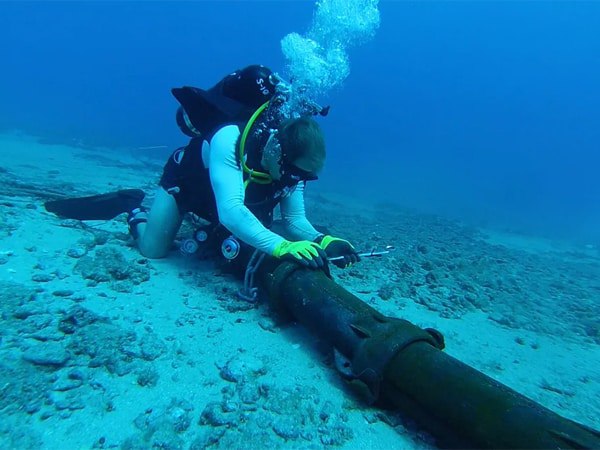
More than $50 million will be invested by Kazakhstani and Azerbaijani operators in laying fiber optic fiber along the bottom of the Caspian Sea. Kazakhstan's minister of digital development Zhaslan Madiev has announced: "Today, a joint venture between Kazakhtelecom JSC (Kazakhstan's national telecommunications company) and Azertelecom LLC has been established, and a tender to select a contractor for designing and laying an underwater FOCL is being finalized." The laying of optics on the bottom of the Caspian Sea will total 370 kilometers. "Investments of Kazakhstan and Azerbaijan telecom operators will total more than 23 billion tenges ($50.6 million)." Madiev also said that introducing 5G mobile communication in Kazakhstan should be completed by the end of 2025. According to him, by the end of 2027 cellular operators will invest almost $1 billion in the country's telecommunications industry. The Trans-Caspian fiber-optic communication line (FOCL) project along the Caspian Sea bed is part of the Digital Silk Road project, which envisages the creation of a digital telecommunications corridor between Europe and Asia. Earlier, it was reported that the deadline for the project's realization was 2025.

Sogd-2024 International Trade Fair Marks First Decade

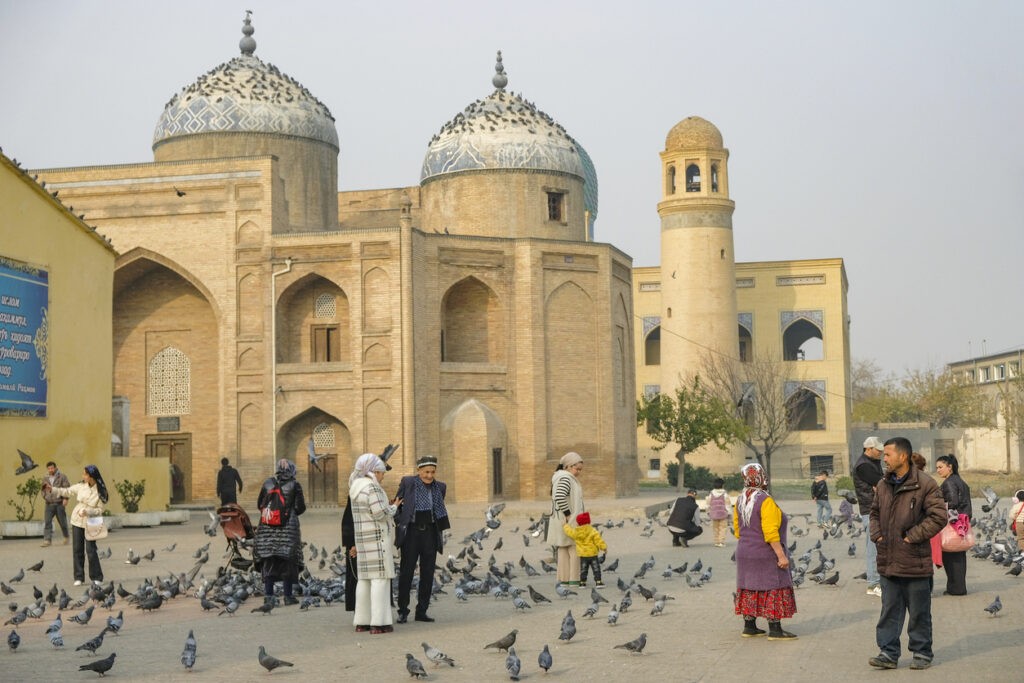
The international trade fair, Sogd-2024 officially opened at the sports palace in Khojand, Tajikistan, on June 18th. This year marks a decade of the Sogd—Valley of Opportunities fair, which will run from June 18th-19th. More than 500 guests from Tajikistan and abroad have gathered, Andar Rahmani, the head of the press service of the Sogd regional administration informed Sputnik Tajikistan, adding that regional ambassadors are also participating in this important economic event. “Ambassadors and representatives of the diplomatic corps of Russia, Turkey, Uzbekistan, Saudi Arabia, Azerbaijan, Japan, Iran, Belarus, Turkmenistan, Slovakia, Poland, Pakistan, Kyrgyzstan and Kazakhstan visited the region,” Rahmani said. Representatives from the Tashkent, Namangan, Ferghana, Samarkand, Bukhara, and Syr Darya regions of Uzbekistan, and business- people from China’s Shaanxi province and representatives of international financial organizations also participated.

Eurasian Connectivity Comes One Step Closer at the 2024 CAMCA Forum in Bishkek

The wider Eurasia region took another step towards cooperation and connectivity last week, as the 10th annual CAMCA Regional Forum was held in Bishkek. CAMCA – standing for Central Asia, Mongolia, the Caucasus and Afghanistan – is an initiative to accelerate dialogue between governments, private enterprises and media figures from these ten nations. Organized by the Washington, D.C.-based Central Asia-Caucasus Institute and the Rumsfeld Foundation, this year’s Forum – the first such event to take place in Kyrgyzstan – featured over 300 delegates across its two days, and presented insights from over 70 speakers. Attendees came from 25 countries in total. Professor Frederick Starr, the Central Asia-Caucasus Institute’s chairman, used his opening address to call on the countries of the region to start preparing for a future within a cohesive international bloc. Dr Starr reasoned that Russia and China, imperial powers that have traditionally had a controlling presence in Central Asia, may see their global influence wane in the coming decade. This would give the countries of Central Asia, and their neighbors, more space to create projects that serve their economies directly. A leading CAMCA regional project is the ‘Middle Corridor’ trade route, which bypasses Russia to transport goods more efficiently between Europe and China. Discussions are also taking place concerning the creation of single business and tourist visas for the whole Central Asia region. The importance of collaboration between countries in the Caucasus and Central Asia to mitigate the impact of climate change has never been so great. Addresses by senior members of the Kyrgyz government highlighted the progress that Kyrgyzstan has made since the administration of president Sadyr Japarov began its work in 2021. The country’s deputy prime minister Edil Baisalov reported that Kyrgyzstan is on track to double its GDP to $30 billion by 2030, while the minister for digital development, Nuria Kutnaeva, spoke about the rapid digitalization of the country’s government services.  In a noticeably warm and collaborative atmosphere, the event nonetheless highlighted the barriers that prevent the ten countries from forming a tangible ‘CAMCA’ space in the present. A key goal is the harmonization of their legislation and policy directions; however, no delegates from Tajikistan could travel to Bishkek for the Forum, as otherwise solid relations between Tajikistan and Kyrgyzstan are still strained by a dispute over their common border. Likewise, Armenian voices were also absent this time, in light of several of the sessions featuring Azerbaijani speakers and talking points. The event featured only one guest from Turkmenistan.  Even in these conflicts, however, Central Asian diplomacy is at work. The conflict on the Kyrgyz-Tajik border, mainly in Tajikistan’s Vorukh district, is being resolved through negotiations between the two countries’ governments, which would have been unthinkable even five years ago. Meanwhile, Kazakhstan is acting as a mediator between Baku and Yerevan in the aftermath of the war in Nagorno-Karabakh. Other topics on the agenda included security priorities for Central Asia, digital innovation in business, cooperation with Afghanistan, transitions in global energy markets, and infrastructure projects...