• KGS/USD = 0.01144 0%
  • KZT/USD = 0.00201 0%
  • TJS/USD = 0.10464 0%
  • UZS/USD = 0.00008 0%
  • TMT/USD = 0.28490 0%
  • KGS/USD = 0.01144 0%
  • KZT/USD = 0.00201 0%
  • TJS/USD = 0.10464 0%
  • UZS/USD = 0.00008 0%
  • TMT/USD = 0.28490 0%
  • KGS/USD = 0.01144 0%
  • KZT/USD = 0.00201 0%
  • TJS/USD = 0.10464 0%
  • UZS/USD = 0.00008 0%
  • TMT/USD = 0.28490 0%
  • KGS/USD = 0.01144 0%
  • KZT/USD = 0.00201 0%
  • TJS/USD = 0.10464 0%
  • UZS/USD = 0.00008 0%
  • TMT/USD = 0.28490 0%
  • KGS/USD = 0.01144 0%
  • KZT/USD = 0.00201 0%
  • TJS/USD = 0.10464 0%
  • UZS/USD = 0.00008 0%
  • TMT/USD = 0.28490 0%
  • KGS/USD = 0.01144 0%
  • KZT/USD = 0.00201 0%
  • TJS/USD = 0.10464 0%
  • UZS/USD = 0.00008 0%
  • TMT/USD = 0.28490 0%
  • KGS/USD = 0.01144 0%
  • KZT/USD = 0.00201 0%
  • TJS/USD = 0.10464 0%
  • UZS/USD = 0.00008 0%
  • TMT/USD = 0.28490 0%
  • KGS/USD = 0.01144 0%
  • KZT/USD = 0.00201 0%
  • TJS/USD = 0.10464 0%
  • UZS/USD = 0.00008 0%
  • TMT/USD = 0.28490 0%

Viewing results 1987 - 1992 of 2928

Doctors, Teachers Among Lowest-Paid Trained Professions in Uzbekistan

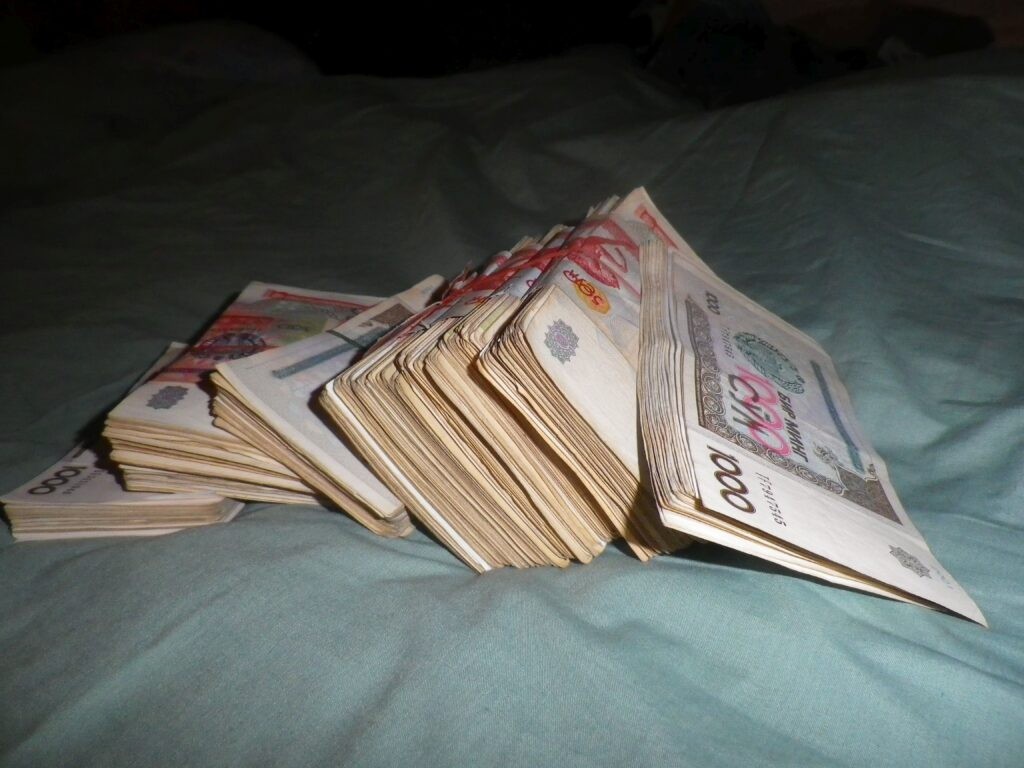
The Bdex.ru website, which publishes open-source statistics on salaries in various countries and cities, has provided data on average salaries in the Central Asian republics. According to their reporting, citizens of Kazakhstan earn the most at $775 per month. Wages in Uzbekistan ($346) and Kyrgyzstan ($360) are almost identical, whilst workers in Tajikistan are paid significantly less at $193. As in many fields, there is no data available for Turkmenistan. According to the Uzbek Statistics Agency, average monthly wages rose 17.2% last year. The highest wages are still found in the capital at $600, and the lowest in the Namangan Oblast ($267). Last year, the highest salaries were for those who work in finance and insurance ($1,077), with the lowest salaries going to healthcare ($242) and education workers ($252). At the same time, real per capita income in Uzbekistan grew by only 2.4% in 2023 - the lowest figure in at least five years. In neighboring Tajikistan, the average monthly nominal wage in 2023 increased by 14.3% on the previous year according to the Minister of Labor, Employment and Migration of the Republic of Tajikistan, Gulnora Hasanzoda. Agricultural and forestry workers earn the least in the country at $74, whilst the highest salaries go to miners at $333, followed by energy workers ($332), and construction workers ($275). According to official statistics, there are about two million migrant workers from Central Asia currently in Russia. Low wages and unemployment are increasingly forcing citizens of Uzbekistan and Tajikistan to look for work abroad. As a rule, these are low-skilled, low-paid jobs that locals are reluctant to take. Due to the war in Ukraine and fear of being forced into the Russian military, migrants have recently started to look elsewhere. According to Staffing Industry Analysts (SIA), Uzbekistan was among the leaders in sending seasonal migrant workers to the U.K. in 2022. "We have seen a dramatic increase in the number of seasonal workers coming to the U.K. from Uzbekistan and Kyrgyzstan," the director of the Gangmasters and Labor Abuse Authority (GLAA), Darryl Dixon observed in the SIA report.

U.S. and Central Asian Countries Launch C5+1 Critical Minerals Dialog

On February 8th, the U.S. Department of State hosted the inaugural meeting of the C5+1 Critical Minerals Dialog (CMD), an initiative announced by Joe Biden and the presidents of Kazakhstan, Kyrgyzstan, Tajikistan, Turkmenistan, and Uzbekistan at their C5+1 summit in New York in September 2023. The C5+1 Critical Minerals Dialog aims to increase the region’s involvement in global critical minerals supply chains, strengthen economic cooperation, and advance the transition to clean energy, while also protecting Central Asia’s unique ecosystems, the U.S. Department of State said. The United States Under-Secretary for Economic Growth, Energy, and the Environment, Jose W. Fernandez, chaired the CMD meeting, and Assistant Secretary of State for Energy Resources, Geoffrey Pyatt moderated the event, accompanied by Deputy Assistant Secretary of State for Central Asian Affairs, John Mark Pommersheim, and colleagues from across the U.S. government who work on critical minerals.  Senior officials from each of the Central Asian governments shared their interest in developing investment opportunities in critical minerals that meet the highest environmental standards. The participants of the meeting underscored the benefit of working together to advance their countries’ shared critical minerals objectives including diversification of markets and development of technologies. 

EDB Plans $3.5bn investment in Kazakhstan Projects in 2024

The Eurasian Development Bank’s annual investment in Kazakhstan's economy has exceeded $1bn for the second consecutive year, the chairman of its management board Nikolai Podguzov said during a February 12th meeting with Kazakhstan’s president Kassym-Jomart Tokayev.  The Eurasian Development Bank (EDB) is an international financial institution with member states including Armenia, Belarus, Kazakhstan, Kyrgyzstan, Russia, and Tajikistan. The bank’s investment in 2022 and 2023 amounted to $4.2bn, with the share of Kazakhstan-based projects in the bank’s portfolio steadily increasing and reaching 59% by the end of 2023. The value of potential EDB projects under consideration for Kazakhstan for 2024 exceeds $3.5bn. These investments are planned for the country’s strategically important sectors such as transport infrastructure, thermal and renewable energy, industrial production, agriculture, and water management. Podguzov emphasized that this year the EDB intends to foster the growth of Kazakhstan’s financial market, including the implementation of new instruments to fund infrastructure projects. He also informed Tokayev about the EDB’s research on the Central Asian water and energy complex. Podguzov said that his bank plans to promote the advancement of Kazakhstan as a driver of efficient water use, and stands ready to offer grants totaling up to $10m to develop regional centers of expertise in water conservation and energy-efficient technologies – and to allocate up to $400m for projects involving digital water-metering technologies, laser land levelling for irrigated areas and the establishment of a regional production and service cluster for state-of-the-art irrigation equipment.

Kyrgyzstan-Turkey Business Forum Held in Ankara

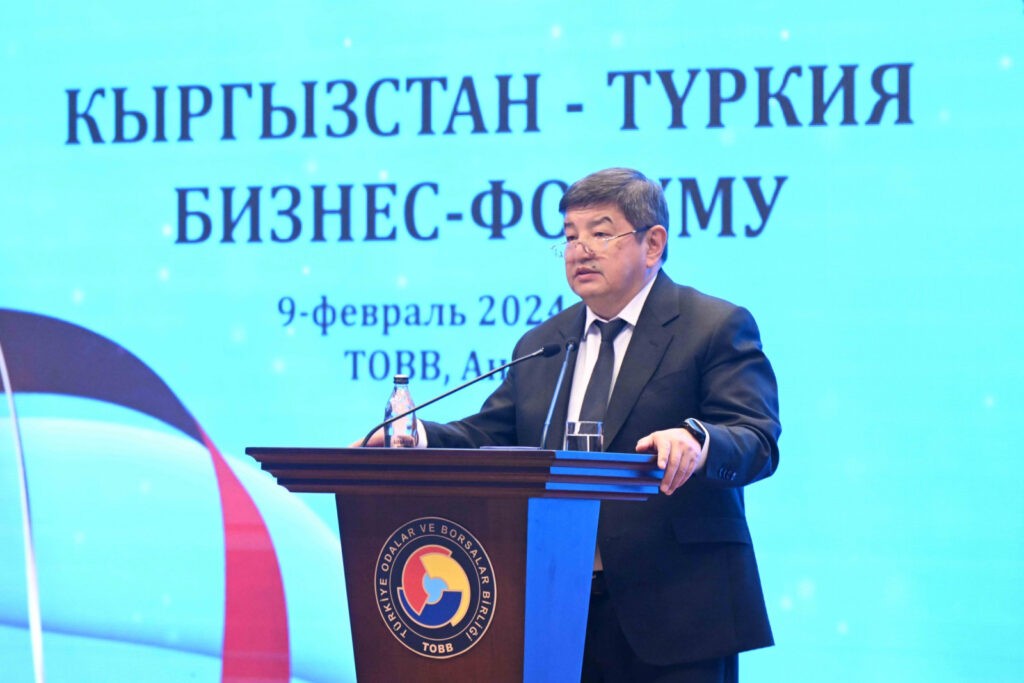
Relations between Kyrgyzstan and Turkey have reached a new level in all areas, the chairman of the Cabinet of Ministers of the Kyrgyz Republic, Akylbek Japarov said at the Kyrgyz-Turkish business forum in the Turkish capital, Ankara on February 9th. According to the Prime Minister, Turkey was the largest foreign investor in Kyrgyzstan’s economy in 2022, with investments totaling $341.6m. Between January and November 2023, trade turnover between the two countries increased again, amounting to $560.5m. Japarov added that the governments of the two countries are now working to create a Kyrgyz-Turkish Investment Fund to finance large infrastructure projects. At the forum, Kyrgyzstan’s Minister of Economy and Commerce, Daniyar Amangeldiev informed Turkish entrepreneurs about opportunities in Kyrgyzstan, highlighting tax breaks and support for investors. The forum culminated in the signing of eight cooperation documents on joint projects, among them a contract for the supply of walnuts from Kyrgyzstan to Turkey. On the same day, Japarov and Turkish Vice President, Cevdet Yilmaz co-chaired the 11th meeting of the Kyrgyz-Turkish Intergovernmental Commission on Trade and Economic Cooperation. The meeting focused on the fields of economy, investment, energy, industry, agriculture, transport, tourism, healthcare, culture, and education. At the meeting Japarov stated that the establishment of a trade mission of Kyrgyzstan in Turkey will help deepen economic ties between the two states and ensure the sustainable development of cooperation in trade and investment.

Shares of Air Astana Begin Trading on Local and London Bourse

Early trading in shares of Kazakhstan's air carrier, Air Astana, began today on securities exchanges in Astana and London as part of an initial public offering (IPO). Trading in Air Astana's global depositary receipts (GDRs) -- a tool used by foreign investors to trade local shares of a company -- also started using the company's common shares on the Astana International Exchange (AIX), priced in U.S. dollars. Price quotes are published on the AIX's website. "Freedom Broker acted as a market-maker on [the AIX]. Early trades turned into main trades after completion of settlements and distribution of securities to investors' accounts in the depository system, in accordance with the applications submitted during the IPO period," reads an official statement. According to the results of early trading, the final price of Air Astana's initial public offering was 1,073.83 tenge per share and $9.5 per GDR, putting the estimated market capitalization of the company at about $847 million at the start of trading. As part of Air Astana's IPO, shareholders BAE Systems of the U.K. sold 7,533,109 GDRs and Kazakh national wealth fund Samruk Kazyna sold 60,393,877 shares (with an additional issue). BAE Systems sold 14,187,643 GDRs on the international market . Gross proceeds from the offering are estimated at about $350-370 million -- of which about $120 million will be used by the airline itself to finance its growth strategy. The main public auction for Air Astana securities is scheduled for February 15 and will be held on the AIX, the Kazakhstan Stock Exchange (KASE, Almaty), and the London Stock Exchange (LSE).

Kazakhstan Claws Back Another $98.5 Million From Nazarbayev’s Nephew

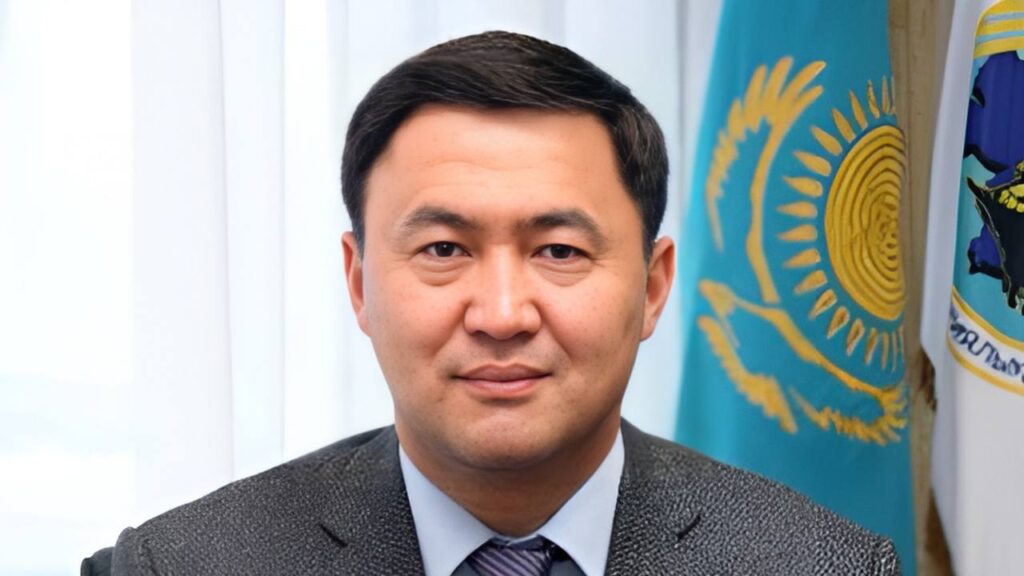
A well-known Kazakhstani businessman and a relative of former President Nazarbayev has returned another $98.5 million to the state's coffers. This money was returned as part of the criminal case against Kairat Satybaldy, according to the Anti-Corruption Agency of the Republic of Kazakhstan. "At present, the funds have been sent to the republican budget on account of compensation for damage caused to the state," said the head of the agency, Askhat Zhumagali. Satybaldy - a nephew of the first president of Kazakhstan - is a well-known businessman and former politician. He held positions in the Akimat of the capital, the National Security Committee, and developed business in the oil and gas industry, banking, the services sector, and trade. Satybaldy was detained in March 2022, accused of abuse of power and embezzlement on a large scale at both JSC Kazakhtelecom and JSC Center of Transport Services. In September of that year, an Astana court found Satybaldy guilty and sentenced him to six years imprisonment, replete with the confiscation of property and deprivation of the right to hold office for ten years. In addition, he was relieved of the title of Major General of the National Security Committee (KNB) and other state awards. In total, since the beginning of 2022, the Anti-Corruption Agency has returned $2 billion of illegally withdrawn assets, of which almost $1.5 billion belonged to Satybaldy. These include a stake in state company, Kazakhtelecom, companies in the railroad and telecommunications sectors, as well as jewelry worth more than $200 million. Additionally, as part of the criminal case, the state repossessed a stake in the Baisat Market, which had belonged to Satybaldy's son. The Agency noted that other investigations into Nazarbayev's nephew on cases related to non-payment of taxes and the laundering of proceeds from criminal activities are ongoing. At the same time, in order to preclude the withdrawal of embezzled budget funds abroad, the anti-corruption service intends to introduce digital technologies, including mechanisms for "coloring" money, and the use of digital tender to fully track how state funds are spent. "Long-term construction projects [and] untimely and low-quality construction are often associated with either embezzlement or withdrawal of money for further kickbacks to officials and other offenses,"Zhumagali stated. "Digital tenge as a tool will help us realize the [plan for] 'coloring' money. And if this money is allocated for salaries, it will not go in other directions. This whole procedure of money movement allocated from the budget becomes transparent, and all transactions must reach their goal; each tenge must be spent for a specifically envisaged purpose." In Kazakhstan, corruption continues to be one of the main factors hindering the country's economic development. In 2023, the country ranked 93rd out of 180 states on Transparency International's Corruption Perceptions Index with a raw score of 39 out of 100. However, this saw an improvement on the ranking of 101st registered on the 2022 index, and following the resignation of the government, on February 7th President Tokayev targeted stamping out corruption as a...