• KGS/USD = 0.01144 0%
  • KZT/USD = 0.00212 0%
  • TJS/USD = 0.10523 0%
  • UZS/USD = 0.00008 0%
  • TMT/USD = 0.28530 0%
  • KGS/USD = 0.01144 0%
  • KZT/USD = 0.00212 0%
  • TJS/USD = 0.10523 0%
  • UZS/USD = 0.00008 0%
  • TMT/USD = 0.28530 0%
  • KGS/USD = 0.01144 0%
  • KZT/USD = 0.00212 0%
  • TJS/USD = 0.10523 0%
  • UZS/USD = 0.00008 0%
  • TMT/USD = 0.28530 0%
  • KGS/USD = 0.01144 0%
  • KZT/USD = 0.00212 0%
  • TJS/USD = 0.10523 0%
  • UZS/USD = 0.00008 0%
  • TMT/USD = 0.28530 0%
  • KGS/USD = 0.01144 0%
  • KZT/USD = 0.00212 0%
  • TJS/USD = 0.10523 0%
  • UZS/USD = 0.00008 0%
  • TMT/USD = 0.28530 0%
  • KGS/USD = 0.01144 0%
  • KZT/USD = 0.00212 0%
  • TJS/USD = 0.10523 0%
  • UZS/USD = 0.00008 0%
  • TMT/USD = 0.28530 0%
  • KGS/USD = 0.01144 0%
  • KZT/USD = 0.00212 0%
  • TJS/USD = 0.10523 0%
  • UZS/USD = 0.00008 0%
  • TMT/USD = 0.28530 0%
  • KGS/USD = 0.01144 0%
  • KZT/USD = 0.00212 0%
  • TJS/USD = 0.10523 0%
  • UZS/USD = 0.00008 0%
  • TMT/USD = 0.28530 0%

Viewing results 2107 - 2112 of 3264

€10bn To Be Invested In Trans-Caspian Transport Corridor

The two-day Global Gateway Investors Forum for EU-Central Asia Transport Connectivity opened on January 29th in Brussels, Belgium. The event brings together high-level representatives from the European Commission, countries of the EU, Central Asia and Caucasus, as well as Turkey. At the forum, the European Commission’s executive vice-president Valdis Dombrovskis announced that European and international financial institutions will commit €10bn ($10.8bn) in support and investments towards sustainable transport connectivity in Central Asia. The forum’s agenda includes discussions of the required investments to transform the Trans-Caspian Transport Corridor into a cutting-edge, multimodal, and efficient route, connecting Europe and Central Asia within 15 days. The European Commission said that Russia's invasion of Ukraine has underlined the urgency to find alternative reliable efficient trade routes between Europe and Asia. The development of transport connectivity is also a means to strengthen regional integration and economic development in Central Asia.  The €10bn commitment is a mixture of ongoing and planned investments which the European Commission foresees to be mobilized for sustainable transport development in Central Asia in the short term. In concrete terms, several significant commitments are being made on the first day of the forum as part of the overall €10bn. The European Investment Bank (EIB), represented by its vice-president Teresa Czerwińska, signed memoranda of understanding totaling €1.47bn ($1.6bn) with the governments of Kazakhstan, Kyrgyzstan and Uzbekistan, as well as with the Development Bank of Kazakhstan. These loans will be made possible by guarantees provided by the European Commission. 

EU And AFD Support Uzbekistan’s Drinking Water And Livestock Sectors

The Delegation of the European Union to Uzbekistan and Agence Française de Développement (AFD), the French Development Agency that implements France’s policy on international development and solidarity, have signed two agreements together. One is to implement the EU’s Drinking Water Program, and the other is for sustainable livestock financing in Uzbekistan.  The agreements provide for new European Union grants, namely €7.9m ($8.5m) for the water program and €4.7m ($5m) for livestock. These grants will finance the technical assistance required for each of the projects, the Delegation of the European Union to Uzbekistan said.  The EU and AFD have confirmed their commitment to continue supporting the government of Uzbekistan in its efforts to create a climate-smart and inclusive livestock sector. Implemented since June 2021 by the Uzbek Committee for Veterinary and Livestock Development, the project for “Inclusive and Climate Friendly Investment Financing in the Livestock Sector of Uzbekistan” aims to make sustainable financing in this sector more efficient. The EU’s contribution focuses on improving access to climate-friendly loans provided by four Uzbek banks — Business Development Bank, HamkorBank, MicrokreditBank, and Xalq Bank.  The Drinking Water Program helps to improve drinking water coverage in three regions of Uzbekistan — Tashkent, Fergana, and Kashkadarya. This project centers on water systems in seven districts within these three regions, providing access to a well-managed drinking water service for around 610,000 people. According to data provided by macrotrends, as of 2020, only 58.83% of the population in Uzbekistan had access to clean drinking water, which is defined by UNICEF as a “fundamental need and human right.” This figure has been in decline year-on-year since 2017, meaning that Uzbekistan ranks second worst in the region after Tajikistan for access to water “on premises, available when needed and free from faecal and priority chemical contamination.” According to UNICEF, only 32% of domestic wastewater is safely treated, whilst the impact of climate change, such as droughts and floods, further complicate the delivery of water and sanitation services.

EBRD Approves New Strategy For Uzbekistan

The European Bank for Reconstruction and Development (EBRD) has approved a new strategy for Uzbekistan, setting out the bank’s priorities in the country until 2029. The EBRD’s strategic approach to operations in Central Asia’s most populous state will be based on activities in three areas: supporting decarbonization, greater water efficiency and cleaner energy; developing the private sector and fostering employment, skills, inclusion and the digital transition; and improving economic governance, the business climate and infrastructure connectivity, the bank said on January 26th. Under the first priority, the EBRD will work with the authorities to further decarbonize the national economy and increase the share of renewable energy in the total power output. It will pay special attention to creating low-carbon pathways and reducing methane emissions under Uzbekistan’s Global Methane Pledge commitments. The EBRD will also support the commercialization and modernization of power distribution and transmission networks, and channel further funds into modernizing and upgrading water, wastewater and irrigation facilities. Under the second priority, the EBRD will expand its support to the country’s private sector by providing direct financing, credit lines to small and medium-sized enterprises, and risk-sharing through local partner banks and trade finance facilities to support increased energy efficiency and women- and youth-led enterprises. Domestic small businesses will continue benefiting from the EBRD’s Business Advisory Services programme. The bank will also promote further digitalization in the private sector, the expansion of e-commerce and the development of local capital markets. Under the third priority, the EBRD will continue supporting the transformation of and governance improvements to state-owned enterprises and banks. It will support privatization, including through pre-privatization engagements; provide advice and financing to encourage the wider use of public-private partnerships; and support public-private sector dialogue through the Foreign Investors Council to help increase foreign direct investment. The bank will continue working to enhance regional and global connectivity, including through policy engagements and financing to improve transport connectivity and regional power trading, and help lower trade barriers. Uzbekistan is the leading recipient of EBRD funding in Central Asia for the fourth year running. To date the bank has invested around €4.28 billion in 147 projects across the country, most of which support private entrepreneurship and investment.

Kazakhstan Freezes Transit Cost of Russian Oil To China

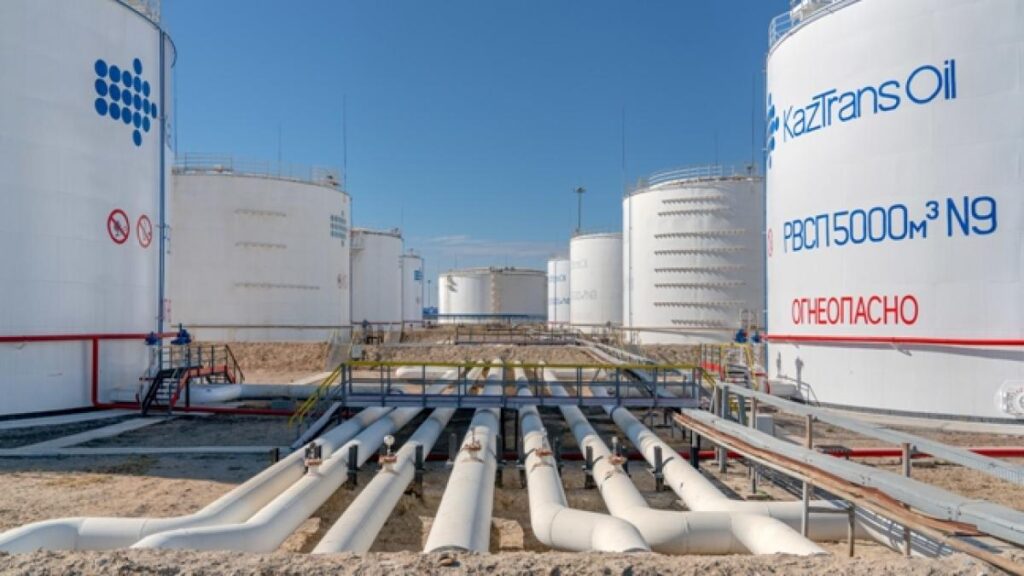
KazTransOil JSC, Kazakhstan’s national oil pipeline operator, on January 26th said it will freeze the cost of transiting Russian oil to China until 2034. Until December 31st 2033 the cost of transporting Russian oil to China through the territory of Kazakhstan will amount to $15 per ton (excluding VAT), the company said.   KazTransOil also said it has extended until December 31st 2033 its contract with Russia’s Rosneft oil company for the transportation of Russian oil through Kazakhstan to China. From 2014-2023, KazTransOil transported 91 million tons of Russian oil to China along the Atasu–Alashankou oil pipeline, which is part of the Kazakhstan-China main oil pipeline system and belongs to Kazakhstan-China Pipeline LLP, a joint venture of KazTransOil JSC (50%) and China National Oil and Gas Exploration and Development Company Ltd (50%). The design capacity of the Atasu–Alashankou pipeline is 20 million tons of oil per year. Russia has been seeking to increase its oil exports to China after western sanctions were imposed on its exports over its invasion of Ukraine. 

Visit of a Delegation from Turkmenistan to Japan: Prospects for Cooperation

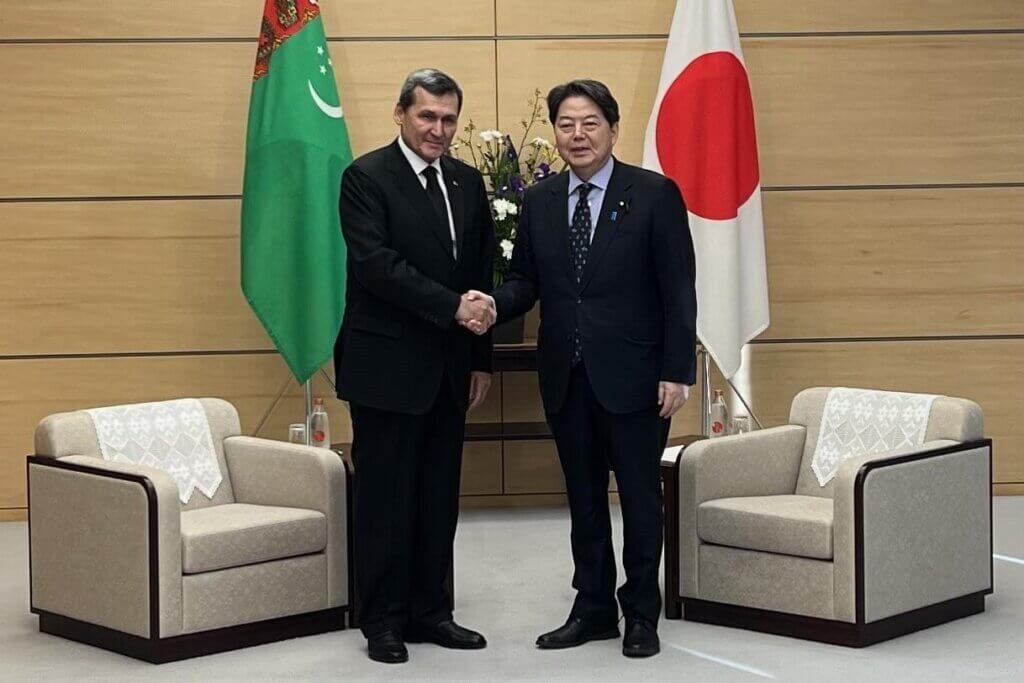
Turkmen Foreign Minister Rashid Meredov led a delegation from Turkmenistan, which visited Japan from January 22nd to 23rd. During the visit, the development of bilateral cooperation and the organization of the first Summit of Heads of State of the Central Asia-Japan Dialogue were discussed. According to information received from the Ministry of Foreign Affairs of Turkmenistan, the diplomats met with Yoshimashi Hayashi, Secretary General of the Japanese Cabinet of Ministers During the visit, they discussed the involvement of Japanese companies in the export of high value-added products, diversification of project financing, study of experience in "green" and hydrogen energy, as well as the creation of modern high-tech industries. According to the Ministry of Foreign Affairs of Turkmenistan, Japanese companies showed great interest in cooperation in infrastructure and energy transition. Meredov also met with Ken Saito, the Minister of Economy, Trade and Industry of Japan. A number of important issues related to cooperation between Central Asia and Japan were discussed. A proposal was made to hold the next Ministerial Dialogue on Energy Economy within the framework of the Dialogue "CA+Japan". The topic of developing a Roadmap on decarbonization, which will be aimed at reducing greenhouse gas emissions and transition to cleaner energy sources, was also touched upon. One of the key topics of discussion was the possibility of introducing the Joint Crediting Mechanism (JCM). This mechanism will allow the countries of Central Asia and Japan to share knowledge, technologies and resources in the field of reducing greenhouse gas emissions and transition to sustainable development. The topic of developing cooperation in the field of e-commerce was also touched upon. The idea is to create an electronic platform to improve trade relations between CA and Japan. This will reduce trade barriers and simplify procedures for importing and exporting goods. Finally, joint work in the field of hydrogen development and transportation technologies was discussed. Hydrogen is one of the promising sources of energy, and its efficient utilization can have a significant impact on addressing climate change. This meeting was an important step in strengthening cooperation between Turkmenistan and Japan in the fields of economy, trade and industry. It opens new perspectives for the development of the energy sector, industry, trade and technology.

EBRD Invested More Than €1.2bn In Central Asian Economies In 2023

The European Bank for Reconstruction and Development (EBRD) says it invested more than €1.2bn ($1.3bn) in projects across Central Asia in 2023 to stimulate the region’s sustainable growth.  Uzbekistan remained the leading recipient of EBRD funding in the region for the fourth year running, attracting more than €700m ($760m). The remaining €518m ($560m) were channeled to support projects in Kazakhstan, Kyrgyzstan, Mongolia, and Tajikistan. In Uzbekistan, the EBRD continued investing in renewable energy power generation and low-carbon technologies. It financed the construction of three greenfield solar power plants with a total installed capacity of nearly 900 MW. The bank provided funds to ACWA Power Wind Karatau to finance the construction of a 100 MW wind power plant in the autonomous republic of Karakalpakstan. It also provided a sovereign loan to modernise 118 pumping stations and improve the sustainability of water supply for irrigation in the densely populated Fergana Valley. Samarkand became the first city in the country to join the EBRD Green Cities programme, and is planning to deploy ecologically friendly electric buses as part of this engagement. In the financial sector, the bank continued working with local financial intermediaries such as SQB, Hamkorbank and Ipak Yuli Bank to support SMEs and promote green lending.  Highlights of the EBRD’s work in Kazakhstan include the launch of the GEFF Kazakhstan II and an investment in a local currency bond issued by the country’s transmission system operator, KEGOC. The funds will help make the country’s electrical grid more sustainable and reliable. The bank’s loan to China Power International Holding and Visor International will be used to build, operate and connect the 100 MW Shokpar wind power plant to the transmission grid. The EBRD’s loan to Kazakhstan’s largest private rolling stock operator, Eastcomtrans, will help expand container-handling capacity at one of the most congested junctions near Almaty and address the issue of bottlenecks along the Trans-Caspian corridor. Last year marked the completion of the street lighting system in Ust-Kamenogorsk (Oskemen), which allowed energy-efficient LED street lights to be installed on 150 streets. In the financial sector, the bank extended a new loan to the country’s leading microlender KMF to support green lending and women’s entrepreneurship. In Kyrgyzstan, the EBRD supported the modernisation of water supply services in the Batken and Jalal-Abad oblasts. The bank signed a number of sovereign projects aimed at modernising key transport and energy infrastructure, which will help improve the country’s connectivity and climate resilience. These projects included loans to upgrade a 30km section of the Issyk-Kul Lake ring road, increase the reliability of the national electricity transmission and distribution grid, and rehabilitate and modernise the Lebedinovskaya hydropower plant. The EBRD also completed the Bishkek landfill project last year, which will provide major environmental benefits for the more than one million people living in the country’s capital. The completion of three infrastructure projects in Tajikistan allowed more than 400,000 people in 13 municipalities across the country to enjoy better access to clean and safe drinking water. Last year the EBRD launched the GEFF Tajikistan II and extended new GEFF loans to Bank...