• KGS/USD = 0.01143 0%
  • KZT/USD = 0.00212 0%
  • TJS/USD = 0.10718 -0.09%
  • UZS/USD = 0.00008 0%
  • TMT/USD = 0.28571 0%
  • KGS/USD = 0.01143 0%
  • KZT/USD = 0.00212 0%
  • TJS/USD = 0.10718 -0.09%
  • UZS/USD = 0.00008 0%
  • TMT/USD = 0.28571 0%
  • KGS/USD = 0.01143 0%
  • KZT/USD = 0.00212 0%
  • TJS/USD = 0.10718 -0.09%
  • UZS/USD = 0.00008 0%
  • TMT/USD = 0.28571 0%
  • KGS/USD = 0.01143 0%
  • KZT/USD = 0.00212 0%
  • TJS/USD = 0.10718 -0.09%
  • UZS/USD = 0.00008 0%
  • TMT/USD = 0.28571 0%
  • KGS/USD = 0.01143 0%
  • KZT/USD = 0.00212 0%
  • TJS/USD = 0.10718 -0.09%
  • UZS/USD = 0.00008 0%
  • TMT/USD = 0.28571 0%
  • KGS/USD = 0.01143 0%
  • KZT/USD = 0.00212 0%
  • TJS/USD = 0.10718 -0.09%
  • UZS/USD = 0.00008 0%
  • TMT/USD = 0.28571 0%
  • KGS/USD = 0.01143 0%
  • KZT/USD = 0.00212 0%
  • TJS/USD = 0.10718 -0.09%
  • UZS/USD = 0.00008 0%
  • TMT/USD = 0.28571 0%
  • KGS/USD = 0.01143 0%
  • KZT/USD = 0.00212 0%
  • TJS/USD = 0.10718 -0.09%
  • UZS/USD = 0.00008 0%
  • TMT/USD = 0.28571 0%

Viewing results 457 - 462 of 961

Ecological Limit: Five Year Countdown to Water Scarcity in Central Asia

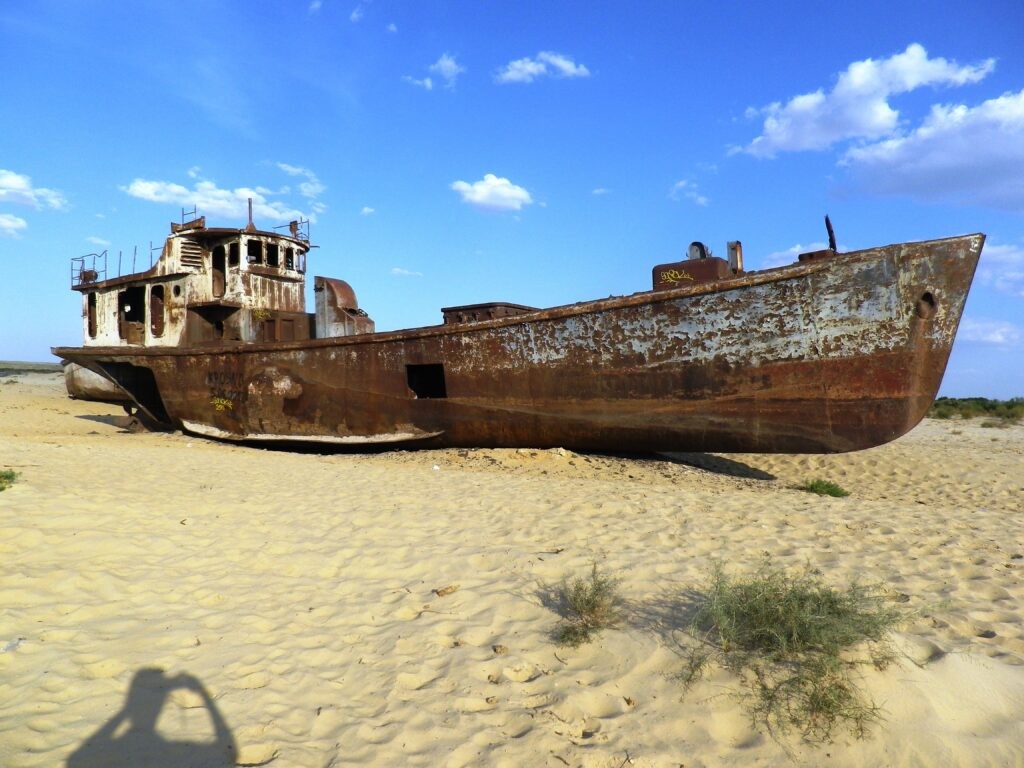
Combating climate change requires collective action by all or a sufficient majority of the world's players supporting global initiatives. Otherwise, it may soon be too late to take any action. To address the issue, the Eurasian Development Bank, the CAREC Think Tank, and the Asian Development Bank organized a two-day forum entitled “The Climate Challenge: Thinking Beyond Borders for Collective Action,” in Almaty, Kazakhstan. Focusing on means of achieving genuine regional cooperation on Asian climate action, the eighth CAREC Think Tank Development Forum was attended by policymakers, experts, and opinion leaders from more than 30 countries. The extensive two-day dialog, consisting of eight sessions, opened with a discussion on the effectiveness of current global initiatives related to climate change: the Paris Agreement, the Global Environment Facility, and the Green Climate Fund. Attention then turned to deepening cooperation among as many stakeholders as possible through multilateral platforms such as the UN Framework Convention on Climate Change. Asia's role in the global fight against climate change, and the difficult balancing act between economic growth and decarbonization efforts were discussed at length. Simply put, the rapid growth of the Asian economy is inevitably accompanied by an increasing consumption of energy, the generation of which leads to increased emissions and pollution. Climate damage due to human impact can be halted and even reversed. However, because this can only be achieved with technological intervention, it poses problems for developing economies unable to afford advanced technologies. Hence, establishing a framework and mechanisms for global technology transfer were key to discussions. Water and finance were also high on the agenda and the subject of a paper presented by Arman Ahunbaev, Head of the Center for Infrastructure and Industrial Research of the Eurasian Development Bank on “Ways to close the investment gap in the drinking water supply and wastewater sector in Central Asia." Ahunbaev reported that 10 million people, or 14% of the population in Central Asia, do not have access to safe drinking water and warned that without intervention, the situation would reach the point of no return in the coming years. To prevent this from happening, he stressed the urgent need for solutions to four problems. The first problem is a twofold increase in the volume of water intake for municipal and domestic needs, based on past figures which showed a growth from 4.2 cubic kilometers in 1994 to 8.6 cubic kilometers in 2020. The second problem is the severe deterioration of water supply infrastructure and treatment equipment, and the third, technological and commercial water losses in distribution networks. The fourth problem is related to the demographic boom and, consequently, the rapid urbanization of Central Asia's population. Cities are expanding and  their infrastructure needs to develop accordingly. According to experts, in 2023, urbanization in Central Asian countries will reach 49%, and by 2050, 61%. By 2030, the urban population will exceed that in rural areas. Ahunbaev noted the need for improvement in financing the water supply and sanitation sector in Central Asia since according to rough...

EBRD to Support Pilot Project for Renewable Hydrogen in Uzbekistan

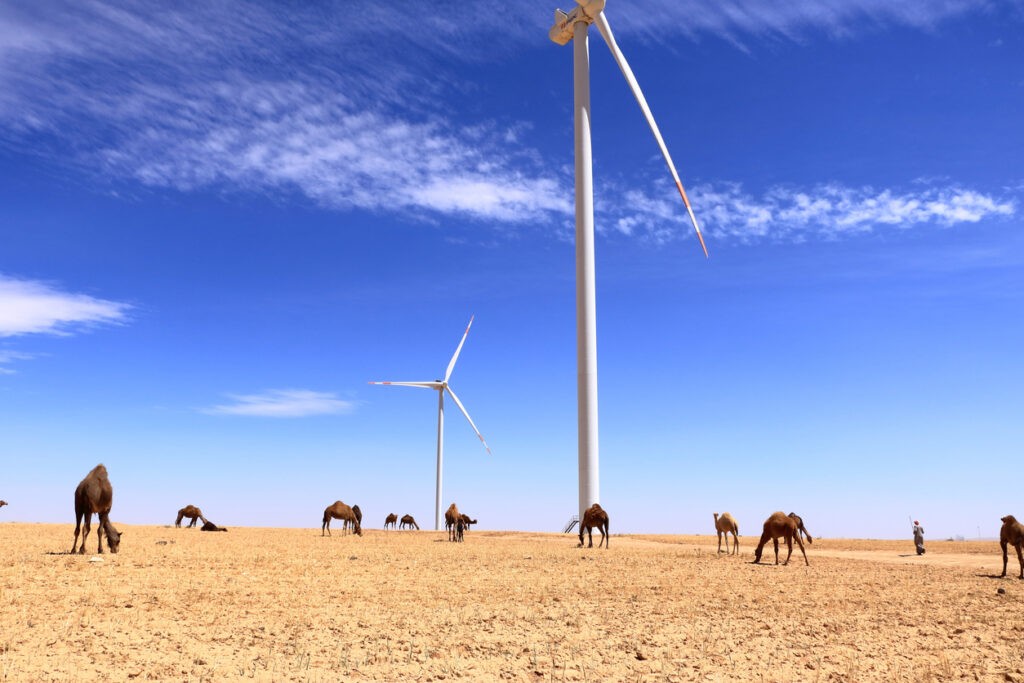
The European Bank for Reconstruction and Development (EBRD) will finance Central Asia's first renewable hydrogen production project in Uzbekistan. The project includes the installation of a 20 MW electrolyzer and constructing a new 52 MW wind farm. The EBRD is providing a $65 million (€58 million) financing package to ACWA Power UKS Green H2, which is developing, designing, constructing, and operating the facility. This company is jointly owned by ACWA Power and Uzkimyosanoat (UKS), a large state-owned chemical holding company. Financing includes a $55 million senior loan from the EBRD and $10 million in concessional financing from Canada through the High Impact Partnership on Climate Change Special Fund (HIPCA). The EBRD also plans to provide an equity bridge loan of up to $5.5 million (€4.9 million) and up to $5.5 million (€4.9 million) for the project. The project, supported by the Japan-EBRD Cooperation Fund, will help replace “grey” hydrogen, derived from natural gas and widely used in producing ammonia fertilizers in Uzbekistan, with renewable hydrogen. The latter is recognized as a critical alternative for decarbonizing the fertilizer sector. The facility is expected to make up to 3,000 tons of hydrogen annually, reducing annual CO2 emissions by 22,000 tons. The Bank also noted that Uzbekistan, the leading recipient of EBRD financing in Central Asia, has already received about €5 billion under 164 projects, most of which support private entrepreneurship. The Times of Central Asia has previously written that the Asian Development Bank (ADB) has announced the launch of a five-year partnership strategy with Uzbekistan from 2024 to 2028. The strategy will support Uzbekistan's reforms in promoting the country's transition to a green economy, supporting private sector development and competitiveness, and stimulating investment in economic capital.

Kazakhstan’s Kapchagay Reservoir Fills Up For First Time In A Decade

Kazakhstan’s Ministry of Water Resources and Irrigation announced on August 26 that the Kapchagay reservoir outside Almaty was completely full for the first time in ten years. Created in 1970 as an artificial lake, 100km long and up to 25km wide in places, the reservoir can hold more than 18 billion cubic meters of water. The reservoir collects water from the Ili River, which originates in China. This spring, the ministry said up to 900 cubic meters of water per second flowed into the reservoir, attributing the increased inflow to the melting of the Tien Shan mountain glaciers and higher than usual rainfall. The reservoir was initially meant to regulate the flow of the Ili River on its way to Kazakhstan’s largest lake, Balkhash. Today, it is used for irrigation, fish farming, and recreation. Located a one-hour drive from Almaty, its beaches are popular with holidaymakers. According to Medet Kerimzhanov, deputy head of the Balkhash-Alakol basin inspectorate, the last time the Kapchagay reservoir was 100% full was in 2014. Today, 750 cubic meters of water per second are released from the reservoir to irrigate fields. Kerimzhanov added that the irrigation season in the region will continue until the end of September. Earlier this month, the Ministry of Water Resources said it was drafting an intergovernmental agreement between Kazakhstan and China on distributing water from transboundary rivers — the Ertis, the Ili, and the Emel. To date, the parties have reached a consensus on several provisions of the future agreement, the ministry said.

CAREC Think Tank Development Forum to Focus on Climate Solutions

The 8th CAREC Think Tank Development Forum (CTTDF) will be held on August 27 and 28 in Almaty. Themed “The Climate Challenge: Thinking Beyond Borders for Collective Action,” the forum aims to address regional climate challenges by fostering collaborations for policy recommendations and joint research. The CAREC Institute, the Eurasian Development Bank, the Asian Development Bank, and other partners will organize the forum, which will bring together policymakers, experts, and leaders from across Asia to advance regional cooperation on climate action. Headquartered in Urumqi in China’s Xinjiang, the CAREC Institute is an intergovernmental organization contributing to the Central Asia Regional Economic Cooperation (CAREC) Program through knowledge generation and capacity building. The Institute is jointly shared and governed by the CAREC's eleven member countries: Afghanistan, Azerbaijan, China, Georgia, Kazakhstan, Kyrgyzstan, Mongolia, Pakistan, Tajikistan, Turkmenistan, and Uzbekistan. The forum participants will engage in meaningful policy discourse to identify solutions for a climate-resilient region, explore joint research opportunities, and facilitate innovative climate studies beyond mainstream agendas. Representatives from international organizations, high-level government officials, esteemed university scholars, and experts from leading think tanks will be key speakers. The Director of the CAREC Institute and the Vice President of the Asian Development Bank will address the opening ceremony. The forum will include a research presentation by Arman Akhunbaev, Eurasian Development Bank’s head of the Center for Infrastructure and Industrial Research, with insights into the financial solutions to close the investment gap in Central Asia's drinking water and sanitation infrastructure. The forum will also feature presentations, panel discussions, case studies, and interactive sessions designed to foster dialogue and develop actionable strategies for climate resilience in the CAREC region.

Who Will Benefit if Kazakhstan Refuses To Build Nuclear Power Plants?

Kazakhstan is facing a growing energy deficit while having large reserves of uranium which would allow the country to develop its nuclear power industry. However, so far, uranium mined in the country is used solely for export, and every year difficulties with supply chains only increase. All these problems can be solved in one elegant way, but this solution is what a part of the Kazakhstani public actively opposes.   Difficulties with production and supplies Kazakhstan ranks second in the world in terms of proven reserves of natural uranium. About 14% of the world's proven reserves are concentrated in the country's subsoil. According to estimates, the country's explored reserves contain more than 700,000 tons of uranium. In 2009, Kazakhstan became the world's largest uranium producer and continues to maintain its leading position in the global market, producing approximately 40% of the world's uranium. In 2021, uranium production in Kazakhstan amounted to 21,800 tons, but by 2023 this had decreased to 21,112 tons. Moreover, due to difficulties related to the availability of sulfuric acid, the national company Kazatomprom reduced production plans for 2024. According to the initial plan, between 25,000 and 25,500 tons were to be produced; now, the plan is to produce 21,000 to 22,500 tons. Kazatomprom has also stated that if limited access to sulfuric acid continues through 2024 and the company fails to reduce the construction backlog at new sites, it could have a negative impact on production plans for 2025. Uranium mining in Kazakhstan is carried out solely by in-situ leaching, the most environmentally safe and lowest-cost method available. The Russia-Ukraine conflict could not help but affect this area of Kazakhstan's exports. This year, it became known that Kazakhstan is working on diversifying its uranium export routes, bypassing Russia. This is stated in the report on implementing the concept of development of Kazakhstan's fuel and energy complex for 2023. As part of this, Kazatomprom is working on an agreement with the Chinese companies CNUS, CNEIC, and CNNC to provide uranium transit services through China. Kazakhstan currently transports uranium products to customers in North America and Europe through the port of St. Petersburg. An alternative way is to use the Trans-Caspian international transportation route, with shipments through the ports of Aktau (Kazakhstan), Alyat (Azerbaijan), and Poti (Georgia).   Nuclear deadlock Obviously, some of the concerns of Kazakhstan's leadership and Kazatomprom regarding the sale of uranium products could be alleviated by developing the country's own nuclear industry, meaning that uranium mined in the country would feed its own nuclear power plants. Talks about the need to build nuclear plants in the country have regularly been raised since the beginning of the 2000s. Kazakhstani nuclear physicists and nuclear specialists, with the persistence of a Don Quixote have periodically rush to attack the windmills of Kazakhstani radio-phobia, which, however, did not arise without reason. The Semipalatinsk Nuclear Test Site (SNTS) and the Chernobyl disaster are two significant elements of this phobia. In the early 1990s, when the SNTP was closed, the...

New Neural Network for Kazakh Study of Snow Leopards

Kazakhstan has launched an innovative project to study and protect snow leopards supported by a new neural navigation network, Yandex Qazaqstan. The network, developed with Kazakh-British Technical University students, scientists from the Institute of Zoology of the Republic of Kazakhstan, and the Snow Leopard Foundation, will significantly accelerate and simplify data analysis from camera traps and other sources, enabling a more effective means of tracking these rare animals' behavior and migration routes. The snow leopard, a symbol of Kazakhstan's mountain ecosystems, is found in regions such as Altai, Zhetysu Alatau, Saur, and Tien Shan. Although  Kazakhstan's leopard population has doubled over the past 30 years, to between 141-183, their existence remains under threat from human activities and climate change, making conservation projects essential. Yandex Qazaqstan will help optimize the monitoring of snow leopards by automatically analyzing images from camera traps and quickly identifying the presence of the animals. As a result, scientists will be able to more accurately and quickly track changes in these rare predators' populations and migration routes. This collaboration between scientists, students, and IT specialists demonstrates Kazakhstan's commitment to protecting its nature and sustainable development and moreover, provide a template for the application of similar technologies in other conservation projects.