• KGS/USD = 0.01144 0%
  • KZT/USD = 0.00215 0%
  • TJS/USD = 0.10691 0.09%
  • UZS/USD = 0.00008 0%
  • TMT/USD = 0.28530 0%
  • KGS/USD = 0.01144 0%
  • KZT/USD = 0.00215 0%
  • TJS/USD = 0.10691 0.09%
  • UZS/USD = 0.00008 0%
  • TMT/USD = 0.28530 0%
  • KGS/USD = 0.01144 0%
  • KZT/USD = 0.00215 0%
  • TJS/USD = 0.10691 0.09%
  • UZS/USD = 0.00008 0%
  • TMT/USD = 0.28530 0%
  • KGS/USD = 0.01144 0%
  • KZT/USD = 0.00215 0%
  • TJS/USD = 0.10691 0.09%
  • UZS/USD = 0.00008 0%
  • TMT/USD = 0.28530 0%
  • KGS/USD = 0.01144 0%
  • KZT/USD = 0.00215 0%
  • TJS/USD = 0.10691 0.09%
  • UZS/USD = 0.00008 0%
  • TMT/USD = 0.28530 0%
  • KGS/USD = 0.01144 0%
  • KZT/USD = 0.00215 0%
  • TJS/USD = 0.10691 0.09%
  • UZS/USD = 0.00008 0%
  • TMT/USD = 0.28530 0%
  • KGS/USD = 0.01144 0%
  • KZT/USD = 0.00215 0%
  • TJS/USD = 0.10691 0.09%
  • UZS/USD = 0.00008 0%
  • TMT/USD = 0.28530 0%
  • KGS/USD = 0.01144 0%
  • KZT/USD = 0.00215 0%
  • TJS/USD = 0.10691 0.09%
  • UZS/USD = 0.00008 0%
  • TMT/USD = 0.28530 0%

Viewing results 499 - 504 of 949

Top Kazakh Businessman Denies Allegations about Greek Island Fire

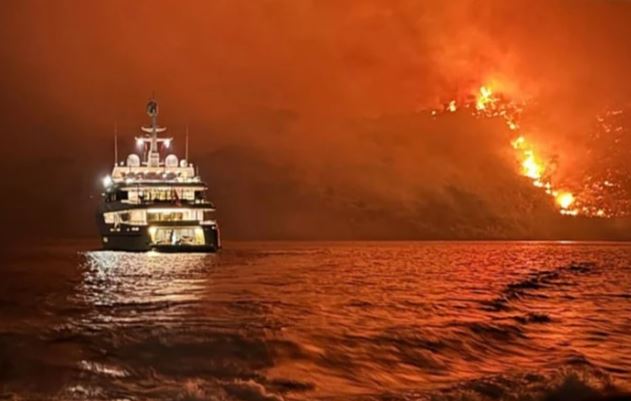
One of Kazakhstan’s wealthiest business executives has denied any wrongdoing in connection with a forest fire that was allegedly caused by fireworks on the Greek tourist island of Hydra. Daniyar Abulgazin, who has shares in multiple Kazakh energy and other companies, said he had rented the luxury boat named Persefoni I that has been linked by Greek prosecutors to the fire on June 21. However, he said he and his group left Greece as previously scheduled on June 22 after speaking with “representatives of the Greek authorities,” who made no claims against them in connection with the fire. Some of his guests had already left Greece on the morning of June 21, according to Abulgazin. “It came as a complete surprise to us to learn of the allegations that followed in the press upon our return, and I categorically deny any wrongdoing,” Abulgazin, who had returned to Kazakhstan, said in a statement that was released by DRD Partnership, a London-based communications firm. Greek prosecutors have charged the captain and 12 crewmembers of the boat with arson and eight Kazakh passengers who were on the vessel face charges of complicity in arson, according to Greek media reports. Several reports said Greek investigators found the remains of firecrackers on a Hydra beach and concluded that passengers from the Persefoni I were on the beach around the time of the fire, which burned an estimated 300 acres. The case has stirred anger in Greece, which is enduring high summer temperatures and a string of forest fires. Some commentators questioned how the Kazakh tourists were able to leave Greece before an investigation of the fire had barely begun. Some Greek media outlets said prosecutors were investigating the initial handling of the matter by Greek authorities. They have also mentioned Abulgazin and the names of some of the other Kazakh passengers on the boat in their reports, posting photos of them on broadcasts and websites. Abulgazin referred to “incorrect and misleading” media reports, expressed regret about the fire and promising to cooperate with the Greek investigation. “Neither I nor my guests performed any actions that could lead to a fire. We strictly followed the fire safety rules established on the yacht. Neither I nor my guests asked the crew of the yacht or other third parties to take any actions that could lead to a fire,” he said. Abulgazin has shares in Qazaq Oil, SinoOil and Gas Energy gas station networks as well as other operations and his worth is estimated at $380 million, according to Forbes Kazakhstan. His wife, Aidan Suleimenova, has interests in fashion companies and shopping centers in Kazakhstan. DRD Partnership, the firm that released Abulgazin’s statement about the fire, says it focuses on “building value for our clients and protecting their reputations at moments of challenge and change.”
Qosh Tepa Canal Threatens Water Balance in Central Asia

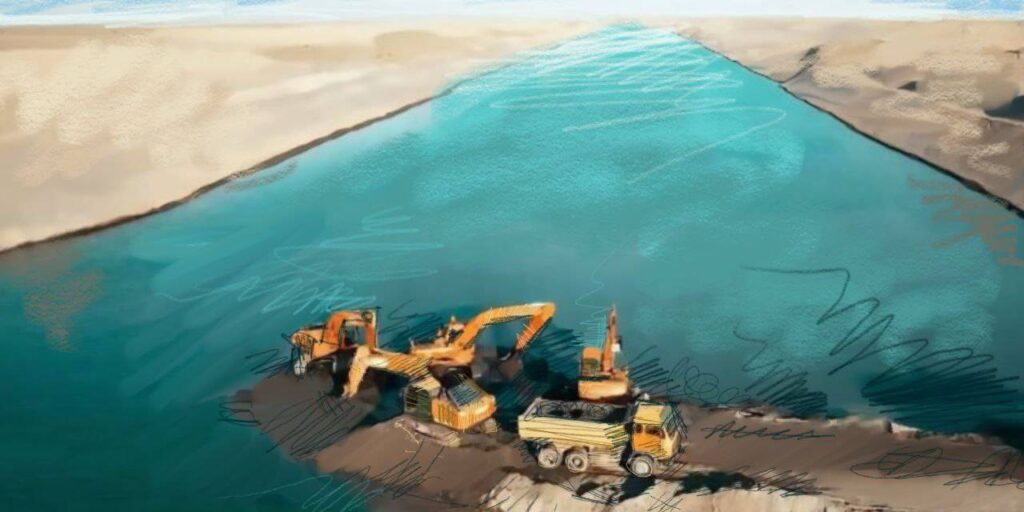
The construction of the Qosh Tepa Canal may threaten Central Asia's water balance and the region must address the issue. The warning, given by Nikolay Podguzov, Chairman of the Board of the Eurasian Development Bank which is involved in projects affecting the region's water balance, was reported  by AKI press. According to experts, the Qosh Tepa Canal, currently under construction in Afghanistan, receives ten cubic kilometers of water per year from general drainage, and also, the Amu Darya river. Marat Imonkulov, Secretary of the Kyrgyz Security Council, said that a reduction of water in the Amu Darya will inevitably lead to an increase in water taken from the Syr Darya river for agriculture and other needs. Some analysts claim that under such a scenario, Central Asia will face a chronic water shortage. Although not one of its members, the EDB, reminded Afghanistan that the construction of the canal is being implemented by the state on its territory and Podguzov stressed, “The states mutually resolve issues related to relations through diplomatic channels. But we have to solve the problem together. I believe that the countries will agree." Analysts seek to resolve the situation by developing digital water accounting, water conservation, and proper treatment of the region's resources. The Qosh Tepa Canal project, conducted by the Taliban and currently underway in northern Afghanistan, is a significant initiative in managing the Amu Darya's water resource but during its first phase, has raised concerns among Central Asian countries. Heeding specialists' forecasts, the President of Uzbekistan, Shavkat Mirziyoyev, said that the construction of the Qosh Tepa Canal will change the water regime and balance in Central Asia.

Children Among Nine Killed in Mudflows in Kyrgyzstan

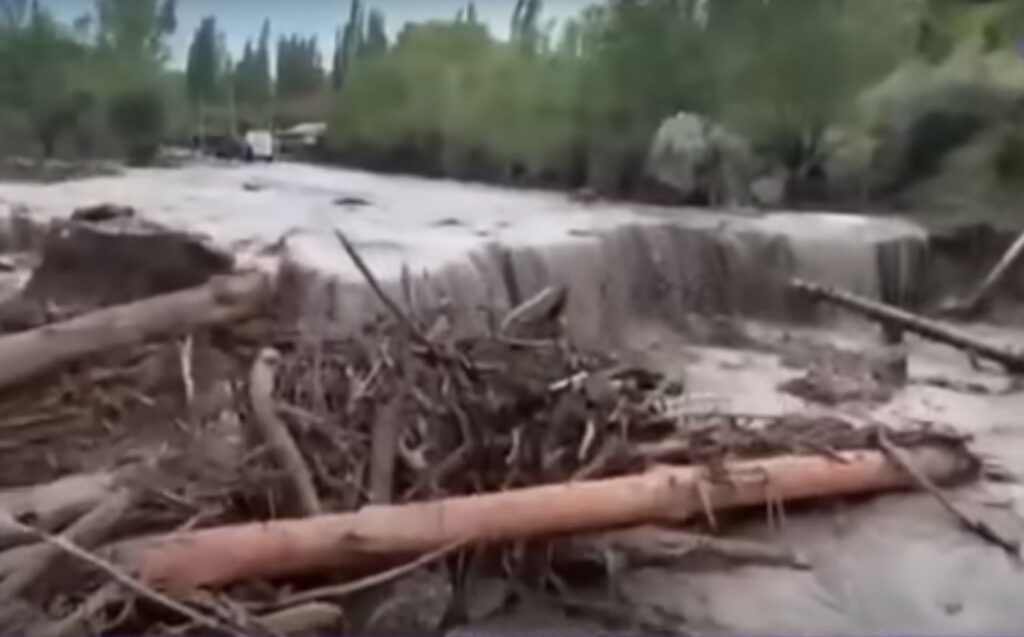
Mudflows caused by heavy rains have killed at least nine people, including four Kazakh children, in an area of southwestern Kyrgyzstan that is popular among tourists for its natural scenery. Search operations were continuing on Sunday. Kyrgyz authorities declared a state of emergency in the Nookat district of the Osh region after the downpours on Friday. Roads, bridges and power lines were damaged and several hundred emergency responders, including police and military personnel, were deployed to help with searches and evacuations. Photos and video posted on Telegram by Kyrgyzstan’s Ministry of Emergency Situations showed rescuers, some in military uniforms, escorting people alongside a fast-flowing river in a ravine. Some carried young children and held onto a rope fixed alongside the ravine wall as they walked. Citing Kyrgyz officials, Kazakhstan’s Ministry of Foreign Affairs said the bodies of four Kazakh children had been found and that its diplomats are helping relatives of the victims. The bodies of the children will be returned to Kazakhstan in “the near future,” the ministry said on Telegram. Akylbek Japarov, chairman of Kyrgyzstan´s Cabinet of Ministers, flew over Nookat district on Sunday to assess the damage and said the government will provide “all-round support” to help those affected, the official Kabar news agency reported. Nookat is popular among trekkers and hikers who enjoy its mountain and forest scenery, particularly in the summer months.

Will Kumtor’s ‘Tails’ Benefit or Harm Kyrgyzstan?

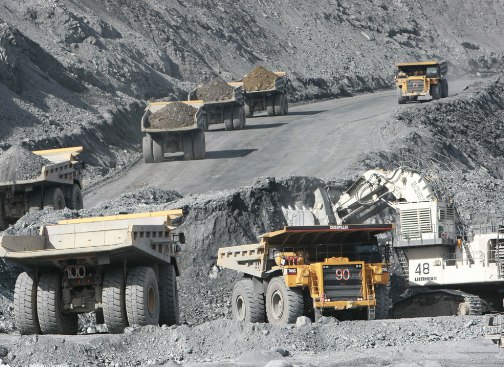
The Finnish company Metso is set to  develop a tailings pond at Kyrgyzstan's Kumtor goldmine but local environmentalists are sceptical, claiming that recycling the waste will bring more damage to the environment than economic benefits. "Tailings" are liquid and solid metal (pulp) remnants of ore processing and according to various estimates, Kumtor's tailings pond contains 70 to 130 tons of gold that could not be mined at the plant.  The remnants of precious metal with harmful waste are mothballed, making secondary mining extremely difficult. The Kyrgyz government however, believes that cooperation with the Finns could provide the state with an annual revenue of some $3.5 billion. Isakbek Torgoev, head of the geo-environmental monitoring laboratory at the Institute of Geomechanics and Subsoil Development of Kyrgyzstan and a candidate of technical sciences, told the Times of Central Asia that the Kumtor tailings pond, grandiose in volume, has over a hundred million tailings. "Throughout the entire phase of the mine -over 30 years - ores were taken from different parts of the Kumtor deposit. At times, ores containing 1.8 grams of gold per ton were dumped in the tailings pond. By comparison, at the Boruu gold mine in Mongolia, that amount of gold is contained in the mined rock, but here it is in the tailings. This is a lot," notes Torgoev. The scientific institute believes that dangerous chemical processes occur in the abandoned ores. "Frankly speaking, I am sceptical about such a development, given that very few successful examples exist worldwide. Especially at Kumtor, with its difficult climatic conditions and frigid winters. Theoretically, the work can be carried out, but practically, we'll see," commented the scientist. According to Torgoev, the price of gold may fall, and because of unprofitability, the Finnish company could refuse to process tailings. Moreover, the reclamation of tailings is a very complicated technological process. In addition to constructing water drains, a layer of a meter thick soil is required to cover them. Otherwise, the waste will go into the rivers and soil, harming the environment. The former owners of Kumtor, the Canadian company Centerra Gold, accumulated about $60 million for the reclamation of the tailings pond after the mine was depleted (tentatively in 2027). However, after the nationalization of the mine, the fate of these funds remains unknown. According to the Ministry of Emergency Situations of Kyrgyzstan, there are 92 burial sites for toxic and radioactive substances in the country. Of these, 23 tailings contain uranium elements, while the rest are buried with radioactive rock residues, heavy metals, and cyanide.

Kazakhstan to Invest $1 Billion in Repairing Water Management Infrastructure

Kazakhstan's minister of national economy, Nurlan Baibazarov, has announced that the country is to repair its water management system following recent severe floods. "The floods that took place in the spring showed the underdeveloped infrastructure of the country's water management system. We have identified 16 projects that require investments of more than 500 billion tenge [over $1 billion]," Baibazarov said. According to the minister, preferential financing will come from from the Saudi Islamic Development Bank. Funds are provided for an extended period at a very low rate, enabling the resolution of long-standing issues in this sector. The renovation of the water management system will include the construction of reservoirs and irrigation canals and the fortification of the technical infrastructure for all services. "First of all, according to the instructions of the head of state, we will carry out a complete renewal of equipment and facilities in the Ministry of Emergency Situations system. In the water sector, we will also equip the Kazvodkhoz system with the necessary equipment," Baibazarov added.

Border Dispute No More: Are Bishkek and Dushanbe Ready to Make Peace?

Kyrgyzstan and Tajikistan have long been restless neighbors from Tashkent and Astana's point of view. In many respects, Kazakhstan and Uzbekistan forced the current rapprochement of the Central Asian republics, as expressed on the outer perimeter in the C5+1 format, where the region strives to put forward a consolidated position. After all, investment does not come to problematic areas. The problem border The main sticking point in relations between Bishkek and Dushanbe stretches for almost a thousand kilometers - the border between the two states - the demarcation of which, following the collapse of the USSR, neither the government of Kyrgyzstan or Tajikistan was concerned about. There were enough problems to deal with: falling living standards, civil war in Tajikistan, and endless revolutions in Kyrgyzstan. To date, the border has still not been fully demarcated, causing problems for residents of both states over access to water, pastures, and roads. Disputed territories accounted for about 30% of the border between the two countries. The first alarm bells sounded back in 2014 - in January and May of that year there were armed incidents on the border between northern Tajikistan's in Sughd Province and Kyrgyzstan's Batken Province. Tajiks and Kyrgyz have lived compactly in this densely populated area for centuries. Tajik villages neighbor Kyrgyz villages, there are exclaves such as Vorukh, and the border can crisscross roads, presenting difficulties for traveling. "In Soviet times, people moved around quietly when the borders were conditional. Residents on both sides had free access to pastures and arable land. There were no problems along the watershed. If lands were given by the republics to each other for some purpose, local authorities knew where and whose land was located. With the collapse of the Union, the whole system ceased to function. And the problems of open unmarked borders became more acute," political observer Negmatullo Mirsaidov explained in a commentary for the BBC Russian Service after the January 2014 clash. Time passed, but the situation did not change, and a new aggravation occurred in the first year of the COVID-19 pandemic. Then, clashes were repeated with depressing regularity, and in 2022 came a military incursion by Tajik soldiers into a Kyrgyz border village with the seizure of administrative buildings. Armed clashes broke out all along the border and Russia intervened, forcing the parties to negotiate. Central Asia then picked up the baton, trying to melt the ice of hostility between the skirmishing neighbors. In early February, Tajik President Emomali Rahmon met with Kyrgyz Foreign Minister, Zheenbek Kulubaev, in Dushanbe. According to the press service of the head of Tajikistan, "Over the past four months, the parties have agreed on the design and working description of about 196 kilometers of the state border and to date have determined about 90% of the line of its passage." Considering that the Tajik-Kyrgyz border is about 980 kilometers long, about 100 kilometers remain to be agreed upon. Before the clash in 2022, more than 300 kilometers of the border were considered disputed....