• KGS/USD = 0.01144 0%
  • KZT/USD = 0.00212 0%
  • TJS/USD = 0.10456 0.19%
  • UZS/USD = 0.00008 0%
  • TMT/USD = 0.28490 0%
  • KGS/USD = 0.01144 0%
  • KZT/USD = 0.00212 0%
  • TJS/USD = 0.10456 0.19%
  • UZS/USD = 0.00008 0%
  • TMT/USD = 0.28490 0%
  • KGS/USD = 0.01144 0%
  • KZT/USD = 0.00212 0%
  • TJS/USD = 0.10456 0.19%
  • UZS/USD = 0.00008 0%
  • TMT/USD = 0.28490 0%
  • KGS/USD = 0.01144 0%
  • KZT/USD = 0.00212 0%
  • TJS/USD = 0.10456 0.19%
  • UZS/USD = 0.00008 0%
  • TMT/USD = 0.28490 0%
  • KGS/USD = 0.01144 0%
  • KZT/USD = 0.00212 0%
  • TJS/USD = 0.10456 0.19%
  • UZS/USD = 0.00008 0%
  • TMT/USD = 0.28490 0%
  • KGS/USD = 0.01144 0%
  • KZT/USD = 0.00212 0%
  • TJS/USD = 0.10456 0.19%
  • UZS/USD = 0.00008 0%
  • TMT/USD = 0.28490 0%
  • KGS/USD = 0.01144 0%
  • KZT/USD = 0.00212 0%
  • TJS/USD = 0.10456 0.19%
  • UZS/USD = 0.00008 0%
  • TMT/USD = 0.28490 0%
  • KGS/USD = 0.01144 0%
  • KZT/USD = 0.00212 0%
  • TJS/USD = 0.10456 0.19%
  • UZS/USD = 0.00008 0%
  • TMT/USD = 0.28490 0%

Viewing results 1675 - 1680 of 3334

Saudi Islamic Development Bank Increasing Its Presence in Central Asia

The Saudi-based Islamic Development Bank (IDB) has been particularly active in Central Asia so far in 2024. The growing IDB role is part of Central Asian region’s foreign policy shift toward the Arab world as financial backers to replace Russia, which is devoting huge attention and resources to its war in Ukraine, and China, which is increasingly reluctant to spend large sums of money in Central Asia after pouring in tens of billions of dollars there during the last 25 years. Some of the Central Asian governments owe China substantial amounts of money that they are unlikely to be able to pay for possibly decades. The Central Asian states have been members of the IDB for many years. Kyrgyzstan was first, joining in 1993, followed by Turkmenistan in 1994, Kazakhstan in 1995, Tajikistan in 1996, and Uzbekistan in 2003. One of the IDB’s three regional offices is in Almaty, Kazakhstan (the other two are in Kuala Lumpur, Malaysia and Rabat, Morocco).  The IDB has been dealing individually with the five Central Asian countries on a wide range of projects and programs in recent months. Energy Resources In February, Tajik Minister of Economic Development and Trade Zavqi Zavqizoda announced a deal was reached for the IDB to provide $250 million to Tajikistan. Zavqizoda said $150 million of that would go toward construction of the Rogun hydropower plant (HPP).  The Rogun HPP was a Soviet-era project. Construction started in 1976 but was discontinued shortly after the Soviet Union collapsed. Tajikistan restarted work on the HPP in 2008. Tajik President Emomali Rahmon has repeatedly said that building the HPP with a planned 3600 MW capacity will make the country energy independent and even allow Tajikistan to bring in extra revenue exporting electricity to neighboring countries.  In its 28 years as an IDB member, Tajikistan had received some $620 million from the IDB, so the $250 million announced in February 2024 represents a significant jump in IDB financial help. Not surprisingly, when IDB President Muhammad Al-Jasser visited Kyrgyzstan in June, Kyrgyz President Sadyr Japarov sought IDB investment in the Kambar-Ata-1 HPP, another decades-old project with a multi-billion-dollar price tag that has barely made any progress in being realized during the 33 years Kyrgyzstan has been independent. Al-Jasser did not commit to IDB financing for the Kyrgyz HPP. However, less than a week after Al-Jasser was in Kyrgyzstan, the IDB was one of several international financial organizations that signed on at a conference in Vienna to be a members of a coordination donors’ committee for the Kambar-Ata-1 projects. At a meeting in Istanbul in February, the IDB reaffirmed its support for the Central Asia-South Asia-1000 (CASA-1000) project that aims to export electricity from HPPs in Kyrgyzstan and Tajikistan to Afghanistan and Pakistan. Kyrgyz Energy Minister Taalaybek Ibrayev met with Al-Jasser in June during the latter’s visit to Kyrgyzstan to discuss funding for Kyrgyzstan’s section of CASA-1000. Not Only Energy In June, the IDB pledged up to $2 billion in funding for improvements to water management...
Facing Pressures, Koytendag Nature Refuge in Turkmenistan Aims for UNESCO Status

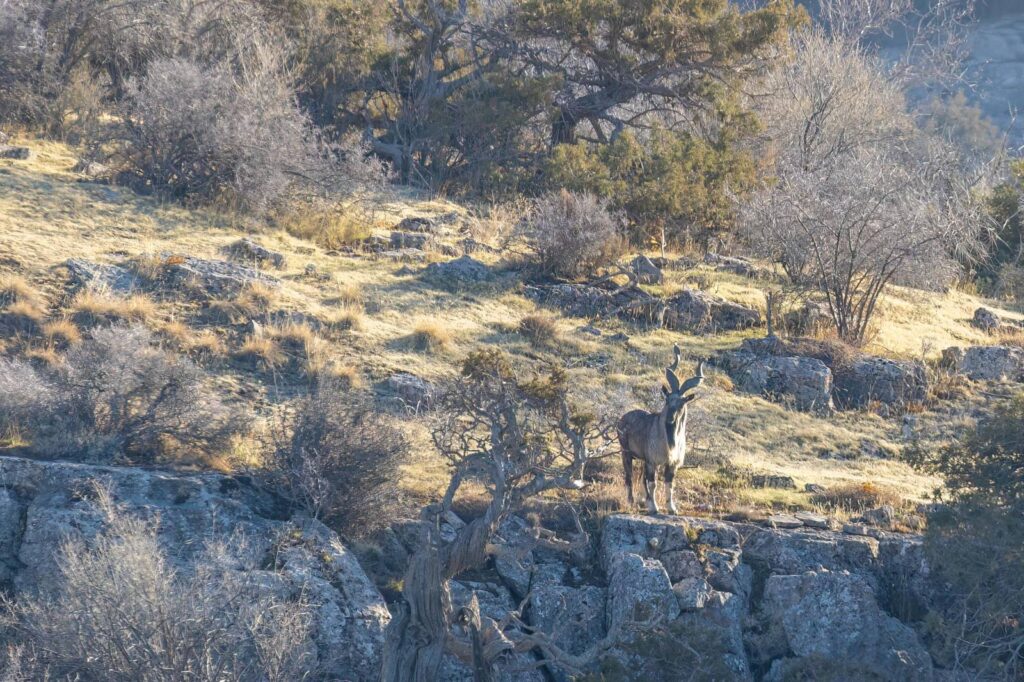
Limestone canyons and grassy plateaus. Vultures, lynx and  markhor, a wild goat known for its corkscrew-style horns. Pistachio trees and juniper forests. The fossilized footprints of dinosaurs and a cave that runs three kilometers into the ground.  The Koytendag State Nature Reserve and surrounding areas in eastern Turkmenistan are a stunning refuge of biodiversity next to Uzbekistan and near Afghanistan. The ecosystem includes river valley plains as well as Ayrybaba, Turkmenistan’s highest mountain at 3,137 meters. Some 50,000 people live in the area. Conservationists are assessing whether the region, which faces pressures such as agricultural encroachment, illegal hunting and unregulated tourism, can become a UNESCO natural world heritage site. [caption id="attachment_20918" align="aligncenter" width="551"] Researchers at the mouth of Koytendag’s Kaptarkhana cave (Image: CLLC)[/caption] There are efforts to reframe the bid for UNESCO status as a “transnational nomination” that pairs Koytendag with Uzbekistan’s adjoining Surkhan State Nature Reserve and could reduce barriers to the movement of wildlife between the two areas. The Koytendag reserve encompasses about 27,000 hectares and the total area of the proposed heritage space in Turkmenistan is 122,000 hectares, according to UNESCO. The U.N. agency says Koytendag is somewhat similar to other mountainous reserves in Central Asia - Chatkal in Uzbekistan, Aksu-Dzhabagly in Kazakhstan and Sary-Chelek in Kyrgyzstan – “but unlike them has a number of highly distinctive geological features.” Turkmenistan’s “system of protected areas,” which includes mountain, desert and marine ecosystems, covers 4.38% of the country, or just over 2,150,000 hectares, the Ministry of Environmental Protection said. Turkmen officials have been working with international conservation groups to protect and restore biodiversity. Conservation X Labs, or CXL, has outfitted some Turkmen rangers with new field uniforms, including those at Koytendag reserve, according to Tatjana Rosen, director of Central Asia Programs for the U.S.-based group.  [caption id="attachment_20920" align="aligncenter" width="533"] Panoramic view of the Koytendag reserve (Image: CLLC)[/caption] Rosen also said CXL and another group, the Center for Large Landscape Conservation, hired an international expert in SMART conservation technology and bought rugged Blackview phones where the SMART software is downloaded. Koytendag rangers have the devices and can use the technology to collect, analyze and report data from the field. Integrating the technology at the national level is ongoing.     Another international donor active at Koytendag is the Critical Ecosystem Partnership Fund, which has funded the conservation of pistachio orchards, the improvement of water supply, the education of local communities about the environment and other projects.   Last year, national and international conservationists conducted a weeklong field mission in Koytendag, surveying flora and fauna and also talking to local communities. At one point, the team chatted with shepherds tending their flocks about sustainable use of pastures and other employment options.    “Overall, it was noted that jobs are scarce in the villages and the demand for shepherding continues to increase,” the Center for Large Landscape Conservation said in a report on the trip.  A meeting of conservationists followed soon after in Ashgabat, Turkmenistan’s capital.  Speleologists have been interested in Koytendag's elaborate cave...

The Rules of the Steppe: Countdown to the 2024 World Nomad Games

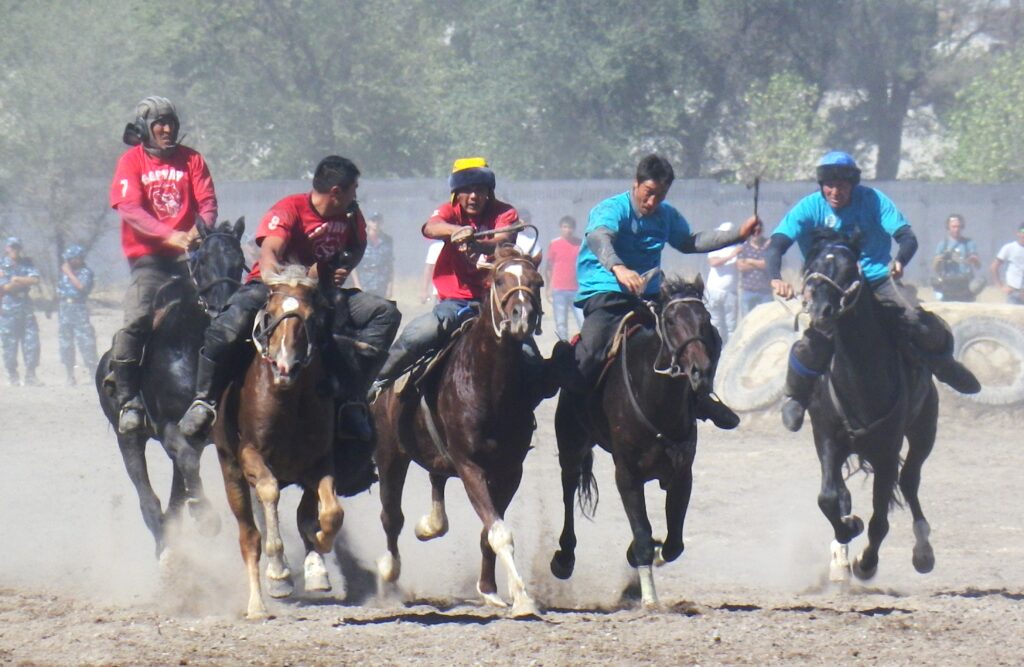
The countdown to the 2024 World Nomad Games (WNG) in Astana, Kazakhstan, which will take place between September 8-13, has begun. Now in its fifth incarnation, the upcoming WNG will host an estimated 3,000 athletes - including nomadic and non-nomadic participants (such as American cowboys) - from over 100 nations. The event will showcase sports, science, and culture at venues comprising the Alau Ice Palace, the Astana Arena, the Ushkempirov Martial Arts Palace (named after the Kazakhstani Greco-Roman Olympian wrestler Zhaksylyk Ushkempirov), the Qazaqstan Athletic Sports Complex, the Duman Complex, and the Kazanat Hippodrome. Beside the hippodrome’s equestrian sports complex, the Ethno-aul, or the “Nomadic Universe,” is where visitors can immerse themselves in the many nomadic yurt traditions through classes, entertainment, and cultural programs. The first official WNG began in the resort town of Cholpon-Ata in the Kyrgyz Republic in 2012. At that time, almost 600 athletes from 19 countries took part in ten sporting categories. Since then - with the second and third WNG also in Cholpon-Ata in 2016 and 2018 - and the fourth in the town of İznik in northwestern Turkey in 2022, the number of games and participants has grown exponentially. In 2016, 1,200 athletes from 62 countries took part in 26 sporting categories. In 2018, the numbers increased to 2,000 athletes from 82 countries in 37 sports. In 2022, 3,000 athletes from 102 countries took part in a limited number of games (13) held over a shorter timeframe due to restrictions enforced by the COVID-19 pandemic. September is a significant calendar month for the WNG due to the traditional nomadic migration between seasonal camps in preparation for winter. To the uninitiated, and in particular, newcomer spectators from the West, the WNG is an action-packed alternative to more conventional and established international sports. Earlier this year, UK package tours for the 2024 WNG sold out. There is a Game of Thrones fantasy element to some of the scheduled events. The venerable warrior allure of selected games that include birds of prey, dogs, horses, wrestling, archery, and agility contests, are rooted in the uncompromising landscape from which the games were born. The WNG is fairly new to the international stage, but the games themselves are not. Abiding by the rules set by the Eurasian Steppe, athletic events are often vigorous and compellingly rugged. The vast, grassy plains with their minimal natural resources are where the nomadic inhabitants learned to sustain their way of life in work and play. Thus, the WNG has been extracted, maintained, and perfected by the ancient rituals of age-old battles and challenging recreation. [caption id="attachment_20496" align="alignnone" width="1979"] Kok-Boru, 2018 World Nomad Games Image Source: Helen Owl[/caption] Horses are a vital extension of Central Asian human resourcefulness. Among the sporting category highlights, the popular Kok-Boru (also known as Buzkashi and Ulak Tyrtysh in Kyrgyz) procured from a battle training custom, will take center stage. Mere balls fade in comparison to the headless goat carcass that the equestrian participants must capture and then fling into the...

Tigers to Return to Kazakhstan

The Ministry of Ecology of Kazakhstan and the World Wide Fund for Nature (WWF International) are set to reintroduce tigers to the republic by settling the animals in a new reserve. Following an agreement signed by the two parties in mid-July, the Ministry of Ecology stated: "This memorandum is a continuation of successful and fruitful cooperation, which has already led to significant achievements in the restoration of biodiversity and infrastructure of the Ile-Balkhash Nature Reserve. The tiger's return to Kazakhstan is an ecologically important project and a symbol of our efforts to restore the natural heritage." The project has been many years in the making. In 2021, President Kassym-Jomart Tokayev discussed reintroducing tigers to Kazakhstan with Russian President Vladimir Putin. Referencing the fact that the last Turanian tigers were spotted in Kazakhstan in the 1930s, he explained: "These are steppe tigers. In ancient times, they were sabre-toothed, so now we are developing an international project to restore the population of these tigers." The long-awaited tigers will arrive this autumn and as reported by the Ministry of Ecology, two tigers, a male and a female, will be delivered from the Netherlands at the expense of the Dutch side in September. In addition to these animals, in 2023, environmentalists announced plans to release a group of Amur tigers from Russia within five years, following an agreement signed by Russia and Kazakhstan at the Eastern Economic Forum (EEF) in 2022. It was assumed that the first generation of the population would consist of Amur tigers, including those from Primorye. Turanian, otherwise known as Transcaucasian tigers, which used to live in Central Asia, northern Iran, and the Caucasus, are genetically close to Amur tigers but slightly smaller. The intention to recreate the tiger population in the country was first declared at an international forum dedicated to preserving tigers in 2010.  Kazakhstan announced its readiness to embrace the initiative and since then, has been rigorous in its preparations. In September 2017, a memorandum was signed between the World Wildlife Fund (WWF) and the government of Kazakhstan on implementing the program  and in 2018, the Ile-Balkhash State Nature Reserve was established, where work to restore the ecosystem is in full swing. The tiger reintroduction program is planned to span over 35 years and comprises three phases: habitat preparation, predator release, and monitoring the growth of the tiger population. In the Ile-Balkhash reserve, boundaries have been established, communication systems have been set up, and comprehensive territory protection measures have been implemented. "The reserve territory is a natural complex that includes a variety of natural ecosystems from semi-desert, floodplain, and saxaul forests to wetlands. Such a favorable geographical location and rich forage create favorable conditions for the breeding of wild animals and a large number of birds. Biodiversity of the reserve includes about 40 species of mammals, 284 species of birds, and more than 420 species of plants, many of which are included in the Red Book of Kazakhstan," the Ministry of Ecology explained. Since 2019, the reintroduction...

Kazakhstan to Increase Transit of Russian, Turkmen, and Uzbek Gas in 2024

At a government meeting on July 16, Kazakhstan's Minister of Energy, Almasadam Satkaliyev, reported using the country’s natural gas transit potential. The transit transportation of Russian natural gas to Uzbekistan was launched in October 2023, and 1.28 billion cubic meters were transported last year. Kazakhstan plans to increase the transit to 3.8 billion cubic meters, with an additional increase to 11 billion cubic meters annually. Turkmen and Uzbek natural gas transit to China has also shown steady growth. This year, Kazakhstan plans to increase this transit to 37.1 billion cubic meters (+1.5 billion cubic meters compared to last year). The minister added that the issue of increasing the transit of Russian natural gas to Kyrgyzstan is currently being discussed. The energy minister also reported that Kazakhstan plans to increase natural gas production by 2.3% compared to 2023 to 60.5 billion cubic meters this year. Most of the country’s natural gas is produced by three large fields — Karachaganak, Tengiz, and Kashagan. Marketable gas production will remain at last year's 29.8 billion cubic meters.

Kazakhstan Reports Steady Economic Growth in First Half of 2024

On July 15, the Ministry of the National Economy of Kazakhstan announced the result of the country’s economic development for the first half of 2024. In the period January-June, the gross domestic product (GDP) increased by 3.3%, compared to 3.2% in the same period last year. The production of goods rose by 3.6%, and the services sector grew by 3.3%. Compared to last year, the economic growth rate slowed in H1 of 2024. This was caused by the economic impact of extreme flooding during the spring, which had a limiting effect on the development of most sectors. The floods resulted in reductions in trade, transport and logistics in ten regions. Oil production also decreased by 1.6%. In the first half of this year, industrial production was one of the main engines of economic growth, the volume of which increased by 2.8%. There was steady growth in multiple sectors of industrial production. Mechanical engineering grew by 9.4%, metallurgy by 8.3%, the chemicals industry by 5.3%, pharmaceuticals by 14.8%, and the furniture industry by 28.3%. The volume of construction work also increased by 8.6%. In January-June, 4.6 million square meters of housing in new apartment complexes were commissioned, 5.9% more than in the same period last year. Agricultural production increased 3.4% in January-June, and transportation and warehousing services grew 7.3%. Investments in non-resource sectors of the economy were also on the rise. Fixed capital investment increased in the manufacturing industry (by 9.4%), information and communications (2.4-fold), scientific and technical activities (58%), transport (33.7%), education (24.1%), financial operations (22.1%), and real estate transactions (4.5%). In June, annual inflation fell to 8.4% compared to 9.5% in January. In the period January-May, Kazakhstan’s foreign trade turnover amounted to $55.3 billion. Exports grew by 1.8% to $32.5 billion, including exports of processed goods, which increased by 0.8% to $10.5 billion. Imports amounted to $22.9 billion, down 7.2%, meaning the positive trade balance was $9.6 billion, an increase of $2.3 billion or 32.4% year-on-year. Since the beginning of the year, Kazakhstan’s international reserves have also increased by $5.4 billion and exceeded $101.3 billion as of July 1. This includes the assets of the National Fund, which increased by $1.4 billion to a total of $61.4 billion. The gold and foreign currency reserves of the National Bank also increased by $4 billion to $39.9 billion.