• KGS/USD = 0.01144 0%
  • KZT/USD = 0.00212 0%
  • TJS/USD = 0.10456 0%
  • UZS/USD = 0.00008 0%
  • TMT/USD = 0.28490 0%
  • KGS/USD = 0.01144 0%
  • KZT/USD = 0.00212 0%
  • TJS/USD = 0.10456 0%
  • UZS/USD = 0.00008 0%
  • TMT/USD = 0.28490 0%
  • KGS/USD = 0.01144 0%
  • KZT/USD = 0.00212 0%
  • TJS/USD = 0.10456 0%
  • UZS/USD = 0.00008 0%
  • TMT/USD = 0.28490 0%
  • KGS/USD = 0.01144 0%
  • KZT/USD = 0.00212 0%
  • TJS/USD = 0.10456 0%
  • UZS/USD = 0.00008 0%
  • TMT/USD = 0.28490 0%
  • KGS/USD = 0.01144 0%
  • KZT/USD = 0.00212 0%
  • TJS/USD = 0.10456 0%
  • UZS/USD = 0.00008 0%
  • TMT/USD = 0.28490 0%
  • KGS/USD = 0.01144 0%
  • KZT/USD = 0.00212 0%
  • TJS/USD = 0.10456 0%
  • UZS/USD = 0.00008 0%
  • TMT/USD = 0.28490 0%
  • KGS/USD = 0.01144 0%
  • KZT/USD = 0.00212 0%
  • TJS/USD = 0.10456 0%
  • UZS/USD = 0.00008 0%
  • TMT/USD = 0.28490 0%
  • KGS/USD = 0.01144 0%
  • KZT/USD = 0.00212 0%
  • TJS/USD = 0.10456 0%
  • UZS/USD = 0.00008 0%
  • TMT/USD = 0.28490 0%

Viewing results 1723 - 1728 of 3334

Water in Kazakhstan’s North Aral Sea Rises by Over a Billion Cubic Meters

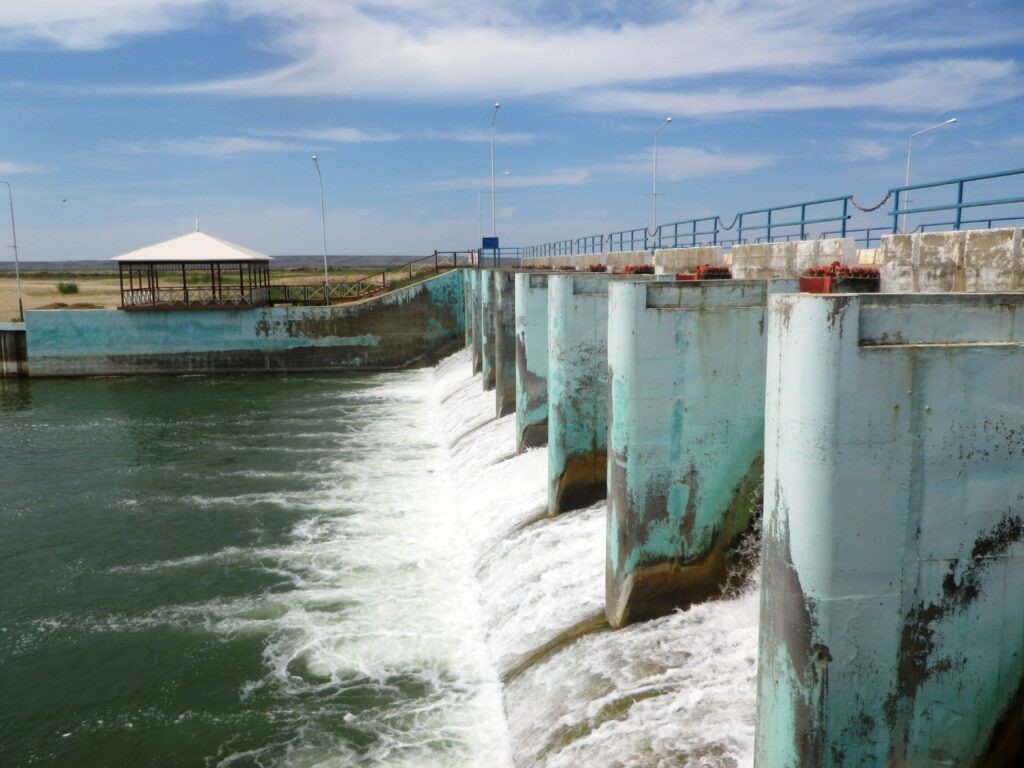
On June 24, the Kazakh Ministry of Water Resources and Irrigation announced that since the beginning of the year, 1.1 billion cubic meters of water have flowed into the North Aral Sea in Kazakhstan, raising the volume to 21.4 billion cubic meters. The North Aral Sea is the portion of the former Aral Sea fed by the Syr Darya River. It split from the South Aral Sea in 1987–‘88 when water levels dropped as a result of water being diverted from the river for agricultural use. At the recent 86th meeting of the Interstate Coordination Water Commission, which includes Kazakhstan, Kyrgyzstan, Tajikistan, Turkmenistan, and Uzbekistan, it was agreed that during this year’s irrigation season, 997 million cubic meters of water would be fed into the North Aral Sea at a rate of at least 30 cubic meters per second. Now, 50 cubic meters of water per second enters the sea, compared to just six cubic meters per second last year. In the 1990s, a dam was constructed to prevent the inflow of water from the North to the South Aral. Rebuilt in 2005, the Kok-Aral Dam enabled water levels to rise in the North Aral Sea. “From the moment the dam was put into operation until today, 46.6 billion cubic meters of water have flowed from the Syr Darya River into the North Aral Sea,” said Moldir Abdualieva, official representative of the Kazakh Ministry of Water Resources and Irrigation. “And over the past 7 years, 13.3 billion cubic meters of water have entered the sea. In recent years, the volume of water in the North Aral had been declining, but since the beginning of 2024 it has begun to grow again and today has reached 21.4 billion cubic meters.” According to the ministry, 75% of the flow of the Syr Darya River comes from Kyrgyzstan, 20% from Uzbekistan, and 5% from Kazakhstan.    
Central Asian Leaders Offer Support, Condolences to Putin After Dagestan Attack

Several leaders in Central Asia have spoken by telephone with Russian President Vladimir Putin and expressed their condolences after attacks by alleged Islamic militants in the Russian area of Dagestan killed about 20 people.  The quick expressions of support on Monday reflect longstanding security ties between Russia and Central Asian countries, as well as growing concerns about extremist attacks in the region, particularly following the March 22 assault on the Crocus City concert hall in the Moscow area that killed more than 140 people. The violence in Russia on Sunday happened in two cities in a mostly Muslim region of the North Caucasus and targeted police and places of worship.  Uzbek President Shavkat Mirziyoyev said in his conversation with Putin that Uzbekistan was ready “to continue active cooperation between the relevant structures in the fight against common threats in the field of security,” according to a statement by Mirziyoyev. The two leaders also discussed implementation of agreements reached during a visit by Putin to Uzbekistan on May 26-28.  Kazakh President Kassym-Jomart Tokayev made similar remarks in a call with Putin, saying Kazakhstan “condemns any assassination and evil attempt on the lives of civilians and regards it as a great threat to international and regional security,” Tokayev’s office reported. It said the two presidents talked about strengthening their “strategic partnership” and discussed the agenda of the Shanghai Cooperation Organization summit, to be held in the Kazakh capital of Astana on July 3-4.  Tajikistan’s leader Emomali Rahmon sent a message expressing “a feeling of deep sadness” and pledges of collaboration on security issues to Putin, saying his country had been fighting terrorism for decades. “Tajikistan, which has been fighting against all forms of terrorism for more than 30 years, strongly condemns this inhuman act of violence in Dagestan and advocates active cooperation in the fight against terrorism,” Rahmon said.  Kyrgyzstan’s leader, Sadyr Japarov, who left Bishkek on Monday on an official trip to Belgium, also expressed solidarity with Russia.  The Islamic State group claimed responsibility for the March 22 attack in suburban Moscow and several Tajik suspects were arrested, leading to some harassment and increased scrutiny of many Central Asian migrants who travel to Russia in hopes of finding work. The situation fueled diplomatic tension between Russia and some Central Asian countries, though their leaders have worked to stabilize relations.  Putin blamed battlefield adversary Ukraine for the March 22 attack, but he didn’t offer evidence and Kyiv denied the allegation.

Prominent Political Figure Akbarsho Iskandarov Detained in Tajikistan

The former Chairman of the Supreme Soviet of Tajikistan, Akbarsho Iskandarov, has been detained in Dushanbe. During the wave of conflicts in the early 1990s, he took over as the Chairman of Parliament and served as Tajikistan's acting president. In recent years, he worked at the Institute of Philosophy, Political Science, and Law of the Academy of Sciences. Prior to this, for many years he served as Ambassador Extraordinary and Plenipotentiary of Tajikistan to Turkmenistan, Kazakhstan, and Mongolia. The General Prosecutor's Office summoned Akbarsho Iskandarov for questioning on June 13 and 14, following which they did not release him. The reason he was interviewed and the grounds on which he has been detained are unknown. "Investigators of the General Prosecutor's Office questioned about 50 people during these days and released them on their recognizance, while Akbarsho Iskandarov was not released," a source stated. Officials and relatives of Akbarsho Iskandarov have refused to comment. Iskandarov was detained after MP Saidjafar Usmonzoda and former Foreign Minister Hamrokhon Zarifi were also held in custody. It is not known whether these detentions are related.

Border Dispute No More: Are Bishkek and Dushanbe Ready to Make Peace?

Kyrgyzstan and Tajikistan have long been restless neighbors from Tashkent and Astana's point of view. In many respects, Kazakhstan and Uzbekistan forced the current rapprochement of the Central Asian republics, as expressed on the outer perimeter in the C5+1 format, where the region strives to put forward a consolidated position. After all, investment does not come to problematic areas. The problem border The main sticking point in relations between Bishkek and Dushanbe stretches for almost a thousand kilometers - the border between the two states - the demarcation of which, following the collapse of the USSR, neither the government of Kyrgyzstan or Tajikistan was concerned about. There were enough problems to deal with: falling living standards, civil war in Tajikistan, and endless revolutions in Kyrgyzstan. To date, the border has still not been fully demarcated, causing problems for residents of both states over access to water, pastures, and roads. Disputed territories accounted for about 30% of the border between the two countries. The first alarm bells sounded back in 2014 - in January and May of that year there were armed incidents on the border between northern Tajikistan's in Sughd Province and Kyrgyzstan's Batken Province. Tajiks and Kyrgyz have lived compactly in this densely populated area for centuries. Tajik villages neighbor Kyrgyz villages, there are exclaves such as Vorukh, and the border can crisscross roads, presenting difficulties for traveling. "In Soviet times, people moved around quietly when the borders were conditional. Residents on both sides had free access to pastures and arable land. There were no problems along the watershed. If lands were given by the republics to each other for some purpose, local authorities knew where and whose land was located. With the collapse of the Union, the whole system ceased to function. And the problems of open unmarked borders became more acute," political observer Negmatullo Mirsaidov explained in a commentary for the BBC Russian Service after the January 2014 clash. Time passed, but the situation did not change, and a new aggravation occurred in the first year of the COVID-19 pandemic. Then, clashes were repeated with depressing regularity, and in 2022 came a military incursion by Tajik soldiers into a Kyrgyz border village with the seizure of administrative buildings. Armed clashes broke out all along the border and Russia intervened, forcing the parties to negotiate. Central Asia then picked up the baton, trying to melt the ice of hostility between the skirmishing neighbors. In early February, Tajik President Emomali Rahmon met with Kyrgyz Foreign Minister, Zheenbek Kulubaev, in Dushanbe. According to the press service of the head of Tajikistan, "Over the past four months, the parties have agreed on the design and working description of about 196 kilometers of the state border and to date have determined about 90% of the line of its passage." Considering that the Tajik-Kyrgyz border is about 980 kilometers long, about 100 kilometers remain to be agreed upon. Before the clash in 2022, more than 300 kilometers of the border were considered disputed....

Firefighters Evacuate People from Burning High-Rise in Astana

A large fire broke out at a 26-storey building in Kazakhstan’s capital on Saturday, sending dense clouds of smoke billowing across the city. Firefighters evacuated people, including a three-month-old baby, from the Rixos Khan Shatyr Residences in Astana, the Ministry of Emergency Situations said. It posted photographs and video of firefighters escorting people into the street and using a crane and hose to extinguish the flames. Much of the blaze appeared to be on part of the building’s outer covering material. Built by Turkish company Sembol Construction, the building is on Turan Avenue and near the Khan Shatyr shopping and entertainment center, which has a distinctive cone-like structure. “Fully equipped apartments and high-level finishes, full range of services and infrastructure, as well as comfortable and spacious offices will be a hallmark of the project,” Sembol Construction said when the building project was underway. Eight people, including one child, were evacuated from the building. According to the official representative of the Ministry of Emergency Situations of the Republic of Kazakhstan Dinara Nurgalieva, there was no information about the severely injured. A firefighting headquarters has been set up at the scene, with firefighters continuing to extinguish not only the cladding of the building, but also working inside the complex. The causes of the fire have not yet been reported, and specialists continue to work at the scene.

Aidos Sadykov Shooting: First Suspect Detained by Kazakhstan Authorities

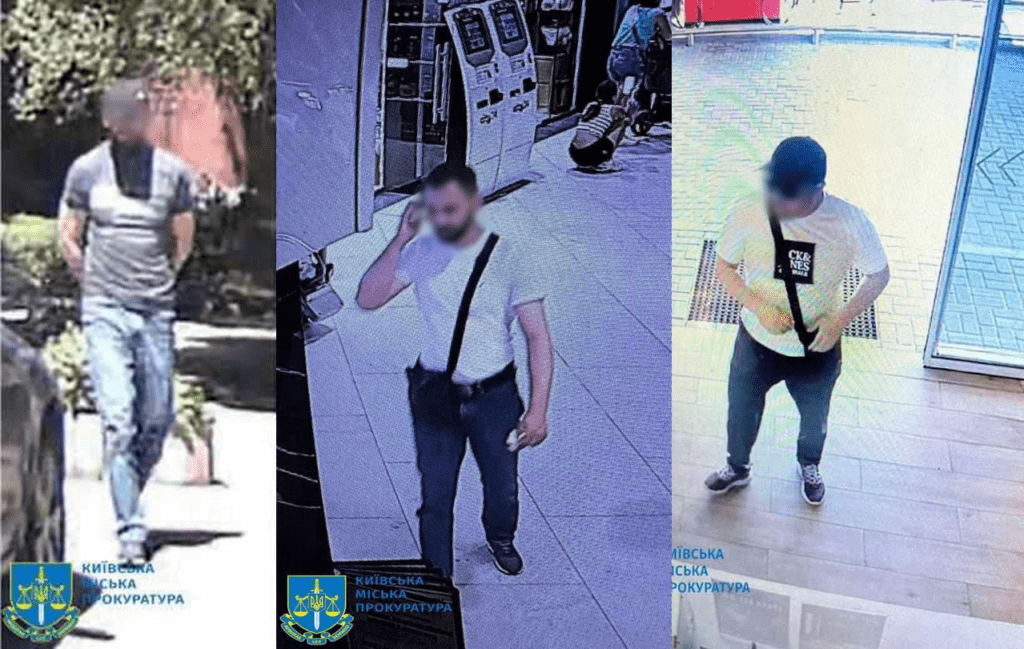
Yesterday, TCA reported that two suspects had been identified by the Ukrainian authorities just three days after after the shooting of Aidos Sadykov, a Kyiv based political blogger. Both are Kazakhstan citizens, 33-year-old Meiram Karataev and 36-year-old Altay Zhakanbaev, whose names have been corroborated by the Prosecutor General of Ukraine’s website. Immediately following the attack, President Tokayev of Kazakhstan said that “the official bodies of the Republic of Kazakhstan are ready to join the investigation.” According to the Kazakhstan Office of the General Prosecutor, on June 21, Zhakanbaev independently turned himself in to the Ministry of Internal Affairs, where he was questioned on the circumstances of the case. On the same day, he was detained on suspicion of involvement in the crime against Aidos Sadykov. Sadykov and his wife, Natalya Sadykova left Kazakhstan in 2014 following allegations of slander by a Kazakh MP, a charge no longer considered a criminal offense as of 2020. Since 2014, they have resided in Kyiv, where they have received refugee status. From Kyiv, the couple host the YouTube channel @base-kazakh, which, according to their description, “covers events in Kazakhstan and the world and does not depend on the authorities, oligarchs and grants”. Sadykov has criticized the Kazakh authorities in the regional press since 2000 and the YouTube channel has been consistently critical of Kazakhstan’s government, starting with President Nazarbayev’s term and continuing under the new President, Kassym-Jomart Tokayev. Since the war broke out in Ukraine, Sadykov and his wife have claimed that Kazakhstan’s leadership is colluding with the Kremlin. The apparent assassination attempt of Sadykov has raised questions about the motive. Kazakhstan parliamentary deputy, Ermurat Bapi has suggested that the assassination attempt was due to “third forces” that want to create a “quarrel between Kazakhstan and some countries”. Sadykova has accused President Tokayev of ordering the assassination. The detainment of the first suspect by Kazakhstan authorities is a positive development in determining the actual motive behind the attack.