• KGS/USD = 0.01144 0%
  • KZT/USD = 0.00214 0%
  • TJS/USD = 0.10508 0.48%
  • UZS/USD = 0.00008 0%
  • TMT/USD = 0.28571 0%
  • KGS/USD = 0.01144 0%
  • KZT/USD = 0.00214 0%
  • TJS/USD = 0.10508 0.48%
  • UZS/USD = 0.00008 0%
  • TMT/USD = 0.28571 0%
  • KGS/USD = 0.01144 0%
  • KZT/USD = 0.00214 0%
  • TJS/USD = 0.10508 0.48%
  • UZS/USD = 0.00008 0%
  • TMT/USD = 0.28571 0%
  • KGS/USD = 0.01144 0%
  • KZT/USD = 0.00214 0%
  • TJS/USD = 0.10508 0.48%
  • UZS/USD = 0.00008 0%
  • TMT/USD = 0.28571 0%
  • KGS/USD = 0.01144 0%
  • KZT/USD = 0.00214 0%
  • TJS/USD = 0.10508 0.48%
  • UZS/USD = 0.00008 0%
  • TMT/USD = 0.28571 0%
  • KGS/USD = 0.01144 0%
  • KZT/USD = 0.00214 0%
  • TJS/USD = 0.10508 0.48%
  • UZS/USD = 0.00008 0%
  • TMT/USD = 0.28571 0%
  • KGS/USD = 0.01144 0%
  • KZT/USD = 0.00214 0%
  • TJS/USD = 0.10508 0.48%
  • UZS/USD = 0.00008 0%
  • TMT/USD = 0.28571 0%
  • KGS/USD = 0.01144 0%
  • KZT/USD = 0.00214 0%
  • TJS/USD = 0.10508 0.48%
  • UZS/USD = 0.00008 0%
  • TMT/USD = 0.28571 0%

Viewing results 949 - 954 of 1561

Kazakh Tennis: Foreign-Born Talent and Grassroots Programs

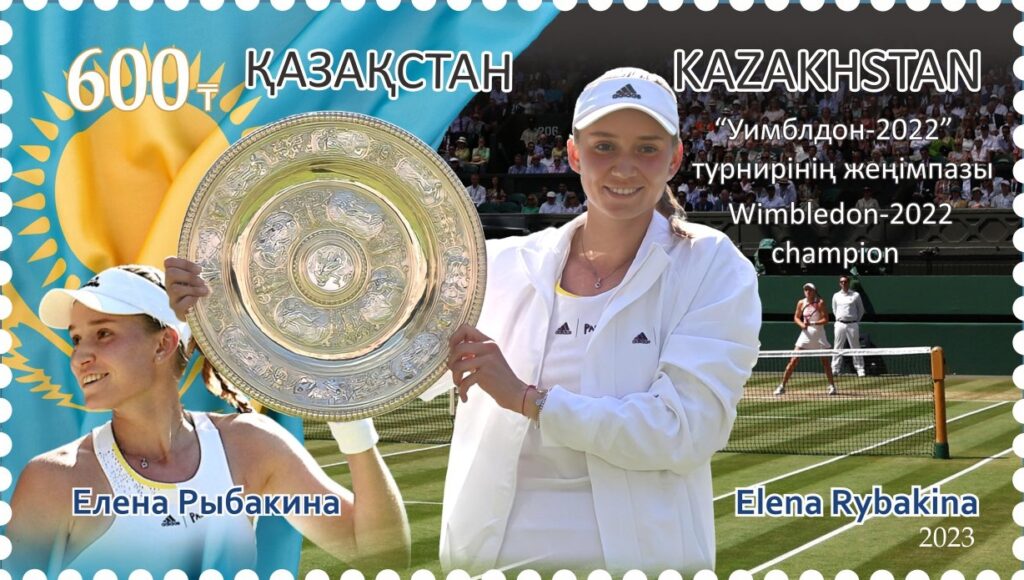
ALMATY, Kazakhstan - Elena Rybakina, a Moscow-born citizen of Kazakhstan, considers her run to the final of the Miami Open this past weekend to be a success. Kazakhstan’s tennis federation duly noted the achievement, but what it really wants to see is more homegrown talent making a splash in global tennis. “It was a great two weeks. A lot of tough matches, great battles,” said 24-year-old Rybakina, who won five matches on her way to the final, where she lost to American Danielle Collins. Rybakina, the world No. 4, won Wimbledon in 2022 and was runner-up at the Australian Open last year. Rybakina played at Spartak Club in Moscow as a junior but secured citizenship in Kazakhstan in 2017 after the tennis federation there offered generous support for her career. Her Wimbledon victory came in a year when players from Russia and Belarus were barred from participating because of international tension over Russia’s invasion of Ukraine. Rybakina’s Wimbledon triumph was met with a “mixed reaction” by some observers who wondered about the state of grassroots tennis in Kazakhstan, said Yuriy Polskiy, vice president of the Kazakhstan Tennis Federation and president of the Asian Tennis Federation. Polskiy wrote in an article published in Euronewsweek in February that 10 Kazakhstanis finished the 2023 season in the top 100. While some players competing for Kazakhstan were born outside the country, all the players in the junior rankings were born and trained in Kazakhstan, he said. Top talents include Amir Omarkhanov, who this year was the first Kazakh player to reach the Australian Open Junior Championship quarterfinals. On the women’s side, Asylzhan Arystanbekova reached the quarterfinals at the junior doubles tournament in Melbourne this year. Bulat Utemuratov, president of the Kazakhstan Tennis Federation, has led development of national tennis, spending big sums since he became head of the federation in 2007. Today, players who are 14-16 years old have been training for about a decade and there are 48 modern tennis facilities with 360 courts, most of them indoors, according to tennis officials. The cost of court rentals has plunged and the number of children playing tennis has soared in Kazakhstan. “They are the ones who will represent Kazakhstan at professional tournaments in the future, and the country won’t have to bring players from elsewhere,” Polskiy wrote. For now, Rybakina and Alexander Bublik, another Russia-born player who changed citizenship and is ranked No. 18 in the world, are the biggest names in Kazakh tennis.
Major Storms Cause Injuries and Disruption Across Swathes of Central Asia

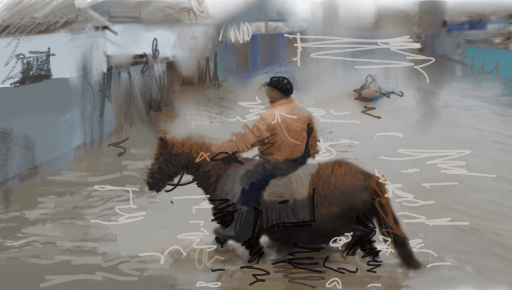
Storms accompanied by heavy winds hit parts of Kazakhstan, Kyrgyzstan and Uzbekistan on the evening of March 28th. Heavy flooding in parts of western Kazakhstan forced the evacuation of at least 1,000 people, including hundreds of children, and a state of emergency has been declared in some areas. Military helicopters evacuated people in distress and rescuers even used rubber dinghies to ferry camels to safety in the Shalkar district of the Aktobe region. Flooding caused widespread disruption after a river overflowed in the city of Aktobe, which has more than half a million residents. Aktobe’s airport was forced to stop operations. In recent days, the flooding has damaged hundreds of buildings, submerged roads and caused power outages. Video on social media showed people wading through water in the city streets and water sloshing across the floor of a bus filled with passengers. Aerial images showed some buildings completely surrounded by floodwaters in more isolated areas. Fifty schools were prepared as temporary evacuation points in the city of Aktobe and rescue teams include volunteers, police officers and military personnel, regional emergency officials said on Instagram. In Almaty, meanwhile, wind speeds of 24 meters per second were recorded, with the storm felling dozens of trees and tearing roofs from buildings. "[There] was a very strong dust-storm and then a downpour with a thunderstorm. For our region at this time of year, this is an extremely rare phenomenon,” Almaty resident Arai Batkalova told the Times of Central Asia. “People were filming videos en masse and posting them on social media." In Bishkek, strong winds damaged eleven schools and eight kindergartens, and near-hurricane-force winds tore the roofs off at least fifteen residential buildings. Local residents reported dozens of fallen trees, some of which destroyed parked cars. Bishkek; image: mchs.gov.kg   Emergency public-safety regimes were imposed in Bishkek and the Chui region. In these areas, storms damaged 154 buildings, and 24 local residents (including two children) were admitted to medical centers, according to the Kyrgyz Ministry of Emergency Situations. Four people were hospitalized with fractures and head injuries. "In order to study dangerous areas on the ground and determine the consequences, mobile groups of civil defense services were organized. It was ordered to involve all available utilities and special equipment as soon as possible," rescuers noted. Kyrgyz authorities are still calculating the damage from the storm. Utility workers spent all night repairing the storm's aftermath: clearing roads, removing fallen trees, and repairing power lines. "On the line of the municipal enterprise, Bishkeksvet, [by] morning [workers repaired] eight cases of broken power lines, as well as other consequences of the bad weather. Brigades continue [working]. By evening, the breaks [of power lines] will be repaired throughout the city," Bishkek City Hall promised. According to the Kyrgyz hydrometeorological center, strong winds were also observed in the south of the country in the Osh region, where wind speeds reached 15 meters per second. Strong winds were also recorded in Uzbekistan's capital, Tashkent, where its speed reached 17 meters per...

Ancient Turkmen City of Anau Declared Cultural Capital of the Turkic World 2024

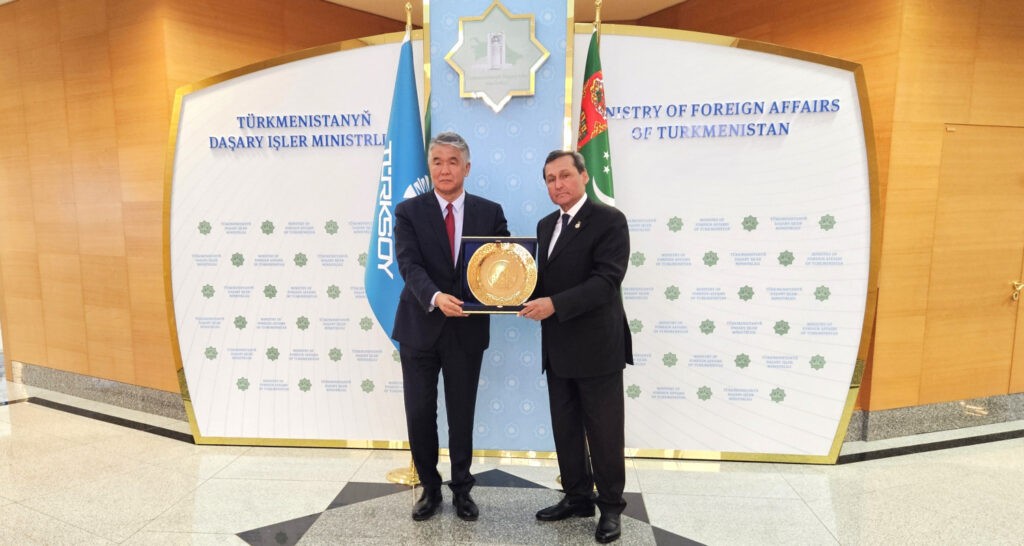
On March 25th, Rashid Meredov, Minister of Foreign Affairs of Turkmenistan and Sultanbay Raev, Secretary General of the International Organization of Turkic Culture (TURKSOY), attended a ceremony in Ashgabat for the declaration of the nomination of Turkmen city Anau as 'Cultural Capital of the Turkic World 2024'. Coinciding with the 300th anniversary of the birth of Turkmen’s beloved bard, 2024 has also been declared the ‘Year of the Great Poet and Thinker of the Turkic World: Magtymguly Pyragy.’ Revered throughout the country, the 18th century Sufi poet and spiritual teacher, Pyragy, is hailed as the father of Turkmen literature and his legacy persists through a rich ingrained tradition of Turkmen bards or ‘bagshys’ adapting his poetry to song. His image appears on numerous monuments as well as banknotes and The Magtymguly International Prize is awarded annually to distinguished scholars of Turkmen language and literature. A 197ft bronze statue, erected in Ashgabat, will be officially unveiled on June 27th; the date of a national holiday celebrating the poet. According to reports from their meeting, Meredov and Raev emphasized the importance of promoting both Magtymguly Pyragy’s legacy and the cultural significance of the ancient Turkmen city of Anau on various international platforms including those of TURKSOY, UN, and UNESCO.

American Cowboys to Compete in 5th World Nomad Games in Kazakhstan

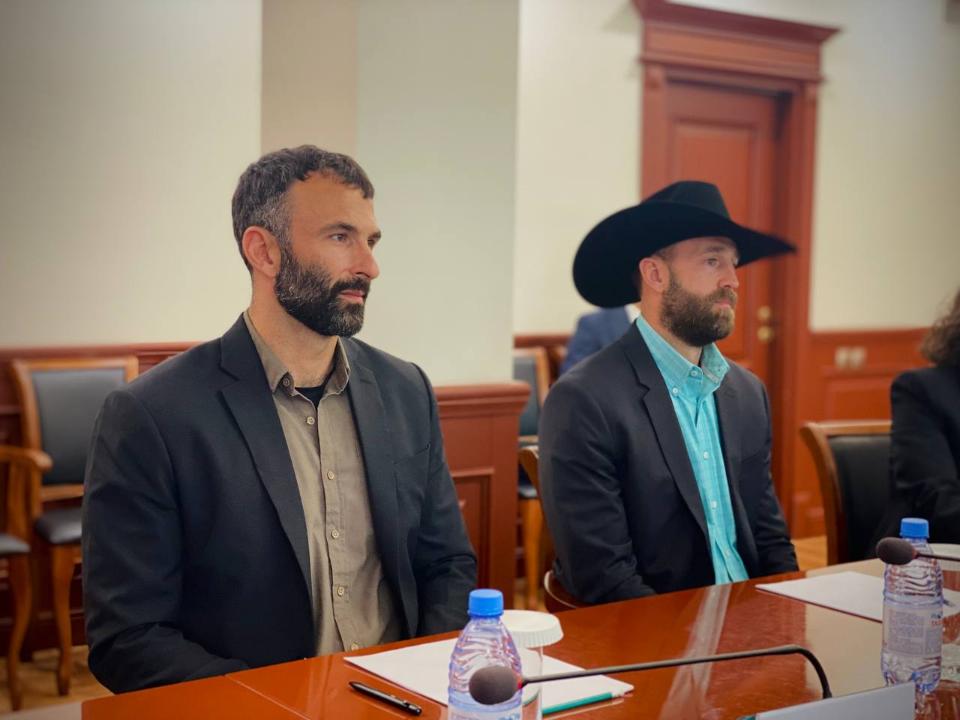
Last week, Kazakhstan’s Minister of Tourism and Sports Ermek Marzhikpayev met Kaycee Field, renowned American professional rodeo cowboy, and Ladd Howell, captain of the US kokpar team. Perhaps surprisingly, the traditional Kazakh game of kokpar is growing in popularity in America. The US National Kokpar Team, led by Howell, competed in both the 2018 and 2022 World Nomad Games and plans were discussed for its participation in the 5th World Nomad Games in Kazakhstan. Kokpar, or goat–picking, is one of the oldest nomadic games in Kazakhstan. Fast and furious, it involves riders fighting for possession of a headless carcass of a goat and throwing it into a pit to score a ‘goal.’ Addressing the US delegation, Minister Marzhikpayev said, “Kokpar is one of the oldest nomadic games, and played for hundreds of years, is highly entertaining. At previous World Nomad Games, Kazakhstani Kokpar athletes won gold. We have heard much about your team as a leader in this sport. It is gratifying that you actively participate in the equestrian sports of Central Asia and are involved in their popularization in the United States. We believe that your team’s performance will be one of the most memorable.” He also mentioned the US team's proposal to provide demonstration performances of American rodeo in this year's program. The 5th World Nomad Games will be held in Astana from 8-14 September and The Ministry of Tourism and Sports of Kazakhstan anticipates the participation of almost 4,000 athletes from over a hundred countries in twenty competitive and ten demonstration events. Initiated by the government of Kyrgyzstan in 2012 for the revival and preservation of nomadic culture, the first World Nomad Games took place in Cholpon Ata on Lake Issyk-Kul in September 2014.

Kazakhstan Ranked Among 50 Happiest Countries in the World

In the recently published UN and Gallup World Happiness Report 2024, Kazakhstan was ranked among the top 50 happiest countries in the world, ahead of Russia, Armenia and Georgia. However, the Baltic States and Uzbekistan returned higher happiness scores on the index. This rating, presented on March 20, was developed on the basis of a three-year study conducted by UN experts, Gallup and other scientists. Citizens of different countries assessed their quality of life by taking into account a variety of factors, including economic status, GDP, life expectancy, major life challenges, sense of freedom, public responsiveness, and the level of corruption. These interdisciplinary studies help the understanding of how different aspects of life interact and influence the overall sense of happiness. TCA asked citizens from across Kazakhstan about the their feelings regarding the level of happiness presented in the report, and met with mixed feelings. "Frankly speaking, I don't have such a feeling,” Alua, a 21-year-old pedagogical student from Taraz told TCA. “After all, food prices are rising almost daily, and wages are not growing as fast. Also, conditions in state institutions haven’t changed much, especially in healthcare and education." "I’ve seen this rating, but prices are rising so quickly that Almaty has become the most expensive city in Central Asia,” Sanzhar, a 22-year-old CMM specialist from Almaty commented. "To be honest, I don't think there have been any significant changes that mean we’re happier than before,” Merey, a 28-year-old singer from Astana told TCA. “The only thing maybe because the coronavirus pandemic was in full swing three years ago, so compared to that the situation is much better now, so people think they’ve become happier. However, the socio-economic situation in the country hasn't changed that much, so it's strange for me to hear that people in our country are happier than in Georgia, for example." Comments from others, however, suggest that life in Kazakhstan is improving year on year. "Yes, I feel the changes,” Raushan, a 40-year-old Art Historian from Almaty stated. “There is less discrimination due to language barriers, and there’s a growing interest in traditional nomadic culture which leads to the creative development of young talents who are able to make a name for themselves internationally. All this strengthens their faith and motivation to move forward with creative ideas and learn ways to promote their creativity." "Thanks to the internet and social networks people are aware of the inhuman things happening in the world. With all that is known, I think people in Kazakhstan are just happy to have a peaceful sky above their heads." Tair, a 25-year-old businessman from Taraz told TCA. "I’ve definitely seen an increase in happiness among people. It's like the confidence in our security has gotten higher for me personally," Merey, a 20-year-old student from Kostanai commented.

Kazakh Musicians Turn to Old Instruments to Make New Music

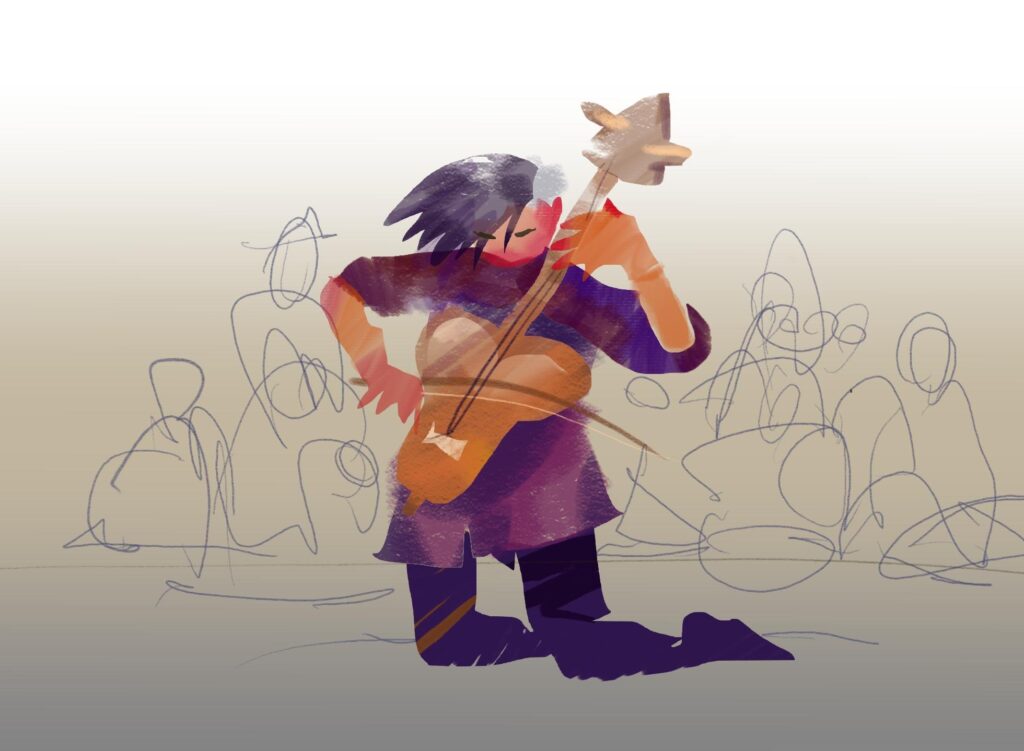
The dombra, the kyu, the kobyz, the zhetigen…. The list of traditional instruments in Kazakh music goes on. These aren’t dust-coated relics. The instruments are increasingly at the forefront of a lot of popular music in Kazakhstan today. They even get makeovers. The dombra is a long-necked, stringed instrument symbolizing Turkic culture. Now there is the electric dombra. Merey Otan, also known as Mercury Cachalot, knows about all of this. She is a musician and graduate student at Nazarbayev University in Astana and co-author of a book about the transformation of traditional instruments in Kazakhstan. In written responses to questions from The Times of Central Asia, Otan talked about contemporary Kazakh music and the role of the old instruments. After some replies, TCA includes brief explanations of her musical references. Researcher Merey Otan speaks last year at a launch for a book she co-authored about traditional instruments and contemporary music in Kazakhstan. Otan is a postgraduate student in the Eurasian Studies program at Nazarbayev University in Astana. Photo: Merey Otan   Merey, tell us how you first encountered Kazakh music and what attracted you to Kazakh instruments?   I have always been surrounded by Kazakh music. As long as I can remember we used to sing Kazakh folk songs at family gatherings, and various celebrations. My sister used to play dombra, a Kazakh traditional plucked two-stringed instrument, and when I started going to school I also started learning to play it. Unfortunately, I stopped taking lessons after a couple of years but I still remember how to play some compositions, kuys, and play it once in a while.   TCA: Kuys is a traditional instrumental piece of Kazakh, Nogai, Tatar and Kyrgyz musical cultures. It is performed on various folk instruments.   Which Kazakh instruments are considered the most popular among contemporary musicians, and why do they attract attention?   Dombra is probably the most popular traditional instrument among local musicians, including contemporary ones. It also has a sacred meaning for the people in terms of national identity. This is evident in the quote of a famous Kazakh poet Kadyr Myrza Ali "A true Kazakh is not a Kazakh but a dombra." This shows that Kazakh people associate their identity with the instrument and incorporating its sound in contemporary songs allows them to situate their music in the local context. Apart from that, musicians also use instuments like qobyz, shanqobyz, zhetigen. Authenticity was always important for musicians and including traditional instruments is one of the popular strategies to demonstrate authenticity for Kazakhstan's musicians. Among the most popular examples are songs by Yerbolat Kudaibergen, Irina Kairatovna, Aldaspan, The Buhars. A dombra and a kobyz, traditional instruments used in Kazakhstan, are shown in a book that was co-authored by researcher Merey Otan. Photo: TCA   TCA: The kobyz is an ancient bowed instrument preserved among the peoples of Siberia, Central Asia, the Volga region, Transcaucasia and other regions.  The shankobyz is an ancient Kazakh reed musical instrument, formerly used by shaman-worshipers to...