• KGS/USD = 0.01144 0%
  • KZT/USD = 0.00196 0%
  • TJS/USD = 0.10737 0%
  • UZS/USD = 0.00008 0%
  • TMT/USD = 0.28490 0%
  • KGS/USD = 0.01144 0%
  • KZT/USD = 0.00196 0%
  • TJS/USD = 0.10737 0%
  • UZS/USD = 0.00008 0%
  • TMT/USD = 0.28490 0%
  • KGS/USD = 0.01144 0%
  • KZT/USD = 0.00196 0%
  • TJS/USD = 0.10737 0%
  • UZS/USD = 0.00008 0%
  • TMT/USD = 0.28490 0%
  • KGS/USD = 0.01144 0%
  • KZT/USD = 0.00196 0%
  • TJS/USD = 0.10737 0%
  • UZS/USD = 0.00008 0%
  • TMT/USD = 0.28490 0%
  • KGS/USD = 0.01144 0%
  • KZT/USD = 0.00196 0%
  • TJS/USD = 0.10737 0%
  • UZS/USD = 0.00008 0%
  • TMT/USD = 0.28490 0%
  • KGS/USD = 0.01144 0%
  • KZT/USD = 0.00196 0%
  • TJS/USD = 0.10737 0%
  • UZS/USD = 0.00008 0%
  • TMT/USD = 0.28490 0%
  • KGS/USD = 0.01144 0%
  • KZT/USD = 0.00196 0%
  • TJS/USD = 0.10737 0%
  • UZS/USD = 0.00008 0%
  • TMT/USD = 0.28490 0%
  • KGS/USD = 0.01144 0%
  • KZT/USD = 0.00196 0%
  • TJS/USD = 0.10737 0%
  • UZS/USD = 0.00008 0%
  • TMT/USD = 0.28490 0%
13 January 2026

Viewing results 775 - 780 of 1104

Turkmenistan President’s Visit Causes Havoc in Dashoguz

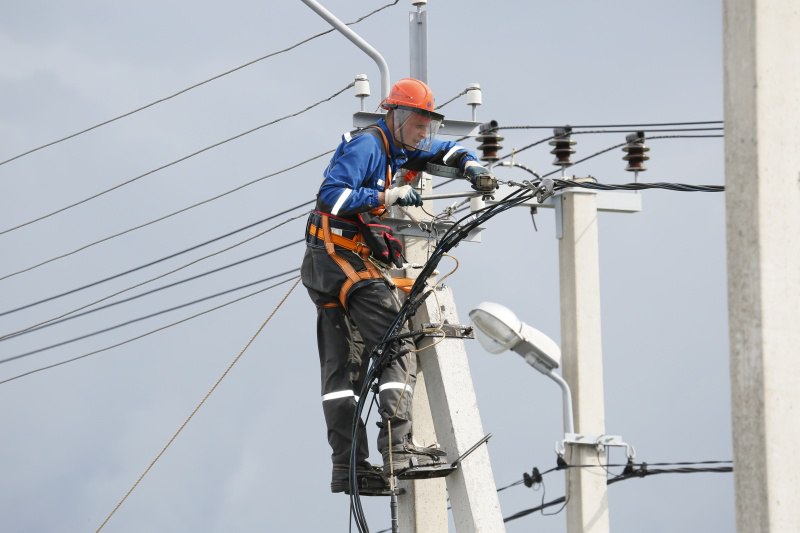
According to reports published by Turkmen.news, traffic was restricted in the Dashoguz region from June 2nd due to President Serdar Berdimuhamedov's arrival to open new power plants. The head of state came to the region on June 5th, but residents endured inconvenience for three days due to safety precautions. The restrictions also affected pedestrians. On the eve of the president’s visit, houses were painted, and extra police officers were placed on duty. As stated in the report, “From June 2nd, access to Tashkhovuz from distant districts was closed. On June 3rd, the ban also affected the residents of the areas directly adjacent to the city. No one was allowed into the regional center: it doesn’t matter if a person works there, studies, or needs treatment.” Also, residents' cars in the regional center were only allowed on the road if they were painted white and were manufactured after 2015. Pedestrians were forbidden to walk freely; on June 3rd, police officers from all etraps (territorial units) were called onto duty in Dashoguz and placed at posts on central roads every hundred meters. This lasted from 6 am until 10 pm. All houses facing the main road, where the presidential motorcade passed, were hastily painted white or covered with whitewash. The work was carried out very carelessly, with no one protecting windows and doors from paint, and traces of paint were left smeared on the ground.

Two Arrested Over Calls for Milk Riots in Kyrgyzstan

In the Issyk-Kul region, citizens suspected of calling for mass riots have been detained; this was reported by 24.kg citing the State Committee for National Security (GKNB) press center. According to the GKNB, two citizens used WhatsApp messenger to agitate local farmers and organize riots in groups with over a thousand participants, calling for blockades and taking milk truck drivers hostage. These actions are related to the seasonal decrease in milk prices due to its low-fat content. Experts confirmed the presence of calls to organize mass riots in the audio recordings. A criminal case has been opened, and an investigation is underway. The GKNB urged citizens to observe public order and not to give in to provocations spread through social networks.

By 2025, All of Kazakhstan Will Have Access to Clean Drinking Water

The Prime Minister of Kazakhstan, Olzhas Bektenov, has said at a government meeting where issues of water supply services to urban and rural settlements were addressed that the entire population will have access to clean drinking water within eighteen months. At the end of last year, access to water supply services in Kazakhstan's cities amounted to 98.9%, and in rural settlements, 96.6%. Full coverage of the urban population has been achieved in nine regions, with the lowest level of provision noted in the Abai and Pavlodar regions. To improve the situation in the regions with low indicators, funds are being allocated on a priority basis. Twenty-nine projects to construct and reconstruct pipelines in nine oblasts are being implemented, with plans to reconstruct and develop 2,000 kilometers of water pipelines, providing water supply to 437 settlements. A connection to a centralized water supply will be made in 44 of these, with a total population of 92,000 people. Five projects are under development and will be implemented after receiving state expertise; their implementation will improve the water supply in 200 settlements. In 2024, 218 billion tenge was bookmarked from the republican budget to fund the construction and reconstruction of water supply and sewage systems. The Prime Minister emphasized that by the end of 2025, 100% of the population must have access to quality drinking water. "This is one of the most socially important tasks. Only one-and-a-half-years are left for its fulfillment. Despite the high percentage of fulfillment, akimats (local authorities) should intensify work to achieve the plans to bring the relevant infrastructure to villages and towns. All works on the water supply should be prioritized. The implementation of water supply networks within settlements should be synchronized with the plans to bring the infrastructure of group water conduits to the borders of villages", said Bektenov.

Child Malnutrition Hits Central Asia

In its recently published report “Child Food Poverty 2024,” UNICEF has identified 63 countries, including four Central Asian countries, where child malnutrition has reached a  crisis point. Severe child food poverty threatens the survival, growth, and development of an estimated 181 million children under five globally, denying them the opportunity to escape social and economic deprivation. As stated in the report, “Child food poverty harms all children, but it is particularly damaging in early childhood when insufficient dietary intake of essential nutrients can cause the greatest harm to child survival, physical growth, and cognitive development. The consequences can last a lifetime: children deprived of good nutrition in early childhood perform worse in school and have lower learning capacity in adulthood, trapping them and their families in a cycle of poverty and deprivation.” The indicator of food ration determines children’s food security. It was developed by UNICEF and the World Health Organization (WHO). For healthy growth and development, children should consume at least five products from the following eight groups: Breast milk Grains, roots, tubers, and plantains Pulses, nuts, and seeds Dairy products Fresh foods Egg Vitamin A-rich fruits and vegetables Other fruits and vegetables. If children consume products that belong to just two groups, they live in extreme nutritional poverty; if they consume products belonging to three-four groups, they live in a moderate state related to nutrition. If they consume products belonging to five or more groups, they are considered not to be in a poor situation related to nutrition. Uzbekistan and Kyrgyzstan have average levels of child malnutrition, Turkmenistan has a low level, and Tajikistan has a high level.

Residents of Turkmenistan Urged Not to Disseminate What’s Happening in the Country

In the city of Turkmenbashi, local authorities, including the khakimlik (mayor's office), the National Security Ministry (NSM), the court, the police, and elders, are holding meetings with youth and cultural workers. At these meetings, they are warned not to disseminate information about events in the country, such as natural disasters and traffic accidents, on the internet or to journalists. The meetings are hosted mainly by elders who reprimand the youth. “They demanded not to share pictures and videos of someone asking for money for a sick child and not to write comments under posts about problems,” a cultural worker said during an anonymous conversation. Meeting participants claim that the elders said, “There are no countries without faults, and faults need to be hidden.” They also emphasized that freedom on the internet should not lead to the spread of negative information. Authorities stated that citizens who distributed videos about the Ashgabat floods have already been identified, and most were cultural workers. "Cultural workers are lighthearted, and all the videos and information leaking online are mostly what you're doing. All problems come either from singers or actors, and the people following them,” a cultural worker was quoted as saying by an NSM official. The elders and representatives of the khakimlik also urged parents to monitor how their children use the internet and what sites they visit and read. Participants in the meeting were required to use VPN programs approved by the authorities and only share positive photos, videos, and messages about the country online.

How Kazakhstan Is Cleansing Itself of Nursultan Nazarbayev’s Legacy

“New Kazakhstan,” the term introduced by Kassym-Jomart Tokayev after the attempted coup d'état in January 2022, has also given birth to a thesis about “Old Kazakhstan." "Old Kazakhstan" is associated with the country's first president, Nursultan Nazarbayev, and his numerous relatives, who penetrated all spheres of life in the country. So,  which former head of state's relatives fell into the clutches of justice? Gulmira Satybaldy Gulmira Satybaldy, former wife of Kairat Satybaldyuly, nephew of the first president of Kazakhstan, Nursultan Nazarbayev, is currently on trial in Almaty. She is accused of locking up her relative and business partner, Abai Zhunusov, for 165 days and, after intimidating him, transferring his shares in various companies to her proxies. Damages are estimated at $2.2 million (1.4 billion KZT). The guilty verdict, which few doubt will be passed, will not be her first. On 4 May 2023, the Astana court sentenced Gulmira Satybaldy to seven years' imprisonment for self-rule and kidnapping. A month later, on 30 June 2023, the Kyzylorda court sentenced her to eight years in prison for embezzlement and misappropriation of other people's property. The new, harsher sentence absorbed the previous punishment. Kairat Satybaldyuly Next is Kairat Satybaldyuly, a rather grim figure from the Nazarbayev clan. In the early noughties, on the now defunct Internet site “Aziopa,” which was attributed to Nazarbayev's former eldest son-in-law Rakhat Aliyev,  Kairat Satybaldyuly was painted black with hints of his handcuffing his wife to the radiator and beating her. It also pointed to Kairat's presidential ambitions. Satybaldyuly is the son of Nursultan Nazarbayev's younger brother, Satybaldy, who died in 1981 in a car accident. According to Forbes Kazakhstan, during his uncle's presidency, Kairat was listed as one of the country's most influential business people with a fortune of 163 million dollars. According to Kazakhstan's media, the nephew of the former president of Kazakhstan was listed as the sole founder of the offshore firm Skyline Investment Company S.A., which owns over 24% of the shares of Kazakhstan's telecommunications company Kazakhtelecom. In addition to working  in the civil service, including in the National Security Committee, he was deputy akim of Astana, and held senior positions in national companies. Detained in March 2022 on suspicion of abuse of power and large-scale embezzlement of funds by Kazakhtelecom JSC and Transport Service Center JSC, Satybaldyuly was held in custody until the trial. In court, Satybaldyuly reached a mediation agreement with the injured parties and paid 40 billion tenge ($89.5 million) in damages. He also entered into a procedural plea agreement. In September 2022, he was sentenced to six years in prison. The court ordered the confiscation of his property and banned him from working in the civil service for ten years. A submission was also made to the President of Kazakhstan to strip Satybaldyuly of the title “Major General of the National Security Bodies of Kazakhstan,” as well as the state orders “Kurmet” and “Parasat.” Despite reports that the Anti-Corruption Service of Kazakhstan is investigating criminal cases against Satybaldyuly involving tax...