• KGS/USD = 0.01144 0%
  • KZT/USD = 0.00217 0%
  • TJS/USD = 0.10642 -0.09%
  • UZS/USD = 0.00008 0%
  • TMT/USD = 0.28530 0%
  • KGS/USD = 0.01144 0%
  • KZT/USD = 0.00217 0%
  • TJS/USD = 0.10642 -0.09%
  • UZS/USD = 0.00008 0%
  • TMT/USD = 0.28530 0%
  • KGS/USD = 0.01144 0%
  • KZT/USD = 0.00217 0%
  • TJS/USD = 0.10642 -0.09%
  • UZS/USD = 0.00008 0%
  • TMT/USD = 0.28530 0%
  • KGS/USD = 0.01144 0%
  • KZT/USD = 0.00217 0%
  • TJS/USD = 0.10642 -0.09%
  • UZS/USD = 0.00008 0%
  • TMT/USD = 0.28530 0%
  • KGS/USD = 0.01144 0%
  • KZT/USD = 0.00217 0%
  • TJS/USD = 0.10642 -0.09%
  • UZS/USD = 0.00008 0%
  • TMT/USD = 0.28530 0%
  • KGS/USD = 0.01144 0%
  • KZT/USD = 0.00217 0%
  • TJS/USD = 0.10642 -0.09%
  • UZS/USD = 0.00008 0%
  • TMT/USD = 0.28530 0%
  • KGS/USD = 0.01144 0%
  • KZT/USD = 0.00217 0%
  • TJS/USD = 0.10642 -0.09%
  • UZS/USD = 0.00008 0%
  • TMT/USD = 0.28530 0%
  • KGS/USD = 0.01144 0%
  • KZT/USD = 0.00217 0%
  • TJS/USD = 0.10642 -0.09%
  • UZS/USD = 0.00008 0%
  • TMT/USD = 0.28530 0%

Viewing results 853 - 858 of 1319

Kazakhstan’s Constitution Now Published in Braille

The Kazakh Constitutional Court has presented the first edition of the country's Constitution printed in Braille, making it accessible to the visually-impaired. The initiative to translate copy of Kazakhstan's Basic Law into Braille (relief-dot tactile font) was realized with support from the OSCE Program Office in Astana and the Ministry of Culture and Information. Welcoming the move, Chair of the Constitutional Court of Kazakhstan Elvira Azimova stated: “The Constitutional Court will continue to promote equality, dignity, and justice for everyone according to the Constitution of Kazakhstan and the Universal Declaration of Human Rights. The publication of the Braille text of the Constitution is our joint contribution to promoting this policy." Volker Frobart, Head of the OSCE Programme Office in Astana, emphasized the Kazakh authorities' commitment to valuing human rights  and demonstrating an inclusive approach to ensure equal access to information. Publications in Braille will be distributed  to 56 institutions, including national and regional libraries, training centers, and specialized schools. According to the World Health Organization,  Kazakhstan is currently home to 160 thousand visually- impaired citizens.

The Aral Sea: Addressing Water Issues, Crisis, and Striving for a Better Life in Central Asia

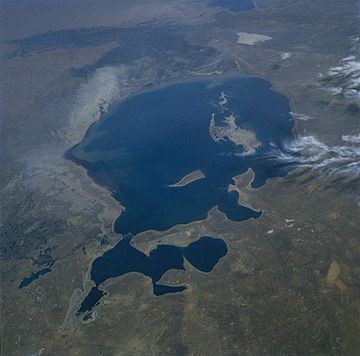
By Arindam Banik and Muhtor Nasirov   The world is currently grappling with the devastating impact of climate change, as rising temperatures have become an undeniable reality. In January 2024, the global temperature exceeded normal levels for the second consecutive month, pushing the global average temperature over the 1.5-degree threshold for the first time. Many human activities, such as unplanned water use, excessive groundwater extraction, and climate change, are thought to be contributing to this situation. One poignant example is the case of the Aral Sea in Central Asia. This once breathtaking and teeming endorheic lake, nestled between Kazakhstan and Uzbekistan, was not just a body of water. It was a symbol of life, a testament to the beauty and resilience of nature. Its azure waters and diverse marine life were a source of sustenance and livelihood for the region's people. It was a vibrant ecosystem, nourished by the almost entire flow of the two main rivers, the Amu Darya and the Syr Darya, in the upstream region of Central Asia. Interestingly, the Amu Darya River used to flow into the Caspian Sea through Uzboy Channel. However, a significant shift occurred during human settlement when the flow of these rivers was redirected into the Aral Sea, marking a crucial turning point in the region's hydrological history. Despite its former glory as the third-largest lake in the world, covering an area of 68,000 km2 (26,300 sq miles), the Aral Sea began shrinking in the 1960s after the rivers that fed it were diverted to support large-scale irrigation for cotton production intended for export. The irrigated area in the Aral Sea Basin has now expanded to eight million hectares. By 2007, it had decreased to only 10 percent of its original size, dividing into four lakes. By 2009, the southeastern lake had vanished, and the southwestern lake had shrunk to a thin strip at the western edge of the former southern sea. In the following years, occasional water flows partially replenished the southeastern lake. In August 2014, NASA satellite images revealed that the eastern basin of the Aral Sea had completely dried up, leading to the formation of the Aralkum Desert. This dramatic change has severely impacted the ecology, risking the survival of numerous fish subspecies and three endemic sturgeon species. The loss of these species disrupts the natural balance and affects the livelihoods of the local communities that depend on fishing. The herring, sand smelt, and gobies were the first planktivorous fish in the lake, and their decline led to the lake's zooplankton population collapse. Consequently, the herring and sand-smelt populations have not recovered. Except for the carp, snakehead, and possibly the pipefish, all introduced species survived the lake’s shrinkage and increased salinity. In an attempt to revive fisheries, the European flounder was introduced. This situation is urgent as the delicate balance of this ecosystem is on the verge of collapse. The region's once-prosperous fishing industry has been devastated, leading to unemployment and economic hardship. Additionally, the diverted Syr Darya River...

Two Uzbek Universities Enter the QS World Rankings

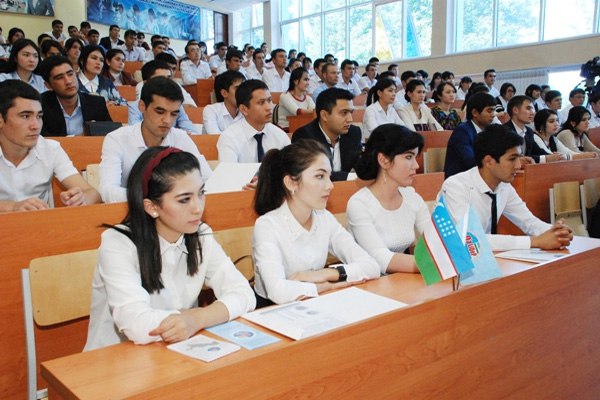
The higher education analytics firm Quacquarelli Symonds has published its latest annual table of the world’s best universities -- the QS World University Rankings 2025. For the first time in the ratings' history, two Uzbek universities — the Tashkent Institute of Irrigation and Agricultural Mechanization Engineers (TIIAME) National Research University (547th place) and the Mirzo Ulugbek National University of Uzbekistan (781st place) — were included in the ranking. Under the QS "academic reputation" indicator, TIIAME National Research University is among the top 300 universities in the world. The National University of Uzbekistan has produced renowned scientists who have made significant contributions to the advancement of global science. The Times of Central Asia has previously written about Botir Kobilov, who received a doctoral degree from Harvard Business School. Damir Musayev, another Uzbek, defended his doctoral thesis in genetics at Yale University in the United States and received his Doctor of Science degree.

Farms in Tajikistan Being Abandoned Due to Lack of Money

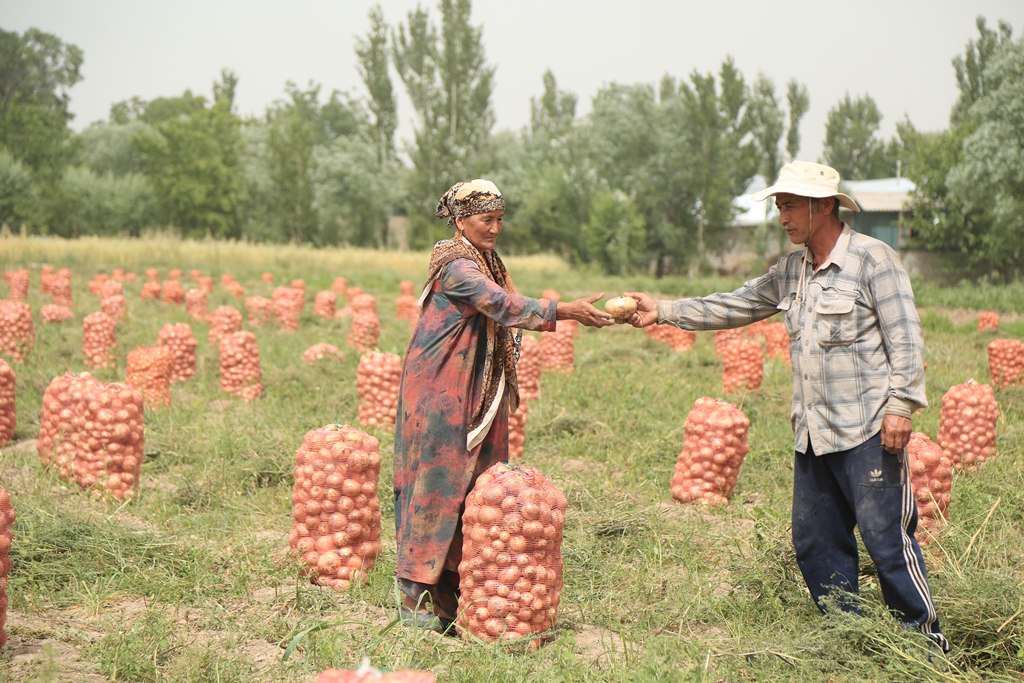
Farmers in Tajikistan are being forced to abandon their farms, explaining that there is no way to earn a living from them. One farmer in the Sino Dekhkan farm in the Vosei district said he was forced to stop operating because of financial problems. “I used to take a loan from Amonatbank to run my business. But they don't give loans anymore. They say you are already old; you will die, and who will pay you back? The land has been standing for two years. It's a cotton field. I haven't found a single somoni for sowing,” the man said. Another problem, farmers say, is the shortage of irrigation water, and the situation only worsens yearly. “I have not been on my land for three years. Because there is no water in the canal. The Nazar State Farm, in Kukhnashahr, takes all the water, and we don't have a drop left,” complained a resident of Kamolobod village in Kulyab. Farmers in Sughd region, adjacent to Dushanbe, face the same problem. Some farmers complain that the authorities force them to plant crops to their detriment. As a result, they say, they not only do not make a profit but also remain at a disadvantage. Economist Foziljon Fatkhulloyev said the agriculture industry will only develop once farmers are given more benefits and preferences. “They give benefits, for example, for six months, but do not consider that farmers' profits do not cover their expenses. If they provide more benefits, the prices of agricultural products on the market would be reduced by 5-10 percent. They should at least give agrarians tax breaks,” he suggested. About 70% of Tajikistan's population lives in rural areas, and developing the agricultural sector will help solve many of its residents' socio-economic problems. Agriculture and labor migration are a source of income for many families. Data is needed on how many farms were forced to close last year, and how many farmers still need to yield products. Representatives of Tajikistan's Ministry of Agriculture do not comment on the situation. At press conferences, the ministry's leadership reports on the development of agriculture and the success of farms.

Foreign Investment in Central Asia is Following Demographic Trends

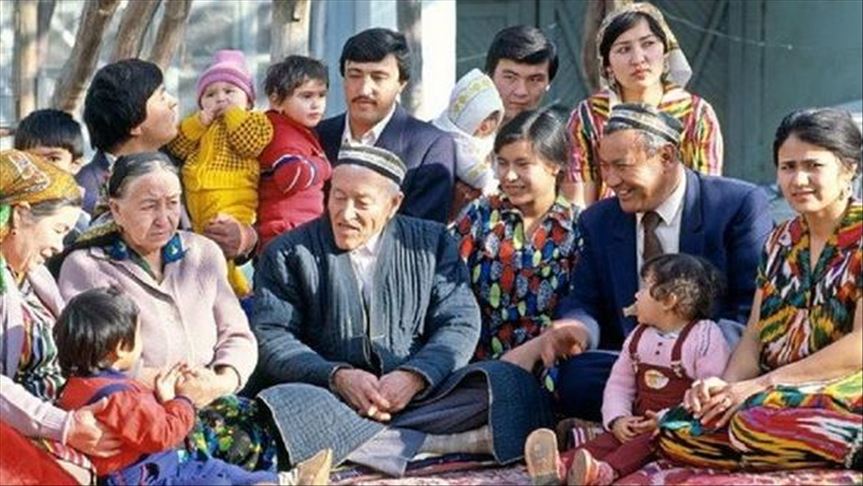
The population growth in Central Asia, combined with worsening demographic situations across the rest of the post-Soviet space, means a gradual shift in power and investment toward the regional powers of Uzbekistan and Kazakhstan. Thanks to their growing markets – unlike Belarus and Russia, where the population is slowly declining, and especially Ukraine – Uzbekistan and Kazakhstan are starting large projects with the participation of foreign investors. In particular, Russia is showing increased interest in Central Asia, with the US and the EU also keen to engage financially. Recently, Kazakhstani political scientist Marat Shibutov noted on social media that politicians have realized the benefits of investing in countries with major population growth. He argued that power dynamics across the post-Soviet space are changing in line with that. Shibutov quoted an article that he co-authored with Yuri Solozobov in May 2019: “according to statistics, in 1991 there were 20 million people in Uzbekistan and 51 million in Ukraine. Now, there are officially 32.6 million in Uzbekistan (experts say about 34 million) and 42 million in Ukraine (the real figure is unknown). But soon, everything is set to change dramatically. In fact, in 2-5 years, Uzbekistan will equal or surpass Ukraine in population – this will be a turning point in the post-Soviet space. First and foremost, Uzbekistan's investment and trade position will improve, especially in the consumer goods segment. Considering the nuclear power plant project being implemented with the help of Russia and the Ustyurt oil and gas fields, Uzbekistan will become a more promising country for foreign investors than Ukraine, whose development will be entirely about defense spending and internal political issues.” Due to the war that started in 2022, Shibutov’s forecast has materialized even faster. According to UN estimates, Ukraine's population this year is barely 37 million. No one has accurate data since the last census in this country was carried out in 2001. As of 2023, the Ministry of Social Policy of Ukraine put the figure even lower than the UN, at 36 million. Thus, after Russia (with a population of over 140 million), Uzbekistan is likely the second most populous country of the former USSR. In Kazakhstan the population is growing even faster than in Uzbekistan. Russian and Kazakh businesses are implementing 135 projects worth $26.5 billion. Additionally, 67 joint projects worth $14 billion are being planned across key economic industries, including machine building, metallurgy, and chemicals. They are expected to create 11,000 jobs. According to Russian ambassador to Kazakhstan Alexei Borodavkin, there are more than 18,000 enterprises with Russian capital in Kazakhstan and about 4,000 joint ventures with Kazakh partners. Overall, Russia and Kazakhstan have investments totaling $33.5 billion across 143 projects. In November last year, a memorandum of cooperation was signed between the countries’ ministries of energy to build three thermal power plants (TPP) in Kazakhstan – Kokshetau TPP, Semey TPP, and Ust-Kamenogorsk TPP. The combined capacity of the new coal-fired facilities will be about 1 GW (Kokshetau TPP 240 MW, Semey TPP 360 MW,...

Kazakhstan’s Bolashak Program: More Trouble Than It’s Worth?

In 1993, Nursultan Nazarbayev, the first president of Kazakhstan, established the Bolashak ('Future' in Kazakh) International Scholarship. Its goal was to help gifted Kazakhstani youth obtain a high-quality foreign education. However, the program is currently mired in scandals with alarming regularity. Of course, most of these clickbait stories are minor — such as a 2022 incident with the famous singer Dimash Qudaibergen. He was selected for the Bolashak Program and went abroad before changing his mind. He tried to transfer the scholarship to someone else but was forced to return the money to the state. Still, several cases indicate that behind the scenes at the Center for International Programs, which administers the scholarship, something is not right. So far, no one has intervened – the program is still running – but the latest scandal could attract the attention of Kazakhstan's president Kassym-Jomart Tokayev. And he has already expressed dissatisfaction with some of the conditions of the scholarship. Getting the president’s attention Let’s unpack the current scandal, which has to be extinguished by a senior official such as the minister of education and science. Kazakhstani Natalya Vorobyova recorded a video message to Tokayev, saying that in 2016, she and her colleague Makpal Daribaeva acted as debt guarantors for her former colleague Valeria Gavrilenko, who had completed the Bolashak Program. According to Vorobyova, Gavrilenko “in 2019, conspiring with the center’s employees… illegally withdrew two apartments [that had been pledged to the center] as collateral and went off to live in the UK.” Now, her debt – graduates of the program are required to work in Kazakhstani government agencies for 3-5 years (depending on the region) – has to be repaid by the guarantors, i.e., by Vorobyova and Daribaeva. They owe about KZT30 million ($60,000). The press service of the Center for International Programs explained that since Gavrilenko evaded paying off the debt, the agreement transferred it to the guarantors. Just days later, on May 30, Sayasat Nurbek, who heads Kazakhstan’s Ministry of Education and Science, intervened, saying that an agreement had been reached with Gavrilenko whereby she would pay off her debt, with a corresponding agreement already signed by her. “Since Gavrilenko took it upon herself to fully return the money, an agreement was signed with her, and she has begun to pay back the money. Accordingly, the claims against the guarantors are withdrawn. Nevertheless, we were forced to initiate a case against all three obligation-bearers. We were forced to do this because they are jointly liable under the law. If Gavrilenko pays the full amount, the claims against the guarantors will be dropped. Unfortunately, they seem to have been advised incorrectly. They felt threatened that they would be forced to pay full damages. Today, we are concentrating all claims on Gavrilenko,” Nurbek said in the Senate as he was answering questions from journalists. As for the third party in this scandal – which, according to the minister, is also responsible – it is the former president of the Center for International...