• KGS/USD = 0.01144 0%
  • KZT/USD = 0.00217 0%
  • TJS/USD = 0.10456 0%
  • UZS/USD = 0.00008 0%
  • TMT/USD = 0.28571 0%
  • KGS/USD = 0.01144 0%
  • KZT/USD = 0.00217 0%
  • TJS/USD = 0.10456 0%
  • UZS/USD = 0.00008 0%
  • TMT/USD = 0.28571 0%
  • KGS/USD = 0.01144 0%
  • KZT/USD = 0.00217 0%
  • TJS/USD = 0.10456 0%
  • UZS/USD = 0.00008 0%
  • TMT/USD = 0.28571 0%
  • KGS/USD = 0.01144 0%
  • KZT/USD = 0.00217 0%
  • TJS/USD = 0.10456 0%
  • UZS/USD = 0.00008 0%
  • TMT/USD = 0.28571 0%
  • KGS/USD = 0.01144 0%
  • KZT/USD = 0.00217 0%
  • TJS/USD = 0.10456 0%
  • UZS/USD = 0.00008 0%
  • TMT/USD = 0.28571 0%
  • KGS/USD = 0.01144 0%
  • KZT/USD = 0.00217 0%
  • TJS/USD = 0.10456 0%
  • UZS/USD = 0.00008 0%
  • TMT/USD = 0.28571 0%
  • KGS/USD = 0.01144 0%
  • KZT/USD = 0.00217 0%
  • TJS/USD = 0.10456 0%
  • UZS/USD = 0.00008 0%
  • TMT/USD = 0.28571 0%
  • KGS/USD = 0.01144 0%
  • KZT/USD = 0.00217 0%
  • TJS/USD = 0.10456 0%
  • UZS/USD = 0.00008 0%
  • TMT/USD = 0.28571 0%

Viewing results 181 - 186 of 269

Kazakhstan Shapes an Ambitious Future

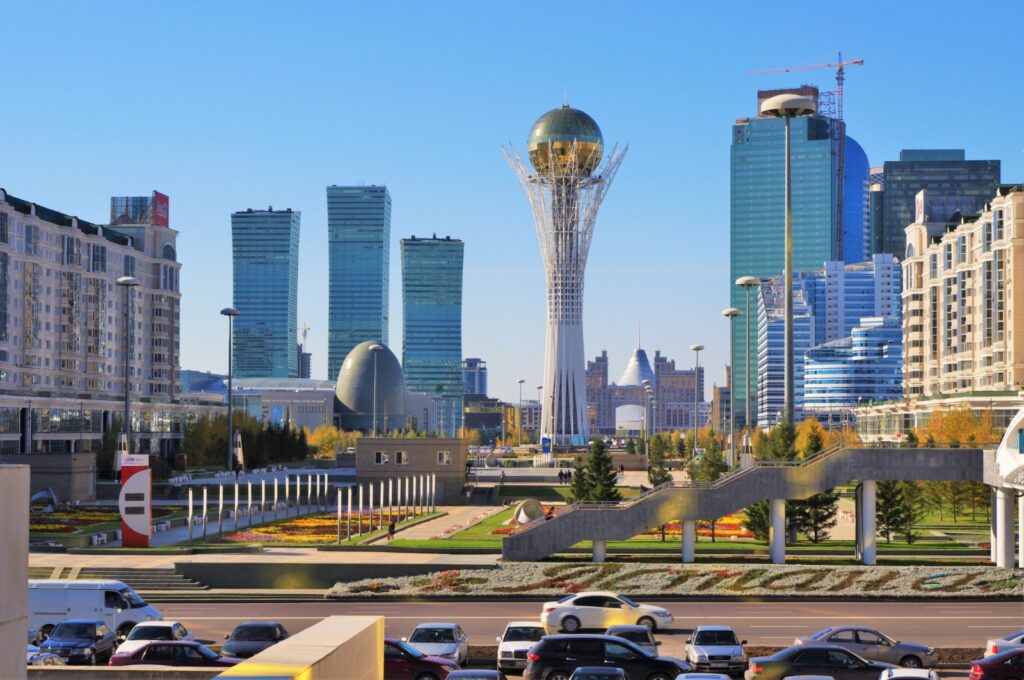
As Kazakhstan continues on its path towards economic expansion and modernization, it has set forth a revitalization and growth vision for 2024 and beyond, underpinned by a series of ambitious reforms and strategic investments. A central part to President Kassym-Jomart Tokayev’s vision, which he also detailed in a government meeting on February 7th, is the development of a sustainable and inclusive economy driven by innovation, strategic foreign investment and proactive engagement with the global community.   Building on the 2023 growth momentum There are positive indications that Kazakhstan is on the right track, despite challenges posed by ongoing global geopolitical risks and uncertainties. Its strong economic expansion continued in 2023, as gross domestic product (GDP) increased by nearly 5% as of the third quarter. The government is aiming to accelerate the pace of growth further throughout the remainder of the decade. Tokayev said in his February 7th speech that the target was to increase economic output to $450 billion by 2029, stressing that to do this, the country will need 6% annual GDP growth.   Attracting investment To achieve this ambitious goal, the country’s leadership is currently implementing a series of reforms, which are designed to attract a substantial influx of foreign investment (of at least $150 billion in total) by adopting environmental, social and governance (ESG) principles, as well as by enhancing the country’s overall investment climate. Examples of these initiatives include “green bonds” introduced in 2017; the sustainable finance initiatives presented since 2021 via the Astana International Financial Center, and the mandatory ESG reporting framework for companies listed on the Astana International Exchange. A pivotal element in Kazakhstan’s comprehensive series of economic reforms and investment strategies is the establishment of the Investment Headquarters, which is charged with the critical mission of enhancing the investment climate within Kazakhstan while ensuring qualitatively the proper execution of investment projects. At the same time, the government is working on a new Tax Code that should comprehensively reset the dynamics between the state and the private sector. The development of this code is guided by the need for a delicate balance between creating an environment conducive to investment, and securing the necessary revenues for the national budget.   Local capacity building The strategic plan behind the reforms foresees the introduction and transfer of cutting-edge technologies, the localization of production processes, and the establishment of high value-added clusters. These clusters would be strategically focused on driving the acceleration of the manufacturing sector. Potential sectors to benefit from these clusters include green technology, finance, and agriculture. Furthermore, the legislative and institutional framework will be implemented through the enactment of a fresh law on industrial policy and the establishment of a new Ministry of Industry and Construction.   A focus on standards of living These steps represent a commitment to improving the overall well-being of the population in tandem with ensuring economic growth. Tokayev has underscored that the focus of these efforts extends beyond merely achieving macroeconomic expansion and emphasized that economic developments must have a...

Central Asia’s Mineral Wealth Can Help the West Unlock a Greener Future

Critical minerals are essential components in many of today’s rapidly growing energy technologies. From lithium in electric vehicle batteries, to copper used in wind turbines and electricity networks, these minerals are at the heart of the green transition. The demand for these minerals will increase as clean-energy technologies continue to develop and become even more widely adopted. The International Energy Agency (IEA) forecasts a significant uptick in mineral requirements for clean energy technologies. According to its Sustainable Development Scenario (SDS), the world’s total mineral demand could quadruple by 2040. Electric vehicles and battery storage are expected to account for about half of this growth over the next two decades. A few major producers dominate the global market Problematically, the global market for critical minerals is dominated by just a few key players. China controls a significant portion of overall worldwide production, not to mention 85% of the processing capacity needed to refine these minerals for manufacturing purposes. China’s dominance extends to lithium, graphite, rare earth elements and cobalt, which are all essential for clean energy technologies. Russia also holds considerable weight in the resource-extraction sector. For example, it controls 43% of the palladium market and a quarter of vanadium production. These minerals have wide-ranging applications, with palladium used in catalytic converters and vanadium in batteries. The United States is heavily reliant on mineral imports from China. This dependence poses significant economic and security risks as any supply-chain disruption could have far-reaching impacts. As a result, the U.S. has initiated the Partnership for Global Infrastructure and Investment (PGII) and the Minerals Security Partnership (MSP). The PGII is a shared G7 commitment, while the MSP drives co-operation of 13 countries and the European Union (EU). They both aim to catalyse public and private investment in responsible global supply chains of critical minerals. Fortunately, Central Asia is emerging as a key player in the global critical minerals landscape. The region is perhaps best noted for its substantial reserves of uranium, of which it is the world’s largest supplier. Less known is the fact that the region also holds 38.6% of global manganese ore reserves, 30.07% of chromium, 20% of lead, 12.6% of zinc and 8.7% of titanium, as well as significant reserves of other critical materials. Eyes turn to Kazakhstan’s special contribution While all of Central Asia is rich in these minerals, Kazakhstan is increasingly noticed as the stand-out performer. Kazakhstan is perhaps best known as the global leader in uranium production. It has the world’s largest reserves of this metal, and has been the world’s top producer for several years. Uranium is necessary for the global nuclear energy supply chain, and Kazakhstan has implemented advanced recovery techniques, making the extraction process both efficient and environmentally friendly. Kazakhstan also has significant potential in rare earth elements, and is one of the world's largest producers of chromium (used primarily in producing stainless steel and other alloys) with one of the world's largest deposits and significant mining operations in the northwest regions. The country is...

Mirziyoyev Fortifies China-Uzbekistan Relations for Economic and Green Transformation

Ahead of his trip to Beijing, in his article for the People's Daily, Uzbekistan’s President Shavkat Mirziyoyev poured lavish praise on China. Not only did Mirziyoyev say he admired Chinese President Xi Jinping's global development, security and civilization initiatives as efforts to significantly address global challenges and accelerate the transition to a more sustainable and inclusive future, he also aligned Tashkent's vision of regional and international security with Beijing. Mirziyoyev has paid several visits to China, underscoring Beijing's growing importance in his economic and development agenda. His objective to strengthen "multifaceted" relations with Beijing further expounds the fact that China will be a centerpiece of his foreign and regional policy and ambition for a green transition. During his October's trip to Beijing to attend the third Belt and Road Forum, Mirziyoyev struck a complimentary tone, expressing gratitude to Xi for the invitation, stressed that the number of Chinese companies investing in Uzbekistan had increased fivefold and said that he expected bilateral trade to exceed $10 billion by the end of 2023. Mirziyoyev’s campaign has worked, given that Chinese enterprises are the second-largest investors in the country, China accounts for more than one-fifth of Uzbekistan’s foreign trade (21.3%) and bilateral trade in 2023 has far exceeded expectations, reaching $14 billion. Once Mirziyoyev signaled that China as one of his top foreign policy priorities, it helped Tashkent sign several agreements with Beijing. In his latest visit, Mirziyoyev called for international unity on the "Green Silk Road," which was first proposed by Xi in Uzbekistan back in 2016, and fully supported the green initiative’s potential to shape the agenda for a “common green future.” Construction of a 400-megawatt solar photovoltaic power plant by PowerChina and Mirziyoyev's meetings with Chinese energy companies in October indicated that he was impressed by their ability to deploy modern engineering solutions in electricity transmission networks and to implement solar, wind and hybrid power projects. Just last month, Mirziyoyev praised his strategic partner for completing projects at an “astonishingly” fast pace, and he continues to hail China's progress on large scale joint investments projects which have helped Tashkent make important strides in developing green energy and their endeavor to create 27 gigawatts of renewable energy generation by 2030. While cooperation with the "undisputed global leader" in renewable energy would solidify Tashkent's energy security and environmental sustainability, the first hydrogen plant in the country and region will also save some 33 million cubic meters of gas every year, decarbonize heavy industries, and add a new engine of growth, raising Uzbekistan’s international profile. The two nations are promoting active cooperation on infrastructure, too. The Chinese-built Angren-Pap railway line, the China-Kyrgyzstan-Uzbekistan transport corridor, and the four routes of the China-Central Asia natural gas pipeline that pass through Uzbekistan denote a region-wide consensus on developing intra- and inter-regional infrastructure to push trade, enhance connectivity, and bring prosperity. Once finalized, the China-Kyrgyzstan-Uzbekistan railway project will give Central Asia the shortest and most accessible passage to global markets, bringing billions of dollars of investments into...

Kazakhstan at a Crossroads: Navigating Geopolitical Dynamics in Eurasia

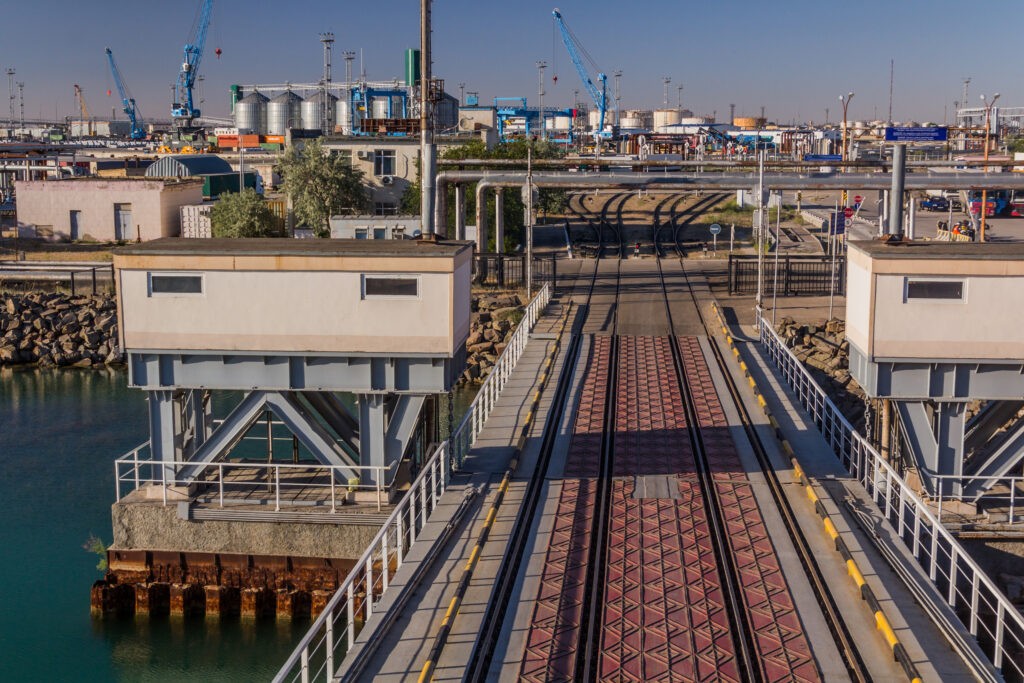
Sharing borders with China, Kyrgyzstan, Russia, Turkmenistan and Uzbekistan, Kazakhstan is the largest landlocked country in the world and the ninth largest overall by land area. Its geography makes this country a pivotal transit hub and it is now in the process of reshaping its strategic role in Eurasia. A recent significant development is the announcement of a new railway to China, which will further enhance Kazakhstan’s position in global trade, including in China’s famous Belt and Road Initiative (BRI). Deepening its relationship with China is one way that Kazakhstan seeks to diversify its economic and political ties away from Russia. At the same time, Kazakhstan is also looking to reduce its relative dependency on China and trying to balance its relationships with other major powers. Although some Western states have lately recognised this, and various international financial institutions are also assisting in enhancing Kazakhstan’s connectivity, these actors still need to pay more focused attention to Kazakhstan and work with the country in a more constructive manner. Expanding infrastructure and regional connectivity In the past, Kazakhstan has strengthened its position as a transit corridor through investments of more than $3.5 billion in the Khorgos gateway on the Chinese border (for facilitating Chinese goods being shipped to Central Asia and Europe), and other significant investments in various railways (most recently, the Shalkar–Beyneu and Zhezkazgan–Saksaul lines), as well as in the Kuryk seaport on the Caspian Sea and in the Trans-Caspian International Transport Route (TITR). The TITR is a 6,500-km corridor that links Asia with Europe and passes through various countries including Kazakhstan, Azerbaijan, Georgia, and Turkey. The Kuryk seaport has direct access to railway tracks and is fast becoming an important multi-modal route for cargo transshipment. In May 2023, Kazakhstan and China signed 47 co-operation agreements worth $22 billion. At the time, Kazakhstan’s President Kassym-Jomart Tokayev underlined that “the full exploitation of our transport and logistics capacity is of strategic importance”. He named China, Europe, Russia, and Central Asia as targets for logistical expansion. Reviewing bilateral relations with China in October last year, Tokayev proclaimed that his initiatives “confirm Kazakhstan’s readiness to strengthen our ‘all-weather’ relations and multifaceted co-operation”. Kazakhstan’s new railways amid incipient geopolitical shifts Given the above context, the recent announcement of the third railway connection between Kazakhstan and China is an important development that will enhance freight capacity and reduce border congestion. The new 272-kilometre (km) line will run in a south-east direction from Ayagoz in eastern Kazakhstan to Bakhty on the Chinese border before continuing to Chuguchak in Tacheng prefecture. The double-track railway is expected to boost freight capacity between Kazakhstan and China by more than two thirds, raising annual carriage from 28 million to about 48 million tonnes per year after its completion in 2027. The connection is a part of the major investment in a total of 1,300 km of new railway lines that are expected to facilitate exports and contribute to the TITR’s development. In the meantime, Kazakhstan has recently flashed on the geopolitical...

What the Proposed U.S. Ban on Russian Uranium Imports Could Mean for Kazakhstan

On Monday, 11 December 2023, the U.S. House of Representatives passed a new bill banning imports of Russian uranium. While the bill would need to pass the U.S. Senate and be signed off by President Joe Biden in order to become law, this first step towards legality raises questions about the future of nuclear energy in the U.S., and which country could provide the resources necessary to facilitate it going forwards. This bill represents a significant opportunity for Kazakhstan, the world’s largest producer of uranium, which could potentially step into the breach and provide the mineral necessary to meet the U.S.' nuclear energy needs. If successfully made into law, the bill entitled the “Prohibiting Russian Uranium Imports Act” will see a complete ban on unirradiated low-enriched uranium (the type used to make nuclear fuel) that is produced in Russia, and annual caps on the amount of low-enriched uranium that can still be imported from the country until 2027. Waivers have been built into the wording of the legislation to allow the U.S. Department of Energy (DOE) to work around the ban if no feasible alternative is found to sustain the functioning of a nuclear reactor or nuclear company. However, the bill also guides the DOE to submit a report outlining the alternatives to Russian-produced uranium, which could be utilized over the next five years. One country sure to be on their radar is Kazakhstan. A former powerhouse of the Soviet Union’s nuclear weapons testing program, Kazakhstan was left with significant infrastructure for uranium mining after the collapse of the bloc in 1991. Its nuclear production is currently monopolized by one company, Kazatomprom, which has emerged as a global leader in the field. Although the U.S. mines its own uranium, it does not produce enough to meet its domestic demands for nuclear power, which in the year 2022 was over 20,100 metric tonnes in total. That year, the U.S. produced 75 metric tonnes of uranium ore from its own mines. By comparison, Kazakhstan produced 21,227 metric tonnes in the same time period. Mukhtar Dzhakishev, the former head of Kazatomprom, has spoken about the necessity of increasing the volume of production in Kazakhstan if it were to be a viable candidate for replacing Russia’s supply to the U.S. Greater resources would need to be directed towards mining if the country were to increase its annual uranium yield to make up for the lost volume of Russian uranium. If the U.S. were to seek a trade agreement with Kazakhstan to bolster its nuclear power supplies, it would indicate an alignment with the European Union, which recently expressed a desire to conduct increased trade with countries in Central Asia. Given that the largest exports from Central Asian countries to Europe are of natural resources such as oil, gas and metals, it is safe to assume that energy will be one of the key goals in any trade deals the EU tries to negotiate. These announcements have arisen in the wake of Russia’s war in...

Kazakhstan’s Foreign Policy: A New Year’s Outlook Under President Tokayev

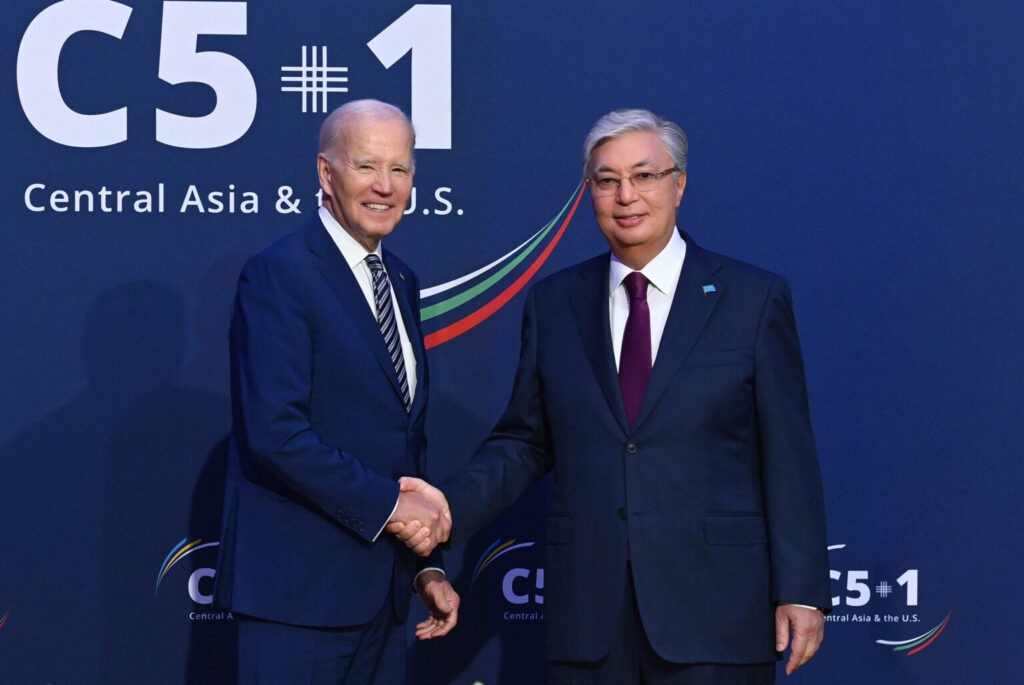
When Kassym-Jomart Tokayev became the President of Kazakhstan in 2019, he brought to the role a wealth of experience from his long diplomatic career. Amongst many responsibilities, this experience included high-level government positions such as the post of deputy foreign minister and prime minister. Navigating geopolitical challenges since 2019 Tokayev has had a high global profile, including serving as director-general of the United Nations Office in Geneva. It was therefore expected that his internationally recognised acumen would play a foundational role in defining Kazakhstan's path through the complex, and sometimes chaotically evolving, geopolitics in Central Asia and beyond. Tokayev became president at a time when Kazakhstan faced both internal and external challenges. Domestic political and administrative reforms could not wait. The country’s strategically important natural resources, such as uranium and oil, as well as its keystone geographic position at the heart of Central Asia with a long border on the Caspian Sea attracted the attention of the international community. Situated between Russia and China, Kazakhstan required a balanced and nuanced foreign policy to respond to growing interest from the European Union (EU) and the United States. Since assuming the presidency in 2019, Tokayev has enhanced the country's geo-economic context as a shaper of transit corridors. Most notable of these is the Trans-Caspian International Trade Route (TITR), which puts Kazakhstan at the centre of pivotal geopolitical dynamics as a bridge between Europe and Asia. Strengthening bilateral and multilateral partnerships The EU, recognising Kazakhstan’s importance, has deepened its engagement with the country through an Enhanced Partnership and Cooperation Agreement that entered into force in 2020. Deeper ties between Astana and Brussels, and the EU's interest in Kazakhstan, go far beyond hydrocarbon energy resources to embrace cooperation in green technologies, digital transformation and sustainable development. At the same time, Tokayev's tenure has seen Kazakhstan navigate its relationships with international superpowers amidst significant "black-swan" events like the COVID-19 pandemic and the worsening of Russia's conflict with Ukraine. His administration has skilfully maintained good ties with Russia while also adhering to international sanctions. Such an approach showcases Kazakhstan's commitment to global norms, multilateralism and international cooperation, combined with its commitment to an independent foreign policy based on national interests. Under President Tokayev's leadership, Kazakhstan has enhanced its diplomatic engagement by emphasising its strategic role in both regional and global geopolitics. His tenure has been marked by a continuing series of high-profile meetings and participation in key summits. Kazakhstan has also made crucial contributions to regional organisations, such as the Organisation of Turkic States (OTS) and the Commonwealth of Independent States (CIS). The country's involvement in these organisations underlines its commitment to regional cooperation and integration. Particularly in the OTS, Kazakhstan has emerged as a leader, facilitating discussions and promoting initiatives that align with its broader foreign policy goals. Top-level international meetings (with figures such as U.S. President Joe Biden, Russian President Vladimir Putin, Chinese Communist Party Chief Xi Jinping, UN Secretary-General Antonio Guterres and French President Emmanuel Macron) underscore Kazakhstan's central strategic importance in global...