• KGS/USD = 0.01144 0%
  • KZT/USD = 0.00212 0%
  • TJS/USD = 0.10456 0%
  • UZS/USD = 0.00008 0%
  • TMT/USD = 0.28490 0%
  • KGS/USD = 0.01144 0%
  • KZT/USD = 0.00212 0%
  • TJS/USD = 0.10456 0%
  • UZS/USD = 0.00008 0%
  • TMT/USD = 0.28490 0%
  • KGS/USD = 0.01144 0%
  • KZT/USD = 0.00212 0%
  • TJS/USD = 0.10456 0%
  • UZS/USD = 0.00008 0%
  • TMT/USD = 0.28490 0%
  • KGS/USD = 0.01144 0%
  • KZT/USD = 0.00212 0%
  • TJS/USD = 0.10456 0%
  • UZS/USD = 0.00008 0%
  • TMT/USD = 0.28490 0%
  • KGS/USD = 0.01144 0%
  • KZT/USD = 0.00212 0%
  • TJS/USD = 0.10456 0%
  • UZS/USD = 0.00008 0%
  • TMT/USD = 0.28490 0%
  • KGS/USD = 0.01144 0%
  • KZT/USD = 0.00212 0%
  • TJS/USD = 0.10456 0%
  • UZS/USD = 0.00008 0%
  • TMT/USD = 0.28490 0%
  • KGS/USD = 0.01144 0%
  • KZT/USD = 0.00212 0%
  • TJS/USD = 0.10456 0%
  • UZS/USD = 0.00008 0%
  • TMT/USD = 0.28490 0%
  • KGS/USD = 0.01144 0%
  • KZT/USD = 0.00212 0%
  • TJS/USD = 0.10456 0%
  • UZS/USD = 0.00008 0%
  • TMT/USD = 0.28490 0%

Viewing results 4549 - 4554 of 5758

Kazakhstan Looking to Develop Tourism

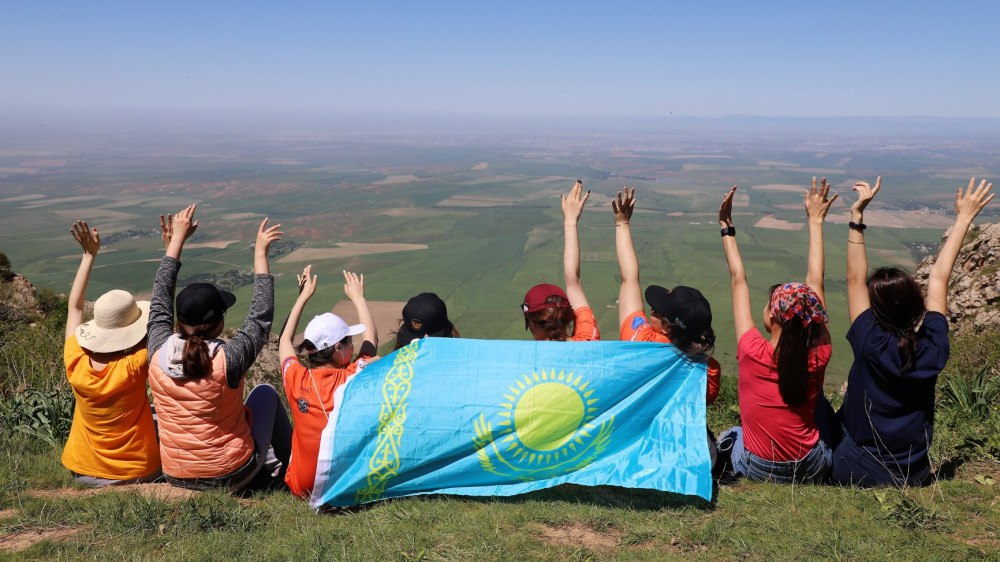
In recent years the government has made sizeable efforts to develop the country’s tourism industry. Today, more than ten tourist clusters are being developed in Kazakhstan, including the Almaty agglomeration, the resorts of Burabay, Katon-Karagay, and Bukhtarma in the East Kazakhstan Region, the Caspian resort areas in the west of the country, and ancient Turkestan. [caption id="attachment_20746" align="aligncenter" width="479"] @iStock, Charyn Canyon[/caption] A lot has been done, but there is more to do In June of this year, President Kassym-Jomart Tokayev held a meeting on developing tourism, where he outlined new priorities. “Today, the share of tourism in GDP has exceeded 9%. So, we can say that this indicator is returning to pre-pandemic levels. About 10% of jobs in the world are provided by tourism. Thirty percent of world exports, 7% of investment, and 5% of tax revenues are attributable to tourism services sector. Kazakhstan has everything necessary for the development of all types of tourism: from environmental to business,” he noted. “Almost 90% of foreign tourists in Kazakhstan come from neighboring CIS countries. There are still a few tourists from further abroad. Meanwhile, international research shows that more than 70% of travelers prefer to visit vacation destinations within a four-hour flight. That is, Kazakhstan can be very attractive to tourists from China, India, East Asia, and the Middle East. At the same time, we must take into account specific issues related to the national mentality of foreign tourists, their interests and demands, and not approach all tourists with a single program. This requires qualified cadres and the will to do quality work. Within five years, we can double or even triple the number of tourists. We need to develop air transportation. First of all, we need to expand the presence of low-cost airlines on popular air routes.” As the most promising destinations, President Tokayev cited the mountain cluster in the Almaty Region, Caspian Sea beaches in the Mangistau Region, and the Shchuchinsk-Burabay resort area in Akmola Region. Almaty was singled out as the locus of tourism development in Kazakhstan. The city accounts for a quarter of the country’s total tourist flow, including half of foreign tourists. President Tokayev also noted shortcomings: in some resort areas, there is not enough capacity, logistics need to be developed, and personnel training is lagging. [caption id="attachment_20747" align="aligncenter" width="456"] @borovoe.kz, Burabay resort area[/caption] Higher rankings and higher investment In May, Kazakhstan rose in the World Economic Forum’s latest Travel & Tourism Development Index, jumping 14 spots to rank 52nd out of 119 countries, ahead of Qatar, Azerbaijan, Uzbekistan, Vietnam, Egypt, and Latvia. Kairat Sadvakassov, chair of the state company, Kazakh Tourism, called this a victory. “Our long-term goal is to break into the top 50 of this ranking. Now, we are only two spots away from [achieving] this goal. This became possible thanks to the coordinated work of central government entities and local executive-branch entities, associations, businesses, and universities,” explained Sadvakassov. This year, the Ministry of Tourism and Sports expects more than 10 million...
Uzbekistan Flings Open Doors to Tourists, Foreign and Local

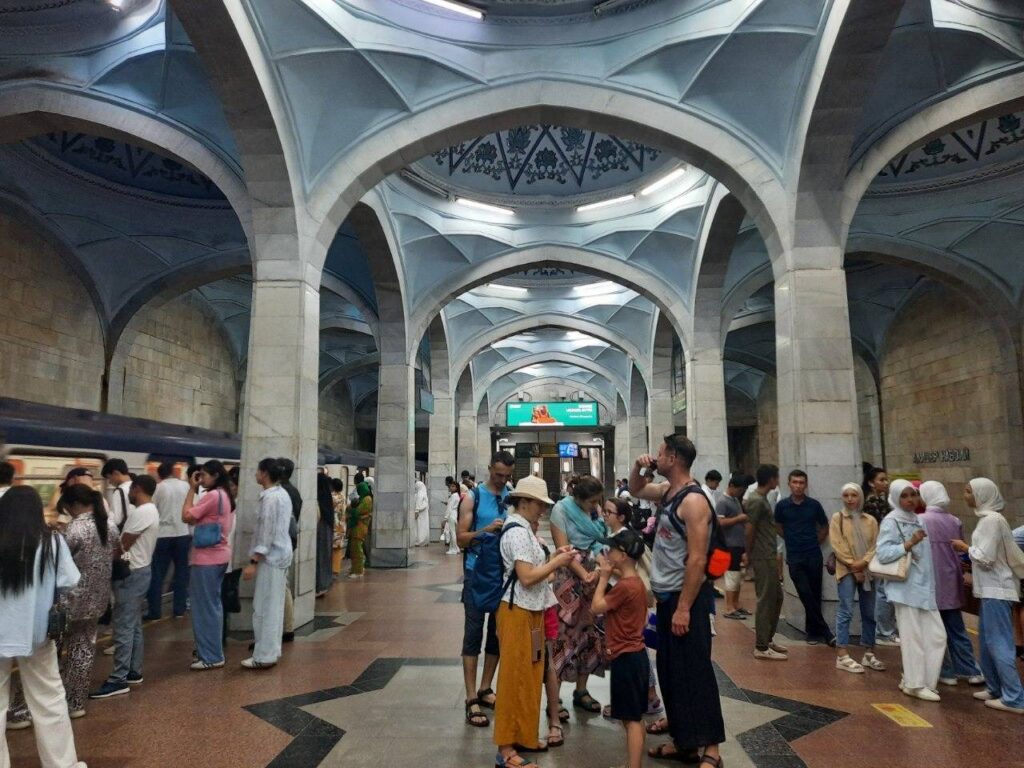
A lot of foreign tourists in Uzbekistan head for fabled Silk Road cities such as Khiva, Bukhara and Samarkand, but some also go to the Alisher Navoi underground station in the Tashkent metro. There, they admire turquoise imagery and a domed ceiling evoking centuries-old Islamic architecture in a Soviet-era transit system used by hundreds of thousands of commuters every day. The subway system in the Uzbek capital is a showcase for Uzbekistan´s internal tourism ambitions, enticing travelers with posters and video advertisements aimed at generating a domestic market alongside international visitors. State and private TV channels pitch trips to historical and pilgrimage sites for local people. [caption id="attachment_20926" align="aligncenter" width="510"] Tourists visit 16th century historical and religious sites in Nurota, an Uzbek town. Photo: TCA, Sadokat Jalolova.[/caption] These are expansionary times for tourism in the Central Asian country, which is loosening visa restrictions and ramping up its image as a leisure destination while Barcelona, Venice and other international tourism heavyweights in Western Europe are under strain. There are challenges: Infrastructure shortcomings, urban pollution, unregulated construction and occasional friction with UNESCO guidelines. Tourism in Uzbekistan is mostly regional, with the vast majority of foreign visitors coming from post-Soviet states. Some 3.5 million foreign tourists entered the country in the first six months of this year, a 13.3% increase over the same period in 2023, according to the national statistics agency. Of those, 3.2 million came from Kyrgyzstan, Tajikistan, Russia, Kazakhstan and Turkmenistan. Smaller numbers came from Türkiye (52,000), China (29,000), India (28,000), South Korea (20,000), Italy (18,000), and other countries. [caption id="attachment_20928" align="aligncenter" width="522"] The Kalon Mosque, Minaret and the Mir-I-Arab Madrasa, Bukhara. Photo: TCA, Stephen M. Bland[/caption] Gil Stein, a professor of ancient Near Eastern studies at the University of Chicago, led a university-affiliated tourist group to explore “the traditional crafts and foods of Central Asia” for two weeks in June. The group traveled mostly in Uzbekistan, following a brisk schedule that included Khiva, Bukhara, Samarkand, Tashkent and the Ferghana Valley – the latter is a fertile, less-touristed region extending into Kyrgyzstan and Tajikistan. Uzbekistan is “preserving cultural heritage as a way of attracting cultural heritage tourism” and the industry caters to “three or four classes of tourist,” including the local market as well as those seeking to visit Islamic holy places and Buddhist heritage sites, Stein said. His group visited workshops, some run by sixth generation artisans, to marvel at weaved silk, hand-forged Damascus steel knives and other products. “Traditional crafts are alive and well” and they are “patronized by modern Uzbeks” as well as foreign tourists, said Stein, who has traveled to Central Asia for years. He described a “broader opening up” in Uzbekistan as it looks to expand international contacts alongside relationships with China and Russia, the big regional powers. Uzbekistan’s tourism revenue was $2.14 billion in 2023, about 2.35% of GDP. Current measures to boost tourism include a $50 million credit line for local tourism organizations, tax exemptions for some industry operators, hotel management courses, and...

Responsible AI Rankings: Uzbekistan Leads in Central Asia

The Global Center on AI Governance has published a report titled “Results of the Global Index on Responsible AI in Eastern Europe and Central Asia.” Among Central Asian countries, Uzbekistan has been judged to use artificial intelligence in the most responsible way. Recent AI initiatives in Uzbekistan cover fields including cultural and linguistic diversity, international cooperation, public sector skills development, and transparency. Kazakhstan ranks second in the region. Among Central Asian countries, Kazakhstan ranks first for the number of government initiatives related to responsible AI. Kyrgyzstan ranks third in the region, demonstrating significant non-governmental sector participation in responsible AI. However, the need for a comprehensive government system affects its overall outcome. The report states that the country has received a high rating for responsible AI governance, second only to Uzbekistan in the region. However, due to the scarcity of government frameworks, which, along with government initiatives, had the most weight in the index score, Kyrgyzstan scored lower in the Responsible AI Index. Tajikistan is the only Central Asian country with an AI national strategy aimed at development until 2040. It ranks fourth in the region. However, this strategy covers only 5 out of 19 thematic directions. Tajikistan's scores are relatively high regarding responsible AI governance; however, the country has the most passive non-state sector among the pillars assessed. Turkmenistan has the lowest indicator in the region. Government structures related to the responsible use of artificial intelligence have not been identified in the country.

Kyrgyzstan and Turkmenistan to Increase Trade and Economic Cooperation

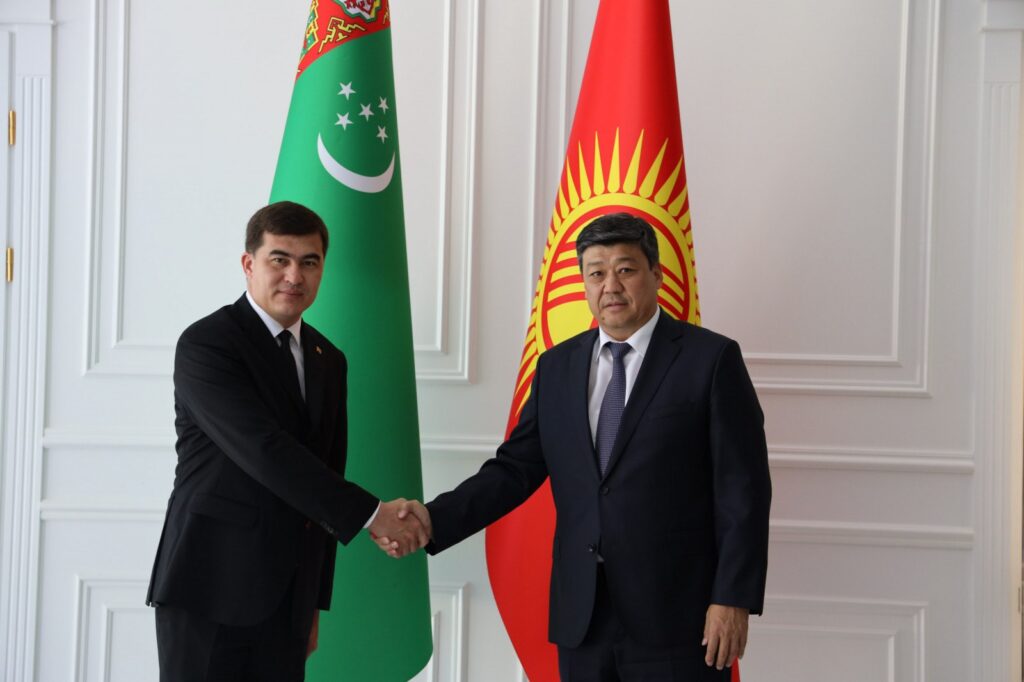
On July 25, Kyrgyzstan hosted the 6th meeting of the Kyrgyz-Turkmen intergovernmental commission on trade, economic, scientific, technical, and humanitarian cooperation, chaired by Kyrgyzstan’s Deputy Chairman of the Cabinet of Ministers—Bakyt Torobaev, Minister of Water Resources, Agriculture and Processing Industry, and Annageldi Saparov, Minister of Energy of Turkmenistan. The parties noted the sevenfold increase in trade turnover between Kyrgyzstan and Turkmenistan over the past four years and discussed means for further improvement.  In 2023, bilateral trade totalled $64 million. Torobaev proposed opening a joint bonded zone in Turkmenistan to develop trade infrastructure and postal operations in e-commerce. He also noted that providing preferential tariffs for Kyrgyz cargo trucks through Turkmenistan's territory and simplifying the visa procedure for Kyrgyz drivers will significantly expand bilateral trade exchange. Due to their geographical locations, the parties emphasized that Kyrgyzstan and Turkmenistan have significant potential in the transport and logistics sector. In particular, the planned launch of a transport corridor from China through Kyrgyzstan and Uzbekistan to Turkmenistan, utilizing the Turkmenbashi seaport, will provide access to the Caspian Sea and the Russian Federation, opening up new economic opportunities for both countries. The meeting addressed the need to continue working on creating a Kyrgyz-Turkmen Development Fund as a mechanism for uniting the two countries' business sectors and stimulating the creation of joint ventures. The parties also discussed a project to build a Turkmen resort in Cholpon-Ata at Lake Issyk-Kul. The Kyrgyz government’s press service stated that the parties signed documents on Kyrgyzstan's import of Turkmen electricity in 2025 but did not disclose details.

China the Largest Market for Kazakhstan’s Agricultural Products

The Kazakh minister for agriculture, Aidarbek Saparov, has named China the largest market for Kazakhstani agricultural products. Kazakhstan mainly exports grain and oilseeds to China, and imports Chinese vegetables and nuts. In 2023 Kazakhstan’s agricultural exports to China increased by 84%, and reached $1 billion. In the first five months of this year, bilateral agricultural trade increased by 14%. It reached $540 million, including Kazakhstan’s exports at $380 million. Kazakhstan has signed protocols with China on the export of 27 types of agricultural products to the Chinese market, including 18 types of crop products and nine types of livestock products. Currently, nine Kazakh companies export livestock products, and 728 companies export crop products. They are waiting to be included in China’s importers register. Kazakhstan's agriculture ministry has signed a protocol with China's customs service to harmonise veterinary requirements for the export of various types of animals and livestock products, including cattle skins, dry mare's milk, frozen poultry products, horse meat, offal obtained from slaughtering animals, meat products that have undergone high heat treatment, as well as chilled beef and lamb. Saparov noted that Kazakhstan is among the world’s top 25 food exporters, exporting Kazakh agricultural products to 80 countries. Over the past five years its agricultural exports have doubled, reaching $5.4 billion. “We intend to continue increasing these figures. In the context of a growing food deficit [in the world], our country seeks to double agricultural exports by 2029,” he said, adding that Kazakhstan is changing the structure of agricultural exports, giving preference to deeply processed products, the exports of which have doubled over the past five years, reaching $2.3 billion.

Daughter of Civil Activist in Turkmenistan Not Allowed to Leave Country

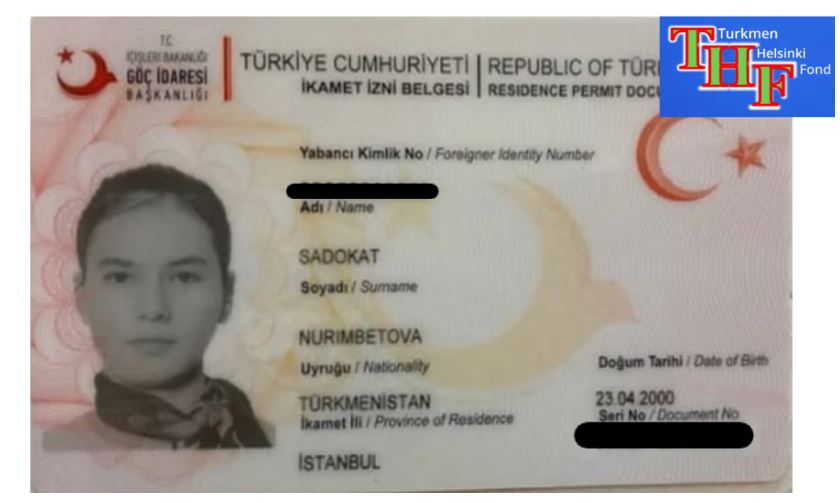
Sadokat Nurimbetova, the daughter of prominent civil activist Hamida Babajanova, was removed from a Turkmenistan Airlines flight to Istanbul at Ashgabat International Airport, it has been reported. Nurimbetova, an ethnic Uzbek, is a second-year student at Istanbul Medical University, and accordingly she has a valid Turkish residence permit, a “kimlik.” On June 5, Nurimbetova went to her home country to apply for a new passport, which she duly received on July 10, and bought a plane ticket to Istanbul. At passport control, two immigration officials intercepted Nurimbetova and took her to a separate room. There, she was fingerprinted and interrogated, after which the Migration Service officers told the student that she was banned from leaving Turkmenistan.  “This is a directive from above," Nurimbetova was told, and was advised not to go anywhere and not to complain to anyone. It was also emphasized to her that her mother should not entertain thoughts of going anywhere. Nurimbetova is the daughter of well-known Turkmen civil activist Hamida Babajanova, who last year defended the right of her elderly mother, Yakujan, to make a pilgrimage to Mecca. Recently, cases of Turkmen citizens being removed from flights abroad without explanation have become more frequent. The same thing is happening when attempting to cross the border by land.