• KGS/USD = 0.01144 0%
  • KZT/USD = 0.00213 0%
  • TJS/USD = 0.10456 0.19%
  • UZS/USD = 0.00008 0%
  • TMT/USD = 0.28490 0%
  • KGS/USD = 0.01144 0%
  • KZT/USD = 0.00213 0%
  • TJS/USD = 0.10456 0.19%
  • UZS/USD = 0.00008 0%
  • TMT/USD = 0.28490 0%
  • KGS/USD = 0.01144 0%
  • KZT/USD = 0.00213 0%
  • TJS/USD = 0.10456 0.19%
  • UZS/USD = 0.00008 0%
  • TMT/USD = 0.28490 0%
  • KGS/USD = 0.01144 0%
  • KZT/USD = 0.00213 0%
  • TJS/USD = 0.10456 0.19%
  • UZS/USD = 0.00008 0%
  • TMT/USD = 0.28490 0%
  • KGS/USD = 0.01144 0%
  • KZT/USD = 0.00213 0%
  • TJS/USD = 0.10456 0.19%
  • UZS/USD = 0.00008 0%
  • TMT/USD = 0.28490 0%
  • KGS/USD = 0.01144 0%
  • KZT/USD = 0.00213 0%
  • TJS/USD = 0.10456 0.19%
  • UZS/USD = 0.00008 0%
  • TMT/USD = 0.28490 0%
  • KGS/USD = 0.01144 0%
  • KZT/USD = 0.00213 0%
  • TJS/USD = 0.10456 0.19%
  • UZS/USD = 0.00008 0%
  • TMT/USD = 0.28490 0%
  • KGS/USD = 0.01144 0%
  • KZT/USD = 0.00213 0%
  • TJS/USD = 0.10456 0.19%
  • UZS/USD = 0.00008 0%
  • TMT/USD = 0.28490 0%

Viewing results 4681 - 4686 of 5752

Kyrgyzstan, Tajikistan and Uzbekistan Poised to Host the 2035 Asian Cup

Three Central Asian countries—Kyrgyzstan, Tajikistan, and Uzbekistan—are poised to submit a joint application to the Asian Football Confederation (AFC) to host the Asian Cup 2035 ; the main competition of Asian national football teams. On his “Futbolium” Telegram channel, sports expert Alisher Nikimbayev informed subscribers ,“I have no right to speak officially. But as far as I understand, this is how everything is planned for 2035. And there is already unofficial support from the AFC for this proposal." Nikimbayev mentioned that in addition to the refurbishment of current facilities,  new stadiums are being built in Bishkek and Dushanbe. The stadium in Khujand is also being put in order. He finished by noting that Uzbekistan already has stadiums that meet FIFA requirements.

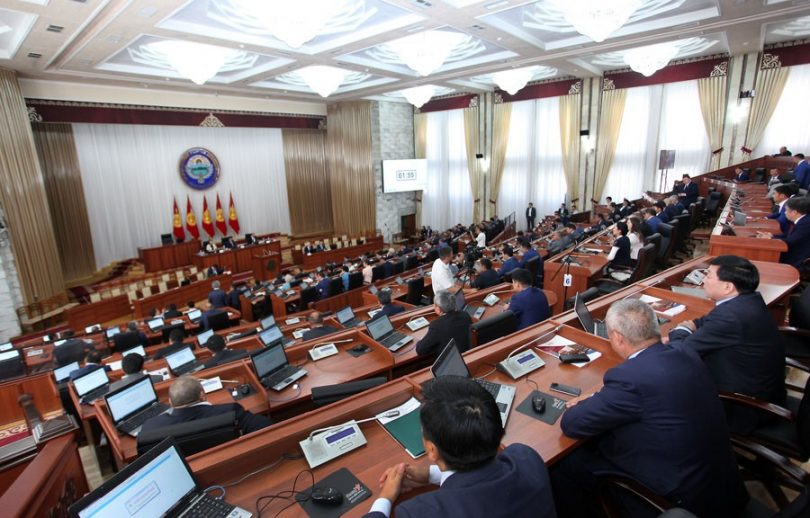
Kyrgyzstan Parliamentarian in Brawl with Security Guard

In Bishkek, Chyngyz Azhibayev, a deputy of the Kyrgyz Republic's Jogorku Kenesh (Parliament), almost ran over an employee of the Asia Mall shopping and entertainment center, after which he got into a fight with him, 24.kg has reported. The incident occurred on June 21, but has only just been acknowledged. According to a source in law enforcement agencies, at about 3PM, whilst driving his car out of the shopping mall's parking lot, Azhibayev narrowly avoided hitting a security guard. The deputy then reacted aggressively to the security guard's remarks, exited his vehicle, and proceeded to start a fight with him. The pair were separated by bystanders, but the deputy then called the police and filed a complaint against the guard. The press service of the Leninsky district police department said that the call came in at 15:50. Law enforcement officers who arrived on the scene took Azhibayev's statement, which he later withdrew, meaning the case was terminated.

Drop in Uzbekistan’s Gold Sales

 In April, Uzbekistan's sales of gold dropped significantly, according to data published by the World Gold Council (WGC). In the same month,  the total gold reserves held by the world’s central banks increased by 33 tons and volumes of purchases and sales amounted 36 tons and 3 tons respectively. The most active buyers of precious metals during the reporting period were the Central Banks of Turkey (8 tons), Kazakhstan (6 tons), and India (6 tons). Meanwhile,  the Central Bank of China greatly reduced its gold purchases , while increasing its reserves by 2 tons to 2,264 tons; the lowest figure since November 2022. A significant decrease in precious metal sales occurred at the expense of Uzbekistan and Jordan, whose reserves decreased by only 1 ton. In May, the world central banks' reserves  increased by 10 tons, the volume of purchases was 23 tons, and that of sales, totalled 12 tons. During that month, Kazakhstan took the lead in sales of 10 tons of gold. A previous report, posted by the TCA, provided data for Uzbekistan’s gold exports in February and March.

Universities of Kazakhstan and China to Cooperate on Microsatellite Launch

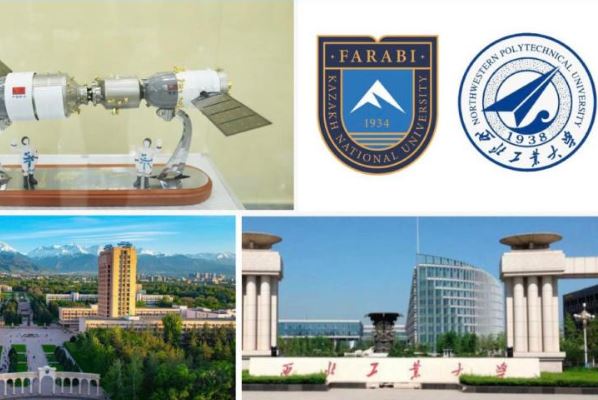
Al-Farabi Kazakh National University and the Northwest Polytechnic University of China have agreed to conduct joint scientific research using microsatellites. According to the press service of the Ministry of Science and Higher Education of the Republic of Kazakhstan, the agreement was reached during  talks between the President of the Republic of Kazakhstan, Kassym-Jomart Tokayev, and Xi Jinping, during the latter's official visit to Kazakhstan. The initiative, the first of its kind to be implemented by Kazakh universities,  opens up new opportunities for space research, training qualified specialists, and developing joint satellites, as well as enabling remote sensing studies of the Earth via a microsatellite. Integral to the project, is an aim to develop equipment for gravimetric measurements, including a specialized ground station and a transmitter on the satellite, designed to detect density inhomogeneities in the Earth's crust and mantle. The employment of such, will help solve fundamental problems in the study of geodynamic processes at great depths. The North-West Polytechnic University of China is a leader in launching objects into space whilst Al-Farabi Kazakh National University, the only Kazakh university with experience in launching nanosatellites into orbit , has already launched its own Al-Farabi-1 and Al-Farabi-2 nanosatellites.

Taking the Necessary Steps to Curb Child Abuse in Kazakhstan

In Almaty, a young woman threw herself off a Ferris wheel, falling to her death. Before committing suicide, she had strangled her five-year-old daughter. The number of children in Kazakhstan has soared over the past decade, but so have the number of crimes committed against minors. When Mom and Dad are the murderers In 2023, twenty-five children were murdered in Kazakhstan, seven of them by their relatives according to the country’s children's ombudsman, Dinara Zakiyeva. This year, Kazakhstanis were shocked by numerous horrifying cases of child abuse. According to relatives and neighbors, the family of the woman who strangled her daughter lived in the Ile District of Almaty Region and were financially secure and successful. The regional commissioner for children's rights, Aigul Yesimbekova, explained that the woman had confesses her crime to her sister before committing suicide. “The child had Down's syndrome. The mother was most likely in an internal crisis and despair when she decided to do this,"Yesimbekova explained. "She went to her sister and told her that she was going to kill herself. When her sister tried to calm her down, she went to the park (the Central Park of Culture and Leisure in Almaty). Her husband is an IT specialist, and the financial component [of her life] was fine. She was not registered with psychiatrists, her husband makes money, and everything seemed fine, but the child was sick. Probably, her soul was in such a state of crisis; it is hard when a child is sick. Maybe she murdered the child in a rush of emotion, and then, unable to cope with the guilt, she took the step she did.” According to Zakiyeva, such families are in critical need of psychological support, and child protective services should supervise them. However, the situation with psychologists and child social workers in Kazakhstan is poor. At the end of June, a court in the Turkestan Region convicted a mother of killing her two children. Their bodies were found in a rented apartment in February 2024 in the city of Turkistan. The mother was sentenced to 15 years in prison. After killing her children, the woman called her friend and told her what she'd done. Even against the backdrop of Kazakhstan’s high birth rates, the Turkestan Region - as is the entire south of the country - is an outlier. The percentage of people under the age of 18 in Kazakhstan stands at 34.1%, whereas in the Turkestan Region, this figure is 43.3%, followed by the Mangystau Region at 41.9%, and the federal city of Shymkent at 40.6%. Experts say that it is in the regions with the highest birth rates that the highest rates of violence against children are recorded. In September of last year, a pedophile raped and brutally murdered a five-year-old girl who lived next to him in the village of Zhibek Zholy in the Turkestan Region. He was sentenced to life imprisonment and chemical castration. News of the murder almost sparked a riot and deadly reprisals against the rapist;...

Astana Qazaqhstan Team’s Stellar Rise from the Ashes

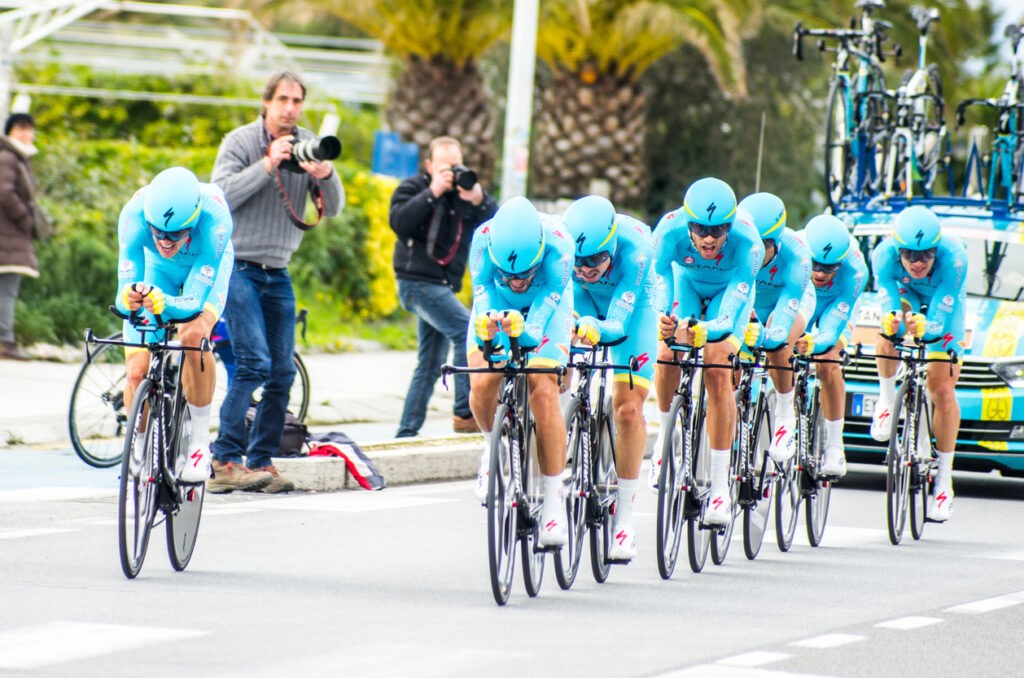
On July 4, the official website of the National Olympic Committee of the Republic of Kazakhstan announced that Astana Qazaqstan Team member, Mark Cavendish, won the fifth stage of the Tour de France.  Winning the Tour for the 35th time, Cavendish surpassed the previous record set by Eddy Merckx and demonstrating the management's rise from recent troubles, his victory revived his team's former glory. Two names Alexander Vinokurov and Danial Akhmetov are the two cyclists who first turned the spotlight on the Astana Qazaqstan Team. In May 2006, "Operation Puerto", the code name of the Spanish police investigation into the doping system in cycling, led by Dr. Eufemiano Fuentes, resulted in a series of searches and arrests involving numerous cyclists. The implication of the Spanish team Liberty Seguros-Würth, of which Kazakh cyclists Alexander Vinokurov and Andrey Kashechkin were key members, led to its sponsors' withdrawal.  Vinokurov sought assistance from the then Prime Minister and head of the Cycling Federation of Kazakhstan, Danial Akhmetov. With support from the latter, the Astana team was established that year and Vinokurov celebrated by winning the Vuelta a España, with Kashechkin finishing third. Scandals, intrigues, investigations The first scandal broke out immediately. When the owner of the ProTour license, which belonged to Liberty Seguros-Würth, refused to sell it to Astana, the team submitted an application to the International Cycling Union. The initial response from the  IUW was that it could not guarantee the license until the 2007 Tour.  Meanwhile, organizers assured Astana that it would be allowed to participate  in major international competitions and on December 20, 2006, the team was granted a four-year license. In July 2007, a doping scandal broke at the Tour de France, at the centre of which, was Astana's team leader , Alexander Vinokurov. A test performed after his winning a stage of the classic race showed the presence of different types of red cells in his blood, indicative of a blood transfusion prior to competing, and Vinokourov was disqualified for two years. Andrei Kashechkin was similarly caught and during the second season, two more Astana athletes, suspected of doping, were likewise suspended from racing. All these troubles led to the Kazakh team's absence from the 2008 Tour de France season in the Giro d'I and other Grand Tours. By then, the team was under the direction of  Johan Brunel renowned for bringing on winner of the Tour de France, Alberto Contador, and many other strong riders. Both Johan Brunel and Alexander Vinokurov were connected with the doping scandal that followed in 2009.  As soon as his disqualification period had expired the famous rider intended to return to "Astana triumphantly." Brunel invited American cyclist Lance Armstrong to Astana to pair with Contador. He persistently objected, however, to the contract with Vinokurov and Kashechkin. Ultimately, he left the team, unable to withstand the confrontation with the famous Kazakh. Armstrong and most of the team went after him, and Contador's contract was delayed for another year. The outcome of the scandals forced...