• KGS/USD = 0.01143 -0%
  • KZT/USD = 0.00193 -0%
  • TJS/USD = 0.10881 0%
  • UZS/USD = 0.00008 0%
  • TMT/USD = 0.28575 0%
  • KGS/USD = 0.01143 -0%
  • KZT/USD = 0.00193 -0%
  • TJS/USD = 0.10881 0%
  • UZS/USD = 0.00008 0%
  • TMT/USD = 0.28575 0%
  • KGS/USD = 0.01143 -0%
  • KZT/USD = 0.00193 -0%
  • TJS/USD = 0.10881 0%
  • UZS/USD = 0.00008 0%
  • TMT/USD = 0.28575 0%
  • KGS/USD = 0.01143 -0%
  • KZT/USD = 0.00193 -0%
  • TJS/USD = 0.10881 0%
  • UZS/USD = 0.00008 0%
  • TMT/USD = 0.28575 0%
  • KGS/USD = 0.01143 -0%
  • KZT/USD = 0.00193 -0%
  • TJS/USD = 0.10881 0%
  • UZS/USD = 0.00008 0%
  • TMT/USD = 0.28575 0%
  • KGS/USD = 0.01143 -0%
  • KZT/USD = 0.00193 -0%
  • TJS/USD = 0.10881 0%
  • UZS/USD = 0.00008 0%
  • TMT/USD = 0.28575 0%
  • KGS/USD = 0.01143 -0%
  • KZT/USD = 0.00193 -0%
  • TJS/USD = 0.10881 0%
  • UZS/USD = 0.00008 0%
  • TMT/USD = 0.28575 0%
  • KGS/USD = 0.01143 -0%
  • KZT/USD = 0.00193 -0%
  • TJS/USD = 0.10881 0%
  • UZS/USD = 0.00008 0%
  • TMT/USD = 0.28575 0%
21 December 2025

Viewing results 1297 - 1302 of 1814

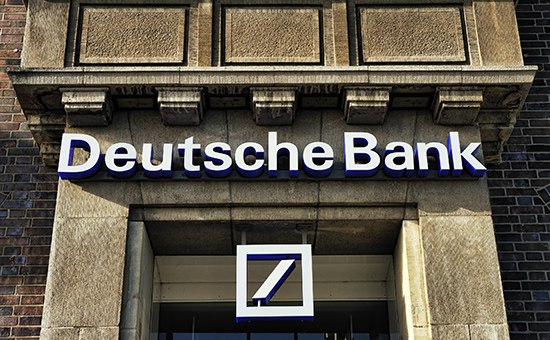
Deutsche Bank Loans €165 Million to Uzbekistan’s Uzpromstroybank

The Uzbek bank Uzpromstroybank has received a loan of €165 million ($180 million) from Germany's Deutsche Bank. Gazeta.uz reports that “The funds will be used to create new jobs, including the production of industrial and construction materials, as well as to finance medium-sized business projects with the involvement of foreign investors in Uzbekistan.” The country's president Shavkat Mirziyoyev has tasked commercial banks with attracting foreign investments and supporting clients' investment projects by expanding external financing sources.

Almaty Hosts Russia’s Defense Head Belousov in First of a Series of CSTO Events

The Collective Security Treaty Organization (CSTO) is holding several events in Almaty, Kazakhstan's biggest city, between 30 May and 6 June. The CSTO is a regional organization in the field of collective security. It comprises six states: Armenia, Belarus, Kazakhstan, Kyrgyzstan, Russia, and Tajikistan. On May 30 a meeting was held between the defense ministers of Kazakhstan and Russia, Ruslan Zhaksylykov and Andrei Belousov. According to a statement from the Kazakh defense ministry, the parties discussed bilateral military cooperation, touching on training and joint activities, including exercises within the CSTO. “Its practical realization is carried out, among other things, within the framework of multilateral exercises. Colonel General Ruslan Zhaksylykov informed the interlocutor about holding the exercise “Birlestik” (Unity) in July this year in western Kazakhstan. According to its plan, military contingents of Azerbaijan, Kyrgyzstan, Tajikistan, and Uzbekistan will jointly work out training and combat tasks related to the localization of armed conflict and countering illegal formations,” the ministry said. Almaty's police have warned that given the scale of the events and the number of participants, the city will be partially restricted to traffic until 6 June.

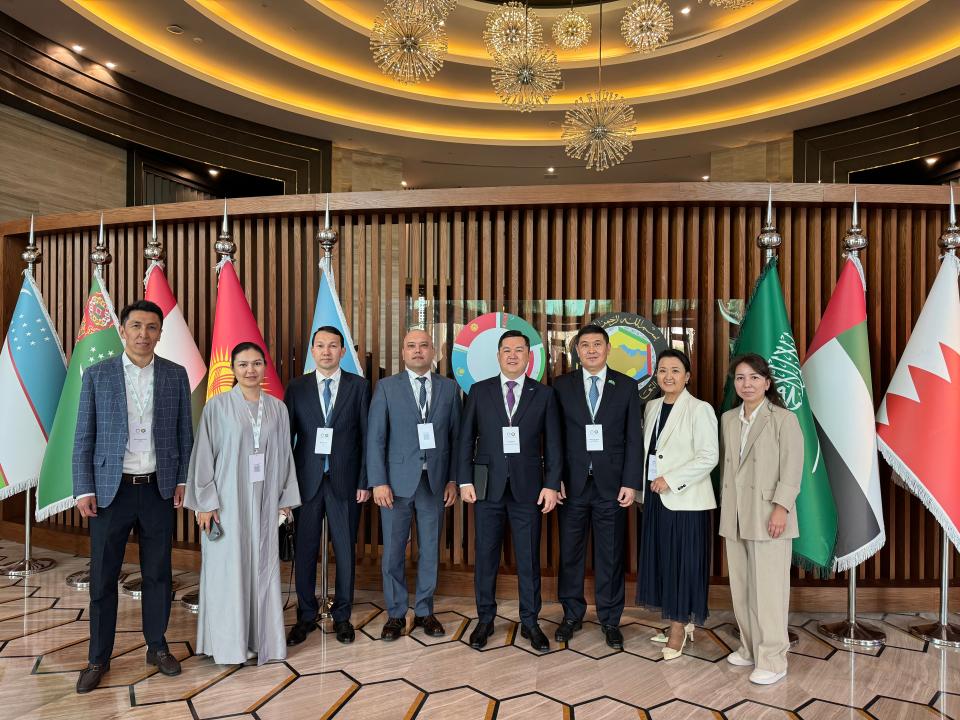
First Meeting of Central Asia – GCC Investment Forum

The Central Asia – GCC Investment Forum met for the first time in Saudi Arabia’s capital Riyadh on 29 May. The Gulf Cooperation Council (GCC) is a political and economic alliance of six Middle Eastern countries: Saudi Arabia, Kuwait, the United Arab Emirates, Qatar, Bahrain, and Oman. The forum provided opportunities for representatives of Central Asian governments and business sectors and GCC countries to present economic and investment proposals, exchange views on issues concerning bilateral and multilateral cooperation, and discuss the implementation of strategically important projects in various fields. Delegates also participated in thematic panel sessions focusing on agriculture and food security, mining and metals industry, development and infrastructure, renewable and green energy. Kazakhstan’s Foreign Ministry, the Governor of the Astana International Financial Centre (AIFC) Renat Bekturov, noted the strategic importance of intensifying cooperation between the public and private sectors of the two regions. In his remarks, he emphasized the enormous potential of the Gulf market for strengthening trade and economic relations with Kazakhstan, as well as the unlimited prospects for expanding investment partnerships. With regard to other sectors, Bekturov spoke of the significant opportunities for Central Asian and GCC countries to expand collaboration in green energy, food security, transport and logistics, mining, petrochemicals, agriculture, finance, and tourism.    

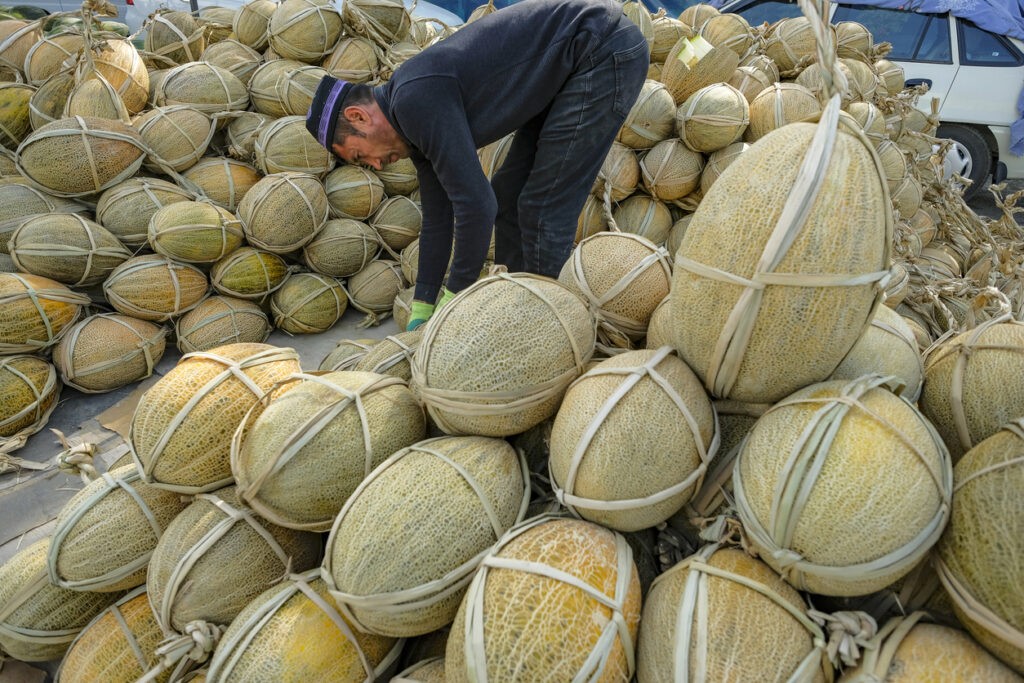
Mixed Reaction to Uzbekistan’s New Fruit Export Policy

Uzbekistan's cabinet of ministers has introduced 'recommended' export prices for 60 types of fruits and vegetables, below which their distribution abroad is now prohibited. While this move is intended to support exporters, analysts from the agency EastFruit say that it will harm exports, risk long-term cooperation, and that the new measures will not increase tax revenues or improve currency control. A recent article by EastFruit states: “Notably, these prices are fixed for the produce irrespective of quality, variety, or other differentiating factors, which disregards the inherent diversity within the fruit and vegetable industry. Historical trends indicate that such regulatory decisions are detrimental across the board. They primarily affect producers and small-scale exporters by limiting their market opportunities. This restriction not only diminishes investment appeal in agricultural production but also detracts from Uzbekistan’s attractiveness as a trading partner for major, established importers. The introduction of such direct controls makes the prospect of long-term contractual partnerships exceedingly precarious”. Uzbek economist Otabek Bakirov described this decision as “another bureaucratic hurdle for exporters”. “These rules make doing business worse, so the new rules should come into force at least 3 months after they are announced. Or will the Government’s decision prevail over the Law once again?” wrote the economist on his Telegram channel. Analysts also note that Uzbekistan’s exports have stagnated due to Russia's ban on importing fruits and vegetables from most countries. Export figures have remained almost unchanged over the past five years, ranging from $700 million to $900 million. Russia (26.3%), Pakistan (24.2%), Kazakhstan (13%) and China (9.3%) are the main export markets for fruit and vegetable products.

Foreign Ministries of Kyrgyzstan and Pakistan Discuss Safety Amid More Raids on Foreign Citizens

The Deputy Foreign Minister of Kyrgyzstan, Almaz Imangaziev has met with a delegation from the Pakistani Foreign Ministry, led by Additional Secretary Muhammad Saleem. The meeting in Bishkek centered on addressing safety concerns following unrest on May 13, when medical students from Egypt were attacked, a video of which went viral. This then swelled into mass disorder on the night of May 17-18, when a crowd of approximately 1,000 protesters blocked several streets in the center of Bishkek. During the meeting, the Kyrgyz side provided detailed information regarding the recent conflagration, with Imangaziev assuring the Pakistani delegation that all necessary measures to ensure the safety of foreign citizens have been taken, and that comprehensive efforts are underway to prevent such incidents in the future. This meeting, however, came against the backdrop of the Bishkek Police and State National Security Committee carrying out more raids on foreign citizens, wherein 64 “illegal migrants” were rounded up. As part of a campaign launched in March, the authorities have deported some 1,500 Pakistanis and 1,000 Bangladeshis. The unrest in Bishkek has served to underscore splits within the government’s ranks. Deputy Cabinet Chairman, Edil Baisalov described those who attacked the foreign students as a “bunch of hooligans,” whilst President Japarov stated that the “demands of our patriotic youth to stop the illegal migration of foreign citizens and to take tough measures against those who allow such activities are certainly correct.”

Kazakhstan Changing Its Labor Laws to Better Reflect the Country’s Needs

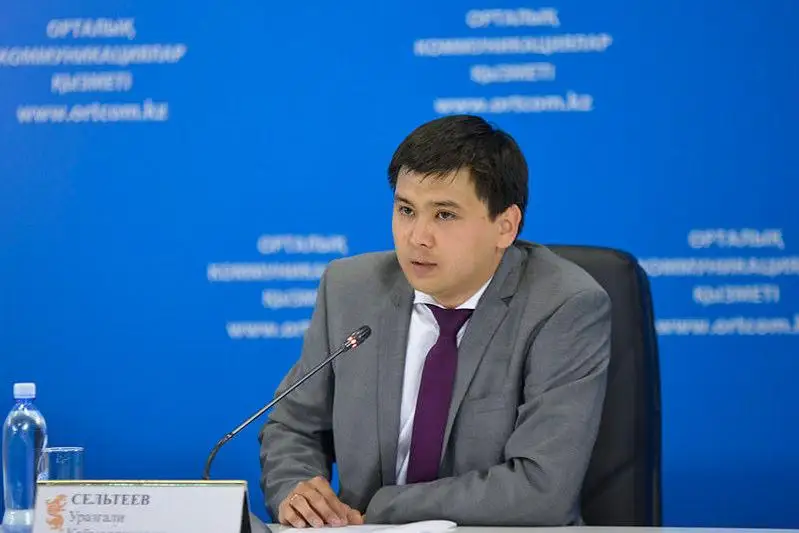
Kazakhstan has recently adopted regulations that make it more difficult for migrants and citizenship-seekers to enter the country. Urazgali Selteyev, a political scientist and director of the Institute for Eurasian Integration, told The Times of Central Asia that the legislation is being streamlined rather than tightened. According to some experts, Kazakhstan is the most attractive country in Central Asia for migrants. For many years, foreign workers have been entering the country, and illegal migration is high, as residents of neighboring countries are hired in the agricultural and construction sectors and are involved in transportation and services. In recent years, cases of detection and deportation of illegal migrants from the farthest regions, including Africa, have become more frequent. In addition, since 1991, more than one million 'kandas' (formerly known as oralmans) have arrived in Kazakhstan -- persons of Kazakh nationality resettling in the country according to established quotas. Often, kandas arrive from Uzbekistan, Kyrgyzstan, Turkmenistan, China, and Russia. Also, after the partial mobilization for Russia's war in Ukraine announced in September 2022 by Russian president Vladimir Putin, an unspecified number of draft evaders and their family members entered Kazakhstan. This situation forces the Kazakh authorities to take a stricter approach to regulating migration flows. Just the other day, the website “Open Normative Legal Acts” (“Open NLA”) posted a document highlighting the discussion that began two years ago. The document states that Kazakhstan will develop rules to determine whether kandas have a right to claim Kazakh nationality. In May this year, Kazakhstan's president Kassym-Jomart Tokayev signed the law “On introducing amendments and additions to some legislative acts of the Republic of Kazakhstan on the improvement of legislation in the field of migration and penal system.” This law provides new grounds for refusal of admission and restoration of Kazakh citizenship, such as ignorance of the state language at the elementary level, the basics of the Constitution of Kazakhstan, and a certain level of national history determined by an authorized body in the field of science and higher education. Simply put, applicants for citizenship will have to pass the exam. As explained by the Minister of Science and Higher Education Sayasat Nurbek, the test will include three components: the first is knowledge of the Kazakh language, the second is the basics of the Constitution, and the third is the basics of the history of Kazakhstan. “These tests will be required to be taken by persons who apply for citizenship. There are reservations on a separate list of honored: on the presidential list, minors and people with disabilities will be exempted,” explained Nurbek. According to the new migration rules, EAEU citizens can stay in the country for no more than 90 days within 180 days; other foreigners can stay for no more than 30 days, and a maximum of 90 days in six months. In the previous version of legislative acts, there were no restrictions concerning the 180 days, thus, foreigners lost the opportunity to repeatedly renew the terms of stay, leaving the country for...