• KGS/USD = 0.01144 0%
  • KZT/USD = 0.00201 0%
  • TJS/USD = 0.10475 0%
  • UZS/USD = 0.00008 0%
  • TMT/USD = 0.28571 0%
  • KGS/USD = 0.01144 0%
  • KZT/USD = 0.00201 0%
  • TJS/USD = 0.10475 0%
  • UZS/USD = 0.00008 0%
  • TMT/USD = 0.28571 0%
  • KGS/USD = 0.01144 0%
  • KZT/USD = 0.00201 0%
  • TJS/USD = 0.10475 0%
  • UZS/USD = 0.00008 0%
  • TMT/USD = 0.28571 0%
  • KGS/USD = 0.01144 0%
  • KZT/USD = 0.00201 0%
  • TJS/USD = 0.10475 0%
  • UZS/USD = 0.00008 0%
  • TMT/USD = 0.28571 0%
  • KGS/USD = 0.01144 0%
  • KZT/USD = 0.00201 0%
  • TJS/USD = 0.10475 0%
  • UZS/USD = 0.00008 0%
  • TMT/USD = 0.28571 0%
  • KGS/USD = 0.01144 0%
  • KZT/USD = 0.00201 0%
  • TJS/USD = 0.10475 0%
  • UZS/USD = 0.00008 0%
  • TMT/USD = 0.28571 0%
  • KGS/USD = 0.01144 0%
  • KZT/USD = 0.00201 0%
  • TJS/USD = 0.10475 0%
  • UZS/USD = 0.00008 0%
  • TMT/USD = 0.28571 0%
  • KGS/USD = 0.01144 0%
  • KZT/USD = 0.00201 0%
  • TJS/USD = 0.10475 0%
  • UZS/USD = 0.00008 0%
  • TMT/USD = 0.28571 0%

Viewing results 1471 - 1476 of 2215

Kazakhstan Launches Battle against Counterfeit Medicines

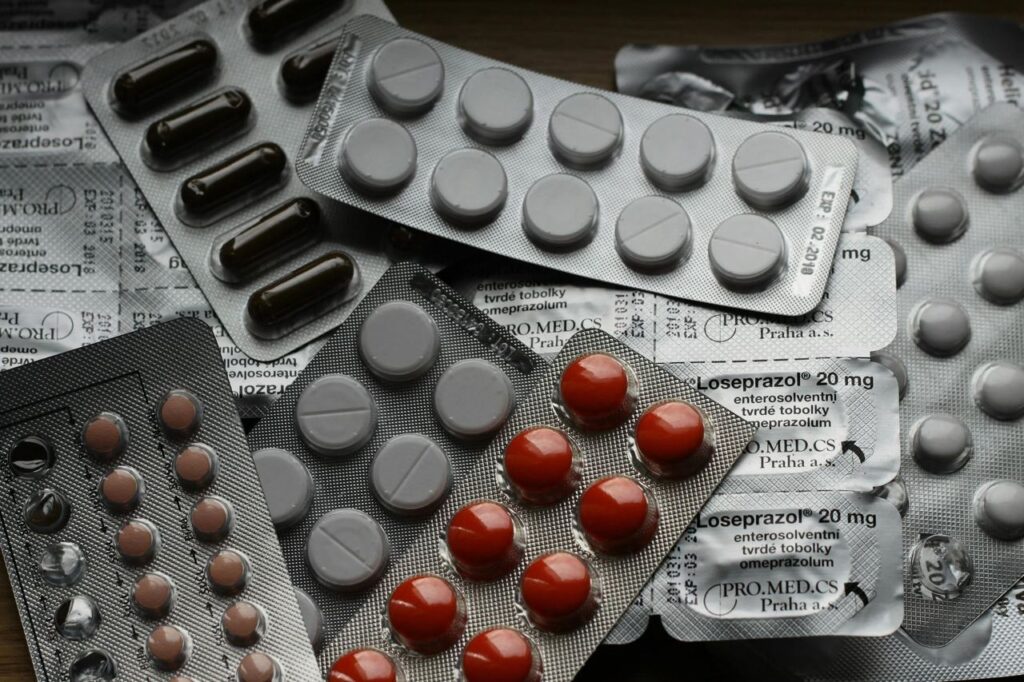
From 1 July 1, 2024, in an effort to rid the country of counterfeit drugs flooding the local market,  labeling of all medicines in Kazakhstan will become mandatory. According to the World Health Organization (WHO), every tenth package of medicines distributed in developing countries is counterfeit, and in Kazakhstan, exceeds 10% of the volume of imported medicines. This is not only an economic issue, but one that poses a direct  threat to people's lives and the health of the nation.  Under the new initiative, all drugs will be assigned an electronic passport detailing both its source and  path to the consumer. The Ministry of Health of the Republic of Kazakhstan stated that the key aim of the project is to eradicate illegal trade in medicines, including those used within the state's medical programs and mandatory social health insurance. Confident that mandatory labeling will prove effective in dealing with gray imports in the pharmaceutical market,  economist Andrei Chebotarev remarked, "When the manufacturer's goods are labeled, you can trace their  route all the way to your home medicine cabinet. Everyone will know, for example,  where the pills were produced and how they were imported into the country. At present, there is no  guarantee that  goods are genuine. Where was this medicine produced? In India, in Germany? It is almost impossible to check the source." In short, he continued, labeling is the surest way of "letting the cat out of the bag." Another positive impact of the introduction of labeling concerns  an increase in tax revenues and customs duties. Pharmacies in Kazakhstan already sell drugs labeled with the DataMatrix code. Specialists believe that the pharmaceutical industry is ready to exit the shadow turnover. During the first two months of 2024, almost 5,000 tons of various drugs worth $275.7 million, were imported by Kazakhstan.  
U.S. Authorities Asked to Sanction Violators of Religious Freedoms in Tajikistan

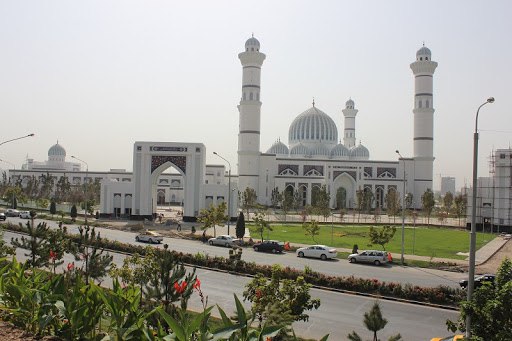
In early May, the U.S. Commission on International Religious Freedom (USCIRF) published its annual report on violations of religious freedom around the world. As a result of the report, the Commission called on the U.S. government to impose targeted sanctions against government agencies and officials in Tajikistan responsible for serious violations of religious freedom. This is reported by Radio Ozodi. The U.S. Commission on International Religious Freedom (USCIRF) is an independent, bipartisan federal government organization created by the U.S. Congress to monitor, analyze, and report on religious freedom abroad. USCIRF makes foreign policy recommendations to the President, Secretary of State, and Congress to deter religious persecution and promote freedom of religion and belief. Its annual report describes and evaluates U.S. international religious freedom policy. USCIRF criticizes the Tajik authorities for punishing oppositionists and critics of Emomali Rahmon's government under the pretext of combating extremism, closing mosques due to failure to fulfill the plan to draft into the Armed Forces of Tajikistan, restricting the activities of certain Aga Khan-related facilities in the Gorno-Badakhshan Autonomous Oblast, banning the activities of Jehovah's Witnesses, etc. The Commission emphasizes that the situation of religious freedom in Tajikistan, despite earlier recommendations, did not improve in 2023. "In 2023, the government of Tajikistan continued to restrict the religious activities of citizens, including those living abroad," the report states. For this reason, the Commission recommended that the U.S. government impose targeted sanctions against government agencies and officials responsible for serious violations of religious freedom, freeze their assets, and bar them from entering the United States. A similar recommendation was announced last May. USCIRF also called on the U.S. State Department to place Tajikistan, along with 16 other countries, on a "red" list of countries "of particular concern" because their governments commit or tolerate particularly serious violations of the right to freedom of religion or belief. In addition to Tajikistan, the list includes Burma, China, Cuba, Nicaragua, North Korea, Pakistan, Russia, Saudi Arabia, Turkmenistan, Vietnam and others. The Tajik authorities have not yet responded to the report, but the Tajik Committee on Religious Affairs responded to Radio Ozodi's request in January this year that it "considers the situation with religious freedom in the country to be good" and "not all the data in the reports correspond to reality". Tajikistan's challenges with violent extremism were highlighted recently following the claim by an offshoot of the Islamic State terrorist group, known as Islamic State-Khorasan, for the April attack on the Crocus City concert hall outside Moscow, which resulted in at least 143 fatalities. Russian investigators have determined that the assault was carried out by four individuals, all of whom were identified as Tajik nationals.

Prosecutor General’s Office of Tajikistan and U.S. State Department Sign Memorandum of Cooperation

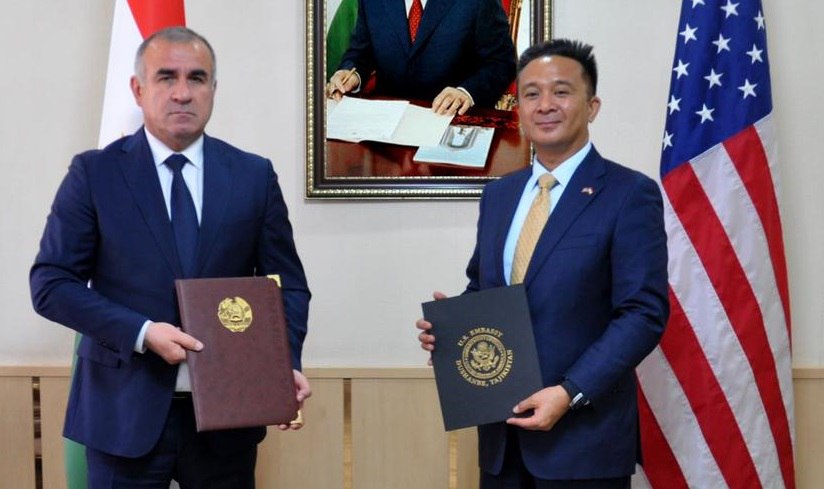
Tajikistan and the U.S. have agreed to continue bilateral legal cooperation in various areas, as reported by the General Prosecutor's Office of the Republic of Tajikistan. During the meeting, Prosecutor General of Tajikistan, Rahmon Yusuf Ahmadzoda and the U.S. Ambassador to the Tajikistan, Manuel Mikaller discussed issues related to the exchange of information on challenges and threats to the security of both states, the protection of the rights and interests of citizens, preventing and combating manifestations of violent extremism and terrorism, cyber-crime, transnational organized crime, and other issues. A Memorandum of Intent on cooperation on the implementation of the Personal Identity Comparison and Evaluation System to Regulate the Movement of Terrorists (PISCES) was signed. "This system allows the movement of terrorists to be tracked through extensive technological surveillance, as well as assisting in their capture and apprehension," the report stated.

Uzbekistan To Work With Hungary on Nuclear Projects

Hungary will train nuclear engineers from Uzbekistan to work in Uzbek power plants, the country's trade minister Peter Szijjarto announced during his recent visit to Tashkent. "Since we have several decades of experience in the field of nuclear power, we have already started training future Uzbek nuclear power specialists in Hungary," Sijjarto wrote on social media. He noted that if a contract with Rosatom is signed for the construction of a nuclear power plant on the territory of Uzbekistan, it will use the Hungarian technology of cooling on the basis of a "dry" cooling tower. A similar method is already used by the Hungarian company Eniox, which is ready to provide financing to Hungary's Eximbank Hungary in the amount of 130 million euros when participating in the Uzbek nuclear project. Hungary has now started construction of the Russian-designed Paksh-2 NPP of generation "3+" with two power units based on VVER-1200 reactors. Operating since 1982, the Paksh NPP will start to be decommissioned from 2032. "In the current energy crisis, the ability to produce nuclear energy has become extremely valuable. Without nuclear energy, Europe would not have a secure energy supply and affordable energy," Sijjarto emphasized. As the world's fifth-largest exporter of uranium, Uzbekistan is attracting Japanese and Chinese companies that are actively developing uranium in the republic, especially with a focus on black shale. According to data for 2022, Uzbekistan has reserves of 49,200 tons of uranium and about 32,900 tons of uranium in black shale.  The deposits are mainly concentrated in sandstones of the Kyzylkum desert. Today, uranium mined in the country is exported abroad by companies such as Itochu (Japan), Cameco (Canada), CNEIC (China) and others.

Saudi Al Faris International Proposes to Open Schools in Uzbekistan

According to the Dunyo news agency, Uzbekistan's ambassador to Saudi Arabia Nodirjon Turgunov  met with the chairman of the education company Al Faris International, Osama bin Salih, to discuss introducing  Al Faris schools to Uzbekistan. Al Faris schools are among the best in Saudi Arabia, and operate to the international IBO standard.   Bin Salih commented: “We are ready to establish international schools based on one hundred percent of our own capital or with Uzbek partners. In these schools, education is provided in accordance with international standards, studies are conducted on the basis of strict requirements of foreign and local languages. In addition, preschool educational institutions will  be established, where children under the age of six will be given intensive lessons in preparation for primary school."

Son-in-Law of Former Kazakh President Nazarbayev Sells His London Mansion

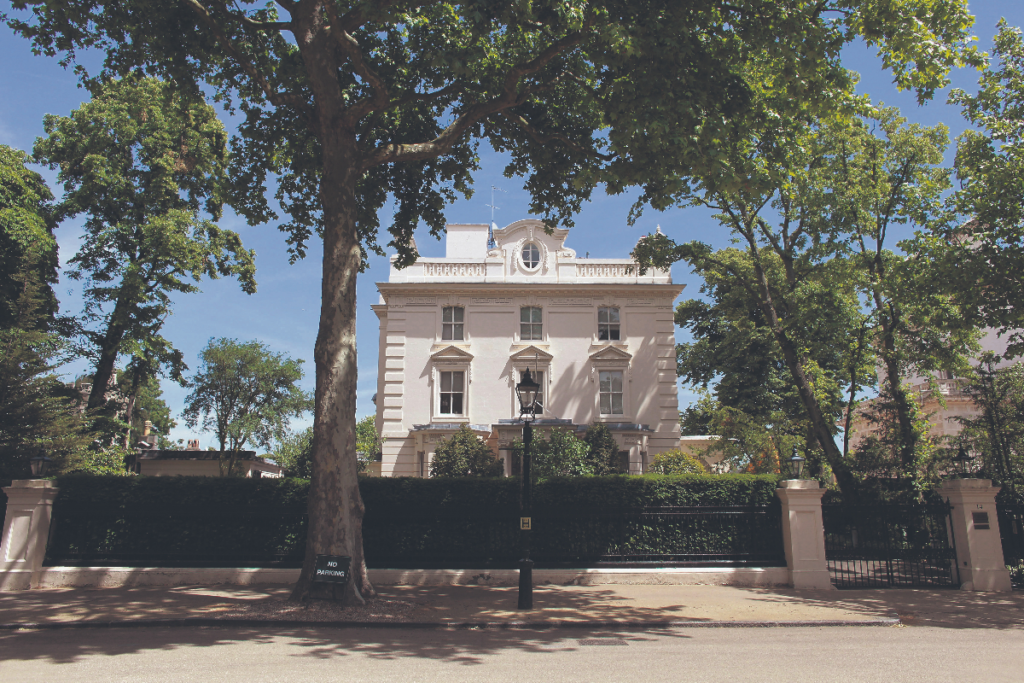
Kazakh billionaire, Timur Kulibayev has sold his mansion in the prestigious London neighborhood of Mayfair for £35 million pounds sterling. The son-in-law of Kazakhstan's former president, Nursultan Nazarbayev is also looking for a buyer for a second house nearby, according to a report in City A.M. The British publication claims that Kulibayev has struck a deal to sell the property to North Wind Capital, an investment company founded by former Deutsche Bank director, Ben Williams. The new owners are planning a large-scale reconstruction of the building. According to City A.M., Kulibayev's mansion on Upper Grosvenor Street was sold at an undervalued price due to the value of luxury real estate taking a significant drop since Brexit. Many London homeowners have already taken substantial losses on investment and residential properties. "Kulibayev has owned two mansions next door to each other for almost 20 years. They are directly opposite the Embassy of Monaco, and just a short walk from Buckingham Palace. Almost all this time, the house which he sold was empty," notes the City A.M. article. In 2024, Timur Kulibayev and his wife Dinara Kulibayeva, daughter of Nursultan Nazarbayev, still sit atop the list of the richest Kazakhs. The combined fortune of the Nazarbayev family is estimated at almost $10 billion.