• KGS/USD = 0.01144 0%
  • KZT/USD = 0.00209 0%
  • TJS/USD = 0.10617 1.05%
  • UZS/USD = 0.00008 0%
  • TMT/USD = 0.28490 0%
  • KGS/USD = 0.01144 0%
  • KZT/USD = 0.00209 0%
  • TJS/USD = 0.10617 1.05%
  • UZS/USD = 0.00008 0%
  • TMT/USD = 0.28490 0%
  • KGS/USD = 0.01144 0%
  • KZT/USD = 0.00209 0%
  • TJS/USD = 0.10617 1.05%
  • UZS/USD = 0.00008 0%
  • TMT/USD = 0.28490 0%
  • KGS/USD = 0.01144 0%
  • KZT/USD = 0.00209 0%
  • TJS/USD = 0.10617 1.05%
  • UZS/USD = 0.00008 0%
  • TMT/USD = 0.28490 0%
  • KGS/USD = 0.01144 0%
  • KZT/USD = 0.00209 0%
  • TJS/USD = 0.10617 1.05%
  • UZS/USD = 0.00008 0%
  • TMT/USD = 0.28490 0%
  • KGS/USD = 0.01144 0%
  • KZT/USD = 0.00209 0%
  • TJS/USD = 0.10617 1.05%
  • UZS/USD = 0.00008 0%
  • TMT/USD = 0.28490 0%
  • KGS/USD = 0.01144 0%
  • KZT/USD = 0.00209 0%
  • TJS/USD = 0.10617 1.05%
  • UZS/USD = 0.00008 0%
  • TMT/USD = 0.28490 0%
  • KGS/USD = 0.01144 0%
  • KZT/USD = 0.00209 0%
  • TJS/USD = 0.10617 1.05%
  • UZS/USD = 0.00008 0%
  • TMT/USD = 0.28490 0%

Viewing results 1633 - 1638 of 2383

Kazakhstan Could Become Main Transport Link Between Europe And Asia

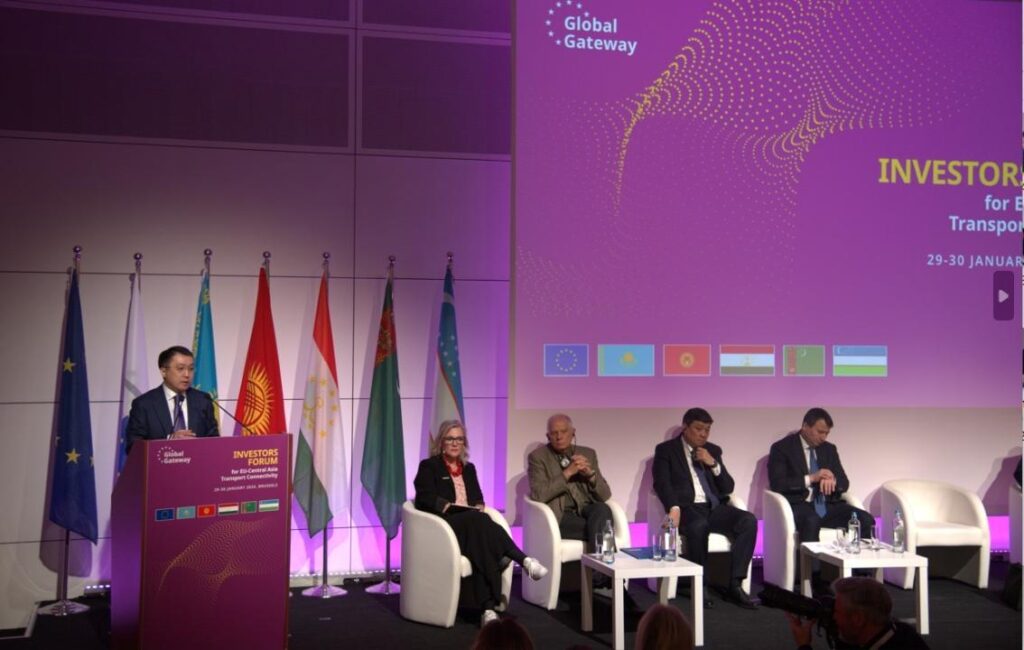
Addressing the Global Gateway Investors Forum for EU-Central Asia Transport Connectivity on January 29th in Brussels, Belgium, Kazakhstan’s transport minister Marat Karabaev proposed Kazakhstan as the most sustainable main transport route between Europe and Asia. Mr Karabaev said that in the next five years Kazakhstan intends to attract investments worth €40bn ($43.3bn) in major transport infrastructure projects. During this period Kazakhstan plans to reconstruct transit corridors with a length of 4,700km and repair the roads that form the basis of the Trans Caspian Transport Corridor. “To implement these projects we propose raising funds within the framework of the EU’s Global Gateway initiative and invite European contractors to take part in the construction of roads in Kazakhstan,” Mr Karabaev said. Kazakhstan will construct 1,300km of new railway lines and modernize the existing infrastructure. This work is also aimed at increasing the transport capacity between Asia and the European Union. It is also planned to transfer 22 airports in Kazakhstan to the management of investors.  To strengthen Kazakhstan’s Caspian fleet and create a container hub in the port of Aktau, investors are offered 171 hectares for the construction of terminal facilities. It is possible to transfer the seaports of Aktau and Kuryk to trust management on ship-or-pay terms, the minister said.
EU To Simplify Visa Regime For Kazakhstanis

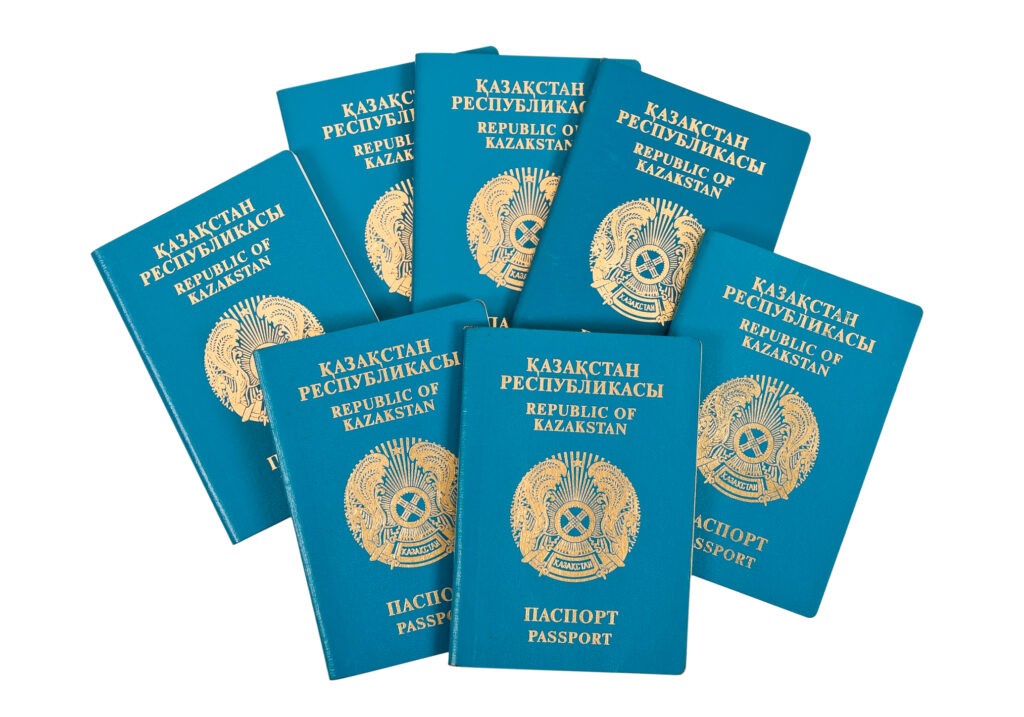
Citizens of Kazakhstan can currently travel to 34 countries without requiring a visa, and it seems the power of the Kazakhstani passport may be set to increase further still. At the end of last week Kazakhstan's deputy minister of foreign affairs, Alibek Bakayev, held a second round of talks with the head of the EU Delegation to Kazakhstan, Kestutis Jankauskas, on the issue of EU visas. The introduction of a visa-free regime with the EU is not currently being discussed. However, the EU Schengen-area visa regime is being improved in the following areas: - introduction of a single list of documents required for a visa application; - a reduction in consular fees; - a shortening of the waiting period for applications; - increasing the validity period for multiple-entry visas. In 2024 citizens of Kazakhstan can visit 34 countries without obtaining a visa from a foreign consulate. These are: Albania, Andorra, Argentina, Armenia, Azerbaijan, Barbados, Belarus, Brazil, China, Colombia, Ecuador, the Republic of Georgia, Haiti, Hong Kong, Iran, South Korea, Kyrgyzstan, Malaysia, Maldives, Moldova, Mongolia, Nicaragua, Oman, UAE, Philippines, Qatar, Russia, St. Vincent & Grenadines, Serbia, Tajikistan, Thailand, Turkey, Ukraine, and Uzbekistan. There are also several states where one can get a "visa upon arrival" stamp immediately upon entry. These states are Zambia, Indonesia (for 30 days), Mauritius, Namibia, and the Seychelles. However, that list will shrink in the spring of 2024: Kazakhstan's temporary visa-free regime with Thailand end on February 29. According to the Global Passport Power Ranking 2024 by Passport Index, Kazakhstan's passport ranks 56th in the world in terms of freedom of movement bestowed upon its holder.

EU And AFD Support Uzbekistan’s Drinking Water And Livestock Sectors

The Delegation of the European Union to Uzbekistan and Agence Française de Développement (AFD), the French Development Agency that implements France’s policy on international development and solidarity, have signed two agreements together. One is to implement the EU’s Drinking Water Program, and the other is for sustainable livestock financing in Uzbekistan.  The agreements provide for new European Union grants, namely €7.9m ($8.5m) for the water program and €4.7m ($5m) for livestock. These grants will finance the technical assistance required for each of the projects, the Delegation of the European Union to Uzbekistan said.  The EU and AFD have confirmed their commitment to continue supporting the government of Uzbekistan in its efforts to create a climate-smart and inclusive livestock sector. Implemented since June 2021 by the Uzbek Committee for Veterinary and Livestock Development, the project for “Inclusive and Climate Friendly Investment Financing in the Livestock Sector of Uzbekistan” aims to make sustainable financing in this sector more efficient. The EU’s contribution focuses on improving access to climate-friendly loans provided by four Uzbek banks — Business Development Bank, HamkorBank, MicrokreditBank, and Xalq Bank.  The Drinking Water Program helps to improve drinking water coverage in three regions of Uzbekistan — Tashkent, Fergana, and Kashkadarya. This project centers on water systems in seven districts within these three regions, providing access to a well-managed drinking water service for around 610,000 people. According to data provided by macrotrends, as of 2020, only 58.83% of the population in Uzbekistan had access to clean drinking water, which is defined by UNICEF as a “fundamental need and human right.” This figure has been in decline year-on-year since 2017, meaning that Uzbekistan ranks second worst in the region after Tajikistan for access to water “on premises, available when needed and free from faecal and priority chemical contamination.” According to UNICEF, only 32% of domestic wastewater is safely treated, whilst the impact of climate change, such as droughts and floods, further complicate the delivery of water and sanitation services.

German Company To Help Create Medical Cluster In Turkmen City Of Arkadag

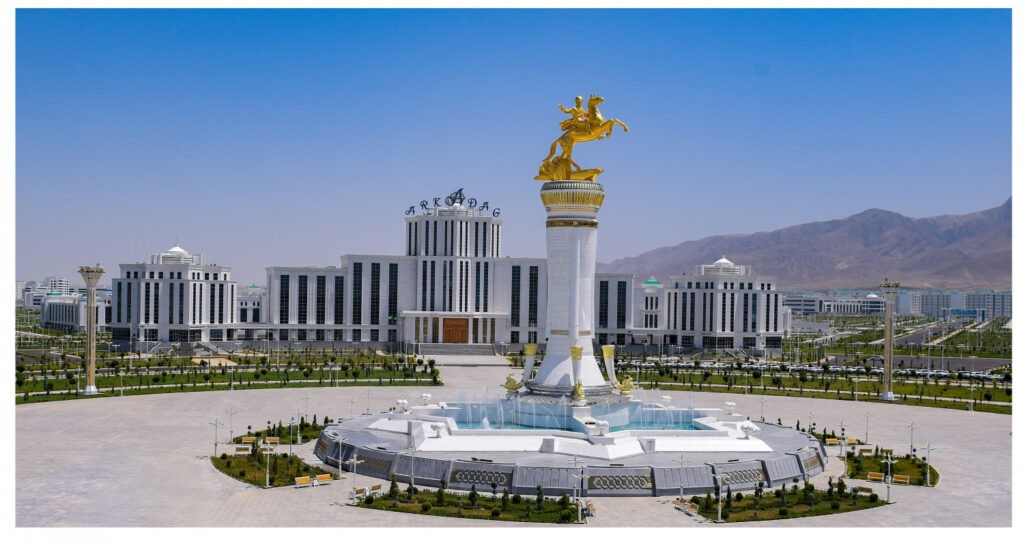
On January 27th Gurbanguly Berdimuhamedov, the chairman of the Halk Maslahaty (People’s Council) of Turkmenistan, met with the managing director of the German consulting company Goetzpartners Emerging Markets GmbH, Vladimir Mathias. Goetzpartners won an international tender to consult on the creation of a medical cluster in the Turkmen city of Arkadag, the Turkmen Foreign Ministry has reported. Germany is one of Turkmenistan’s key European partners. Several German companies are involved in large-scale projects in the fields of transport, communications and logistics in the country. At the meeting Mr Mathias explained to Mr Berdimuhamedov that the planned medical cluster in Arkadag is designed to produce various types of medical products not only for the domestic market, but also for export.  The city of Arkadag was unveiled on June 29th, 2023. The “smart” city, designed to be home for 70,000 people and costing billions of dollars to construct, is located 30km south of the capital, Ashgabat.

Kazakhstan Freezes Transit Cost of Russian Oil To China

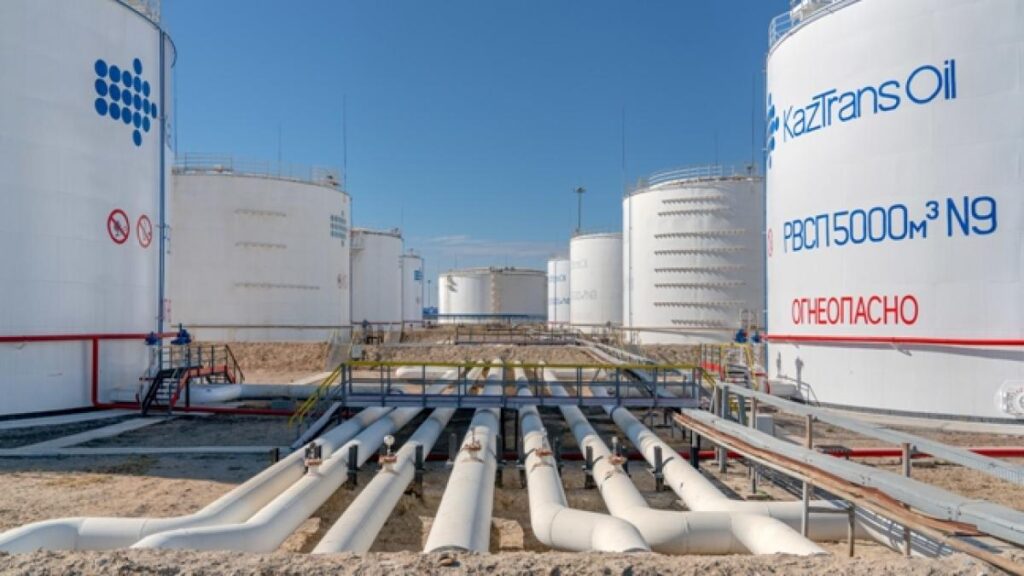
KazTransOil JSC, Kazakhstan’s national oil pipeline operator, on January 26th said it will freeze the cost of transiting Russian oil to China until 2034. Until December 31st 2033 the cost of transporting Russian oil to China through the territory of Kazakhstan will amount to $15 per ton (excluding VAT), the company said.   KazTransOil also said it has extended until December 31st 2033 its contract with Russia’s Rosneft oil company for the transportation of Russian oil through Kazakhstan to China. From 2014-2023, KazTransOil transported 91 million tons of Russian oil to China along the Atasu–Alashankou oil pipeline, which is part of the Kazakhstan-China main oil pipeline system and belongs to Kazakhstan-China Pipeline LLP, a joint venture of KazTransOil JSC (50%) and China National Oil and Gas Exploration and Development Company Ltd (50%). The design capacity of the Atasu–Alashankou pipeline is 20 million tons of oil per year. Russia has been seeking to increase its oil exports to China after western sanctions were imposed on its exports over its invasion of Ukraine. 

Negotiations on Syria Have Started in Kazakhstan

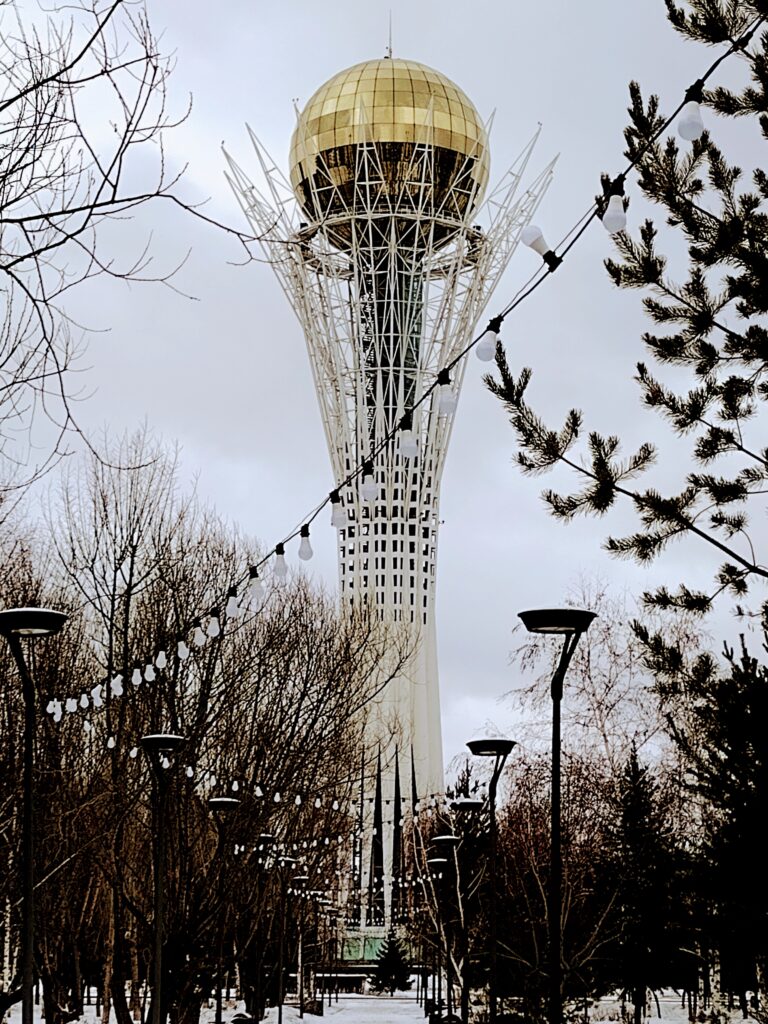
The 21st meeting of the Astana process on Syria has started in the capital of Kazakhstan. The two-day round of negotiations will continue until January 25th. The main agenda of the meeting is the development of the regional situation around Syria, efforts for a comprehensive settlement in the SAR, the humanitarian situation, and mobilization of the international community to promote post-conflict reconstruction of Syria and others. Delegates from the guarantor states of Russia, Turkey, Iran, the Syrian Government and the Syrian opposition are taking part in the negotiations, whilst representatives from Jordan, Iraq, and Lebanon are acting as observers. Last June, Astana hosted the 20th meeting on Syria, wherein representatives of the Ministry of Foreign Affairs of Kazakhstan proposed that the meeting be the last in the “Astana Process” framework, stating that the task was fulfilled and all of its goals had been realized. However, earlier this week it emerged that Kazakhstan received a collective appeal from the participants in the process to resume negotiations. The Foreign Ministry of Kazakhstan noted that Astana had not been chosen as a platform for these negotiations by chance, but because it was convenient both politically and geographically for all of the participants, whilst also enhancing Kazakhstan’s standing on the global stage. The head of the delegation from Russia, Alexander Lavrentiev, stated that Russia was one of the initiators of the resumption of this format of negotiations. "We, the guarantor countries of the ‘Astana Process’ on Syria studied this issue and came to the conclusion that Astana should remain the host platform,” Lavrentiev said. “There was a joint request from the three countries to the leadership of Kazakhstan - Turkey, Iran and Russia." Lavrentiev also noted how Kazakhstan's activity in the international arena is expanding, drawing attention to the nation’s joining the UN mission in the Golan Heights. “There, peacekeepers from our Rosgvardiya also maintain stability,” he stated. “I believe that cooperation between our countries will expand and will be useful in this area, as well. Therefore, I believe that the Astana format will remain a very effective mechanism; however, it is obvious that the settlement of the Syrian issue is still far away. The level of trust between the warring parties is still low." Kazakh political analysts noted that with its multi-vector policy, conflict resolution is one of the main concepts of Kazakhstan's foreign policy."Kazakhstan is a trusted partner,” said the scientific head of the Center for Analytical Studies, Eurasian Monitoring, Taisiya Marmontova. “The Astana platform is seen as safe and effective. Now the Arab-Israeli conflict has escalated, it can be seen as doubly commendable that Syria is making great efforts to find points of contact that will allow the opposing groups to launch a constitutional process and remove Syria from the map of hot spots in the world."