• KGS/USD = 0.01144 0%
  • KZT/USD = 0.00204 0%
  • TJS/USD = 0.10394 -0.38%
  • UZS/USD = 0.00008 0%
  • TMT/USD = 0.28571 0%
  • KGS/USD = 0.01144 0%
  • KZT/USD = 0.00204 0%
  • TJS/USD = 0.10394 -0.38%
  • UZS/USD = 0.00008 0%
  • TMT/USD = 0.28571 0%
  • KGS/USD = 0.01144 0%
  • KZT/USD = 0.00204 0%
  • TJS/USD = 0.10394 -0.38%
  • UZS/USD = 0.00008 0%
  • TMT/USD = 0.28571 0%
  • KGS/USD = 0.01144 0%
  • KZT/USD = 0.00204 0%
  • TJS/USD = 0.10394 -0.38%
  • UZS/USD = 0.00008 0%
  • TMT/USD = 0.28571 0%
  • KGS/USD = 0.01144 0%
  • KZT/USD = 0.00204 0%
  • TJS/USD = 0.10394 -0.38%
  • UZS/USD = 0.00008 0%
  • TMT/USD = 0.28571 0%
  • KGS/USD = 0.01144 0%
  • KZT/USD = 0.00204 0%
  • TJS/USD = 0.10394 -0.38%
  • UZS/USD = 0.00008 0%
  • TMT/USD = 0.28571 0%
  • KGS/USD = 0.01144 0%
  • KZT/USD = 0.00204 0%
  • TJS/USD = 0.10394 -0.38%
  • UZS/USD = 0.00008 0%
  • TMT/USD = 0.28571 0%
  • KGS/USD = 0.01144 0%
  • KZT/USD = 0.00204 0%
  • TJS/USD = 0.10394 -0.38%
  • UZS/USD = 0.00008 0%
  • TMT/USD = 0.28571 0%

Viewing results 109 - 114 of 684

Four Sentenced to Life Over Killings That Terrorized Tajikistan’s Konibodom

Four men have been sentenced to life imprisonment in connection with a series of murders that terrorized the northern Tajik city of Konibodom and surrounding areas throughout 2024. The announcement was made by Konibodom Chairman Davron Zokhidzoda at a press conference, as reported by Asia-Plus. However, he did not disclose the date of sentencing or provide further details, citing a lack of familiarity with the full investigation. On December 21, 2024, Tajikistan’s General Prosecutor’s Office announced the arrest of four suspects: 26-year-old Solehjon Khudoyberdiev, 27-year-old Akhadjon Tukhtaev, 36-year-old Bakhtiyor Ravshanov, and 28-year-old Manuchehr Odilov, all residents of Konibodom and nearby villages. As previously reported by The Times of Central Asia, between March and December 2024, a total of 23 people from seven families were killed in a wave of violent incidents that shook the region. The killings began on the night of March 28–29, when five members of the Sharifov family were found dead in their home. Authorities initially suspected the family patriarch, 65-year-old Mukhiddin Sharifov, but this theory was later dismissed. His son, Kabir Sharifov, told Asia-Plus that his father was ultimately recognized as one of the victims. The violence escalated in April with the murder of elderly couple Muzaffar and Inoyat Urmonov. Their relative, Sharifjon Ashurov, was arrested and sentenced to 20 years in prison in December, despite his family insisting he was at home on the night of the murders. In May, six people from two families, one Tajik and one Kyrgyz, were found murdered in the village of Sanchidzor. Authorities held Marat Sattarov, a 42-year-old school security guard, responsible. He was sentenced to life in prison by the Supreme Court in November. Tragedy struck again in December when six members of the Nematov family, including four children, were discovered dead in their home in Shurobqala. The father, Naimdjon Nematov, was found hanged in a nearby tree, while his wife and children showed signs of strangulation. Just days later, four more people from two families were killed in the village of Khisorak. The string of murders plunged Konibodom into panic. Reports of masked individuals seen at night stoked public fear, prompting residents to form watch groups and light fires for protection.

Four Convicted for Hotel Gas Leak That Killed Journalist Inessa Papernaya

A court in Tashkent has sentenced four men in connection with the deaths of Russian journalist Inessa Papernaya and her companion, Maxim Radchenko, who died of carbon monoxide poisoning at a city hotel in October 2024. The verdict was reported by a RIA Novosti correspondent present at the hearing. The incident occurred at the Karaman Palace Hotel on October 22, 2024. Papernaya, 47, and Radchenko died alongside an unidentified Uzbek man found in a separate room. Investigators concluded that gas entered the hotel’s ventilation system following a pool cleaning, leading to fatal carbon monoxide exposure. However, none of the hotel’s promotional materials mention a swimming pool, and some sources explicitly state that the facility does not have one. A worker involved in construction at the site confirmed the absence of a pool. Forensic analysis revealed the presence of carbon monoxide bound to hemoglobin in Papernaya’s blood. The Yakkasaray District Criminal Court opened proceedings on May 26, after the investigation concluded in late April. The four defendants were charged with providing services that failed to meet safety standards and operating without proper authorization, crimes punishable by up to 12 years in prison. Judge Bahodir Kayumov found hotel owner Azamat Khuzhakulov guilty under Part 4, Article 186 of Uzbekistan’s Criminal Code. He was sentenced to eight years and one month in prison. The three co-defendants, plumber Nodirbek Kurbanov and heating equipment vendors Zayniddin Jamoliddinov and Abdurashul Yusupov, were each sentenced to three years in prison. Prosecutors had sought sentences of seven to eight years. The court also ordered compensation payments: 67.58 million UZS (approximately $5,358) to Papernaya’s family and 60.68 million UZS (approximately $4,811) to Radchenko’s relatives. The payments will cover expert examination fees and the repatriation of the victims’ remains. All four men have ten days to appeal the verdict. During the trial, Khuzhakulov admitted partial guilt. The other three defendants denied any wrongdoing. According to the indictment, the deaths resulted from a faulty, outdated boiler that had not undergone technical inspection, lacked certification, and should have been decommissioned in 2021. Inessa Papernaya was a veteran journalist who worked for several major Russian media outlets. She was an editor at Lenta.ru and deputy editor-in-chief at Profil magazine. She also collaborated with the Center for Strategic Research, a Moscow-based think tank specializing in economic policy and long-term strategy development. Her death has fueled speculation and conspiracy theories in segments of the Russian media.

Uzbek Official Dismissed After Viral Lap-Sitting Video Sparks Gender Debate

A government official in Uzbekistan has been dismissed following the circulation of a video showing him with a female subordinate sitting on his lap during an online meeting. The footage, which went viral on social media, prompted a public backlash, with the Ministry of Employment and Labor issuing a statement describing the incident as a “violation of the ethics of a civil servant.” The dismissal of the head of the district department of employment and poverty reduction in Samarkand was confirmed by the ministry. The woman in the video, reportedly an assistant at the agency, has not been publicly named and is believed to have resigned voluntarily. The incident has sparked a broader discussion about workplace conduct, gender dynamics, and women’s rights in Uzbekistan, where traditional norms continue to influence professional and personal life. Gender and Power in the Uzbek Workplace In recent years, Uzbekistan has made significant progress regarding the participation of women in public life. Women currently hold about 32 seats in the 150-member Legislative Chamber of the Oliy Majlis (national parliament). However, their visibility in executive positions and technical fields remains limited. In Uzbekistan, only 35.4 % of the population aged between 15–64 in the labor force are women, and they earn about 34 % less than men. The World Bank estimates that equal participation and wages could boost the country's GDP by 29 % and lift over 700,000 people out of poverty. The government has introduced various reforms aimed at improving gender equality, including protections against domestic violence, promoting women's entrepreneurship, and gender budgeting initiatives. However, critics argue that these measures are often symbolic or inconsistently enforced. Cultural Taboo and Social Media The lap-sitting video has sparked a wave of internet commentary from both men and women in Uzbekistan, where public discussions of gender roles are often muted. Some saw the video as a clear example of workplace harassment and power imbalance, while others downplayed its significance or blamed the woman involved. Observers argue that the case highlights deeper structural issues within Uzbek institutions, where entrenched gender hierarchies and informal power dynamics often go unchallenged. In many areas of public and private life, the country remains deeply patriarchal, and whilst public discourse around consent, professional boundaries, and gender equality is growing, it remains nascent. A Moment for Change? The government’s decisive response to the video may signal a growing awareness of public expectations and international scrutiny. For activists and reformers, the hope is that this moment can serve as more than a spectacle and lead to more conversations about power, professionalism, and the role of women in modern Uzbekistan. As one widely shared comment on Telegram put it: “It’s not about the lap. It’s about who gets to sit at the table.”

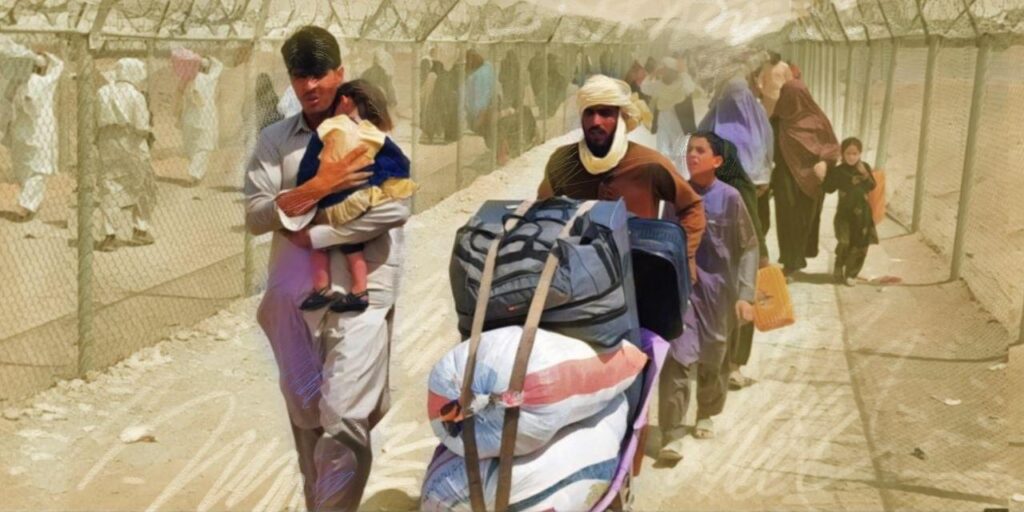
Tajikistan Escalates Deportations of Afghan Refugees Amid Growing Concerns

Afghans who fled to Tajikistan are keeping a low profile lately. Tajik authorities have started the latest wave of deportations, and this one looks to be bigger than the previous sweeps. “You Have 15 Days” At the beginning of July, Afghan refugees and asylum-seekers in Tajikistan received an SMS warning them to leave the country within 15 days or else they would be forcibly deported. Tajikistan’s government has not commented on these messages, but the detention of Afghans started not long after the messages were sent. So far, the only two places mentioned where Afghans were being apprehended were the Rudaki district outside of Dushanbe and the town of Vahdat, 26 kilometers from Dushanbe. Hundreds of Afghan refugees are known to be living in these two areas. Radio Free Europe/Radio Liberty’s Tajik Service, known locally as Ozodi, reported that journalists who went to the houses of Afghan refugees in Vahdat were stopped and turned away by men in military uniforms outside the homes. Some Afghan refugees in Vahdat spoke with Ozodi under the condition of anonymity and said that on July 15, several vans arrived and took away “dozens” of Afghan men, women, and children. One said Afghan refugees are staying inside their homes, fearing that if they go out, they will be detained and deported. Police “take the documents from Afghans and set a date for them to leave the country,” the refugee said, “For more than 20 days we have practically not stepped outside at all.” Local Tajiks confirmed that Afghans were being taken away and that many of those who remained were searching for new places to live to avoid being apprehended. The Tajik authorities did not say anything about the deportations until July 19, when the state news agency Khovar posted a text from the Press Center of the Border Troops of the State Committee for National Security. The statement said some “foreign citizens” had entered Tajikistan illegally, and a “certain number” of them engaged in illegal activities such as “narcotics trafficking, [spreading] the ideas of extremist movements,” or providing false information or documents to acquire refugee status. The office of the UN High Commissioner for Refugees (UNHCR) said that as of the end of 2024, there were 9,902 Afghan refugees registered in Tajikistan. However, Afghans have been fleeing their homeland and coming to Tajikistan for many years, and some estimates for the number of Afghans in Tajikistan run as high as 13,000. Something else which remains unclear about the Afghan refugees in Tajikistan is how many are ethnic Tajiks. Ostensibly, most of them could be since the ethnic Tajik population of Afghanistan is mainly found in areas adjacent to Tajikistan. Many who came to Tajikistan 10 or 15 years ago have assimilated and are likely not refugees or asylum seekers, but may not have obtained Tajik citizenship. It is unclear how many Afghan citizens have been detained and deported since the start of July, but they are just the latest to be sent back to...

Kazakhstan Drug Seizure Tops Six Tons in First Half of 2025

Kazakh authorities seized 6.4 tons of narcotic substances in the first half of 2025, Interior Minister Yerzhan Sadenov announced at a recent meeting of the Interdepartmental Commission on Crime Prevention. For comparison, the Ministry of Internal Affairs reported a total of 21 tons of drugs confiscated in 2024. That figure included 547 kilograms of synthetic substances, 2.5 kilograms of heroin, over 10 tons of marijuana, and 572 kilograms of hashish. Authorities also recorded more than 8,000 drug-related offenses, dismantled 63 drug laboratories, and identified 7,400 internet resources involved in the distribution of drug-related content. Between January and June 2025, the volume of synthetic drugs seized nearly doubled compared to the same period last year, reaching 570 kilograms. In addition, law enforcement blocked over 17,000 drug-related websites and detained 474 individuals on drug charges, including 28 administrators of Telegram channels. Authorities shut down 103 underground drug labs and uncovered 63 drug smuggling cases. Twenty-one criminal cases have been opened against organized drug trafficking groups, including three transnational networks. Health Minister Akmaral Alnazarova reported that more than 17,000 individuals suffering from drug addiction are registered with medical facilities across Kazakhstan. While the number of opioid users has declined by 50 percent over the past five years, there has been a marked rise in addictions linked to synthetic stimulants and poly-drug use. In response to these developments, Prime Minister Olzhas Bektenov has ordered the implementation of stricter mechanisms to identify and block online drug content and to restrict financial transactions associated with drug trafficking. “The increase in drug use among young people is particularly concerning,” Bektenov stated. “Distribution occurs via the internet, postal services, hidden ‘stash’ drops, and anonymous electronic payments, removing direct contact between dealers and consumers.” The Prime Minister also called for tighter control over the dispensation of addictive pharmaceuticals, the expansion of rehabilitation centers including those for minors, and stronger efforts for early detection and treatment of drug dependence. As previously reported by The Times of Central Asia, Central Asia remains a significant transit corridor for narcotics smuggled from Afghanistan. However, the situation is becoming increasingly complex, as more drugs are now being consumed within the region itself.

Kazakhstan to Increase Penalties for Attacks on Medical Workers

Kazakhstan is preparing legislative amendments that will significantly increase criminal liability for violence against medical personnel, equating such offenses with attacks on law enforcement officers. The initiative follows a directive from President Kassym-Jomart Tokayev, who urged the government to take stronger action to protect medical staff amid a growing number of violent incidents. At a recent meeting, Prime Minister Olzhas Bektenov reviewed proposals presented by Health Minister Akmaral Alnazarova. The Ministry of Health is drafting legislation that would classify attacks on healthcare workers in the same legal category as assaults on police officers. Proposed measures also include equipping staff with smart video badges, installing comprehensive security systems in hospitals, and deploying permanent police posts in emergency departments. Under the current Criminal Code, an attack on a law enforcement officer is punishable by up to 10 years in prison, while attempted murder carries a sentence of 10 to 15 years with property confiscation. Speaking at a briefing, Minister Alnazarova announced the introduction of a new article in the Criminal Code addressing threats and violence against medical workers. Threats alone could result in up to two years' restriction of liberty. Violence against a single medical worker may carry a sentence of 1 to 10 years, while attacks involving multiple perpetrators or targeting groups of workers could lead to up to 15 years of imprisonment. “These are adequate and necessary measures to protect our medical workers,” Alnazarova said, adding that the bill would be submitted to the Mazhilis, the lower house of parliament, in September. According to the Health Ministry, over 170 cases of violence against doctors, nurses, paramedics, and other healthcare staff have been recorded in Kazakhstan since 2019. “Such incidents must be resolutely suppressed by legal means,” Bektenov emphasized. “I instruct the ministries of health, internal affairs, and justice to develop and submit the necessary legislative amendments to parliament within ten days.” As previously reported by The Times of Central Asia, two recent assaults on medical personnel in Kazakhstan resulted in hospitalizations. In response, the health minister issued a public appeal urging an end to violence against medical staff.