• KGS/USD = 0.01144 0%
  • KZT/USD = 0.00210 0%
  • TJS/USD = 0.10438 0%
  • UZS/USD = 0.00008 0%
  • TMT/USD = 0.28490 0%
  • KGS/USD = 0.01144 0%
  • KZT/USD = 0.00210 0%
  • TJS/USD = 0.10438 0%
  • UZS/USD = 0.00008 0%
  • TMT/USD = 0.28490 0%
  • KGS/USD = 0.01144 0%
  • KZT/USD = 0.00210 0%
  • TJS/USD = 0.10438 0%
  • UZS/USD = 0.00008 0%
  • TMT/USD = 0.28490 0%
  • KGS/USD = 0.01144 0%
  • KZT/USD = 0.00210 0%
  • TJS/USD = 0.10438 0%
  • UZS/USD = 0.00008 0%
  • TMT/USD = 0.28490 0%
  • KGS/USD = 0.01144 0%
  • KZT/USD = 0.00210 0%
  • TJS/USD = 0.10438 0%
  • UZS/USD = 0.00008 0%
  • TMT/USD = 0.28490 0%
  • KGS/USD = 0.01144 0%
  • KZT/USD = 0.00210 0%
  • TJS/USD = 0.10438 0%
  • UZS/USD = 0.00008 0%
  • TMT/USD = 0.28490 0%
  • KGS/USD = 0.01144 0%
  • KZT/USD = 0.00210 0%
  • TJS/USD = 0.10438 0%
  • UZS/USD = 0.00008 0%
  • TMT/USD = 0.28490 0%
  • KGS/USD = 0.01144 0%
  • KZT/USD = 0.00210 0%
  • TJS/USD = 0.10438 0%
  • UZS/USD = 0.00008 0%
  • TMT/USD = 0.28490 0%

Viewing results 1015 - 1020 of 1883

Major Mineral Fertilizer Production Plant Planned for Kazakhstan

EuroChem, a global fertilizer leader and China National Chemical Engineering Co. (CNCEC), a global provider of industrial engineering technologies are to collaborate on the design, construction, and commission of a large-scale chemical complex to produce mineral fertilizers in Zhanatas located in Kazakhstan’s Zhambyl region. The agreement was officially signed on 14 May in Astana. Scheduled to open in 2027, the construction of  the chemical complex is part of the Integrated Kazakhstan Industrialization Roadmap and represents the third and final stage of a project in which EuroChem has invested over US$1 billion. EuroChem Group President Oleg Shiryaev said that once in operation, the plant will have an annual output of over one million tons of mineral fertilizers, in high demand by Kazakhstan, other Central Asian countries, China, Russia and Europe. According to a report by the Kazakh Ministry of Industry and Construction, the new enterprise will create 2,400 new jobs. During the signing of the agreement, Minister of Industry and Construction of Kazakhstan Kanat Sharlapaev, welcomed the input of  world leaders in mineral fertilizer production as an important step in developing the country's chemical industry and emphasized: “To be truly food secure, fertilizers are a must. This is therefore a landmark project for us. Its joint implementation with EuroChem and Chinese partners is a great example of large Eurasian cooperation at its best and a significant event for regional food security.”    
Tajikistan To Reconnect To Central Asia’s Unified Energy System

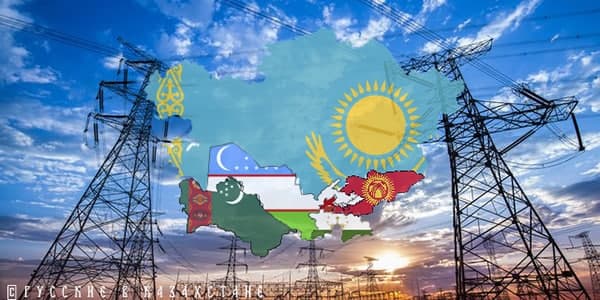
Tajikistan will soon connect itself to Central Asia's unified energy system. The unified system for energy distribution was created in 1960, when the systems of Uzbekistan, southern Kyrgyzstan, northern Tajikistan and southern Kazakhstan's Shymkent junction were connected to work in parallel through 110- and 220-kV power lines. This system operated in isolation from the Soviet Union's general scheme. In 2003 Turkmenistan left the energy system, having decided that it was able to provide itself with electricity on its own. And in early November 2009, the entire southern part of the Tajik energy system was automatically de-energized due to a spontaneous shutdown of units at the Nurek HPP. Tajikistan and the south of Uzbekistan remained without electricity for a day. After that Uzbekistan announced its withdrawal from the energy "ring". After that Uzbekistan completely de-energized the lines connecting its energy system with the Tajik system. As a result, Tajikistan's energy system automatically remained isolated from the rest of the region. Thus, the system ceased to exist as such in 2009, but was recreated again in 2019. Currently, it includes Kazakhstan, Uzbekistan, and Kyrgyzstan.

IFC to Support Central Asian Tech Startups With New Fund

The International Finance Corporation (IFC) is allocating $5 million to a new fund that will be used to support technology startups in Central Asia, Gazeta.uz reports. IFC is reportedly investing in Sturgeon Emerging Opportunities, a new venture capital fund managed by Sturgeon Capital, a major venture capital investor in emerging markets. Sturgeon Emerging Opportunities will focus on supporting startup projects in areas such as fintech, business-to-business platforms, agri-tech, healthcare and education. The investment in Sturgeon is part of IFC's Startup Catalyst program, which aims to address financial challenges in undervalued venture capital ecosystems by investing in incubators, gas pedals and funds in emerging markets. "The fund will help start-up entrepreneurs to expand their businesses, improve operational efficiency and create long-term employment opportunities," the statement said. Besides investing  in projects in Central Asia, the fund also intends to work in other emerging markets such as Egypt and Pakistan. Sturgeon Capital estimates that the IT startup market in these countries could generate nearly $300 million in annual digital revenue by 2030. However, startups in these countries are currently struggling to raise capital to launch and scale their products and services.

Kazakhstan Launches Battle against Counterfeit Medicines

From 1 July 1, 2024, in an effort to rid the country of counterfeit drugs flooding the local market,  labeling of all medicines in Kazakhstan will become mandatory. According to the World Health Organization (WHO), every tenth package of medicines distributed in developing countries is counterfeit, and in Kazakhstan, exceeds 10% of the volume of imported medicines. This is not only an economic issue, but one that poses a direct  threat to people's lives and the health of the nation.  Under the new initiative, all drugs will be assigned an electronic passport detailing both its source and  path to the consumer. The Ministry of Health of the Republic of Kazakhstan stated that the key aim of the project is to eradicate illegal trade in medicines, including those used within the state's medical programs and mandatory social health insurance. Confident that mandatory labeling will prove effective in dealing with gray imports in the pharmaceutical market,  economist Andrei Chebotarev remarked, "When the manufacturer's goods are labeled, you can trace their  route all the way to your home medicine cabinet. Everyone will know, for example,  where the pills were produced and how they were imported into the country. At present, there is no  guarantee that  goods are genuine. Where was this medicine produced? In India, in Germany? It is almost impossible to check the source." In short, he continued, labeling is the surest way of "letting the cat out of the bag." Another positive impact of the introduction of labeling concerns  an increase in tax revenues and customs duties. Pharmacies in Kazakhstan already sell drugs labeled with the DataMatrix code. Specialists believe that the pharmaceutical industry is ready to exit the shadow turnover. During the first two months of 2024, almost 5,000 tons of various drugs worth $275.7 million, were imported by Kazakhstan.  

Kazakhstan Secures Almost Billion Cubic Meters of Irrigation Water from Uzbekistan

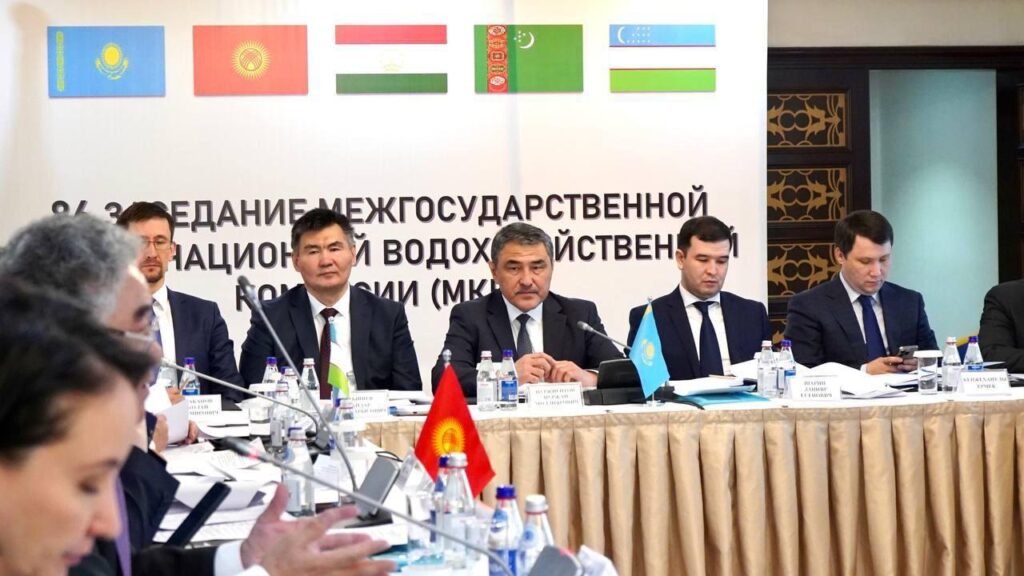
Kazakhstan is set to receive 922 million cubic meters of water from Uzbekistan via the Dostyk interstate canal during this year's irrigation season. According to a report issued by the Kazakh Ministry of Water Resources and Irrigation on 13 May, the matter was determined in an Agreement by the Interstate Water Coordination Commission of Kazakhstan, Kyrgyzstan, Tajikistan, Turkmenistan, and Uzbekistan. In addition, the parties formally approved the joint operation of the Naryn-Syr Darya cascade of reservoirs scheduled until 30 September. It was announced that the Shardara reservoir in the Turkestan region of southern Kazakhstan currently holds 4.8 billion cubic meters of water. The Toktogul reservoir on the Naryn river in upstream Kyrgyzstan, which releases water for irrigating fields in the south, has so far amassed 8 billion cubic meters of water. During the meeting, a draft agreement was also created ‘On the creation of a mechanism for water and energy cooperation between the countries of Central Asia.’ Kazakhstan’s Minister of Water Resources and Irrigation Nurzhan Nurzhigitov commented, “Our priority now, is to collect and send flood water to the Caspian Sea, Lake Balkhash, Kamysh-Samar lakes, and from the Ulytau region to lakes in the Kyzylorda region. But it is also important to provide water to the southern regions of Kazakhstan. And in this matter, water diplomacy is very important.”  

Launch of Flights Between Almaty and Nukus

From 1 June, Uzbekistan Airways will begin operating regular flights between Almaty in Kazakhstan and Nukus, the main city of Uzbekistan’s north-western Karakalpak Autonomous Region. Flights on a 174-seat A320 aircraft, will operate twice a week, on Wednesdays and Saturdays. In welcoming the move, the Ministry of Transport of Kazakhstan said that the new air route would greatly enhance the development of trade, economic and business cooperation between Kazakhstan and Uzbekistan. The introduction of the flights will also benefit tourism, making it easier and quicker to visit the region’s renowned Savitsky Museum, home to one of the world’s best collections of Soviet art; the Muynak Ship Cemetery on the fast-disappearing Aral Sea, and the ancient city of Mizdakhan. The total number of international flights from Kazakhstan now stands at 567 per week on 121 air routes, including direct flights to 28 countries.