• KGS/USD = 0.01144 0%
  • KZT/USD = 0.00210 0%
  • TJS/USD = 0.10563 0%
  • UZS/USD = 0.00008 0%
  • TMT/USD = 0.28530 0%
  • KGS/USD = 0.01144 0%
  • KZT/USD = 0.00210 0%
  • TJS/USD = 0.10563 0%
  • UZS/USD = 0.00008 0%
  • TMT/USD = 0.28530 0%
  • KGS/USD = 0.01144 0%
  • KZT/USD = 0.00210 0%
  • TJS/USD = 0.10563 0%
  • UZS/USD = 0.00008 0%
  • TMT/USD = 0.28530 0%
  • KGS/USD = 0.01144 0%
  • KZT/USD = 0.00210 0%
  • TJS/USD = 0.10563 0%
  • UZS/USD = 0.00008 0%
  • TMT/USD = 0.28530 0%
  • KGS/USD = 0.01144 0%
  • KZT/USD = 0.00210 0%
  • TJS/USD = 0.10563 0%
  • UZS/USD = 0.00008 0%
  • TMT/USD = 0.28530 0%
  • KGS/USD = 0.01144 0%
  • KZT/USD = 0.00210 0%
  • TJS/USD = 0.10563 0%
  • UZS/USD = 0.00008 0%
  • TMT/USD = 0.28530 0%
  • KGS/USD = 0.01144 0%
  • KZT/USD = 0.00210 0%
  • TJS/USD = 0.10563 0%
  • UZS/USD = 0.00008 0%
  • TMT/USD = 0.28530 0%
  • KGS/USD = 0.01144 0%
  • KZT/USD = 0.00210 0%
  • TJS/USD = 0.10563 0%
  • UZS/USD = 0.00008 0%
  • TMT/USD = 0.28530 0%

Viewing results 1051 - 1056 of 1968

Turkish Company to Manufacture Irrigation Systems in Kazakhstan

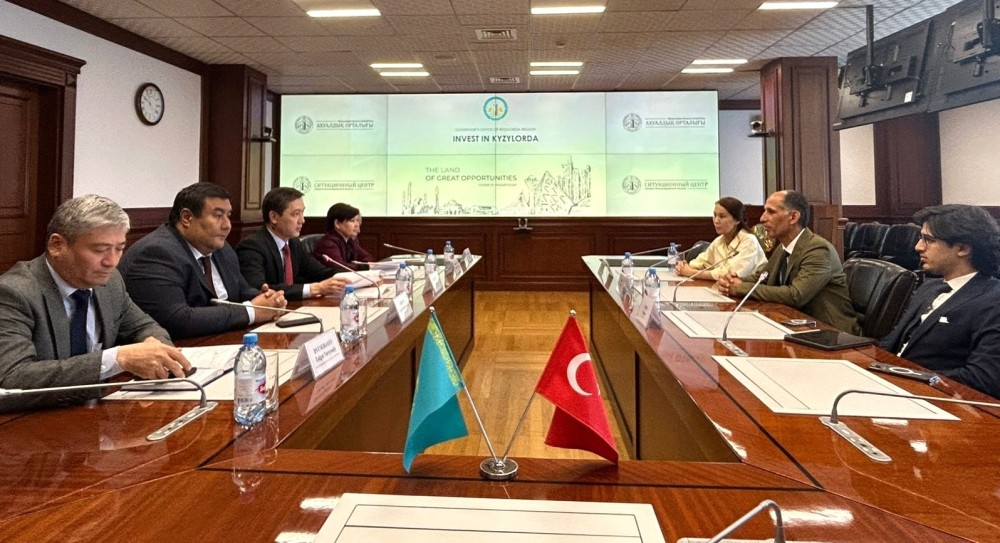
Akplas, a leading Turkish manufacturer, has announced plans to produce modern irrigation systems for agriculture in Kazakhstan’s Kyzylorda region. According to a report issued by Kazakh Invest, agreement on the project was reached during the Turkish company’s visit to Kazakhstan on 11 May. During their meeting, organized with assistance from Kazakh Invest, representatives of Akplas discussed the implementation of the project with Kyzylorda’s executive bodies and inspected the site earmarked for the build of the factory. Expected to be commissioned in early 2025, the first stage of the project will cost around $10 million, followed by a further investment of some $50 million. The facility will initially manufacture sprinkler irrigation systems to serve 80 thousand hectares per year and within five years, increase its production capacity for the irrigation of 400 thousand hectares.    

Kazakhstan and Uzbekistan Boost Transport Cooperation

On May 11, Ministers of Transport of Kazakhstan and Uzbekistan, Marat Karabaev and Ilkhom Makhkamov signed a Road Map for strategic cooperation in transport and logistics for 2024-2025. During the meeting in Astana, the ministers discussed the development of international transport corridors, rail and road transportation, and joint projects relating to the construction of a transport infrastructure. High on the agenda, were the joint implementation of the construction of the Uzbekistan – Afghanistan – Pakistan railway and the collaborative development of the multimodal transport corridor Belarus – Russia – Kazakhstan – Uzbekistan – Afghanistan – Pakistan. With reference to accelerating transportation through the digitalization of cargo documentation, the parties lauded the introduction of the ‘E-permit’ system of electronic exchange of permit forms between the two countries. The Kazakh side welcomed  Uzbekistan’s plans to build the Termez – Mazar-i-Sharif – Kabul - Peshawar railway and confirming his country’s readiness to participate in the project, Marat Karabaev stated, “The implementation of the project will contribute to the development of regional connectivity and trade for the countries of Central Asia, giving them access to the major sea ports of the South Asian region.” The parties also reported that work is now underway on a new railway line between Darbaza and Maktaaral, which will increase the throughput capacity between Kazakhstan and Uzbekistan by a further 10 million tons. The Kazakh minister noted that the volume of export-import transportation between the two countries by road increased by 6% over the past year and amounted to 1.8 million tons.  

Kazakhstan and Netherlands Cooperate in Agriculture and Healthcare

On 10 May in Astana, contracts were signed by Kazakhstan and the Netherlands to promote bilateral relations in both agriculture and healthcare, reported Kazakh Invest. The Ministry of Agriculture of Kazakhstan and the Dutch company VISCON signed a memorandum of understanding to implement the construction of an automated center for crop production. Employing artificial intelligence technologies and in vitro cultivation methods, the project will improve the sustainability, quality, and yield of crops in Kazakhstan. Running from 2024-2030, the initiative is set to produce 12 million seedlings annually. The Ministry of Agriculture also signed a contract with Royal GD to modernize Kazakhstan’s current veterinary service. By upgrading quality control, the joint project will ensure that Kazakhstan’s livestock products meet international standards and hence, boost its exportation to Western markets. With regard to the nation’s health, the Ministry of Healthcare of Kazakhstan and Royal Philips signed a memorandum of cooperation through which the Dutch company will localize the production of portable ultrasound devices in Kazakhstan.    

Son-in-Law of Former Kazakh President Nazarbayev Sells His London Mansion

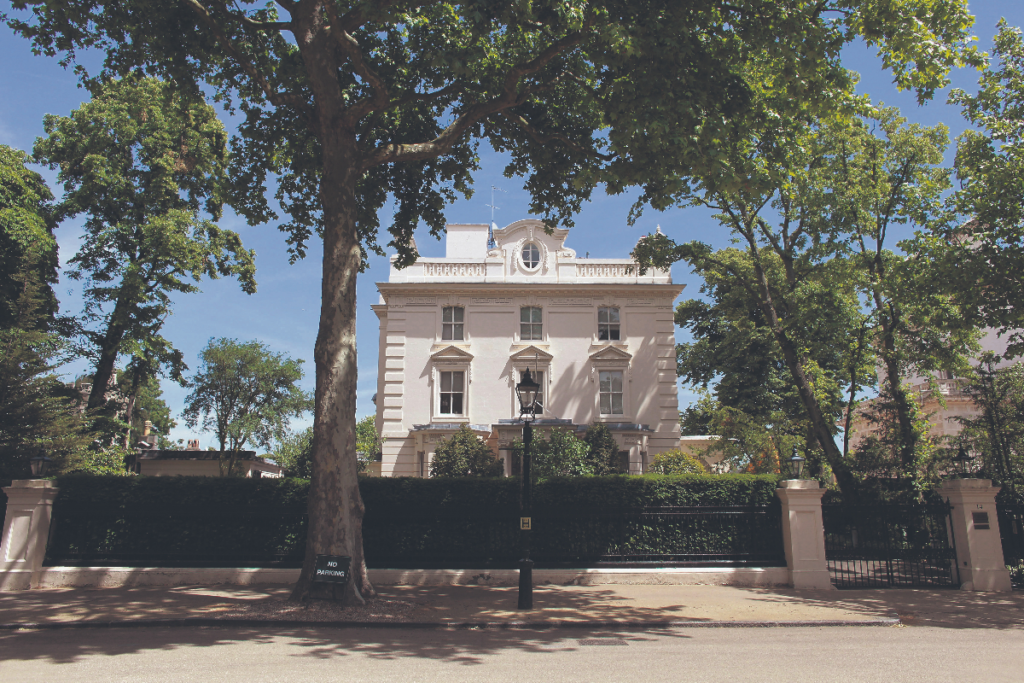
Kazakh billionaire, Timur Kulibayev has sold his mansion in the prestigious London neighborhood of Mayfair for £35 million pounds sterling. The son-in-law of Kazakhstan's former president, Nursultan Nazarbayev is also looking for a buyer for a second house nearby, according to a report in City A.M. The British publication claims that Kulibayev has struck a deal to sell the property to North Wind Capital, an investment company founded by former Deutsche Bank director, Ben Williams. The new owners are planning a large-scale reconstruction of the building. According to City A.M., Kulibayev's mansion on Upper Grosvenor Street was sold at an undervalued price due to the value of luxury real estate taking a significant drop since Brexit. Many London homeowners have already taken substantial losses on investment and residential properties. "Kulibayev has owned two mansions next door to each other for almost 20 years. They are directly opposite the Embassy of Monaco, and just a short walk from Buckingham Palace. Almost all this time, the house which he sold was empty," notes the City A.M. article. In 2024, Timur Kulibayev and his wife Dinara Kulibayeva, daughter of Nursultan Nazarbayev, still sit atop the list of the richest Kazakhs. The combined fortune of the Nazarbayev family is estimated at almost $10 billion.

USAID to Host 13th Central Asia Trade Forum in Kazakhstan

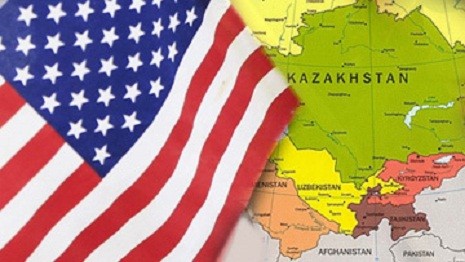
The U.S. Embassy in Kazakhstan has announced that preparations are well underway for the 13th Central Asia Trade Forum. Under the theme, ‘Trade Connections: Bridging Globally,’ the event will be hosted by U.S. Agency for International Development (USAID) in Almaty from 13 – 14 May. Since its inception, the Central Asia Trade Forum (CATF) has attracted the participation of over 10,000 government and business leaders from 25 countries in Central and South Asia, Europe, and the United States, and led to contracts worth over $32 million. This year’s event will focus on exploring new trade opportunities and overseas markets, as well as identifying and expanding the scope of regional trade. To this end, the forum will feature sessions on customs digitalization, transport and logistics, trade regulation (including regional trade agreements), World Trade Organization standards, and harmonization. Promoting the event, Luis A. Rivera, Regional Mission Director at USAID Central Asia, stated, “The forum’s success is its ability to attract policymakers, business leaders, and trade experts each year. Agreements made at the forum have expanded businesses, strengthened trade between Central Asian nations, and advanced economic growth in the region and beyond,” The accompanying trade fair, organized in partnership with Kazakhstan’s Ministry of Trade and Integration and Almaty Chamber of Commerce and Investment, with the participation of 40 companies from Kazakhstan, Kyrgyzstan, Tajikistan, Turkmenistan, and Uzbekistan, will showcase agricultural, textile, apparel, and food products. Other complementary events include a business-to-business expo to promote Central Asian products amongst global buyers, and a Kazakhstan-Pakistan Trade Fair. In the wake of the forum, business executives and officials from the five CA countries, will convene at the 11th Regional Meeting of the National Trade Facilitation Committees of Central Asian countries on 15 May, to discuss customs control, transport, phytosanitary certification, and veterinary border control.  

Kazakhstan, Kyrgyzstan, and Uzbekistan Favor EEU Economic Integration

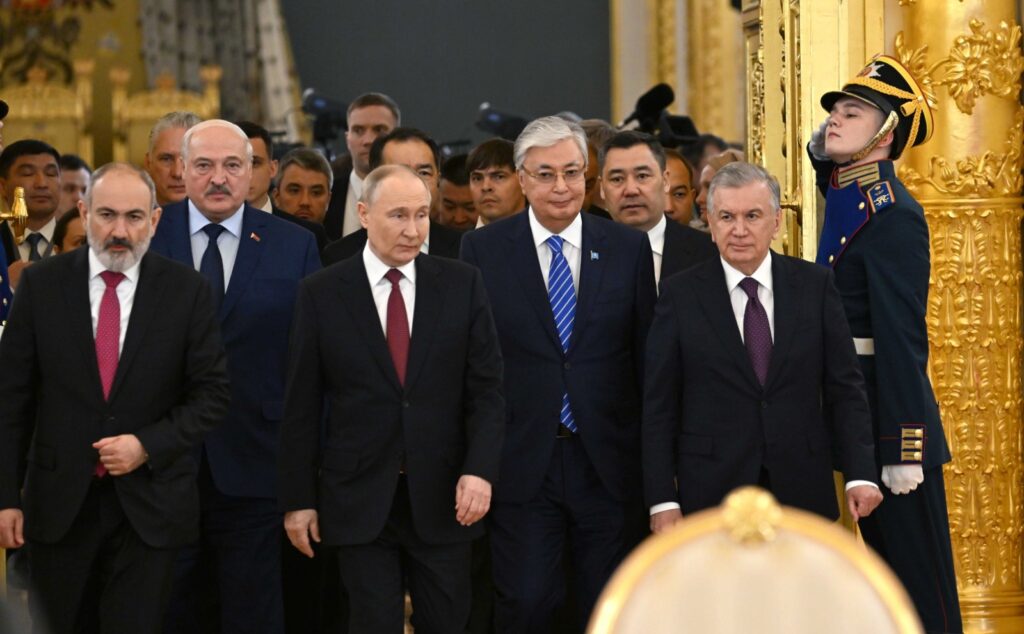
On May 8, Russian President Vladimir Putin, President of Belarus Alexander Lukashenko, President of Kazakhstan Kassym-Jomart Tokayev, President of Kyrgyzstan Sadyr Japarov, and Prime Minister of Armenia Nikol Pashinyan convened in Moscow for a meeting of the Supreme Eurasian Economic Council - the governing body of the Eurasian Economic Union (EEU). The event, which marked the tenth anniversary of the establishment of the Russian-led economic integration bloc, was also attended by heads of the EEU observer states, President of Cuba Miguel Diaz-Canel Bermudez and President of Uzbekistan Shavkat Mirziyoyev. In his address, Kazakhstan President Tokayev remarked that in the relatively short period since the Treaty on the Eurasian Economic Union was signed in Astana ten years ago, cooperation between the parties has contributed greatly to the development of Kazakhstan’s economy, and stated: “The correctness of the chosen vector of development of our association has been confirmed by the macroeconomic results of the past decade. Thus, Kazakhstan’s trade turnover with the EEU member countries has increased 1.7-fold and reached $28.5 billion.” Referencing the positive potential for EEU cooperation with rapidly developing countries in Asia, Africa, and the Middle East, he urged EEU member states to join the Ashgabat Agreement on the creation of an International Transport Corridor to engage with markets in the Persian Gulf. The Kazakh president also emphasized the need for improvements to trade links between Europe and Asia, North and South, and warned that unless renewed, the existing infrastructure in the Eurasian region will continue to deteriorate. Citing the modernization and expansion of transport and logistics infrastructure as a key priority, he stated, “In Kazakhstan, we plan to repair 11,000  and build over 5,000  kilometers of new railways by 2030. As part of the Belt and Road initiative, a Kazakh terminal, built in the Chinese city of Xi’an, accounts for up to 40% of all container traffic on the China-Europe route. There are also plans to launch 5 cross-border transport and logistics hubs on Kazakhstan’s borders with Russia, China, Uzbekistan, and Kyrgyzstan, and on the Caspian Sea.” Kyrgyz President Japarov announced that further development of Eurasian economic integration, including the creation of a single market for goods and services without barriers, a common energy market, and freedom of movement of labor resources, remains a priority for Kyrgyzstan. Regarding benefits afforded by Kyrgyzstan’s membership of the EEU, Japarov said that the country’s trade with EEU member states has grown by 76%, from $2.5 billion to $4.4 billion, its exports to EEU countries have tripled from $410 million to $1.23 billion, and its imports  increased by more than 50%, from $2 billion to $3 billion. Apart from gold, 80% of Kyrgyzstan’s exports go to the EEU countries. The Kyrgyz president also emphasized the importance of linking the EEU and the Chinese Belt and Road initiative. Despite the current observer status of his country and the EEU, Uzbek President Mirziyoyev reported that over the past three years, trade between Uzbekistan and the EEU has grown by 60 percent. Looking ahead, he announced, “Uzbekistan is interested in expanding practical partnership and...