
• KGS/USD = 0.01144 0%
  • KZT/USD = 0.00211 0%
  • TJS/USD = 0.10438 0%
  • UZS/USD = 0.00008 0%
  • TMT/USD = 0.28490 0%
  • KGS/USD = 0.01144 0%
  • KZT/USD = 0.00211 0%
  • TJS/USD = 0.10438 0%
  • UZS/USD = 0.00008 0%
  • TMT/USD = 0.28490 0%
  • KGS/USD = 0.01144 0%
  • KZT/USD = 0.00211 0%
  • TJS/USD = 0.10438 0%
  • UZS/USD = 0.00008 0%
  • TMT/USD = 0.28490 0%
  • KGS/USD = 0.01144 0%
  • KZT/USD = 0.00211 0%
  • TJS/USD = 0.10438 0%
  • UZS/USD = 0.00008 0%
  • TMT/USD = 0.28490 0%
  • KGS/USD = 0.01144 0%
  • KZT/USD = 0.00211 0%
  • TJS/USD = 0.10438 0%
  • UZS/USD = 0.00008 0%
  • TMT/USD = 0.28490 0%
  • KGS/USD = 0.01144 0%
  • KZT/USD = 0.00211 0%
  • TJS/USD = 0.10438 0%
  • UZS/USD = 0.00008 0%
  • TMT/USD = 0.28490 0%
  • KGS/USD = 0.01144 0%
  • KZT/USD = 0.00211 0%
  • TJS/USD = 0.10438 0%
  • UZS/USD = 0.00008 0%
  • TMT/USD = 0.28490 0%
  • KGS/USD = 0.01144 0%
  • KZT/USD = 0.00211 0%
  • TJS/USD = 0.10438 0%
  • UZS/USD = 0.00008 0%
  • TMT/USD = 0.28490 0%

Viewing results 1117 - 1122 of 1883

Central Asia’s Hospitality Market Showing Significant Growth

In 2023, the hospitality industry in the countries of Central Asia, Belarus and parts of the Caucasus seemed to rise to the challenge of the times following Russia's full-scale invasion of Ukraine, as they experienced a wave of change leading to astonishing growth. According to news portal infoline.spb.ru, all of the above countries' hospitality sectors recorded double-digit growth in their local currencies. For example, Kazakhstan (25%), Uzbekistan (12.6%), and Kyrgyzstan (24.9%), as well as Armenia (25.4%) and Azerbaijan (12%), showed steady growth both due to the natural evolution of the industry and the increasing share of legal business. Armenia and Kyrgyzstan, in particular, attributed their dynamics to a sheer increase in the number of customers -- the inflow was provided by both tourists and migrants from Russia. The hospitality industry in Central Asia is still in its formative stages, but the prospects for its development look extremely promising. This is due to several factors: --The demographic factor. The population of Kazakhstan, for example, has grown by 18% over the last 13 years, which is the main driver of demand for catering services; --New players in the market: the emergence of new chain restaurants from different countries provides an additional impetus; --Growth in tourism. Inbound tourism to Central Asia is growing strongly, with Uzbekistan and Kyrgyzstan attracting significant flows of foreign tourists, creating a huge demand for catering services; --Transformation of the Russian market. The Russian hospitality market -- due to the war in Ukraine and international sanctions -- is undergoing a period of significant transformation despite its size and maturity. Since the beginning of 2022, major international chains such as McDonald's, KFC and Starbucks have ceased operations in the country, creating ruptures and opportunities in the industry. In this context, Russian restaurant chains are showing increased interest in the Central Asian market, recognizing its potential for growth and development. Brands such as Shokoladnitsa, Yakitoria, Osteria Mario, Shvili and others have announced plans to expand into Kazakhstan, Uzbekistan, as well as Azerbaijan and Armenia. They are targeting increased revenue and profits due to low rent, material costs and the lower level of competition in these countries. The revolution in the world of hospitality that's sweeping Central Asian countries is opening new horizons for the industry. Rapid growth and transformation is creating unique opportunities for investors and entrepreneurs in the sector.

Tokayev Celebrates Kazakh-Chinese Economic Ties at Boao Forum

Kazakh President Kassym-Jomart Tokayev was feted as guest of honour at the 23rd Boao Asian Forum (BFA) : "Asia and the World: Common Challenges, Common Responsibility." He was joined at the opening ceremony of the plenary session in the Chinese province of Hainan by: Chairman of the BFA Board of Directors Ban Ki-moon, Chairman of the Standing Committee of the National People's Congress Zhao Leji, President of Nauru David Adang, Prime Minister of Sri Lanka Dinesh Gunawardena, Prime Minister of the Commonwealth of Dominica Roosevelt Skerrit, Chairman of the international non-governmental organization "Council of Elders" Mary Robinson, Secretary General of the OECD Matthias Kormann, and Director General of the UN's World Intellectual Property Organization (WIPO) Daren Tang. In his address to the forum, Tokayev made reference to the fact that against the backdrop of escalating world conflicts, there is tension in international trade and an assumption that the growth rate of global GDP will be the lowest in the past 30 years. However, Asia's role in this sphere is increasing, and the region is projected to provide 60 percent of global GDP growth this year. Global trade giants located in Asia are now attracting more and more foreign investment on account of Asia being home to the world's leading technology centres, responsible for 70 percent of patent developments. "Of the expected $30 trillion growth in middle-class consumption by 2030, only $1 trillion is expected to come from Western economies. Collectively, all these factors point to the so-called 'Asian Renaissance," stated Tokayev. He then emphasized the role of the current forum to demonstrate the advanced achievements of the region: "Kazakh-Chinese relations are based on an effective partnership that has made Kazakhstan China's main trade and economic partner in Central Asia. Kazakhstan accounts for half of Chinese trade and investment in the region. Last year, trade turnover between Kazakhstan and China reached a historic record of $41 billion. In 2023, the volume of cargo traffic between our countries increased by 22% to almost 30 million tons." The Kazakh president also mentioned that 80 percent of all land transportation between China and Europe is carried out through Kazakhstan, noting the role of the "One Belt, One Road" project in the creation of modern multimodal, environmentally safe and sustainable infrastructure in the region. With regard to the economic success of the Kazakh Republic, he drew attention to the fact that the country's economic growth of 5.1 percent last year almost exceeds the projected growth rate of the world economy twofold. Plans were outlined for further developments in the field with reference to an open-door policy, abundant resources, and liberal market reforms, aimed to create a favourable ground for mutually beneficial cooperation with China. Tokayev reported that his country is becoming increasingly attractive to investors due to measures to improve the fiscal and monetary system, market reforms, and a price-competitive economy. He also called on the world community to ensure equal opportunities for all countries: "The huge Asian bond market with its huge market capitalization...

Kazakh-Italian Project to Install New Hybrid Power Plant in Zhanaozen

On March 26 the chairman of Kazakhstan's state oil & gas company JSC KazMunayGas (KMG) Magzum Mirzaliyev met with Luca Vignati, a senior executive at the Italian oil & gas company Eni, to discuss the construction of a hybrid power plant in Zhanaozen. The parties discussed the current status of construction of a hybrid power plant in Zhanaozen, where wind (77 MW), solar energy (50 MW) and gas (120 MW) are planned to all be used in the energy mix. "We express our gratitude to Eni for fruitful cooperation and exchange of experience in the framework of this strategic energy project. We hope for further development of our cooperation in this area," said Mirzaliyev in a press release. On January 18 the parties signed an agreement in Rome for the construction of a hybrid power plant in the city of Zhanaozen, in Mangistau region. Additionally, the heads of KMG and Eni discussed drilling the first exploration well at the Abay site in the Caspian Sea -- as well as developing further stages of production at the Kashagan and Karachaganak fields, taking into account the priority to increase the production of marketable gas.

Kazakhstan to Start Producing Cars for Chinese Brand KAIYI

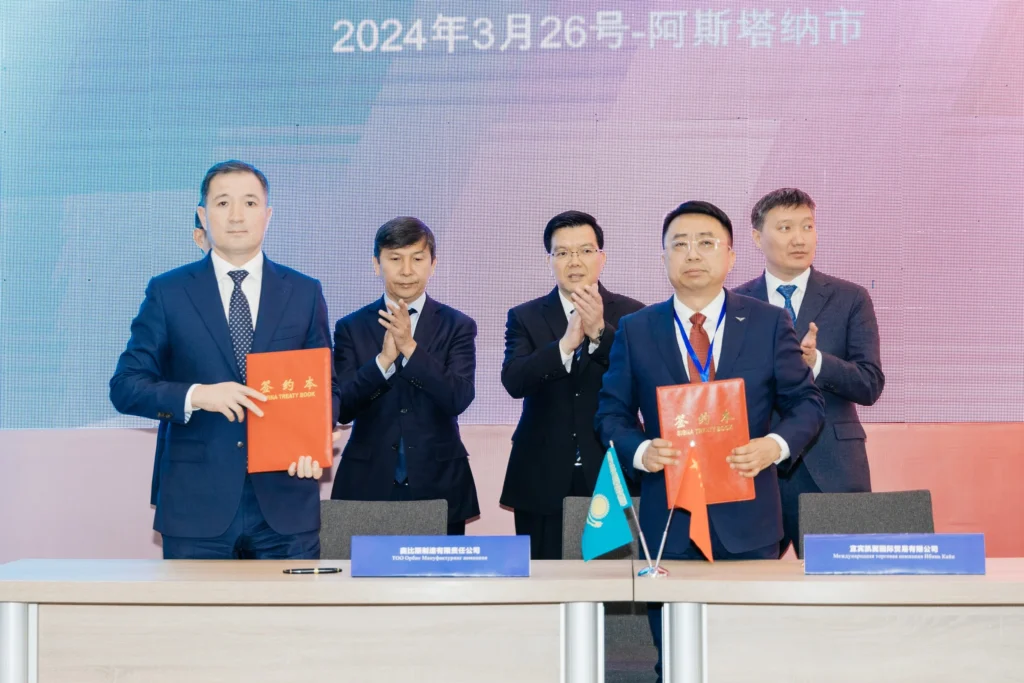
The Kazakh automotive company Orbis Manufacturing plans to build a full-cycle plant in Almaty's industrial zone to manufacture cars under the Chinese brand KAIYI. According to Orbis's press service, a subsidiary of Orbis Kazakhstan signed a memorandum of cooperation with China's Yibin Kaiyi Automobile Co. at the second Forum of Kazakh Exporters in Astana. "We plan to invest about 72 billion tenge (~$160 million) in organizing the production of high-tech cars of leading Chinese brands," commented the president of Orbis Kazakhstan, Sukhrab Mahmudov. Orbis Kazakhstan emphasized that design and estimate documentation (DED) for the production line is currently being finalized. The plant's production capacity is planned at 80,00 vehicles per year. It will initially create 1,500 jobs. In May 2023 Orbis Kazakhstan signed an agreement with EXEED International, a premium brand of the Chinese automaker Chery, on the production of cars under the EXEED brand in Kazakhstan.

Kazakhstan Wants to Import Gas, Electricity From Turkmenistan

Kazakhstan’s energy minister Almasadam Satkaliev voiced the idea of importing energy from Turkmenistan at a government meeting on March 26. “We have regular discussions about the supply and exchange of energy resources with our Central Asian counterparts. Turkmenistan is able to provide electricity. At the moment, [Turkmenistan] exports to Kyrgyzstan,” said Satkaliev. He added: “We act on our own needs and repair schedule. We are ready to consider the proposals of our Turkmen colleagues for both gas and electricity, based on their commercial attractiveness for our consumers.” Satkaliev further stated that although Turkmenistan had not yet disclosed any official prices for power or gas, Kazakh companies themselves would clarify the details to determine the commercial attractiveness of the offer. Earlier this month, news outlet Chronicles of Turkmenistan reported that the head of the country's parliament, Gurbanguly Berdimuhamedov, has spoken of Turkmenistan's willingness to export natural gas and electricity to Kazakhstan, Azerbaijan, and Turkey.

Kazakhstan’s Energy Ministry Lists Oil Reserves, Export Metrics

According to the Ministry of Energy of the Republic of Kazakhstan, at the beginning of 2024, oil reserves amounted to 4.4 billion tons. Those reserves are concentrated in Kazakhstan's largest oilfields, where 10 fields hold almost 80% of all recoverable reserves. They are: Kashagan (1.014 billion tons); Tengiz (899.2 million tons); Karachaganak (308.8 million tons, of which condensate: 242.3 million tons); Uzen (123.3 million tons); Korolevskoye (57.1 million tons); Zhanazhol (44.6 million tons, of which condensate: 8.8 million tons); Kalamkas (41.5 million tons); Karazhanbas (37.9 million tons); Buzachi Northern (35.1 million tons); Northern Truva (33.9 million tons, of which condensate: 1.4 million tons). The ministry of energy noted that total oil production is targeted to increase to 100 million tons per year. Work is already underway to expand production at the Kashagan and Tengiz fields, and exploration work to find new fields is also ongoing. Furthermore, the ministry names the countries which are the top importers of Kazakhstan's black gold exports. They included Italy, the Netherlands, China, Korea, Romania, France, Turkey, Greece, and Singapore. According to representatives of the Ministry of Finance of Kazakhstan, the income from oil production and export for the country consists of taxes paid by corporations within the oil sector. The amount of taxes the state receives depends on various factors, such as production volumes, depletion of reserves, tax exemptions, the world oil price, and transportation costs. The ministry of finance lists revenues for 2023 from oil production and exports as follows: customs export duties on crude oil (1.643 trillion tenge); mineral extraction tax from oil sector organizations (1.283 trillion tenge); rent tax on exports from oil-industry businesses (452 billion tenge). The total amount of tax received by Kazakhstan from the oil industry in 2023 amounted to about three trillion tenge ($6.6 billion). This year, the World Bank forecast a solid GDP growth rate of 3.4% for Kazakhstan's economy. The main driver of this growth will be the development of the hydrocarbon sector and increase in oil production. Experts note that increased oil production will increase export revenues and stimulate domestic economic growth.