• KGS/USD = 0.01144 0%
  • KZT/USD = 0.00204 0%
  • TJS/USD = 0.10422 -0.1%
  • UZS/USD = 0.00008 0%
  • TMT/USD = 0.28571 0%
  • KGS/USD = 0.01144 0%
  • KZT/USD = 0.00204 0%
  • TJS/USD = 0.10422 -0.1%
  • UZS/USD = 0.00008 0%
  • TMT/USD = 0.28571 0%
  • KGS/USD = 0.01144 0%
  • KZT/USD = 0.00204 0%
  • TJS/USD = 0.10422 -0.1%
  • UZS/USD = 0.00008 0%
  • TMT/USD = 0.28571 0%
  • KGS/USD = 0.01144 0%
  • KZT/USD = 0.00204 0%
  • TJS/USD = 0.10422 -0.1%
  • UZS/USD = 0.00008 0%
  • TMT/USD = 0.28571 0%
  • KGS/USD = 0.01144 0%
  • KZT/USD = 0.00204 0%
  • TJS/USD = 0.10422 -0.1%
  • UZS/USD = 0.00008 0%
  • TMT/USD = 0.28571 0%
  • KGS/USD = 0.01144 0%
  • KZT/USD = 0.00204 0%
  • TJS/USD = 0.10422 -0.1%
  • UZS/USD = 0.00008 0%
  • TMT/USD = 0.28571 0%
  • KGS/USD = 0.01144 0%
  • KZT/USD = 0.00204 0%
  • TJS/USD = 0.10422 -0.1%
  • UZS/USD = 0.00008 0%
  • TMT/USD = 0.28571 0%
  • KGS/USD = 0.01144 0%
  • KZT/USD = 0.00204 0%
  • TJS/USD = 0.10422 -0.1%
  • UZS/USD = 0.00008 0%
  • TMT/USD = 0.28571 0%

Viewing results 259 - 264 of 381

Kazakhstan Seeks U.S. Cooperation to Develop Critical Minerals

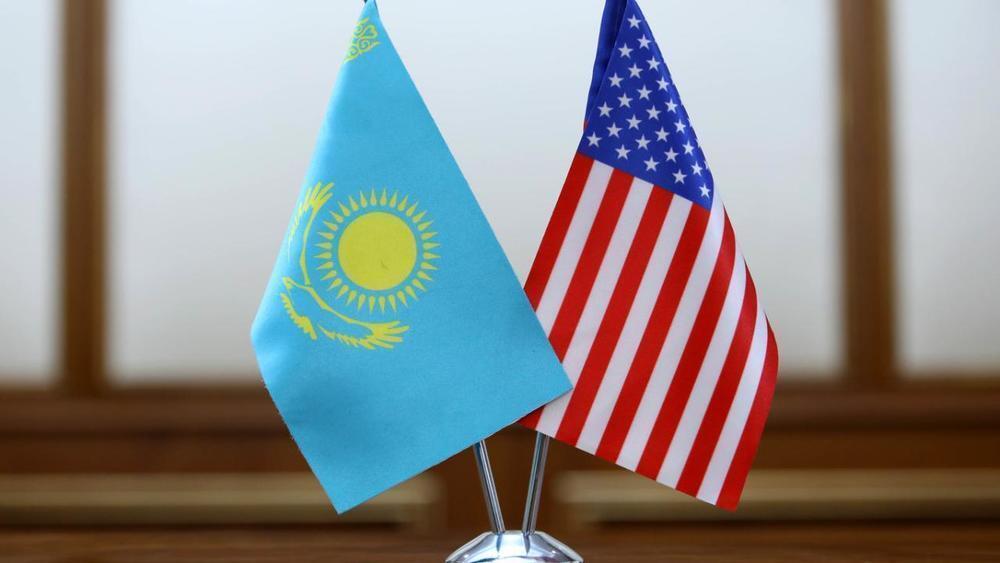
During a visit to the United States on March 1st, Kazakhstan’s Minister of Industry and Construction, Kanat Sharlapaev met David Applegate, director of the U.S. Geological Survey, to discuss expanding bilateral cooperation regarding mineral deposits in Kazakhstan. Of Kazakhstan’s 50 types of minerals, 17 were identified by the U.S. Geological Survey as critical. As reported by Sharlapaev, the key aims of future collaborations are attracting investment in geological exploration, mining, and the processing of rare and rare-earth metals, as well as facilitating Kazakhstan's integration to the global market through cutting-edge technologies and expertise. Speaking at a roundtable discussion at the U.S. Chamber of Commerce with members of the Kazakh-American Business Council (USKZBC) and representatives of American companies, the minister outlined the benefits afforded by consolidating the partnership between Kazakhstan and the USA. Emphasis was placed on the strategic potential of mining rare and rare earth metals and the development of related industries. In particular, he cited the importance of creating a cluster of industries in Kazakhstan to produce raw materials for batteries, including nickel, cobalt, manganese, and lithium and with reference to reforms on the use of subsoil to attract investment, encouraged US mining companies to participate in forthcoming auctions in Kazakhstan.


Przewalski’s Horses to Return to Kazakhstan

In Astana on February 29th, Roman Vassilenko, Kazakhstan’s Deputy Minister of Foreign Affairs, met with a Czech delegation led by Miroslav Bobek, director of Prague Zoo, to discuss the reintroduction of Przewalski’s horses to Kazakhstan. “We have just begun a new chapter on the return of the last wild horses to their natural habitats,” explained Bobek. “Following the success of the horses’ reintroduction to Mongolia, where the population is now thriving, we were approached by the government of Kazakhstan for the same purpose.” Under an agreement made during a visit to Astana in April 2023 by the Czech Republic’s Prime Minister Petr Fiala, the ‘Return of the Wild Horses Project’ aims to relocate some forty horses from Europe and over five years, increase their population in the Kazakh steppe ecosystem. The Kazakh Ministry of Ecology and Natural Resources reported that two Czech Air Force aircraft carrying the first eight horses are scheduled to arrive on June 2nd from Prague and Berlin. They will then be transported to the Altyn Dala state natural reserve in the Kostanay region. The Przewalski horse named after the Russian who discovered it and known as ‘takhi’ in Mongolia, is a rare and endangered species. Originally found on the steppes of Central Asia, it had disappeared from the wilds by the sixties. Thanks to special breeding programmes in European zoos, the breed was saved from extinction and since the 1990’s, has been gradually resettled in its native lands.

Environmental Violations at Kashagan Oil Field Cost NCOC a Billion Dollars

The North Caspian Operating Company (NCOC) has been issued a billion-dollar fine, after it was found to have violated environmental laws at its Kashagan field. Last spring the Department of Ecology for the Atyrau region, where the field is located, conducted an investigation at Kashagan that uncovered a number of violations of environmental legislation. These include the storage of 1.75m tons of sulfur at the field, twice as much as the permitted 730,000 tons. NCOC was also found to have failed to implement environmental protection measures, discharged waste water without the necessary permit, and other infringements. The operator denied all charges, and filed an appeal at a court in Astana to challenge the results of the inspection. After lengthy proceedings the court found that the results of the inspection by the Department of Ecology were legitimate. The judicial panel concluded that restrictions on the volume of sulfur storage annually cannot be considered cumulatively. NCOC can now either appeal this decision in an international arbitration court, or admit its guilt and pay the state the billion-dollar fine.

Kazakhstan to Increase Use of Groundwater for Irrigation

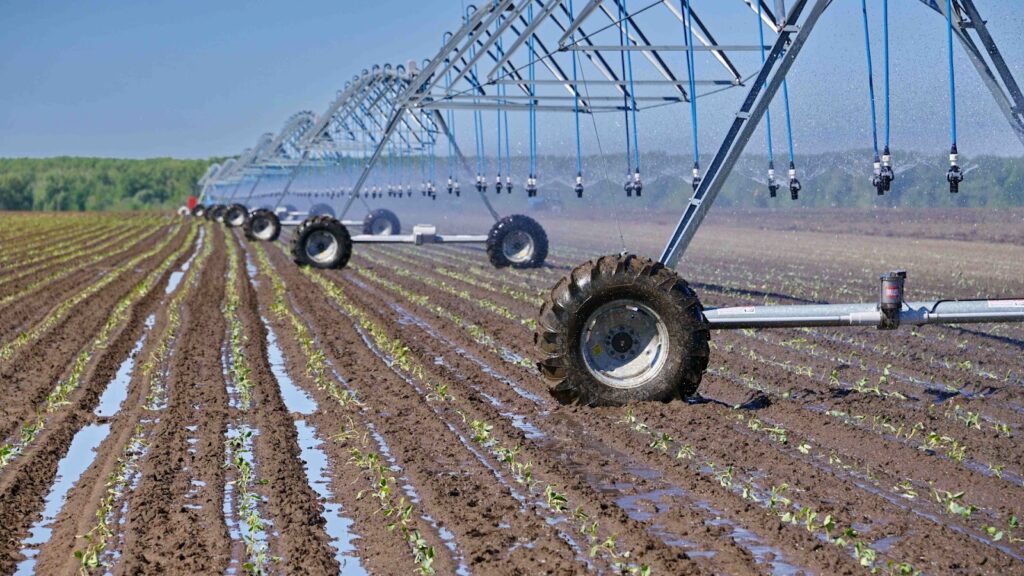
On 27th February, Kazakhstan’s Ministry of Water Resources and Irrigation announced plans to increase the volume of groundwater used for agricultural irrigation by tapping into local reserves. The country and especially its dry southern and eastern regions, has long been dependent on water from its upstream neighbors, Kyrgyzstan and China. Kazakhstan’s groundwater reserves exceed 43,000 tons per day, 19,000 tons of which could effectively be used in irrigation. Agriculture currently uses more than 40 thousand tons, equivalent to 60%, of water collected per day. Of this, groundwater makes up just 1.2%. Under the first stage, this is due to increase to 10-15%, initially from reserves in Almaty, Pavlodar, East Kazakhstan, and Zhambyl. In 2023, of the 1.8 million hectares of irrigated land in Kazakhstan, water-saving technologies were employed on as little as 17% (312,000 hectares), with drip irrigation used on only 84,000 hectares. As an added incentive to implement the expansion of areas of irrigated land through a greater use of groundwater and water-saving technologies, the state will introduce subsidies and reduced tariffs for users.

Kazakhstan, Russia and Turkmenistan to Develop North-South Transport Corridor

On 26th February, Kazakhstan’s Deputy Minister of Transport, Maksat Kaliakparov reported that the railway administrations of Kazakhstan, Russia, and Turkmenistan are planning a joint venture to improve services and reduce cargo delivery time along the International North–South Transport Corridor (INSTC). The North–South Transport Corridor is a key element of the Eurasian transport network, expanding opportunities for logistics and supply chains between Eurasian Economic Union (EAEU) countries, Europe, Asia, and the Middle East. The INSTC has three routes: the Western route (via Azerbaijan), the Eastern route (via Kazakhstan and Turkmenistan), and the Trans-Caspian route (via Caspian seaports). The Eastern route runs through Kazakhstan’s western Mangystau region and connects the Kazakh port of Aktau and the northern ports of Iran. According to Kaliakparov, in 2023, the volume of cargo transported by rail along the North-South corridor alone amounted to 2.1 million tons, 4% more than the previous year. By 2027, the transport potential of the entire corridor will be increased from 6 million to 10 million tons per year. In an effort to become a regional transit hub and avoid geopolitical bottlenecks associated with transit through Russia and Iran, Kazakhstan is now actively engaged in the development of the Trans-Caspian International Transport Route – also known as the Middle Corridor – that will ensure a flow of transport between Europe, Central Asia, and China, without passing through Russia.

Kazakhstan Seeks to Tap Huge Wind Power Potential

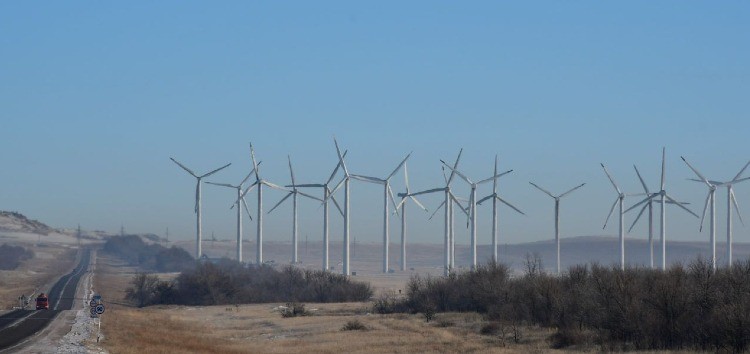
Kazakhstan may soon become one of the world leaders in wind power generation, the country’s Minister of Energy, Almasadam Satkaliev told a parliamentary commission on February 23rd. According to the minister, as the world’s ninth-largest country, Kazakhstan has significant potential for the development of the renewable energy sector, with its vast territory highly suited to wind and solar power generation. Kazakhstan’s climate is favorable for the construction of wind power plants as the country has wind corridors with wind speeds of more than five meters per second, a requirement for the operation of turbines. Experts estimate the potential of wind energy in Kazakhstan at 920 billion kWh per year. The Caspian Region, south Kazakhstan, and the Shelek Corridor and Dzhungar Gate located in the southeast have the most potential. The minister also noted the possibilities for the utilization of solar energy. The southern regions of the country see 2,200-3,000 hours of sun per year, among the most in the world. The best areas for solar generation are the Aral Sea region and south Kazakhstan. In 2023, Kazakhstan consumed 115 billion kWh of electrical energy, compared with 112.9 billion kWh in 2022, and produced 112.8 billion kWh, the same amount as in 2022. Last year Kazakhstan imported 3.4 billion kWh, and exported 1.4 billion kWh. In 2024, the country plans to generate 115 billion kWh. According to the minister, renewable energy has shown steady growth, and since 2014 its capacity has increased more than 16-fold — from 178 MW in 2014 to 2,868 MW in 2023. In 2023, the volume of electricity generated by renewable energy facilities amounted to 6.675 billion kWh, including 3.8 billion kWh from wind power plants, 1.8 billion kWh from solar plants, and 993.8 million kWh from hydropower plants. That accounted for 5.9% of the total electricity generation in the country. Kazakhstan’s goal is to achieve a 15% share of renewable energy sources in power generation by 2030, and a 50% share by 2050.