• KGS/USD = 0.01143 0%
  • KZT/USD = 0.00202 0%
  • TJS/USD = 0.10433 0%
  • UZS/USD = 0.00008 0%
  • TMT/USD = 0.28575 0%
  • KGS/USD = 0.01143 0%
  • KZT/USD = 0.00202 0%
  • TJS/USD = 0.10433 0%
  • UZS/USD = 0.00008 0%
  • TMT/USD = 0.28575 0%
  • KGS/USD = 0.01143 0%
  • KZT/USD = 0.00202 0%
  • TJS/USD = 0.10433 0%
  • UZS/USD = 0.00008 0%
  • TMT/USD = 0.28575 0%
  • KGS/USD = 0.01143 0%
  • KZT/USD = 0.00202 0%
  • TJS/USD = 0.10433 0%
  • UZS/USD = 0.00008 0%
  • TMT/USD = 0.28575 0%
  • KGS/USD = 0.01143 0%
  • KZT/USD = 0.00202 0%
  • TJS/USD = 0.10433 0%
  • UZS/USD = 0.00008 0%
  • TMT/USD = 0.28575 0%
  • KGS/USD = 0.01143 0%
  • KZT/USD = 0.00202 0%
  • TJS/USD = 0.10433 0%
  • UZS/USD = 0.00008 0%
  • TMT/USD = 0.28575 0%
  • KGS/USD = 0.01143 0%
  • KZT/USD = 0.00202 0%
  • TJS/USD = 0.10433 0%
  • UZS/USD = 0.00008 0%
  • TMT/USD = 0.28575 0%
  • KGS/USD = 0.01143 0%
  • KZT/USD = 0.00202 0%
  • TJS/USD = 0.10433 0%
  • UZS/USD = 0.00008 0%
  • TMT/USD = 0.28575 0%

Viewing results 1165 - 1170 of 1866

Kazakhstan to Build New Reservoirs to Reduce Dependence on Neighboring Countries

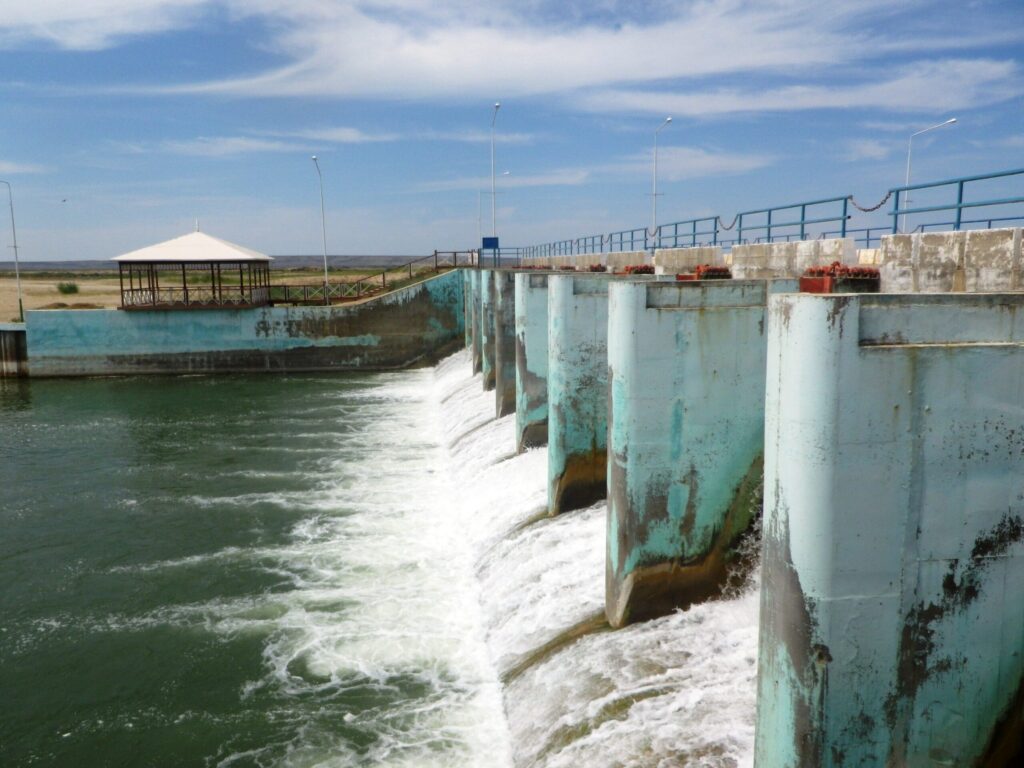
The Ministry of Water Resources and Irrigation of Kazakhstan on December 22nd said it is beginning work on the construction of nine new reservoirs out of a planned twenty to reduce Kazakhstan’s dependence on the water flow from neighboring countries by 25%. The commissioning of new reservoirs will also increase the area of irrigated land by 250,000 hectares and reduce the threat of flooding in 70 rural settlements with a population of 137,000 people. Currently, design documentation is being developed for the nine facilities, and negotiations are underway to attract investors to the construction of new reservoirs. The Ministry of Water Resources and Irrigation has developed a Comprehensive Water Development Plan for 2024-2030. The document includes measures for the construction and reconstruction of reservoirs, reconstruction of hydraulic structures and irrigation systems. “The plan will be implemented in several stages,” said the Minister of Water Resources and Irrigation of Kazakhstan, Nurzhan Nurzhigitov. “In 2024-2026, it is planned to begin construction of twenty new reservoirs with a volume of 2.4 km³ in eleven regions. The implementation of the Comprehensive Plan will increase the volume of available water resources by 3.7 km³, expand the area of irrigated land to 2.2 million hectares, reduce annual losses of irrigation water by 3 km³, and also provide water supply to 41 settlements with a population of more than 55,000 people.” Kazakhstan, especially its southern regions, is highly dependent on irrigation water flow from upstream Kyrgyzstan. This past summer, Kyrgyzstan experienced a shortage of irrigation water and was forced to reduce the water flow to Kazakhstan’s southern Zhambyl region, which negatively impacted the region’s agriculture.
Recent murder in Kazakhstan draws attention to domestic violence and gender discrimination

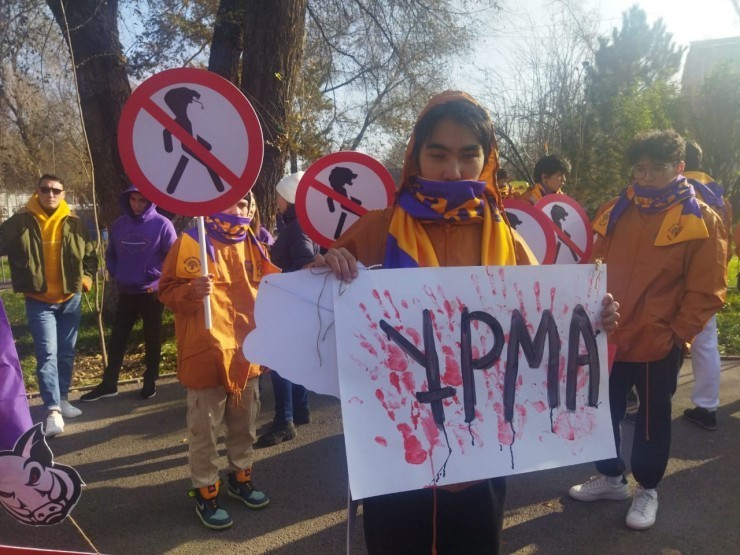
A very public tragedy in Kazakhstan put on display domestic violence at its worst. A quarrel in a restaurant in Astana on the evening of November 8th is reported to have resulted in the death of Saltanat Nukenova, the 31-year-old wife of Kuandyk Bishimbayev. Bishimbayev, who served as Minister of National Economy under former President Nazarbayev, was detained on the same day for suspected murder and remains under arrest awaiting trial. On November 11th, Saltanat was buried in Pavlodar. This appalling incident highlighted the urgent need for stronger protections against domestic violence. An authorized rally was held in Almaty in late November. Around 200 participants came out onto the square behind the Sary Arka cinema, holding posters and chanting slogans against domestic violence. The event was organized by a public movement called Zhana Adamdar and the attendees mostly included young people and students from the movement. Relatives of Saltanat Nukenova also took part. The participants wanted to raise awareness about fighting any manifestation of violence against women and children. Most of the attendees were dressed in the same style, and many of them had scarves with the inscription “Say no to the animal world,” which was also the title of the rally. Speakers at the event detailed the most resonant cases of violence in recent times while the organizers of the rally held a small flash mob and arranged an installation with mannequins in cages with animal masks on them. A minute of silence was observed in honour those who died as a result of violence. Progress in protecting women What proceeded this public tragedy hopefully presents a silver lining. A month later, on December 8, Kazakhstan's current President Kassym-Jomart Tokayev signed a Decree to strengthen human rights with concrete steps towards preventing violence and promoting gender equality. The Decree instructs Kazakhstan’s government to take systematic measures to promote equal rights and opportunities in all spheres of society, as well as to overcome all forms and manifestations of gender discrimination. The decree also encompasses legislation to deter domestic violence and promotes equal rights and safety for both men and women in the Republic of Kazakhstan, as endorsed by UN Security Council resolution 13251. It further involves legislative measures to tighten criminal liability in cases of domestic violence, which have now been implemented. These measures aim to hold perpetrators accountable and ensure that victims can get justice. Additionally, offenders of domestic violence may be required to undergo comprehensive psychological correction as part of their rehabilitation process. The Decree also asks for creating specialized units within the Ministry of Internal Affairs staffed with female officers, who can enhance the effectiveness of combating domestic violence. While the timing of the Decree coincided with the aftermath of Saltanat’s death, there are signs that these steps may have already been in the works. President Tokayev had voiced concerns about domestic violence before the current headlines emerged. At a meeting in the Ministry of Internal Affairs in June 2023, for example, he had affirmed that “comprehensive...

Kazakhstan Signs Twenty Deals Worth $4.85 Billion in Dubai

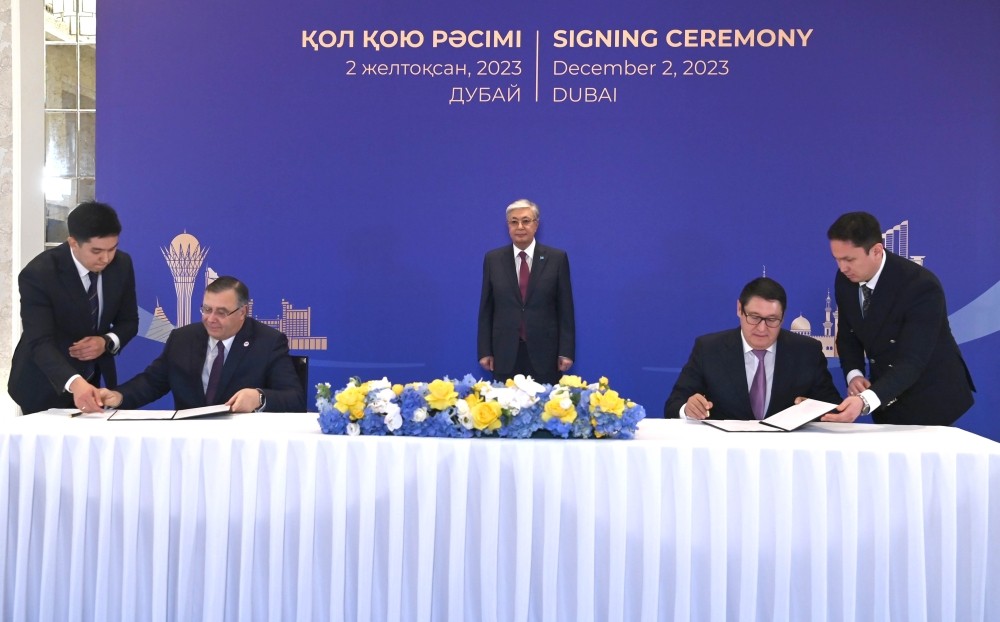
On December 2nd, during his visit to the United Arab Emirates (UAE), President of Kazakhstan, Kassym-Jomart Tokayev, oversaw the signing of twenty commercial agreements. These agreements, facilitated by the Ministry of Foreign Affairs of Kazakhstan and the National Company KAZAKH INVEST, are collectively worth $4.85 billion. A landmark agreement was reached between the governments of Kazakhstan and the UAE for a $1.4 billion construction project of a 1 GW wind power station in Kazakhstan. The project will be implemented with the assistance of Masdar, a UAE-based renewable energy company. Furthermore, a Memorandum of Understanding (MoU) was signed between the Ministry of Energy of Kazakhstan, JSC Samruk-Kazyna, and the Ministry of Investments of the UAE. This MoU outlines plans for implementing low-carbon energy projects with a combined capacity of 10 GW. In addition, JSC Samruk-Kazyna and ACWA Power agreed to jointly develop a project for the construction of wind power stations with a total capacity of 1 GW and an energy storage system in the Zhetysu region in Kazakhstan. An investment agreement was also inked between the Government of Kazakhstan and French company Total Energies. This agreement pertains to the development, construction, and operation of a wind power station with a total capacity of 1 GW in the Zhambyl region of Kazakhstan. In terms of venture funding, the Qazaqstan Investment Corporation established a co-investment platform with ADQ, an Abu Dhabi-based investment and holding company, on strategic partnership for creating a joint financing mechanism for venture projects. Moreover, a joint venture agreement was signed between JSC National Company Kazakhstan, Temir Zholy, and the Abu Dhabi Ports Group. The agreement covers collaboration in five key areas: maritime transportation, maritime and dry ports, railway logistics, digitization, and trading5. Lastly, the JSC National Company KAZAKH INVEST and Emirati company Al Amana Power Solutions agreed to initiate the development of renewable energy projects with investments exceeding $100 million. Overall, these agreements underscore Kazakhstan's commitment to sustainable energy and international collaboration in pursuing green initiatives.

Kazakhstan and Uzbekistan to Bring Mutual Trade to $10 Billion

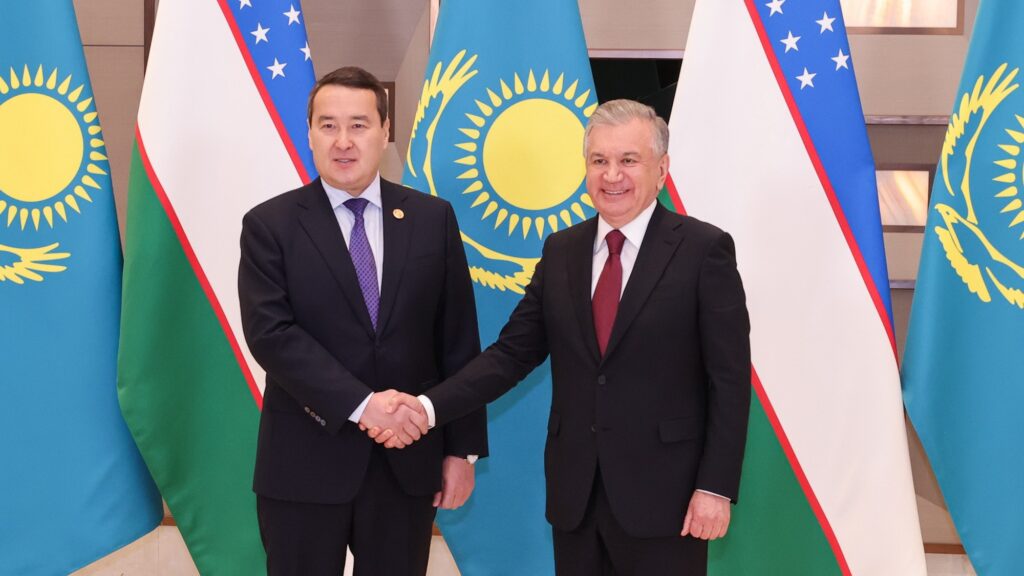
On November 9th, Alikhan Smailov, the Prime Minister of Kazakhstan, made an official visit to Tashkent, Uzbekistan, for the 16th summit of the Economic Cooperation Organization. Prior to the event, he met with the President of Uzbekistan, Shavkat Mirziyoyev. During their meeting, Smailov extended warm greetings from the President of Kazakhstan, Kassym-Jomart Tokayev, and highlighted the strong strategic partnership between the two nations, based on trust and mutual understanding3. Smailov pointed out that "Uzbekistan is one of the largest trade partners of Kazakhstan. Our countries account for about 70% of all trade in Central Asia. At the end of last year, trade turnover increased by 30%, and for the first time reached the milestone of $5 billion. We are actively working to bring mutual trade to $10 billion”. Mirziyoyev reciprocated the sentiment, noting that the strategic agreements between Kazakhstan and Uzbekistan were being systematically realized across various sectors, including trade, transportation, and water management5. He added, “All issues we have are moving forward; I think there is not a single unresolved issue. In terms of trade, the projects we have agreed on with the President of Kazakhstan will help us reach new frontiers”. In line with these discussions, Arman Shakkaliev, Kazakhstan’s Minister of Trade and Integration, and Laziz Kudratov, Uzbekistan’s Minister of Investment, Industry and Trade, signed an agreement to regulate the activities of the International Centre for Industrial Cooperation “Central Asia”7. This center, set to be established on the border of the two countries, will house production sites, warehouses for goods and equipment storage, and transport infrastructure. The aim is to expedite cargo delivery and reduce logistics costs. The Industrial Cooperation Centre is expected to stimulate the creation of new production facilities and jobs, aid in the processing of agricultural and industrial products, and provide logistics services for goods transportation. It's hoped that the centre will enhance transport efficiency and expedite customs clearance processes. The signing of this agreement is a practical step towards the realization of the project. The launch of the Industrial Cooperation Centre is poised to serve as a catalyst for the further development of international trade and economic integration between Kazakhstan and Uzbekistan. It's also projected to contribute to increasing bilateral trade turnover to up to $10 billion.

Promoting Sustainable Development in Central Asia: Key Highlights from the Eurasian Development Bank’s Roundtable

According to a press release issued by the Eurasian Development Bank (EDB), on November 16th, 2023, Almaty, Kazakhstan, served as the venue for a critical roundtable hosted by the EDB, titled "Promoting Sustainable Development in Central Asia". This gathering saw the participation of representatives from a wide range of international organizations and multilateral development banks. Attendees included the likes of the World Bank, the Asian Development Bank, the Asian Infrastructure Investment Bank, the Islamic Development Bank, FAO, UNIDO, UNEP, ESCAP, UNDP, the World Health Organisation, the International Fund for Saving the Aral Sea, and CICA. The agenda was packed with discussions revolving around irrigation, water challenges, environmental and social standards of international financial institutions, and case studies that showcased collaborations in project implementation12. The EDB's latest report, "Efficient Irrigation and Water Conservation in Central Asia", was introduced during the roundtable's first session. Nikolai Podguzov, Chairman of the EDB Management Board, underscored the essential interrelationship between water, food, and energy in Central Asia. He declared the development of the region’s water and energy resources as a strategic priority for the EDB. He also expressed concerns over an impending water deficit in Central Asia within the next five years, urging for collective action supported by multilateral development banks3. Tatiana Proskuryakova, the Regional Director for Central Asia at the World Bank, also spoke at the event. She emphasized the importance of sustainable development in Central Asia to international organizations and multilateral financial institutions. She revealed that the World Bank has allocated approximately a quarter of its $12 billion investment portfolio in Central Asia to water, energy, and environmental sectors. This proportion is expected to rise to almost half in the near future4. Following this, Evgeny Vinokurov, EDB Chief Economist, presented the study "Efficient Irrigation and Water Conservation in Central Asia". He proposed a ten-step solution to address the prevalent issues. The steps include establishing an International Water and Energy Consortium; fostering collaboration among multilateral banks; creating a regional cluster to produce irrigation equipment; consolidating efforts to strengthen cooperation with Afghanistan; using PPP instruments; instituting proper water accounting; gradually integrating investment charges into the tariff structure; improving land conditions; implementing digital technology, and leveraging state-of-the-art irrigation technology and laser levelling.

“This isn’t Moscow” – Kazakh Oligarchs Scuppered in New York Court

In a tale which reaches from “fraud on an epic scale” in the UK to Donald Trump’s shady former business partners, a long-running case against fugitive banker and oligarch Mukhtar Ablyazov and his associates recorded another verdict in the New York Southern District court earlier this month. Yet despite having judgments against him totaling $4.9 billion in Britain alone, over a decade since he fled the UK on a fake passport to avoid three concurrent 22-month sentences for contempt of court, the former Minister for Energy, Industry and Trade in Kazakhstan - who has done business with multiple individuals sanctioned in the West - remains a free man, bemoaning his plight to be a case of “political persecution”. In the early days of Wild West capitalism following the collapse of the USSR, Ablyazov abandoned a career as a nuclear physicist to register a company selling fax machines, photocopiers and computers. By 1998, together with a consortium of investors, Ablyazov acquired a loan to buy Bank Turan Alem - later to become known as BTA Bank - in a privatization auction for a cut-price fee of $72 million. In 2005, he became chairman of the bank following the death of his predecessor, Yerzhan Tatishev, whom Ablyazov has been sentenced in absentia to life in prison in his homeland for ordering the murder of. In May 2019, the District Court of Fairfax, Virginia found Ablyazov’s sister, Gauhar Kusainova guilty of handling over $6 million of assets stolen by her brother from BTA. Already, in September 2018 a UK court had fined Ablyazov’s son-in-law, Ilyas Khrapunov, $500 million for helping him breach an asset freezing order. Ilyas is the son of the former Mayor of Almaty, Viktor Khrapunov, who is accused of embezzlement schemes amounting to at least $300 million and comingling funds with Ablyazov in Trump Organization projects. Viktor and his TV anchorwoman wife fled to Switzerland in August 2008 - allegedly loading up a chartered plane with 18 tonnes of art and antiquities - to join Ilyas, who had established an entity called the Swiss Development Group (SDG) - company slogan: “It’s Good to be Swiss”. By 2014, the Kazakh authorities had identified 58 shell companies and subsidiaries said to be controlled by Ilyas, (that’s nothing compared to Ablyazov’s 1000+) one of which was Triadou SPV. In 2016, Nicolas Bourg, the former Director of Triadou testified the Khrapunovs’ had ordered him to move money out of the US after a California lawsuit was filed against them. “Triadou is a shell entity for SDG,” he said. In the latest round of litigation, seeking to discredit the plaintiff’s witnesses, Mr. Roman for the defense spoke of the “lengths to which BTA Bank was prepared to go to find… Mr. Ablyazov’s allegedly stolen money,” and claimed BTA had paid witnesses, including Ilyas former business partners, Frank Monstrey ($25M) and Felix Sater ($2.7M). Roman argued that “Triadou didn't even know about Ablyazov’s freezing orders in London” and Triadou’s rehabilitation of Flathotel, Cabrini, Syracuse and the Tri-County Mall were not the actions of a shell company. “Triadou doesn't have BTA's money”, he concluded;...