• KGS/USD = 0.01144 0%
  • KZT/USD = 0.00216 0%
  • TJS/USD = 0.10663 0%
  • UZS/USD = 0.00008 0%
  • TMT/USD = 0.28530 0%
  • KGS/USD = 0.01144 0%
  • KZT/USD = 0.00216 0%
  • TJS/USD = 0.10663 0%
  • UZS/USD = 0.00008 0%
  • TMT/USD = 0.28530 0%
  • KGS/USD = 0.01144 0%
  • KZT/USD = 0.00216 0%
  • TJS/USD = 0.10663 0%
  • UZS/USD = 0.00008 0%
  • TMT/USD = 0.28530 0%
  • KGS/USD = 0.01144 0%
  • KZT/USD = 0.00216 0%
  • TJS/USD = 0.10663 0%
  • UZS/USD = 0.00008 0%
  • TMT/USD = 0.28530 0%
  • KGS/USD = 0.01144 0%
  • KZT/USD = 0.00216 0%
  • TJS/USD = 0.10663 0%
  • UZS/USD = 0.00008 0%
  • TMT/USD = 0.28530 0%
  • KGS/USD = 0.01144 0%
  • KZT/USD = 0.00216 0%
  • TJS/USD = 0.10663 0%
  • UZS/USD = 0.00008 0%
  • TMT/USD = 0.28530 0%
  • KGS/USD = 0.01144 0%
  • KZT/USD = 0.00216 0%
  • TJS/USD = 0.10663 0%
  • UZS/USD = 0.00008 0%
  • TMT/USD = 0.28530 0%
  • KGS/USD = 0.01144 0%
  • KZT/USD = 0.00216 0%
  • TJS/USD = 0.10663 0%
  • UZS/USD = 0.00008 0%
  • TMT/USD = 0.28530 0%

Viewing results 1255 - 1260 of 2176

Kazakhstan Takes Sixth Position in FDI Standout Watchlist

Kazakhstan is entering 2024 with significant investment momentum, as it secures the sixth position in the Foreign Direct Investment (FDI) Standouts Watchlist for 2024, released on December 11 by the fDi Intelligence service of the Financial Times. The country's robust macroeconomic performance and continuous reforms have played a key role in making Kazakhstan one of the top FDI destinations globally. The study conducted by fDi evaluates the macroeconomic and FDI trajectories of the world's top 50 FDI destinations. It uses data from the International Monetary Fund (IMF) and the FT’s cross-border investment monitor called fDi Markets. The purpose of this comprehensive analysis is to identify countries starting the new year with a strong macroeconomic performance and impressive FDI momentum. The International Monetary Fund (IMF) has forecasted a real gross domestic product (GDP) growth of 4.6 percent for Kazakhstan in 2024, which is closely aligned with the Fund’s November projection of 4.8 percent for the year 2023. The country has been grappling with inflationary pressures, which peaked at slightly over 21 percent year-on-year in February 2023. However, measures taken by the government have helped curb this surge, and inflation was projected to stabilize around 10 percent by the end of 2023. In its October 2023 report, the IMF highlighted Kazakhstan as an example where prioritizing governance reforms and strengthening the rule of law is instrumental in driving other reforms. The IMF noted that improved governance typically plays a crucial role in pushing forward reforms by building trust and confidence in public institutions and creating a conducive business climate. The IMF also noted how Kazakhstan’s GDP has benefitted from a strong domestic demand and increased oil production attributed to the easing operational constraints affecting the Caspian Pipeline Consortium and the Tengiz oil field expansion. In Central Asia, IMF has assessed that trade and financial inflows, particularly following Russia’s conflict with Ukraine, continue to support economic activity.  However, supply-side disruptions linked to this conflict have also contributed to regional inflation. Kazakhstan's neighbor in the Caspian region, Azerbaijan, has secured the seventh position in the above-mentioned FDI watchlist for 2024 by fDi Intelligence.    
Kazakhstan Now Chairs International Fund for Saving Aral Sea

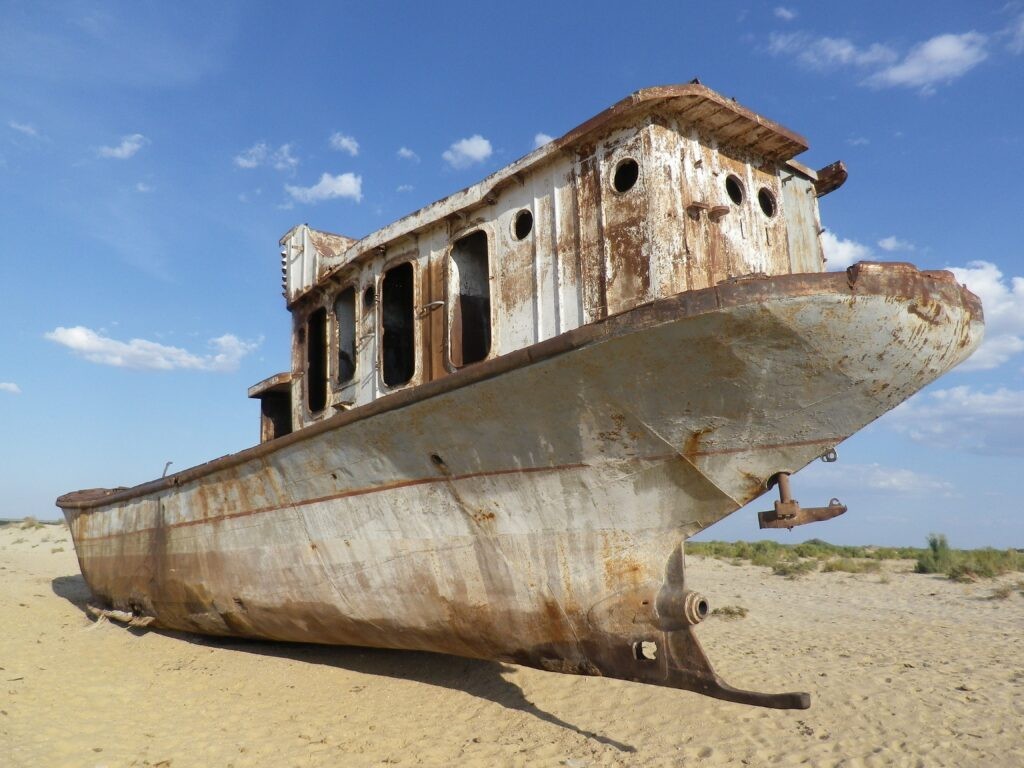
From 2024, the chairmanship of the International Fund for Saving the Aral Sea (IFAS) has passed to Kazakhstan, after President Kassym-Jomart Tokayev was elected as head of IFAS until the end of 2026, the Kazakh Ministry of Water Resources and Irrigation said. The International Fund for Saving the Aral Sea, which includes Kazakhstan, Tajikistan, Turkmenistan, and Uzbekistan, is engaged in the implementation of joint interstate environmental, scientific and practical programs and projects aimed at saving the Aral Sea and improving the environmental situation in the region, as well as solving common social and environmental problems.[/vc_column_text][vc_single_image image="12017" img_size="full" el_class="scond-image" parallax_scroll="no" woodmart_inline="no"][vc_column_text woodmart_inline="no" text_larger="no"]“We are aiming to deepen cooperation both with the states of Central Asia and other international organizations and financial institutions,” said the Minister of Water Resources and Irrigation of Kazakhstan, Nurzhan Nurzhigitov. “This year we plan to begin the second phase of the project to preserve the Northern Aral Sea, implemented together with the World Bank. Saving the Aral Sea is a task that can only be accomplished through the joint efforts of all IFAS founding states. In the next three years, we intend to achieve significant results in this direction.” Speaking in September 2023 in Dushanbe at a meeting of the Council of Heads of State–Founders of the International Fund for Saving the Aral Sea, Tokayev said that IFAS has become the most important institution facilitating regional cooperation on issues of transboundary water resources sharing, as well as solving environmental and socio-economic problems in the Aral Sea basin. Tokayev also emphasized the need to create a mechanism for long-term and sustainable cooperation for the effective use of water and energy resources in Central Asia, taking into account the interests of all countries in the region. To ensure transparency of water use in the region and strengthen the dialogue and friendship between Central Asian nations, Tokayev proposed the development of a work plan which would introduce a unified automated system of accounting, monitoring, management and distribution of water resources in the Aral Sea basin. Tokayev also called on Kyrgyzstan to resume its full participation in IFAS.

Kazakhstan President Tokayev: “As a progressive nation, we should look only forward”

“As a progressive nation, we should look only forward”, said President Kassym-Jomart Tokayev in an interview with Egemen Qazaqstan newspaper, stressing the importance of focusing on long-term goals and placing “national values at the center”. The interview, published on January 2, 2024, included frank discussions on many topics ranging from the government’s “constructive and balanced” foreign policy to its extensive reforms in political, social and economic arenas, while also covering uneasy issues such as the “complex and tense” events of January 2022, which devolved into an attempted violent seizure of power by criminal groups and risked pushing the country into chaos. On foreign policy, Tokayev summarized his government’s “unchanged” priorities as “ensuring the inviolability of the country's sovereignty and territorial integrity, protecting the rights and interests of the citizens of Kazakhstan, and creating favorable external conditions for sustainable economic growth.” The interview revealed key insights on Kazakhstan’s relations with powerful neighbors Russia and China, as well as the country’s strengthening international role, such as through hosting the International Astana Forum, and the One Water Summit with France in 2024. On political reforms, Tokayev highlighted that Kazakhstan was the only country in its geopolitical environment to have undergone large-scale democratic transformations and progressed towards protecting human rights. Some of the advancements detailed in the interview include political modernization and implementing a fairer and more balanced political system, including expanding powers of the elected Mazhilis [parliament] and eliminating the “super presidential powers”. Tokayev described the political reforms to date as “irreversible”. In terms of economic achievements and goals, Tokayev said the goals he set for the economy in 2023 (i.e., to double the GDP to $450 billion by 2029) were “achievable” while stressing that Kazakhstan had the most significant nominal GDP growth in Central Asia in 2023. He described his government’s new approach to economic management, specifying large industrial projects, attracting investment and asset recovery as components of one direction and, on the other, highlighting systemic reforms such as new tax and budget codes as well as new laws on public procurement and public private partnerships to increase transparency. On other issues, he reiterated his vision for the future of energy security as including clean nuclear energy. He also maintained his support for the country’s younger generation of professionals, including in government positions, and touched upon the government’s efforts to further counter domestic violence. The full text of the interview, translated from Kazakh, is given below: EQ:       Thank you, Kasym-Zhomart Kemelevich, for finding time in your busy work schedule for an interview with the newspaper Egemen Qazaqstan. The Kazakh press has been waiting for your opinion on issues of concern to our society. Therefore, today I would like to talk to you frankly on these topics. What was memorable for you last year? KJT:      I would like to take this opportunity to once again congratulate all compatriots on the New Year! The year 2023 was a year full of significant events for our country. We have come to the completion of...

President of Kazakhstan Outlines Vision for Country’s Development

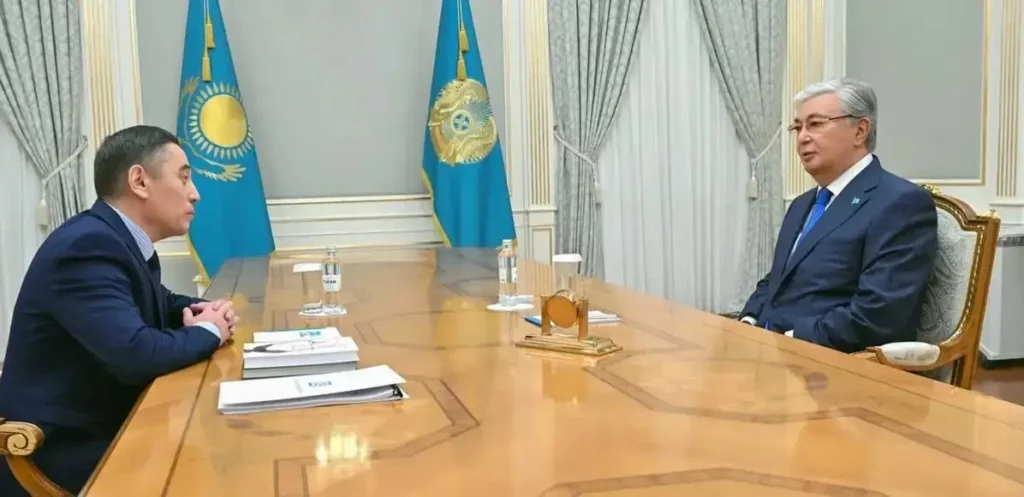
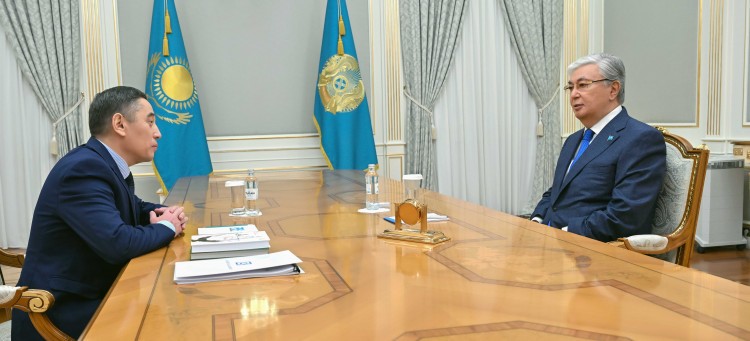
In an interview with the newspaper, Egemen Qazaqstan, President of Kazakhstan, Kassym-Jomart Tokayev spoke about political reforms in Kazakhstan, the country’s economic course, plans for the construction of a nuclear power plant, relations with China, and whether he will participate in the next presidential election. Tokayev said he believes that 2023 was full of significant events for Kazakhstan, including the completion of major political reforms, the establishment of the Constitutional Court, the holding of elections of deputies to the Mazhilis (parliament) and Maslikhats (local councils) at all levels according to new rules, and the first ever elections of akims (mayors) to districts and cities of regional significance. Kazakhstan has begun to build a fair and competitive economic system, Tokayev said, diversifying and demonopolizing the economy, updating infrastructure, supporting business, and attracting investment. In Tokayev’s words, Kazakhstan will continue with a constructive and balanced foreign policy; in 2024, the country will chair several authoritative international organizations: the Shanghai Cooperation Organization, the Collective Security Treaty Organization, the Conference on Interaction and Confidence Building Measures in Asia, the Organization of Turkic States, the International Fund for Saving the Aral Sea, and the Islamic Organization for Food Security. This year, Kazakhstan will also host the World Nomad Games. Asked about the country’s new economic course for a Fair and Just Kazakhstan and the goal of doubling the size of the economy to $450 billion by 2029, Tokayev said it is completely achievable. “According to analysts from the International Monetary Fund, by the end of 2023, GDP in Kazakhstan should be over $259 billion, which is 15% more than in 2022. This is the most significant nominal growth in Central Asia. Positive dynamics are also registered in GDP per capita. According to the IMF forecast, by 2028 this figure will increase by a third – up to $16,800.” The President explained his position vis-à-vis plans for the construction of a nuclear power plant, saying that he pays special attention to the issue given that Kazakhstan is the world’s largest uranium producer and generates its own nuclear fuel. “As many in Kazakhstan are critical of the construction of nuclear power plants given the tragic consequences of tests at the Semipalatinsk nuclear test site, I proposed submitting the issue to a national referendum,” Tokayev said. “Citizens must consider and discuss all the experts’ arguments in order to make a balanced, thoughtful decision during the free expression of their will. This will be the decision of the people.” Commenting on relations with China, the President said that today, relations between Kazakhstan and China are developing in the spirit of friendship, neighborliness, and strategic partnership. Kazakhstan firmly supports the Belt and Road Initiative, Tokayev stated, emphasizing the unprecedented growth of bilateral trade, which reached $24.3 billion from January-October 2023. China is also one of the largest investors in the Kazakhstan, with direct Chinese investment having reached $24 billion. The common border with China and favorable geographical position of Kazakhstan as a bridge between the East and West opens up broad prospects for...

New Law Establishes a National Fund for Children in Kazakhstan

A new law that came into effect on January 1st, 2024, entitled Amendments and Additions to Certain Legislative Acts of the Republic of Kazakhstan, includes provisions regarding the accrual, payment and use of funds transferred from the National Fund to the children of Kazakhstan.  According to this document, all children (up to the age of 18) will receive deductions of fifty percent of the investment income of the National Fund. The project, a first of its kind in Central Asia, is called the "National Fund for Children". The National Fund of the Republic of Kazakhstan holds the state’s assets in the form of finances concentrated on the accounts of the Government in the National Bank. It is accumulated via fulfillment of tax obligations on the extraction of mineral resources, rent tax on export of crude oil and gas condensate and royalties, as well as the share of the Republic of Kazakhstan on division of production in kind or money from their realization, with the amount being determined in accordance with the relevant tax legislation. Lower-end forecasts of savings per child under this new law are calculated to be around US$3,000-4,000. This amount is estimated taking into account the volatility of the capital market and depends on the global economic situation. Only citizens of Kazakhstan can participate in this program, and any child that changes citizenship loses the right of payment. Furthermore, these funds are exempt from taxation and when a person reaches the age of 18, he or she can decide how to use the sum. It is conceivable that these funds can be used by the new generation to finance their future education, including abroad, or for housing purposes. If the funds are not used within 10 years by the citizen holding the funds, they will be automatically credited to his or her pension account.

Kazakhstan Seeks to Resolve Water Management Issues with Regional Neighbors

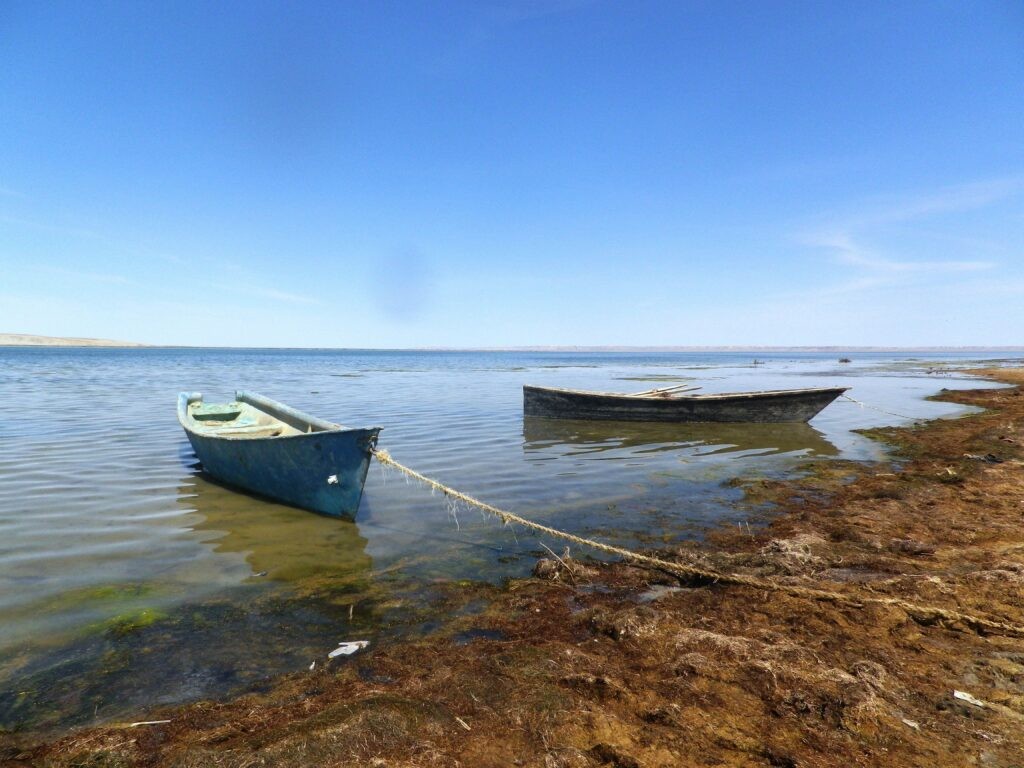
In the modern world, water is as valuable a resource as minerals. For that reason, on September 1st, 2023, the President of Kazakhstan, Kassym-Jomart Tokayev by decree created the Ministry of Water Resources and Irrigation. “Water resources are no less important for our country than oil, gas or metals. I believe that the effective development of the water management system should be handled by an independent department,” Tokayev said at the time. Despite the short period of its work, the new Ministry has already had concrete results, the official website of the Prime Minister of Kazakhstan (primeminister.kz) stated in reviewing the country’s economic performance in 2023.  In particular, the concept for the development of a water resources management system for 2024-2030 has been developed. It will allow for the area of irrigated agricultural land in Kazakhstan to increase up to 2.2 million hectares, increase the share of water-saving technologies up to 40%, and reduce the loss of irrigation water during transportation down to 15%. The Ministry has also prepared a plan for the development of the water sector of Kazakhstan for 2024-2030. Its implementation will increase the volume of the country's water resources by 3.7 cubic kilometers, reduce losses of irrigation water and increase its volume by three cubic kilometers, provide water to 41 settlements with a population of more than 55,000 people, and also reduce Kazakhstan's dependence on water supplies from neighboring countries by 25%. In 2024-2026, it is planned to begin construction of 20 new reservoirs and reconstruct 15 reservoirs across the country. A total of 339 canals with a length of 3,5000 km will be reconstructed. The Ministry also conducted negotiations with neighboring states on water security. As a result, it is expected that by April 1st, 2024, 11.1 cubic kilometers of water will flow into the Syr Darya River, and 487 million cubic meters of water are expected to be taken through the Dostyk interstate canal. This will allow for the accumulation of the volume of water required for growing season in Kazakhstan’s Turkestan and Kyzylorda regions, as well as sending 1.6 cubic kilometers of water to the Aral Sea.[/vc_column_text][vc_single_image image="13383" img_size="full" el_class="scond-image" parallax_scroll="no" woodmart_inline="no" title="Butakov Bay, Small Aral Sea. Photo: TCA"][vc_column_text woodmart_inline="no" text_larger="no"]An agreement was reached with upstream Kyrgyzstan on the supply of irrigation water to the Zhambyl region in southern Kazakhstan, which experienced a severe water shortage this past summer. The Ministry is also negotiating with upstream China on more than 20 rivers that flow to Kazakhstan, including the Ertys, Ili, and Emel. Today, the two neighboring countries have reached a consensus on a number of issues regarding water distribution. Finally, a draft agreement is being developed on a mechanism for water and energy cooperation between the countries of Central Asia, with the participation of Kazakhstan, Kyrgyzstan, Tajikistan, Turkmenistan, and Uzbekistan.