• KGS/USD = 0.01143 0%
  • KZT/USD = 0.00205 0%
  • TJS/USD = 0.10433 0.1%
  • UZS/USD = 0.00008 0%
  • TMT/USD = 0.28577 0%
  • KGS/USD = 0.01143 0%
  • KZT/USD = 0.00205 0%
  • TJS/USD = 0.10433 0.1%
  • UZS/USD = 0.00008 0%
  • TMT/USD = 0.28577 0%
  • KGS/USD = 0.01143 0%
  • KZT/USD = 0.00205 0%
  • TJS/USD = 0.10433 0.1%
  • UZS/USD = 0.00008 0%
  • TMT/USD = 0.28577 0%
  • KGS/USD = 0.01143 0%
  • KZT/USD = 0.00205 0%
  • TJS/USD = 0.10433 0.1%
  • UZS/USD = 0.00008 0%
  • TMT/USD = 0.28577 0%
  • KGS/USD = 0.01143 0%
  • KZT/USD = 0.00205 0%
  • TJS/USD = 0.10433 0.1%
  • UZS/USD = 0.00008 0%
  • TMT/USD = 0.28577 0%
  • KGS/USD = 0.01143 0%
  • KZT/USD = 0.00205 0%
  • TJS/USD = 0.10433 0.1%
  • UZS/USD = 0.00008 0%
  • TMT/USD = 0.28577 0%
  • KGS/USD = 0.01143 0%
  • KZT/USD = 0.00205 0%
  • TJS/USD = 0.10433 0.1%
  • UZS/USD = 0.00008 0%
  • TMT/USD = 0.28577 0%
  • KGS/USD = 0.01143 0%
  • KZT/USD = 0.00205 0%
  • TJS/USD = 0.10433 0.1%
  • UZS/USD = 0.00008 0%
  • TMT/USD = 0.28577 0%

Viewing results 589 - 594 of 1358

New Plant for Deep Processing of Grain in Kostanay, Kazakhstan

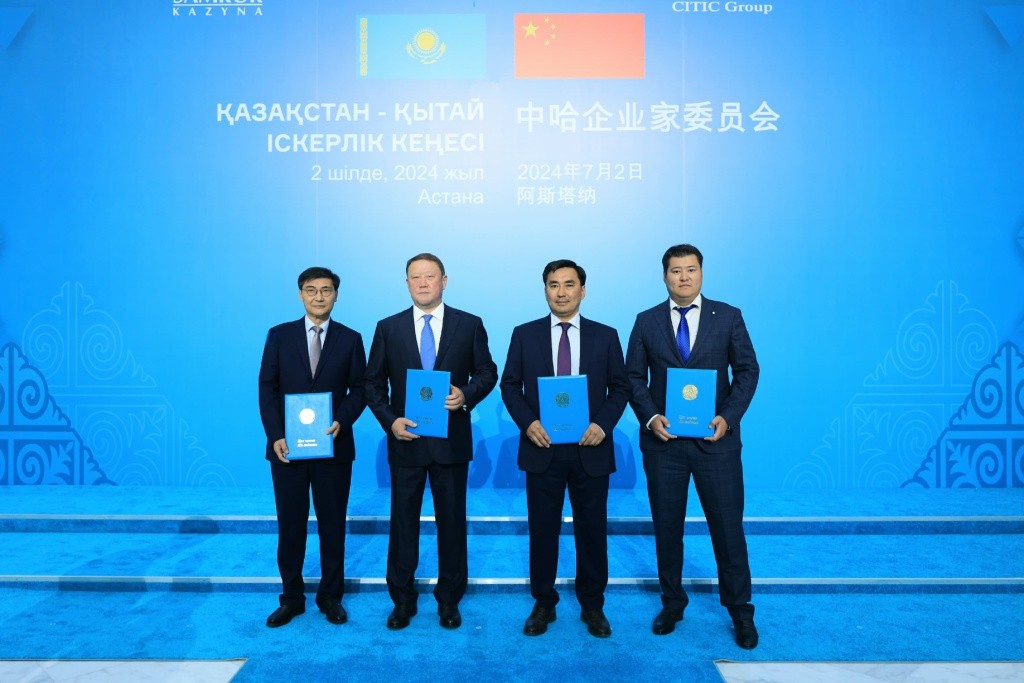
At the Kazakh-Chinese Business Council meeting in Astana on July 2, the administration of Kostanay, Baiterek Venture Fund, KazFoodProducts, and the Chinese company Myande Group signed a Memorandum of cooperation for the construction of the Qostanay Grain Industry plant in Kostanay. As reported by Kazakh Invest, the plant for the deep processing of wheat into amino acids, bioethanol, gluten, animal feed, and wheat bran, when launched in 2027, will manufacture 430 thousand tons of products per year and create about 600 jobs. Hailing the agreement as an important step in strengthening bilateral relations, Rong Zhen, CEO of Myande Group, stated, “We see huge potential in the agro-industrial sector of Kazakhstan, and this cooperation will increase its efficiency and manufacturability and open up new opportunities for Kazakh products to enter the Chinese market." Alikhan Kairatbek, CEO of KazFoodProducts, added: "Based on the quadripartite agreement, it is planned to increase the production of starch molasses to 33 thousand tons per year for further use by domestic confectionery companies. New jobs will be created. Together with the Akimat (administration) of Kostanay region and Baiterek Venture Fund, we are launching large–scale projects in the field of agriculture and are very pleased to have a strategic partnership with Myande Group." Myande Group will also upgrade the AsiaGrowFood plant for deep processing of corn in the Almaty region to increase its production from 200 to 300 tons per day. Deep processing of grain is one of the most promising areas in the manufacturing industry regarding products with high added value. Kazakhstan annually harvests 16-17 million tons of grain, a third of which are exported. Over 260 different types of products with added value can be produced from grain.    
Turkish Investment in Greenhouses in Kazakhstan

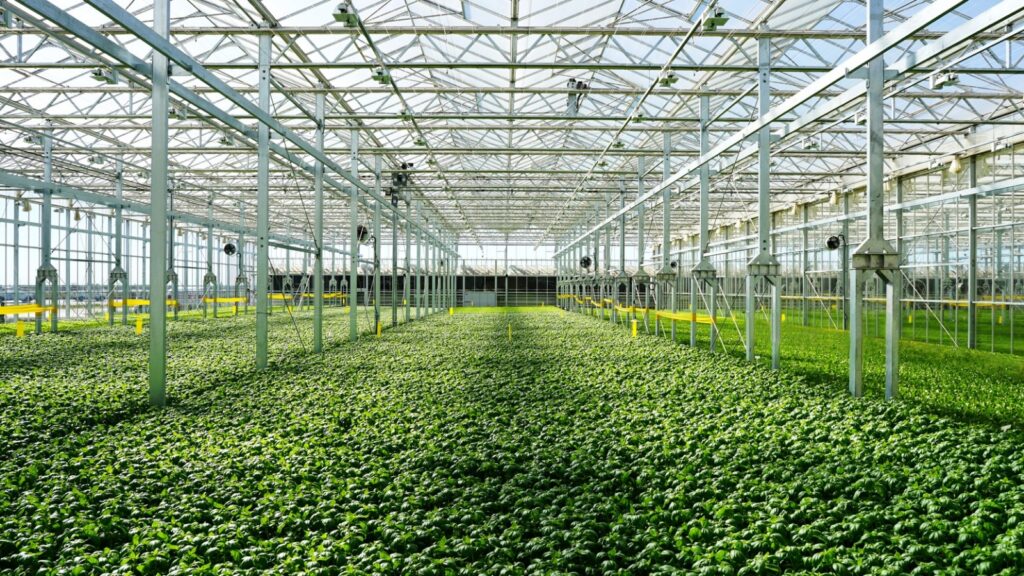
On July 2, Chairman of the Board of Kazakh Invest Yerzhan Yelekeyev, met Abbas Sahin, Vice-President of the Turkish group  Alarko, to discuss the construction of a greenhouse complex in Shymkent in South Kazakhstan. As reported by Kazakh Invest, Alarko signed a contract with the Investment Committee of the Ministry of Foreign Affairs of Kazakhstan, to invest $150 million in the country’s agro-industrial sector for the first stage of a project comprising the construction of greenhouses, spanning ​​200 hectares, and creating 1,750 jobs. Preparations by the Turkish company for construction are now underway, with completion scheduled for 2026. Once in operation, the greenhouses aim to produce up to 50,000 tons of tomatoes per year. “Our company has operated in your country for the last 32 years,” said Abbas Sahin. “Given the large land area and available export markets, Kazakhstan has everything necessary to develop the agro-industrial sector. We see the amount of work that has been done in creating the excellent investor protection mechanisms that are now available to investors. We trust the country and have already invested approximately $700 million into projects implemented in Kazakhstan.” In response, Yelekeyev thanked the Turkish investor for contributing to the development of Kazakhstan’s economy and announced, “Turkey is an important partner of Kazakhstan, having implemented more than 70 projects worth $2.8 billion over the years of independence. We highly appreciate that Turkish companies continue to trust Kazakhstan and actively support measures to implement their projects successfully.”    

Astana Hosts SCO Summit: A New Platform for Kazakh Diplomacy

With the first events of the Shanghai Cooperation Organization (SCO) Summit taking place this morning in Kazakhstan’s capital, Astana, conversations are beginning about what the host country will be discussing – and with whom. The SCO is a political, security and economic alliance in the wider Eurasia region, aimed at promoting trade and investments between member states, as well as global security. Its nine full members are Kazakhstan, Kyrgyzstan, Tajikistan, Uzbekistan, China, Russia, Iran, India and Pakistan. The Organization – which includes four observer states and 14 dialogue partners – covers half of the world’s population, and almost a third of global GDP. Kazakhstan’s multi-vector approach to its foreign policy has seen the country combining its role within the SCO with cooperation with Western governments, through dialogue with the European Union and the United States’ C5+1 platform. President Tokayev recently commented that: “Kazakhstan is committed to multilateral cooperation. In our foreign policy we proceed from the national interests, and are in favor of solving all disputable issues on the basis of rational compromise. In addition to the SCO, this year our country is chairing five other international organizations. This is an unprecedented case, one could say an achievement in the history of Kazakh diplomacy.” This multi-vector approach is key to Kazakhstan’s international diplomacy. Indeed, ‘mutually beneficial cooperation’ and ‘mutually beneficial strategic partnership’ have become the watchwords of Tokayev’s presidency. Over the past decade, Kazakhstan has become an increasingly important land-bridge between East and West, both in terms of trade and diplomacy. Due to projects such as the Belt and Road Initiative and the Middle Corridor, Kazakhstan’s location has made it an indispensable ally to China, whilst playing a pivotal role in the expansion of transcontinental trade has led to Central Asia, in the words of Tokayev, “become a global stakeholder.” In the opinion of experts, more of the same can be expected at this week’s SCO Summit. In an interview conducted by the Kazinform news agency, local political analyst Valery Volodin stressed that: “It goes without saying that each government will be defending its own interests [at the Summit]. But Kazakhstan will be placing an emphasis on regional stability, which will allow countries to implement a host of joint projects with China and Russia. Besides this, Kassym-Jomart Tokayev’s gift for diplomacy will push the SCO to become not just a discussion club, but a real mechanism to solve problems in Eurasia using dialogue between governments.” In an article in The Geopolitics, Michael Rossi, a professor of political science at Long Island University, posited that Kazakhstan is not playing the so-called ‘Great Game’ between East and West, but rather pointing out the scope for "Big Opportunities". “Kazakhstan’s positive relations with countries often in conflict, such as Russia and Ukraine, China and the United States, Azerbaijan and Armenia, and Israel and the Palestinian territories, grant Astana legitimacy,” Rossi writes, “to act as a buffer and stabilizing force among major powers. This positioning allows Kazakhstan to reduce tensions and potentially mediate conflicts. Under...

SCO Summit: Tokayev and Xi Laud Kazakhstan-China Ties

On the eve of the 2024 Shanghai Cooperation Organization (SCO) Summit, hosted this year by Kazakhstan in its capital Astana, the leaders of Kazakhstan and China were keen to highlight the strength of their countries’ partnership. The SCO is a political, security and economic alliance in the wider Eurasia region, aimed at promoting trade and investments between member states, as well as global security. The Organization – which includes nine full members, four observer states and 14 dialogue partners – covers half of the world’s population, and almost a third of global GDP.  In comments to China’s Xinhua news agency, Kazakh President Kassym-Jomart Tokayev spoke of a “close political dialogue” between the two countries, supported by the SCO, thanks to which “China is consolidating its position as Kazakhstan’s leading trade and investment partner”.  Mutual trade between the countries reached a historic record of $41 billion in 2023. Tokayev added that “China became one of the top four foreign investors in Kazakhstan in 2023, investing around $2 billion in direct investments, a year-on-year growth of 16.4%. The total volume of Chinese investment in the Kazakh economy is over $25 billion. Around 4,700 Kazakh-Chinese enterprises operate in our country.” In his comments to Xinhua Tokayev also highlighted Kazakhstan’s growing cultural ties with China, mentioning a new agreement on a visa-free regime between the countries, the creation of cultural centers in both nations, and the fact that 2024 has been named the “Year of Kazakhstan tourism in China”. The president himself lived in China for eight years, where he studied Chinese in Beijing before working for the Soviet Union’s embassy to China. In turn, in a letter published by the Kazinform news agency, China’s leader Xi Jinping noted: “China is now Kazakhstan’s largest trading partner and its top export destination. Major strategic projects including the Zhanatas wind farm, Turgusun hydropower station, and the modernization of Shymkent Oil Refinery have been completed and commissioned. China-Kazakhstan crude oil and natural gas pipelines are operating in a safe and stable manner. The ‘green lanes’ for fast customs clearance of agricultural products are available at all border ports between the two countries, which makes green agri-products of high quality from Kazakhstan easily accessible for Chinese consumers. The potential for cooperation in new energy and transportation infrastructure has been unleashed. The transport and logistics terminal in Xi’an, the Western Europe-Western China Highway, and the China-Europe Railway Express all operate smoothly, providing a strong boost to the development of both China and Kazakhstan.” Kazakhstan has a multi-vector approach to its foreign policy; its role within the SCO complements the country's cooperation with the United States through the C5+1 platform, and a constant dialogue with the European Union. In a recent speech about Kazakhstan's chairmanship of the Shanghai Cooperation Organization this year, President Tokayev commented: "Kazakhstan is committed to multilateral cooperation. In our foreign policy we proceed from the national interests, and are in favor of solving all disputable issues on the basis of rational compromise. In addition to the...

SCO Summit in Astana: Correspondents from China Global Television Network, Times of Central Asia Discuss Upcoming Meeting

National leaders and other dignitaries from over 20 countries will be in the Kazakh capital of Astana this week for the annual summit of the Shanghai Cooperation Organization (SCO). The Times of Central Asia will be covering the SCO Summit live on 3 and 4 July from the city’s Palace of Peace and Reconciliation. The SCO is a political, security and economic alliance in the wider Eurasia region. This year’s Summit host Kazakhstan was a founding member of the Organization in 2001, alongside China and Russia, and its Central Asian neighbors Kyrgyzstan, Tajikistan and Uzbekistan. The last time the Summit was held in Astana, in 2017, India and Pakistan became full members. There are currently nine full member states, four observer states, and 14 dialogue partners, covering half of the world’s population, and almost a third of global GDP. This year's Summit will have significant implications for regional and global affairs. It is likely to produce initiatives aimed at reducing trade barriers, and promoting investments between SCO member states. High on the agenda will be the Belt and Road Initiative (BRI) – a crucial framework for enhancing connectivity and economic ties between China and its Central Asian partners. Other anticipated outcomes include new initiatives on climate change and sustainable development, as well as strengthened cultural and educational exchanges. Upon the initiative of Kazakhstan’s President Kassym-Jomart Tokayev, 2024 has been named the SCO “Year of Ecology”. Ahead of the Astana Summit, The Times of Central Asia’s senior editor Jonathan Campion spoke with an anchor from China Global Television Network, Mr Zhong Shi, about the role of the Shanghai Cooperation Organization plays in the Central Asia region. Their talk can be viewed in full in the videos below. In response to The Times of Central Asia’s question about what makes the SCO different from other alliances that the countries of Central Asia are aligned with, Mr Zhong explained that: “The SCO has been truly effective in combatting what we call the three enemies of all members, namely terrorism, extremism and separatism. There have been joint military drills conducted to enhance the coordination among armed forces”. Listen to Mr Zhong’s full response below: [video width="1920" height="1080" mp4="https://timesca.com/wp-content/uploads/2024/06/fullscreen-Zhong-Shi-answer-2-questions.mp4"][/video]   [video width="1920" height="1080" mp4="https://timesca.com/wp-content/uploads/2024/06/tw0-windows-Zhong-Shi-answer-2-questions.mp4"][/video] In turn, Mr Campion gave The Times of Central Asia’s perspective on the upcoming Summit. Asked about the impact that the Belt and Road Initiative has had on Central Asia, he replied: "Central Asia is evolving as a land bridge component to the Belt and Road Initiative linking China to the Caspian Sea. We’re seeing that investments in transport infrastructure are unlocking the region’s vast natural resources. With the world making a green transition, Kazakhstan stands out, as it has an abundance of critical materials – or green metals as they are known – that are used in the components of green technologies.” Listen to Mr Campion’s full response below: [video width="1920" height="1080" mp4="https://timesca.com/wp-content/uploads/2024/06/Jonathon-answer-Q2.mp4"][/video]   [video width="1920" height="1080" mp4="https://timesca.com/wp-content/uploads/2024/06/Jonathon-answer-Q3.mp4"][/video]  

Kazakhstan, UNDP, and Eurasian Development Bank Unite in Water Management

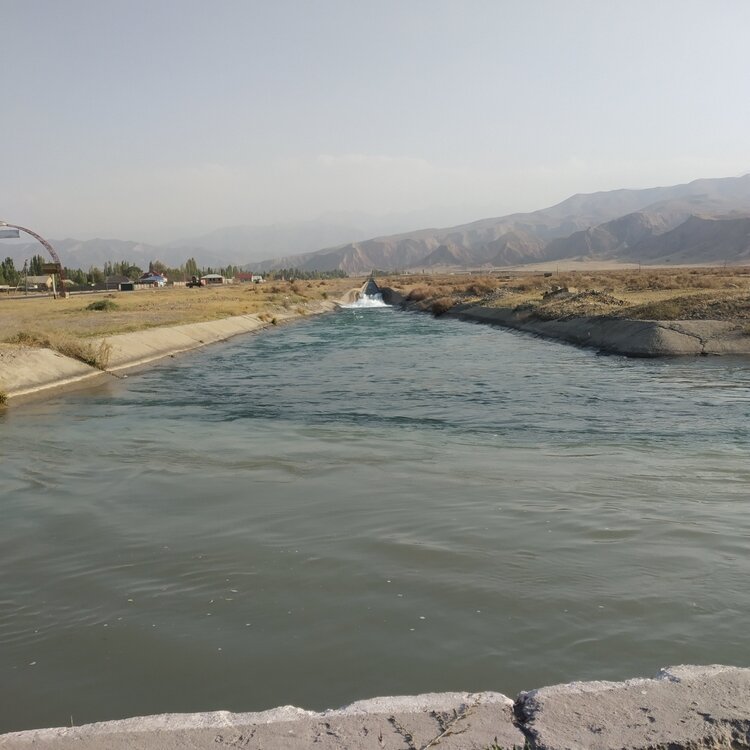
On 28 June, the Ministry of Water Resources and Irrigation of Kazakhstan, the United Nations Development Programme (UNDP) in Kazakhstan, and the Eurasian Development Bank (EDB) signed a letter of intent to cooperate on joint development projects in multi-purpose water resources management. As reported by the EDB Media Centre, as part of the agreement, the EDB plans to allocate approximately US $5.3 million in technical assistance to implement several initiatives including water sector digitalization, the development of regional training centres for state-of-the-art irrigation technologies, piloting modern water-saving technologies, and developing a legal and institutional framework for the water sector. Kazakhstan is experiencing an increase in water-related disasters, as evidenced by recent severe floods and escalating water shortages caused by new infrastructure projects in neighbouring regions, and to mitigate future risks, must instigate improved irrigation and water management strategies. Nurzhan Nurzhigitov, Kazakhstan’s Minister of Water Resources and Irrigation, commented: “Our Ministry faces many important tasks, one of which is the modernization and improvement of the country’s water management system. For this purpose, a concept and its comprehensive plan outlining specific measures for the development of water infrastructure in Kazakhstan and other large-scale projects were developed and approved. We intend to actively cooperate with international organizations and financial institutions, adopt the best practices of other countries, and jointly implement large projects that will bring benefits for decades to come. Today’s agreement is another step in this direction.” Nikolay Podguzov, Chairman of the EDB Management Board, added: “We are on the verge of a water shortage in Central Asia – this is a complex regional challenge, but we are tackling it. This is the call we want to convey to all interested parties. We must act very quickly and together. We have only five years to get the region ready and avoid severe water shortages. To timely inform all interested parties, we have done significant work and will keep working to expand the network of partnerships.” “Globally, the water sector suffers from insufficient funding and investment,” highlighted Sukhrob Khojimatov, UNDP Resident Representative a.i. in Kazakhstan. “Today, less than 10% of global investment goes into water infrastructure. In this context, we are encouraged by this partnership, which we believe will help address complex issues in water management, strengthen climate resilience, and develop regional cooperation in Central Asia under the water agenda.”