• KGS/USD = 0.01144 0%
  • KZT/USD = 0.00208 0%
  • TJS/USD = 0.10391 -0.48%
  • UZS/USD = 0.00008 0%
  • TMT/USD = 0.28571 0%
  • KGS/USD = 0.01144 0%
  • KZT/USD = 0.00208 0%
  • TJS/USD = 0.10391 -0.48%
  • UZS/USD = 0.00008 0%
  • TMT/USD = 0.28571 0%
  • KGS/USD = 0.01144 0%
  • KZT/USD = 0.00208 0%
  • TJS/USD = 0.10391 -0.48%
  • UZS/USD = 0.00008 0%
  • TMT/USD = 0.28571 0%
  • KGS/USD = 0.01144 0%
  • KZT/USD = 0.00208 0%
  • TJS/USD = 0.10391 -0.48%
  • UZS/USD = 0.00008 0%
  • TMT/USD = 0.28571 0%
  • KGS/USD = 0.01144 0%
  • KZT/USD = 0.00208 0%
  • TJS/USD = 0.10391 -0.48%
  • UZS/USD = 0.00008 0%
  • TMT/USD = 0.28571 0%
  • KGS/USD = 0.01144 0%
  • KZT/USD = 0.00208 0%
  • TJS/USD = 0.10391 -0.48%
  • UZS/USD = 0.00008 0%
  • TMT/USD = 0.28571 0%
  • KGS/USD = 0.01144 0%
  • KZT/USD = 0.00208 0%
  • TJS/USD = 0.10391 -0.48%
  • UZS/USD = 0.00008 0%
  • TMT/USD = 0.28571 0%
  • KGS/USD = 0.01144 0%
  • KZT/USD = 0.00208 0%
  • TJS/USD = 0.10391 -0.48%
  • UZS/USD = 0.00008 0%
  • TMT/USD = 0.28571 0%

Viewing results 895 - 900 of 1401

Kazakhstan and Armenia Negotiate on Trade and Transport Cooperation

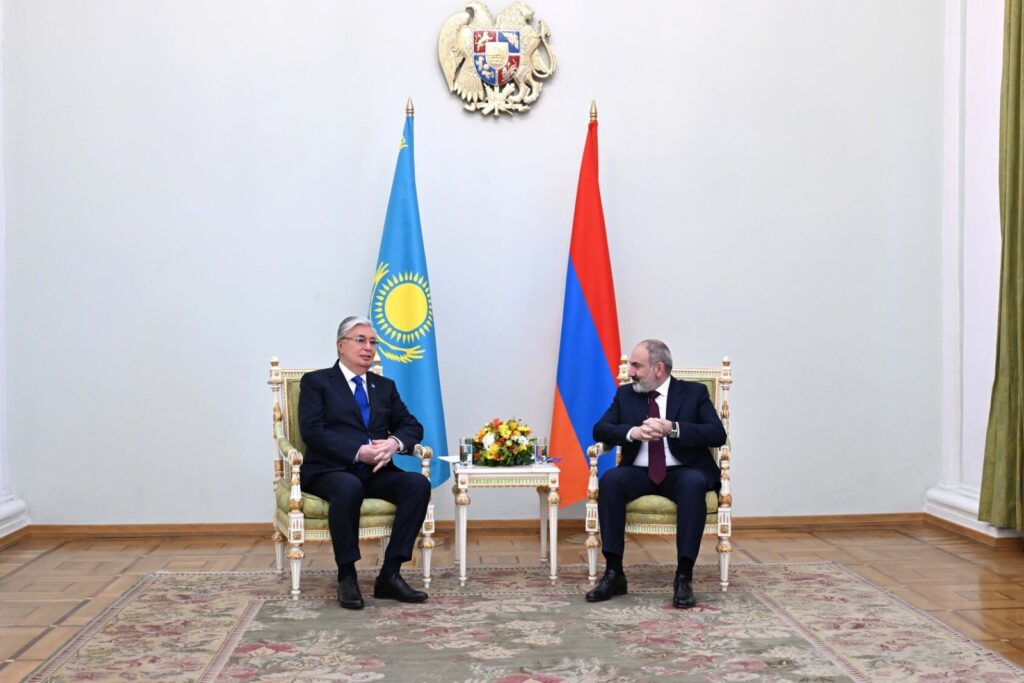
Following negotiations on 15 April in Yerevan, with Armenian Prime Minister Nikol Pashinyan, Kazakh President Kassym-Jomart Tokayev stated that with regard to furthering cooperation, the countries enjoy “unshakable friendship and mutual support.” With reference to developing a more comprehensive partnership, he cited their common goals as expanding and activating bilateral ties, and strengthening regional and international security. Negotiations also focused on enhancing cooperation in economic and investment and the Kazakh president reported, “We - both agreed - that it is necessary to look for new directions that will give impetus to the growth of trade turnover. Kazakhstan is ready to increase its exports to Armenia to $350 million.” Tokayev stressed that development of the transport and logistics sector is key to strengthening Kazakh-Armenian cooperation and hailed Armenia’s readiness to restore transit communications in the South Caucasus under the ‘Crossroads of Peace’ initiative. Aimed at developing communications between Armenia, Turkey, Azerbaijan, and Iran, the Armenian-proposed initiative includes renovating, building, and operating roads, railways, pipelines, cables, and electricity lines. In addition, the Kazakh president welcomed proposals for the operation of direct flights between the countries’ capitals and other cities. Pashinyan likewise emphasized the significant headway made during the negotiations, saying, “We have identified further prospects for strengthening our cooperation, including - transport and logistics. We agree that despite the constant growth in trade turnover, there is still unrealized potential for the development of trade and economic cooperation.”
Kazakhstan’s Foreign Debt Increases by $4 Billion in Five Years With Russia Growing as Creditor

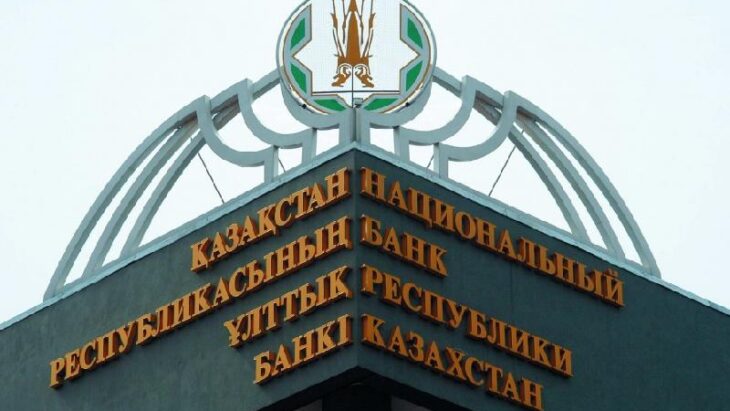
According to the National Bank of Kazakhstan, at the beginning of 2024 the external financial obligations of the republic reached almost $163 billion, whilst in 2019 this figure stood at $158.8 billion. The Netherlands are Kazakhstan's largest creditor with $42.6 billion owed, followed by the U.K. with $13.8 billion, and then Russia at $12.95 billion. Over five years, Kazakhstan's debt to Russia (+47.1%) and multilateral organizations (+28.5%) increased significantly. At the same time, the amount of debt held by legacy creditors decreased, including that held by the Netherlands (-12.9%), the U.K. (-37%), the U.S. (-7.4%), France (-4.3%), China (-20.7%) and Japan (-17%). Last December, the Asian Development Bank approved a $350 million loan to Kazakhstan. This was allocated to reform the country's financial management and increase the economy's resilience against external shocks. In February of this year, the World Health Organization, with the support of the World Bank, launched a Pandemic Fund project in Kazakhstan. For this purpose, the republic was allocated a grant totaling $19 million, as well as a multilateral grant of $27 million for three years. Earlier, former chief auditor of Kazakhstan, Natalia Godunova, criticized the use of international funds by government agencies, saying that the procedure is inefficient.

Central Asian and Gulf Cooperation Council Countries Engage in Strategic Dialogue

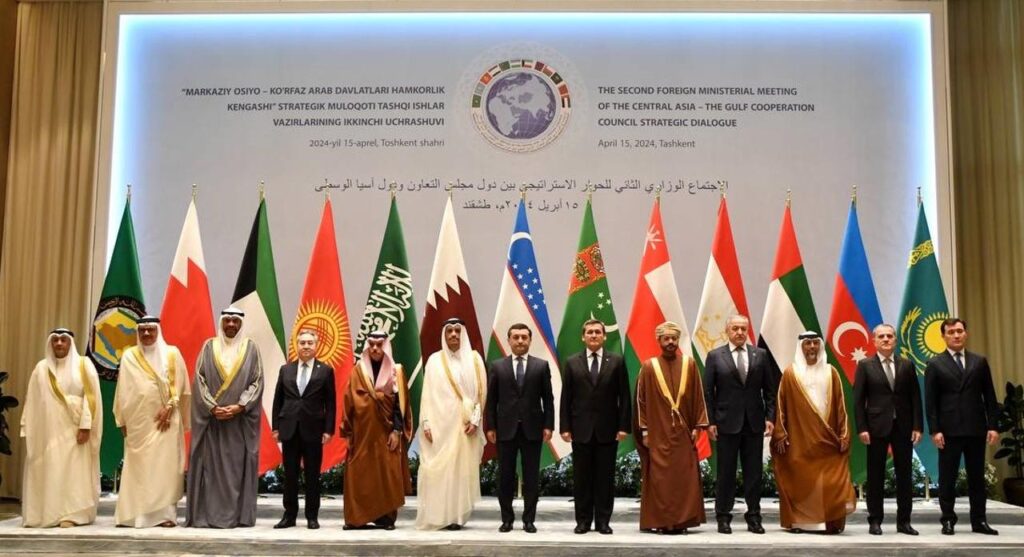
The 2nd Ministerial Meeting of Strategic Dialogue ‘Central Asia – Gulf Cooperation Council (GCC)’, hosted by Tashkent on April 15, was attended by top diplomats from Central Asia and six member states of the Gulf Cooperation Council: Saudi Arabia, the United Arab Emirates, Qatar, Kuwait, the Sultanate of Oman, and Bahrain. Aimed at strengthening comprehensive cooperation between Central Asia and Gulf Cooperation Council states, discussions focused on political, security, trade, economic, investment, transport and logistics, environmental protection, green energy, cultural and humanitarian issues. In his address, Alibek Bakayev, Deputy Minister of Foreign Affairs of Kazakhstan, emphasized the importance of strengthening trade relations between the two regions and encouraged the Gulf States to actively participate in the implementation of joint investment projects in both Kazakhstan and other Central Asian countries. In addition, he outlined various initiatives currently in operation in Kazakhstan including expanding the activities of the Islamic Organization for Food Security and exploiting the potential of the International Technopark of IT start-ups, ‘Astana Hub’. Reporting on the outcome of the Ministerial Meeting, Uzbekistan’s First Deputy Foreign Minister Bakhromjon Aloyev stated that participants had unanimously agreed to a further summit of the Central Asia – Gulf Arab States Strategic Dialogue, to be held in Samarkand in 2025. The ‘Central Asia – GCC’ dialogue platform was launched in 2022 and the first Ministerial Meeting took place that September in Riyadh, Saudi Arabia.

Kazakhstan Exceeds Oil Production Quota Under OPEC+ Agreement

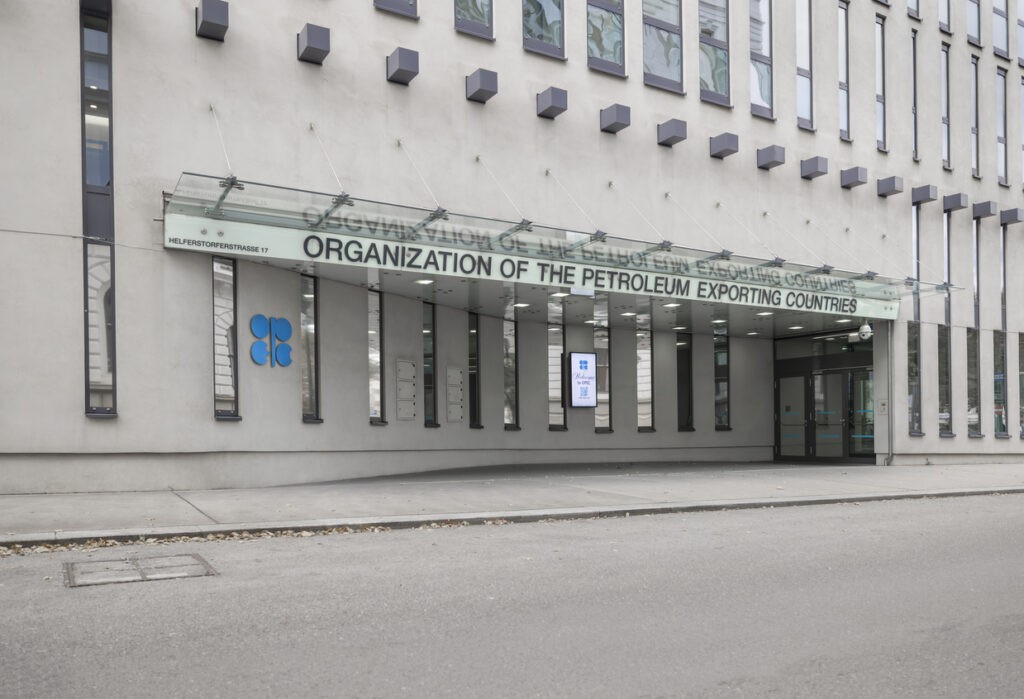
Last month Kazakhstan exceeded its oil production quota under its agreement with the Organization of Petroleum Exporting Countries (OPEC+). According to Times of Central Asia research into oil data, Kazakhstan exceeded its March 2024 limits by 131,000 barrels per day (bpd). However, Kazakhstan's Energy Ministry emphasized that this was a one-off occurrence, brought about by climatic factors in the country. "Despite this, Kazakhstan will continue efforts to comply with its obligations and compensate for overproduction in the first quarter [of 2024]," said the ministry's press service. In addition, based on the results of the 53rd meeting of OPEC's Joint Ministerial Monitoring Committee, Kazakhstan committed to submit a detailed compensation plan to the OPEC Secretariat by April 30. In early March, Kazakhstan agreed to extend its voluntary crude production cut of 82,000bpd until the end of June 2024, reaffirming its commitment to comply with international agreements and maintain stability in oil markets.

Flowers Laid at Tajikistan’s Monument to Kazakh Soldiers

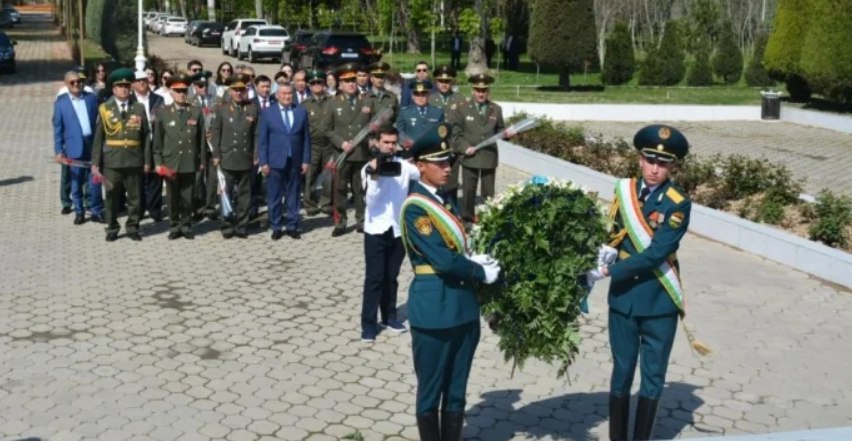
On April 11, a wreath-laying ceremony was held at the monument to the Kazakh soldiers who died on April 7, 1995, while guarding the external borders of the Commonwealth of Independent States (CIS) on the Tajik-Afghan border, according to a report from Avesta. Officials taking part in the ceremony included Kazakhstan's Ambassador Extraordinary and Plenipotentiary to Tajikistan, Valikhon Turekhanov, representatives of the Union of Honorary Internationalists of Tajikistan, veterans of the Border Service, and active military personnel from Tajik armed forces. The participants at the event noted that the Kazakh soldiers had performed their military duty at the cost of their lives, whilst all the while remaining faithful to the military oath. The monument commemorating the bravery of the Kazakh soldiers was opened on December 15, 2007, in the Firdavsi recreation park in Dushanbe. In 2021, the park was renovated and restored with the support of the Embassy of Kazakhstan in Tajikistan, the Ministry of Defense and National Guard of the Republic of Kazakhstan, and other public organizations. On April 7, 1995, the seventh joint company of the Kazakh military was attacked by mujaheddin in a gorge at Pshikharv Mountain on the Tajikistan-Afghanistan border. The militants were defeated in the ensuing battle.

Kazakhstan and Finland to Collaborate on Rail Transportation

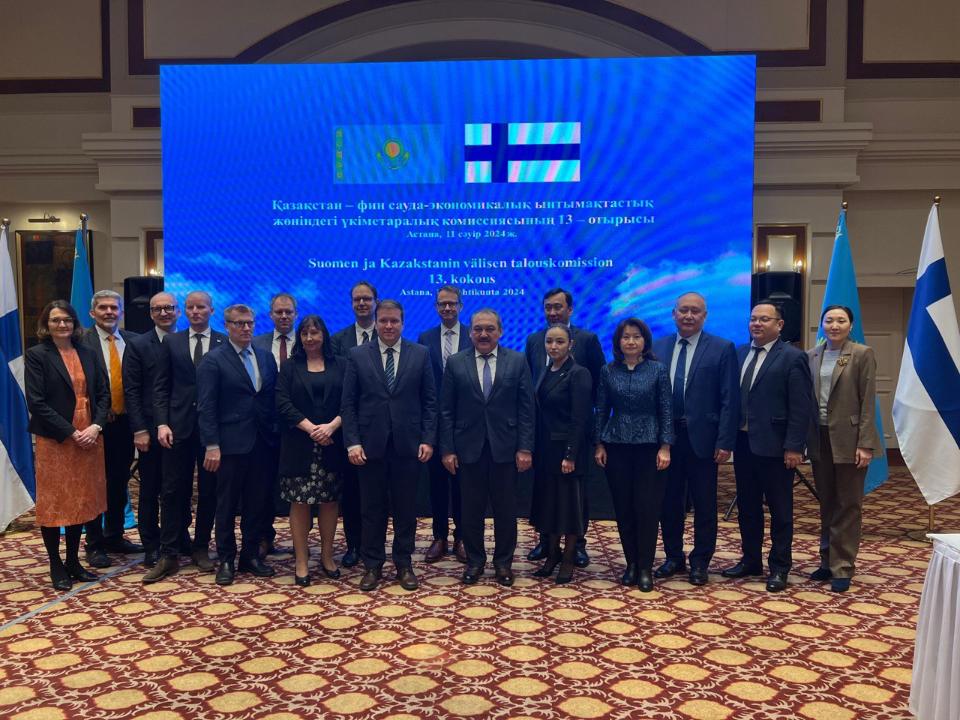
KTZ Express JSC (a subsidiary of Kazakhstan’s national railways company Kazakhstan Temir Zholy) and Finnish Nurminen Logistics Services Oy, have signed a Memorandum of Cooperation for container transportation from China to Finland along the Trans-Caspian International Transport Route (TITR) through the Kazakhstan. At a meeting of the Kazakh-Finnish intergovernmental commission on April 11 in Astana, Deputy Minister of Transport of Kazakhstan Maksat Kaliakparov emphasized the strategic importance of cooperation and development of transit opportunities between the two countries regarding trade between China and Southeast Asian countries and the European Union: “Kazakhstan is the main link in the TITR, or the Middle Corridor, and has already shown potential as an alternative to East – West routes. This is evidenced by an 86% increase in cargo transhipment through the seaports of Aktau and Kuryk, the volume of which rose to 2.8 million tons. The TITR is a ‘green-light’ corridor. Today, the cargo transit time has been reduced from 23 to 14-18 days, including 5 days in Kazakhstan. In 2023, the volume of cargo transportation along the TITR increased by 65%.” To illustrate the potential for cargo transportation between Kazakhstan and the EU, Kaliakparov reported a steady rise in the transportation of cargo through Kazakhstan along the China-Finland-China route. Compared to the previous year, in 2023, the volume of cargo transported by rail increased by 25% (4.3 million tons), and by road, by 14% (7.3 million tons).