• KGS/USD = 0.01144 0%
  • KZT/USD = 0.00194 0%
  • TJS/USD = 0.10879 -0.18%
  • UZS/USD = 0.00008 -0%
  • TMT/USD = 0.28571 0.28%
  • KGS/USD = 0.01144 0%
  • KZT/USD = 0.00194 0%
  • TJS/USD = 0.10879 -0.18%
  • UZS/USD = 0.00008 -0%
  • TMT/USD = 0.28571 0.28%
  • KGS/USD = 0.01144 0%
  • KZT/USD = 0.00194 0%
  • TJS/USD = 0.10879 -0.18%
  • UZS/USD = 0.00008 -0%
  • TMT/USD = 0.28571 0.28%
  • KGS/USD = 0.01144 0%
  • KZT/USD = 0.00194 0%
  • TJS/USD = 0.10879 -0.18%
  • UZS/USD = 0.00008 -0%
  • TMT/USD = 0.28571 0.28%
  • KGS/USD = 0.01144 0%
  • KZT/USD = 0.00194 0%
  • TJS/USD = 0.10879 -0.18%
  • UZS/USD = 0.00008 -0%
  • TMT/USD = 0.28571 0.28%
  • KGS/USD = 0.01144 0%
  • KZT/USD = 0.00194 0%
  • TJS/USD = 0.10879 -0.18%
  • UZS/USD = 0.00008 -0%
  • TMT/USD = 0.28571 0.28%
  • KGS/USD = 0.01144 0%
  • KZT/USD = 0.00194 0%
  • TJS/USD = 0.10879 -0.18%
  • UZS/USD = 0.00008 -0%
  • TMT/USD = 0.28571 0.28%
  • KGS/USD = 0.01144 0%
  • KZT/USD = 0.00194 0%
  • TJS/USD = 0.10879 -0.18%
  • UZS/USD = 0.00008 -0%
  • TMT/USD = 0.28571 0.28%
15 December 2025

Viewing results 193 - 198 of 227

Man Burns City Xmas Tree in Taraz, Protesting New Year Celebrations

A man burned down the main city tree of the administrative center of the Zhambyl region in the city of Taraz. He was detained, and information about the incident was confirmed by the press service of the Ministry of Internal Affairs. “On December 31 at 08:30am, video surveillance cameras recorded the arson of a Christmas tree installed in the park. The police detained a 56-year-old man. The suspect confessed and was taken to a temporary detention facility," the ministry stated. The police indicated that a pre-trial investigation has been launched under Article 202 of the Criminal Code of Kazakhstan (deliberate destruction or damage to someone else’s property). Witnesses to the incident actively distributed a video on social networks. According to the local publication, Orda.kz, the reason for the crime was the man’s belief, according to his explanation, that the New Year should not be celebrated in Kazakhstan. The damage caused by his actions is estimated to be 2.8 million tenge ($6,150).

Investing in the Future: Upgrading Kazakhstan’s Heating and Power Infrastructure

As nations around the globe grapple with the urgency of climate change and the need for sustainable development, one country that stands out is Kazakhstan. With its vast natural resources and strategic location, Kazakhstan has the potential to become a leader in renewable energy and sustainable infrastructure. However, upgrading Kazakhstan's heating and power infrastructure is a significant undertaking that requires substantial time and financial investment. The Challenge Kazakhstan is no stranger to the harsh realities of tough winters. With temperatures often dropping below -30 degrees Celsius and even reaching lows of -52 degrees Celsius in some northern regions, the capacity and resilience of the country's heating infrastructure is tested annually. In a country where winter can last up to six months, maintaining a reliable heating supply isn't just a matter of comfort—it's a matter of survival. However, the extreme weather conditions put a considerable strain on Kazakhstan's heating infrastructure and lead to several challenges. Many of Kazakhstan's heating systems, built during the Soviet era, are showing their age and inefficiency, necessitating an expensive overhaul. These outdated systems often break down, leading to extended periods without heat in the coldest months. A striking example was the 2022 incident in Ekibastuz, a city known for its harsh winters, where residents endured nearly three months without heat due to a power plant failure, which subsequently sparked a government-led corruption investigation. Compounding these issues, Kazakhstan's heating sector heavily relies on fossil fuels, primarily coal. This reliance not only exacerbates environmental pollution but also leads to energy inefficiency. Due to poor insulation in buildings and obsolete heating systems, much of the produced heat is lost, demanding more energy and resources to maintain warmth in homes and businesses. The cost of heating is a significant expense for many Kazakh households, particularly those in rural areas where incomes are lower. The government provides subsidies to help offset these costs, but with energy prices rising globally, this is becoming an increasingly heavy burden on the national budget. The financial aspect of such upgrades is undoubtedly substantial. One source estimates that upgrading transmission and distribution infrastructure alone for all of Central Asia could cost between $25 billion to $49 billion. Additionally, infrastructure projects of this magnitude can take several years to over a decade to implement. For instance, Denmark began its transition to district heating systems and combined heat and power plants in the 1970s, and is still implementing improvements today. Similarly, Germany started its Energiewende (energy transition) initiative in 2000, with goals set for 2050. What Steps Have Been Taken? Efforts are made to upgrade aging systems, improve energy efficiency, and transition to more sustainable sources of energy. In 2023, Kazakhstan significantly upgraded its energy infrastructure, as reported by the Astana Times. The launch of the second Beineu-Zhanaozen gas pipeline and a new distribution pipeline in Mangystau Region improved gas supply, while the completion of the Makat-North Caucasus pipeline met regional demands. The western zone's energy network was fortified with five new power transmission lines. Renewable energy saw...

Investigation Launched into Mobile Operators

The Agency for the Protection and Development of Competition of the Republic of Kazakhstan has established that in 2023, a significant price increase from 7.7% to 57.3% was recorded according to the tariff plans of mobile operators, who increased the cost of services provided on more than 30 plans with a monthly subscription fee. “Taking into account paragraph 3 of Article 199 of the Entrepreneurial Code in connection with the repeated detection of signs of anti-competitive coordinated actions in the calendar year, the Agency has now launched investigations against mobile operators Kcell JSC, MT–S LLP (Tele2/Altel) and Kar-Tel LLP (Beeline) under Article 170 of the Entrepreneurial Code," the Agency for the Protection and Development of Competition of the Republic of Kazakhstan said in a statement. Earlier, the Agency had detected signs of anti-competitive coordinated actions by mobile operators in setting the cost of calls per minute and SMS services. In this regard, notifications were sent to mobile operators to reasonably reduce their pricing. The Agency stated that in case of non-compliance by the operators within an established time-frame, an investigation would be launched.

458 Saiga Antelope Killed For Their Horns

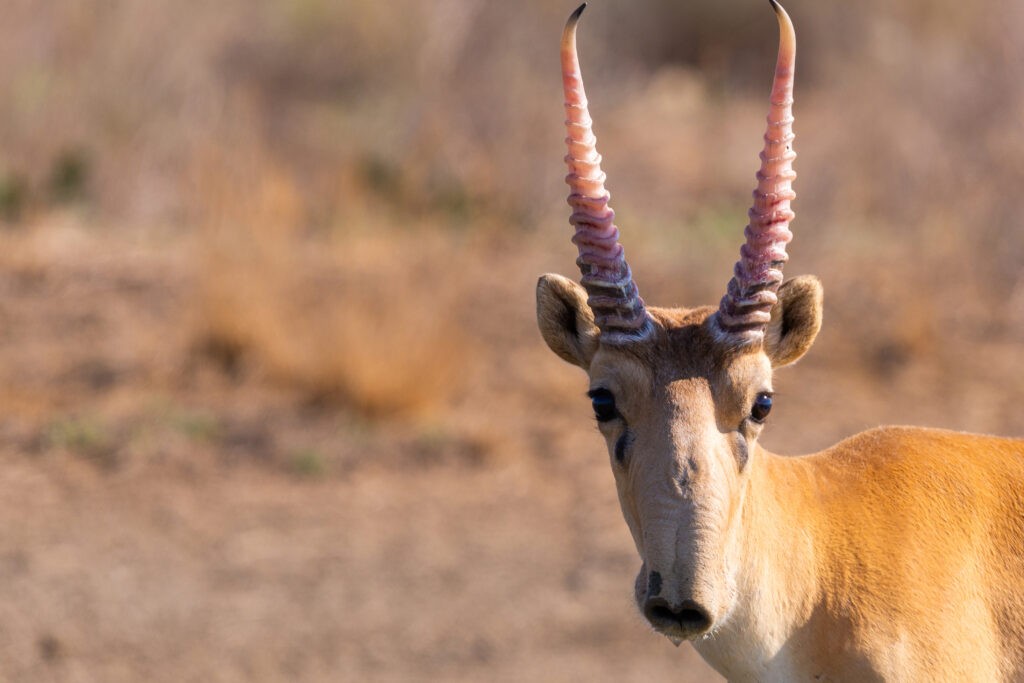
A foreigner tried to take saiga horns worth 2 billion tenge from Kostanay. During a search, 916 saiga horns and about 7.5 million tenge in cash were found in the bags, the Kostanay region police department reported. Presumably, the offender caused about 2 billion tenge in damage to the state. He was arrested and placed in a temporary detention facility. On 25 December, Leonardo DiCaprio, esteemed Hollywood actor and environmentalist, brought attention to the Kazakh government success in saving the saiga population on his Instagram page. “Congrats to the government of Kazakhstan, which invested heavily in anti-poaching initiatives, robust law enforcement, and the establishment of new protected areas”. The antelope species has been reclassified from critically endangered to near threatened on the International Union for Conservation of Nature Red List of Threatened Species, with Kazakhstan population growing from 48,000 in 2005 to over 1.9 million in the wild.

Head of Constitutional Court Addresses Tokayev’s Reforms

The head of the Constitutional Court of the Republic of Kazakhstan has spoken about the implementation of three packages of President Tokayev’s reforms. A delegation from Kazakhstan took part in UN events dedicated to the 75th anniversary of the adoption of the Universal Declaration on the Protection of Human Rights in Geneva, where they addressed Kazakhstan's experience in carrying out political and human rights reforms. The head of the delegation, Chairman of the Constitutional Court, Elvira Asimova spoke about Kazakhstan's priorities in the human rights sphere, naming these as the protection of children and women, the implementation of the concept of a "listening state," digitization, and increasing the active role of civil society in the field of human rights protection. At a special event hosted by human rights NGOs, Asimova reported on the implementation of three packages of President Tokayev’s reforms and on his Decree "On the Action Plan in the field of human rights and the rule of law." “Today's global challenges require the development of global solutions and the ability to respond correctly to current events. In this regard, it should be noted that almost all the delegations with whom we met on the sidelines of the event highly appreciate the reforms being carried out in Kazakhstan. And they welcome the adoption by the head of state on December 8th of the Action Plan in the field of human rights," Asimova said. The document consists of nine sections containing 41 points, from strengthening gender equality and combating domestic violence, to protecting citizens in the field of criminal justice. For the first time in Kazakhstan, the experience of a human rights organization was included in this list. Zhemis Turmagambetova, Executive Director of the Charter for Human Rights Foundation stated that “This year, I conducted the first part of the project to create a ‘Dialogue Police.’ In times of peaceful gatherings and marches and informal associations of citizens on various issues, the police will conduct a dialogue. It is necessary to involve representatives of government agencies there. This is a great support for the actions of the non-governmental sector and civil society. Because everything at a legislative level and at a practical level should be applied by all legislators and all government agencies.” On the sidelines of the forum, the Commissioner for Human Rights of Kazakhstan, Artur Lastaev, together with the Global Alliance of National Human Rights Institutions and UNDP, held a discussion on the contribution of national human rights institutions to the implementation of UN Sustainable Development Goals. “Over the past few years, very serious steps have been taken to strengthen both the institution of the Commissioner for Human Rights and, in general, regarding the implementation of international standards into national legislation,” Lastaev said. “A lot of people say that these are the reforms of President Tokayev. These reforms have already acquired a household name. In this regard, we really have something to be proud of. There are concrete results. If we take the fight against torture, 42 people...

Recent murder in Kazakhstan draws attention to domestic violence and gender discrimination

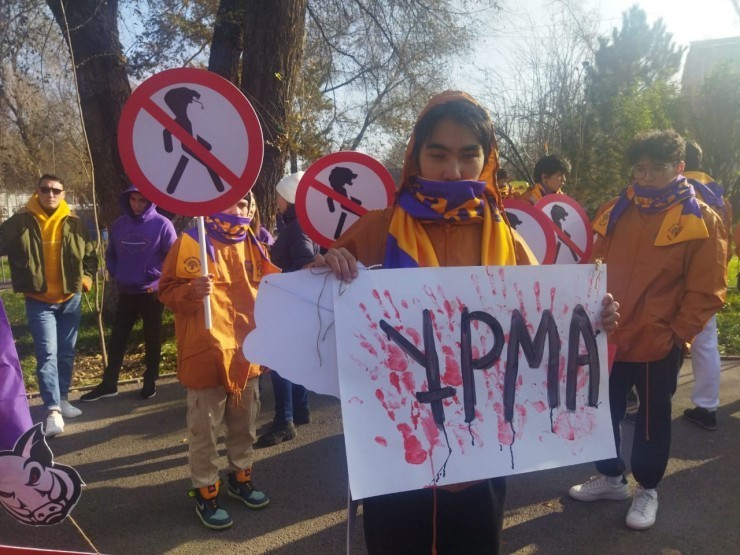
A very public tragedy in Kazakhstan put on display domestic violence at its worst. A quarrel in a restaurant in Astana on the evening of November 8th is reported to have resulted in the death of Saltanat Nukenova, the 31-year-old wife of Kuandyk Bishimbayev. Bishimbayev, who served as Minister of National Economy under former President Nazarbayev, was detained on the same day for suspected murder and remains under arrest awaiting trial. On November 11th, Saltanat was buried in Pavlodar. This appalling incident highlighted the urgent need for stronger protections against domestic violence. An authorized rally was held in Almaty in late November. Around 200 participants came out onto the square behind the Sary Arka cinema, holding posters and chanting slogans against domestic violence. The event was organized by a public movement called Zhana Adamdar and the attendees mostly included young people and students from the movement. Relatives of Saltanat Nukenova also took part. The participants wanted to raise awareness about fighting any manifestation of violence against women and children. Most of the attendees were dressed in the same style, and many of them had scarves with the inscription “Say no to the animal world,” which was also the title of the rally. Speakers at the event detailed the most resonant cases of violence in recent times while the organizers of the rally held a small flash mob and arranged an installation with mannequins in cages with animal masks on them. A minute of silence was observed in honour those who died as a result of violence. Progress in protecting women What proceeded this public tragedy hopefully presents a silver lining. A month later, on December 8, Kazakhstan's current President Kassym-Jomart Tokayev signed a Decree to strengthen human rights with concrete steps towards preventing violence and promoting gender equality. The Decree instructs Kazakhstan’s government to take systematic measures to promote equal rights and opportunities in all spheres of society, as well as to overcome all forms and manifestations of gender discrimination. The decree also encompasses legislation to deter domestic violence and promotes equal rights and safety for both men and women in the Republic of Kazakhstan, as endorsed by UN Security Council resolution 13251. It further involves legislative measures to tighten criminal liability in cases of domestic violence, which have now been implemented. These measures aim to hold perpetrators accountable and ensure that victims can get justice. Additionally, offenders of domestic violence may be required to undergo comprehensive psychological correction as part of their rehabilitation process. The Decree also asks for creating specialized units within the Ministry of Internal Affairs staffed with female officers, who can enhance the effectiveness of combating domestic violence. While the timing of the Decree coincided with the aftermath of Saltanat’s death, there are signs that these steps may have already been in the works. President Tokayev had voiced concerns about domestic violence before the current headlines emerged. At a meeting in the Ministry of Internal Affairs in June 2023, for example, he had affirmed that “comprehensive...