Viewing results 679 - 684 of 1082
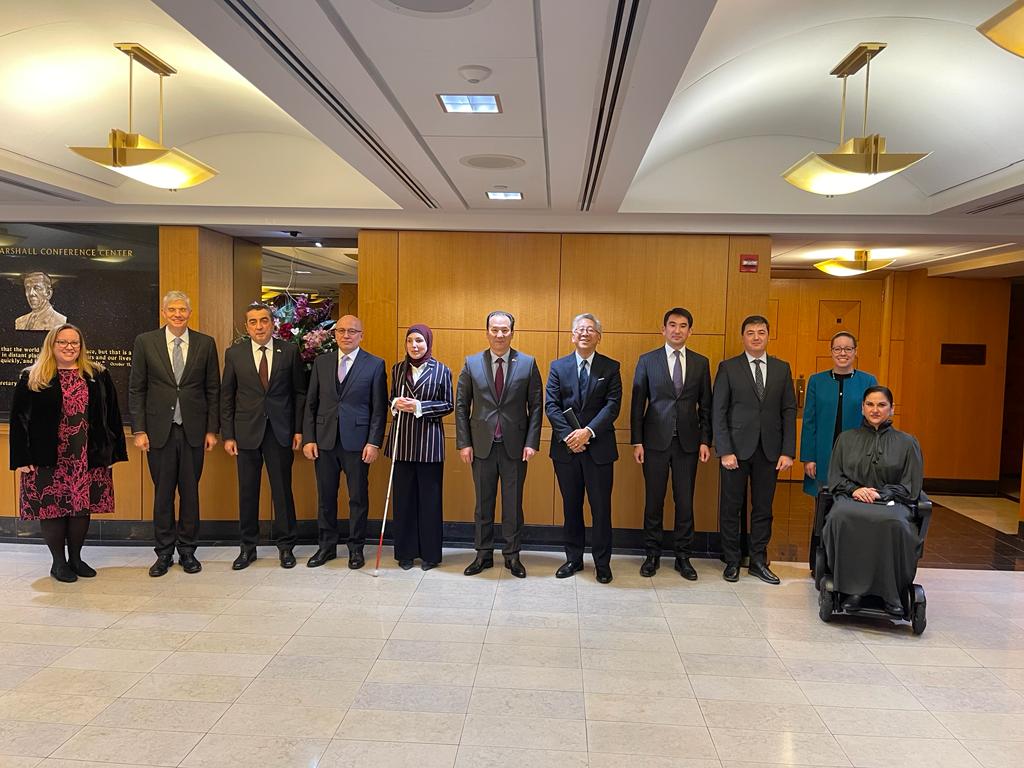
On December 11th, the U.S. Department of State hosted a meeting of representatives of C5+1 countries dedicated to protecting the rights of people with disabilities and finding practical solutions to their problems. The C5+1 diplomatic platform represents the U.S. Government’s holisitc approach to Central Asia, jointly engaging all five Central Asian nations. The meeting was attended by Sara Minkara, Special Adviser to the President of the United States on the International Rights of Persons with Disabilities, Donald Lu, Assistant Secretary of State, Deputy Assistant Secretary John Mark Pommersheim, and representatives of government agencies of the USA. The Ambassadors of Kazakhstan, Kyrgyzstan, Tajikistan, and Uzbekistan to the United States also spoke during the meeting, which was moderated by Minkara, who shared her experience and recommendations on ensuring protection of the rights of persons with disabilities. U.S. Assistant Secretary of State, Donald Lu stressed the importance of increasing cooperation within the C5+1 format on the rights of persons with disabilities in a multilateral format. Following the meeting, the participants agreed on joint actions in this direction.
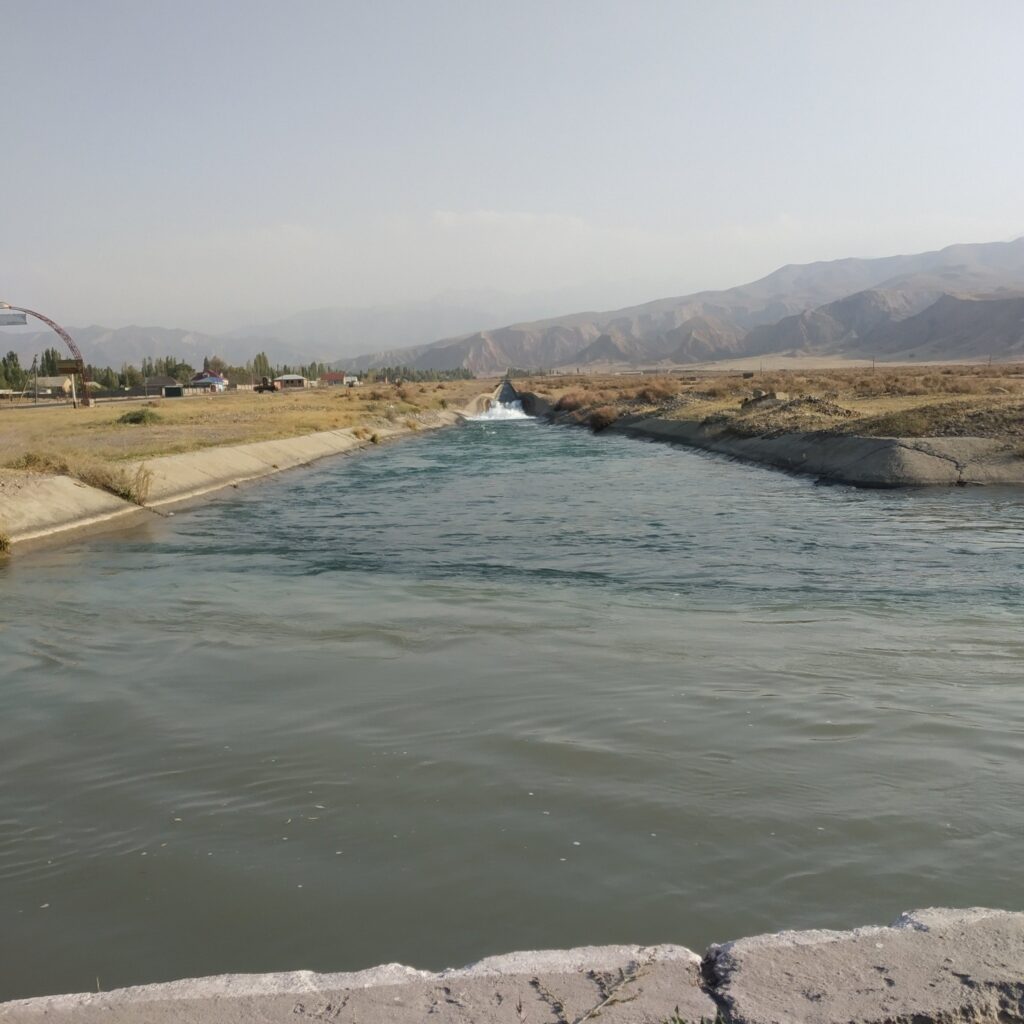
Issues of modernizing water infrastructure and improving the water resources management system were discussed at a meeting of the Water Council of Kazakhstan chaired by Prime Minister, Alikhan Smailov, A post on the PM’s official website states. Minister of Water Resources and Irrigation, Nurzhan Nurzhigitov reported that Kazakhstan has 102.3 km3 of water, 54% of which is formed within the country, and the remaining 46% coming from neighboring countries. The annual consumption by economic sectors is about 25 km3 of water, of which 65% is used for agriculture, and 25% for industrial needs. To ensure the country's water security and solve the problem of shortages, a draft Comprehensive Plan for the Development of Water Resources for 2024-2030 has been developed. It provides for a number of urgent measures for the construction and reconstruction of reservoirs, and the reconstruction of hydraulic structures and irrigation systems. Implementation of the plan will increase available water resources by 3.7 cubic kilometers, and the area of irrigated land to 2.2 million hectares, as well as reduce annual losses of irrigation water by 3 cubic kilometers. In 2024-2026, it is planned to begin construction of 20 new reservoirs with a volume of 2.4 cubic kilometers in nine regions. This will increase the area of irrigated land by 250,000 hectares and reduce Kazakhstan’s dependence on neighboring countries for its water supply by an average of 25%. “We must annually introduce water-saving technologies on 150,000 hectares of irrigated lands. Now, implementation is carried out on 40-50,000 hectares per year. At the same time, in the southern regions where there is the greatest water shortage, the volume of implementation is the smallest,” said Smailov.
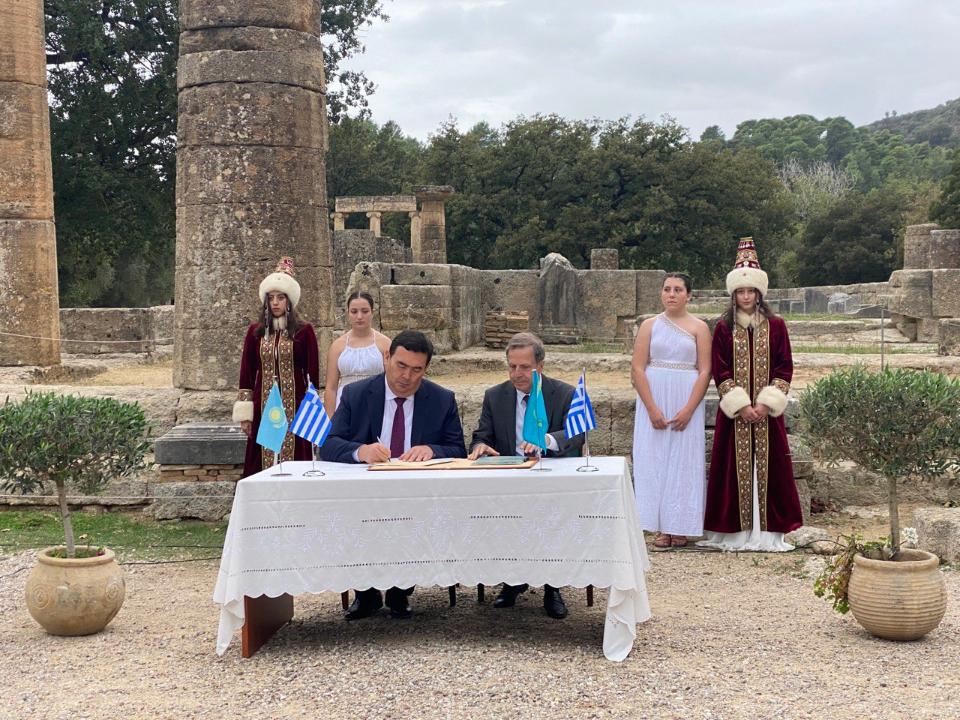
On November 4th, a historically significant twinning ceremony was held between the city of Taraz in Kazakhstan and Ancient Olympia in Greece. The agreement was signed at the Temple of Hera, an ancient site revered by the Greeks. It's here that the rules of the original Olympic Games were kept, and where the Olympic Flame is ceremonially lit every two years, symbolizing the continuation of an ancient sporting tradition. Bakhytzhan Orynbekov, the Akim (Mayor) of Taraz, views this partnership as an opportunity to foster mutual growth. He believes that it will enhance exchanges in various sectors, including culture, sports, tourism, science, and education. These fields are seen as key areas of development that can benefit from international cooperation. Georgios Georgiopoulos, the Mayor of Ancient Olympia, echoed these sentiments. He expressed enthusiasm about forming bonds of friendship and brotherhood with Taraz. With a rich history stretching back 2000 years, Taraz has been a significant cultural crossroads between the East and West. This makes it an ideal partner for Ancient Olympia, which itself has a storied history dating back to antiquity. In a meeting with representatives from Ilia's business community, both parties agreed to strengthen economic ties and cultivate relations between their respective regions and business circles. This agreement underscores the importance of international collaboration in fostering economic growth and development. Ancient Olympia is renowned for its UNESCO World Heritage Sites and also for hosting the International Olympic Academy. This institution is the primary educational and cultural arm of the International Olympic Committee and plays a vital role in promoting the values and ideals of the Olympic movement. The initiative to twin Taraz and Ancient Olympia was spearheaded by the Embassy of Kazakhstan in Greece and the Kazakh-Hellenic Business Council, demonstrating the importance of diplomatic and business relations in fostering cultural ties.
By 2050, the available resources in the Syr Darya and Amu Darya basins – the region’s two largest sources of water - situated in southern Kazakhstan and along Uzbekistan’s southern border with Turkmenistan - could decrease by 10% to 15%. Water shortages inevitably impact the region’s agricultural sector, which relies on water as a critical factor in food production, the Eurasian Development Bank (EDB) has stated in a news release. The reduction in wheat yields in seven oblasts of Kazakhstan could result in direct economic losses exceeding U$1.2 billion by 2030. These concerns were highlighted by Conrad Albrecht, Managing Director and Head of the Directorate of Sustainability at the Eurasian Development Bank (EDB) during the recent Seventh North and Central Asia Multistakeholder Forum on the Implementation of the SDGs in Almaty. “Kazakhstan, being the only Eurasian nation to have implemented a carbon pricing system, faces the additional challenge of a potential carbon tax amounting to U$250 million. Most economies in the region rely heavily on carbon-intensive industries, necessitating a transition towards more sustainable production methods”, Albrecht said. He also pointed out that the region’s carbon dioxide (CO2) emissions significantly exceed its contribution to the global economy in terms of both GDP and population. However, countries such as Armenia, the Kyrgyz Republic, Tajikistan and Uzbekistan have a share of global CO2 emissions lower than their share of the world’s population, indicating that the region’s economies are critically carbon intensive. “All countries in the Eurasian region are taking climate change extremely seriously, acknowledge their direct contribution to the global agenda and are ready to make ambitious commitments to decarbonization”, Albrecht stressed. “Nevertheless, Central Asian countries still require substantial support from multilateral development banks, and while climate finance to the region is increasing, it remains significantly smaller compared to other low- and middle-income countries”.
Kazakhstan held a National Day of Mourning on October 29th for more than 40 people killed in a coal mine fire in the central Qaraghandy region, the deadliest such accident in the country’s post-Soviet history. The death toll has now risen to 45, with the recovery of two additional bodies, rescue official Gennady Silinsky said. Some 252 people were underground at the Kostenko mine when the fire struck in the early hours of October 28th, said operating company, ArcelorMittal, the world’s second-largest steel producer. Authorities said an evacuation had been ordered after the fire broke out, but that an explosion occurred before many workers could reach safety. The blast could be felt more than two kilometers away, Silinsky told a news briefing. On October 28th, the Government of Kazakhstan confirmed the nationalization of the local branch of the steel giant, ArcelorMittal Temirtau, which operates the country’s largest steel plants and several coal and ore mines. In a statement, Prime Minister Alikhan Smailov said that the government had reached a preliminary agreement with the company's shareholders, and was now in the process of “formalizing” the nationalization. ArcelorMittal confirmed it had signed a “preliminary agreement for a transaction that will transfer ownership to the Republic of Kazakhstan”. The company said it "will commit to finalizing this transaction as soon as possible”. The Office of Kazakhstan’s Prosecutor-General announced a probe into potential safety violations at the Kostenko mine. It was the second deadly incident at an ArcelorMittal site in Kazakhstan this year, after five miners were killed in an accident at a mine in the same region in August. ArcelorMittal's operations in the resource-rich Central Asian country have regularly been accused by authorities of failing to respect safety and environmental regulations.
At least 21 people were killed when a fire broke out at a mine in Kazakhstan operated by the global steel giant ArcelorMittal on October 28th, prompting President Kassym-Jomart Tokayev to order an "end to investment cooperation" with the company, RFE/RL's Kazakh Service reports. A local unit of the company, ArcelorMittal Temirtau, said in a statement that 252 people were underground at the Kostenko mine in the central Qaraghandy region when the fire struck. It said 208 miners had been evacuated, with 18 seeking medical help, while 23 people had not been accounted for. There was no immediate comment about the cause of the incident. This was the second deadly event at an ArcelorMittal site in Kazakhstan this year, after five miners were killed at a mine in the same region in August. Tokayev, who expressed condolences to the victims' families, said "the government has ordered an end to investment cooperation with ArcelorMittal”. The president said an investigative commission will be set up to determine the cause of the blaze. ArcelorMittal operates around a dozen mines in Kazakhstan. The company's operations in the resource-rich Central Asian country have regularly been accused by authorities of failing to respect safety and environmental regulations. Following the incident in August at an ArcelorMittal coal mine, Tokayev denounced the "systemic character" of accidents involving the company that he said has left more than a hundred people dead in Kazakhstan since 2006. In December 2022, Astana threatened to ban ArcelorMittal from operating in the country after a worker died in what the company labeled an accident at its factory in Temirtau.