• KGS/USD = 0.01144 0%
  • KZT/USD = 0.00212 0%
  • TJS/USD = 0.10543 -0.09%
  • UZS/USD = 0.00008 0%
  • TMT/USD = 0.28530 0%
  • KGS/USD = 0.01144 0%
  • KZT/USD = 0.00212 0%
  • TJS/USD = 0.10543 -0.09%
  • UZS/USD = 0.00008 0%
  • TMT/USD = 0.28530 0%
  • KGS/USD = 0.01144 0%
  • KZT/USD = 0.00212 0%
  • TJS/USD = 0.10543 -0.09%
  • UZS/USD = 0.00008 0%
  • TMT/USD = 0.28530 0%
  • KGS/USD = 0.01144 0%
  • KZT/USD = 0.00212 0%
  • TJS/USD = 0.10543 -0.09%
  • UZS/USD = 0.00008 0%
  • TMT/USD = 0.28530 0%
  • KGS/USD = 0.01144 0%
  • KZT/USD = 0.00212 0%
  • TJS/USD = 0.10543 -0.09%
  • UZS/USD = 0.00008 0%
  • TMT/USD = 0.28530 0%
  • KGS/USD = 0.01144 0%
  • KZT/USD = 0.00212 0%
  • TJS/USD = 0.10543 -0.09%
  • UZS/USD = 0.00008 0%
  • TMT/USD = 0.28530 0%
  • KGS/USD = 0.01144 0%
  • KZT/USD = 0.00212 0%
  • TJS/USD = 0.10543 -0.09%
  • UZS/USD = 0.00008 0%
  • TMT/USD = 0.28530 0%
  • KGS/USD = 0.01144 0%
  • KZT/USD = 0.00212 0%
  • TJS/USD = 0.10543 -0.09%
  • UZS/USD = 0.00008 0%
  • TMT/USD = 0.28530 0%

Viewing results 589 - 594 of 1005

Kazakhstan Ranked Among 50 Happiest Countries in the World

In the recently published UN and Gallup World Happiness Report 2024, Kazakhstan was ranked among the top 50 happiest countries in the world, ahead of Russia, Armenia and Georgia. However, the Baltic States and Uzbekistan returned higher happiness scores on the index. This rating, presented on March 20, was developed on the basis of a three-year study conducted by UN experts, Gallup and other scientists. Citizens of different countries assessed their quality of life by taking into account a variety of factors, including economic status, GDP, life expectancy, major life challenges, sense of freedom, public responsiveness, and the level of corruption. These interdisciplinary studies help the understanding of how different aspects of life interact and influence the overall sense of happiness. TCA asked citizens from across Kazakhstan about the their feelings regarding the level of happiness presented in the report, and met with mixed feelings. "Frankly speaking, I don't have such a feeling,” Alua, a 21-year-old pedagogical student from Taraz told TCA. “After all, food prices are rising almost daily, and wages are not growing as fast. Also, conditions in state institutions haven’t changed much, especially in healthcare and education." "I’ve seen this rating, but prices are rising so quickly that Almaty has become the most expensive city in Central Asia,” Sanzhar, a 22-year-old CMM specialist from Almaty commented. "To be honest, I don't think there have been any significant changes that mean we’re happier than before,” Merey, a 28-year-old singer from Astana told TCA. “The only thing maybe because the coronavirus pandemic was in full swing three years ago, so compared to that the situation is much better now, so people think they’ve become happier. However, the socio-economic situation in the country hasn't changed that much, so it's strange for me to hear that people in our country are happier than in Georgia, for example." Comments from others, however, suggest that life in Kazakhstan is improving year on year. "Yes, I feel the changes,” Raushan, a 40-year-old Art Historian from Almaty stated. “There is less discrimination due to language barriers, and there’s a growing interest in traditional nomadic culture which leads to the creative development of young talents who are able to make a name for themselves internationally. All this strengthens their faith and motivation to move forward with creative ideas and learn ways to promote their creativity." "Thanks to the internet and social networks people are aware of the inhuman things happening in the world. With all that is known, I think people in Kazakhstan are just happy to have a peaceful sky above their heads." Tair, a 25-year-old businessman from Taraz told TCA. "I’ve definitely seen an increase in happiness among people. It's like the confidence in our security has gotten higher for me personally," Merey, a 20-year-old student from Kostanai commented.
Kazakh Musicians Turn to Old Instruments to Make New Music

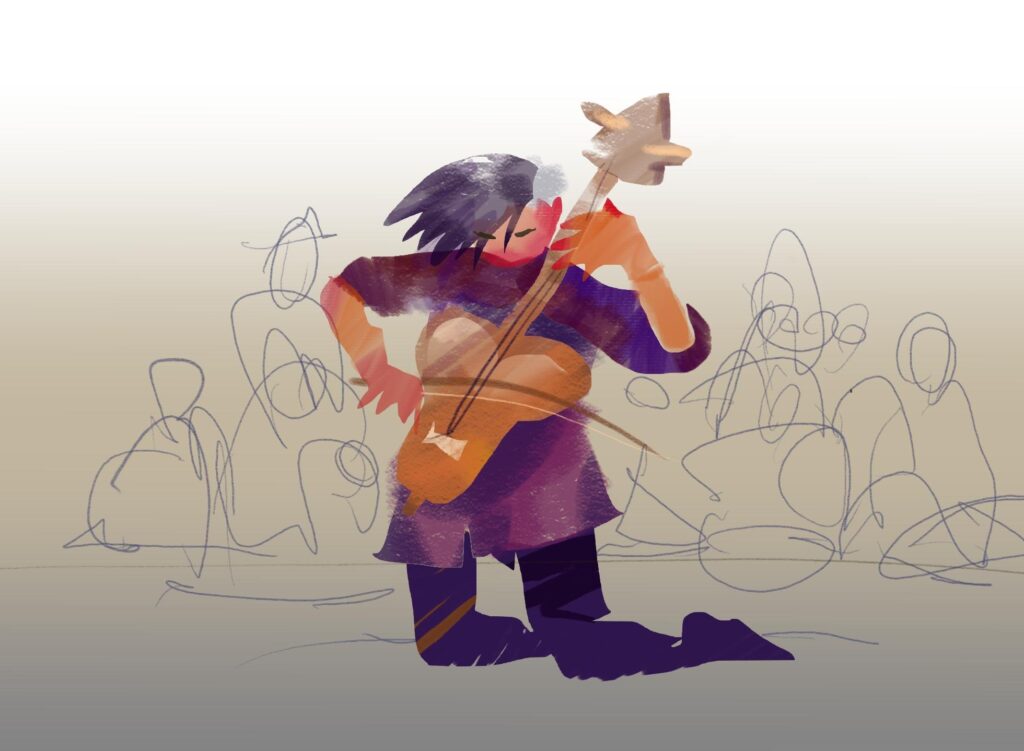
The dombra, the kyu, the kobyz, the zhetigen…. The list of traditional instruments in Kazakh music goes on. These aren’t dust-coated relics. The instruments are increasingly at the forefront of a lot of popular music in Kazakhstan today. They even get makeovers. The dombra is a long-necked, stringed instrument symbolizing Turkic culture. Now there is the electric dombra. Merey Otan, also known as Mercury Cachalot, knows about all of this. She is a musician and graduate student at Nazarbayev University in Astana and co-author of a book about the transformation of traditional instruments in Kazakhstan. In written responses to questions from The Times of Central Asia, Otan talked about contemporary Kazakh music and the role of the old instruments. After some replies, TCA includes brief explanations of her musical references. Researcher Merey Otan speaks last year at a launch for a book she co-authored about traditional instruments and contemporary music in Kazakhstan. Otan is a postgraduate student in the Eurasian Studies program at Nazarbayev University in Astana. Photo: Merey Otan   Merey, tell us how you first encountered Kazakh music and what attracted you to Kazakh instruments?   I have always been surrounded by Kazakh music. As long as I can remember we used to sing Kazakh folk songs at family gatherings, and various celebrations. My sister used to play dombra, a Kazakh traditional plucked two-stringed instrument, and when I started going to school I also started learning to play it. Unfortunately, I stopped taking lessons after a couple of years but I still remember how to play some compositions, kuys, and play it once in a while.   TCA: Kuys is a traditional instrumental piece of Kazakh, Nogai, Tatar and Kyrgyz musical cultures. It is performed on various folk instruments.   Which Kazakh instruments are considered the most popular among contemporary musicians, and why do they attract attention?   Dombra is probably the most popular traditional instrument among local musicians, including contemporary ones. It also has a sacred meaning for the people in terms of national identity. This is evident in the quote of a famous Kazakh poet Kadyr Myrza Ali "A true Kazakh is not a Kazakh but a dombra." This shows that Kazakh people associate their identity with the instrument and incorporating its sound in contemporary songs allows them to situate their music in the local context. Apart from that, musicians also use instuments like qobyz, shanqobyz, zhetigen. Authenticity was always important for musicians and including traditional instruments is one of the popular strategies to demonstrate authenticity for Kazakhstan's musicians. Among the most popular examples are songs by Yerbolat Kudaibergen, Irina Kairatovna, Aldaspan, The Buhars. A dombra and a kobyz, traditional instruments used in Kazakhstan, are shown in a book that was co-authored by researcher Merey Otan. Photo: TCA   TCA: The kobyz is an ancient bowed instrument preserved among the peoples of Siberia, Central Asia, the Volga region, Transcaucasia and other regions.  The shankobyz is an ancient Kazakh reed musical instrument, formerly used by shaman-worshipers to...

German Company to Make Cosmetics From Kazakh Mare’s Milk

The German skincare company Zollmann Stutenmilch GmbH is looking to expand its range of products -- including some containing horse's milk from Kazakhstan's S-Agro-Borovskoe. In September 2023 the Kazakhs opened a farm for producing powdered mare's milk under the 'Local Food' brand in the Kostanay region, employing 150 people. "The German company has been breeding horses since the 1970s, and in 1990 started producing freeze-dried mare's milk. Its farm in the town of Mühlben is the largest and oldest enterprise in Germany specializing in the production of kymyz [mare's milk]. We signed an agreement for further cooperation in Germany," said the director of S-Agro-Borovskoe, Meiram Akhmetzhanov. Local Food's kymyz is produced on a farm equipped with an automated milking system that collects fresh milk in cooling tanks without contacting air, which prevents pathogenic bacteria from entering the product. The milk is then pasteurized, cooled and frozen in a freeze dryer to produce a 100% organic, dry product with a shelf life of up to two years -- a major improvement, considering that fresh mare's milk can only be stored for two hours. Hans Zollmann, founder of Zollmann Stutenmilch GmbH, emphasized that the Kazakh company has become an exclusive partner and explained that the new agreement will include the production of organic cosmetics based on mare's milk. "The signed agreement is a new stage of our cooperation with Kazakhstan, especially with Kostanay. We plan to produce [all the same products that] we produce in Germany here in Kazakhstan. I have devoted my whole life to the production of mare's milk and I believe that Kazakhstan has great opportunities in this area, as this drink is their national treasure," Zollmann added. The launch of Local Food cosmetics is scheduled for the third quarter of 2024, and will create an additional 30 jobs. In the future, S-Agro-Borovskoe is also considering the production of sports nutrition products, baby food and pharmaceutical supplements.

Baikonur Launch to ISS Scheduled for Saturday 23rd March

ALMATY, Kazakhstan - A spacecraft carrying three crewmembers from Russia, Belarus and the United States is scheduled to launch Saturday to the International Space Station. The mission was aborted Thursday with seconds to lift-off from the Baikonur Cosmodrome in Kazakhstan. The scrapped launch was caused by a “voltage drop in the chemical current source," said Yuri Borisov, head of Roscosmos, the Russian space agency. Tass, the Russian state news agency, quoted Borisov as saying the crew is safe and well. The Soyuz spacecraft was expected to take about three hours after a launch on Thursday to reach the station, where seven people already aboard are awaiting the new arrivals. If a Saturday afternoon launch goes ahead, the travel time will be longer and docking is expected to occur on Monday. Those heading to the space station are mission commander Oleg Novitsky of Roscosmos (his fourth trip to space), Belarusian Marina Vasilevskaya (her first trip) and NASA’s Tracy Caldwell Dyson (her third). Novitsky, a lieutenant colonel in the Russian Air Force, and Vasilevskaya, a former flight attendant, will return to Earth after 12 days on the station, accompanied by NASA’s Loral O’Hara, who has spent six months in space. Dyson, a chemist with experience as an electrician and private pilot, is scheduled to return to Earth in September. Coordination between the U.S. and Russian space agencies has continued despite international tension over the war in Ukraine. “Russia and the United States are still cooperating in space. At least for now,” tweeted Eric Berger, senior space editor at Ars Technica, a technology publication. Russia operates the Baikonur Cosmodrome in southern Kazakhstan. The Soviet Union opened the facility in the 1950s.

Drug Dealing in Kazakhstan Continues to Gain Momentum

Over the past six years the volume of seized synthetic drugs in Kazakhstan has almost doubled, Finprom.kz reports. In 2023 law enforcement agencies in Kazakhstan interdicted and confiscated 41.1 tons of illicit substances, up from 20.3 tons in 2018. In 2023 the number of drug laboratories destroyed increased to 75 from 68, and Kazakhstani officials called the increase in the distribution of banned substances an outbreak of drug trafficking. Because of the increase in drug usage, the Ministry of Internal Affairs has said that new types of synthetics will be included in the national list of narcotic drugs before they are brought into Kazakhstan. As soon as the drugs are on the national list, they'll immediately be registered on Eurasian Economic Union (EAEU) and UN International Committee lists. Until 2019 in Kazakhstan, the procedure for inclusion of new drugs in the national list took about a year -- now it takes no more than a month. Over the past few years in Kazakhstan, the volume of seizures of all sorts of so-called "salts," "ecstasy" and various synthetic cannabinoids has increased 143.4 times -- rising to 1.1 tons from 7.7 kilograms. At the same time, the share of synthetics out of the total number of confiscated drugs in 2023 was insignificant, at 2.7 percent. It's difficult to obtain accurate data on the market volume of modern illicit substances -- often because new types of drugs are distributed mainly among young people through messenger apps and crypto-wallets, with the use of bots for publishing advertisements. According to the Interior Ministry, more than 3,000 different drug-dealing sites and 1,300 online stores on encrypted messaging app Telegram were blocked by Kazakhstan last year. Finprom.kz analysts report that they themselves managed to independently find several such channels operating in the country. At the end of 2023, Kazakhstani Interior Minister Yerzhan Sadenov named some of the main barriers in the fight against the spread of synthetic drugs. He said the issue is complicated by the fact that the drugs are made in clandestine labs in the country from substances that are not considered illegal in Kazakhstan -- and can only legally be brought to the attention of police after they are used to make a drug. Last year the Ministry of Internal Affairs seized more than 100 tons of these ingredients -- which could have turned into eight tons of finished drugs. Therefore, the Ministry of Internal Affairs proposes increasing criminal liability for trafficking in precursor chemicals. Today the country punishes only the smuggling of these substances. According to the Prosecutor General's Office of Kazakhstan, last year drug crime in the country increased by 9%. In 2023, 7,500 drug crimes and criminal offenses were recorded. The police detained about 4,500 people, including minors, on suspicion of distribution, manufacture or sale of illegal substances.

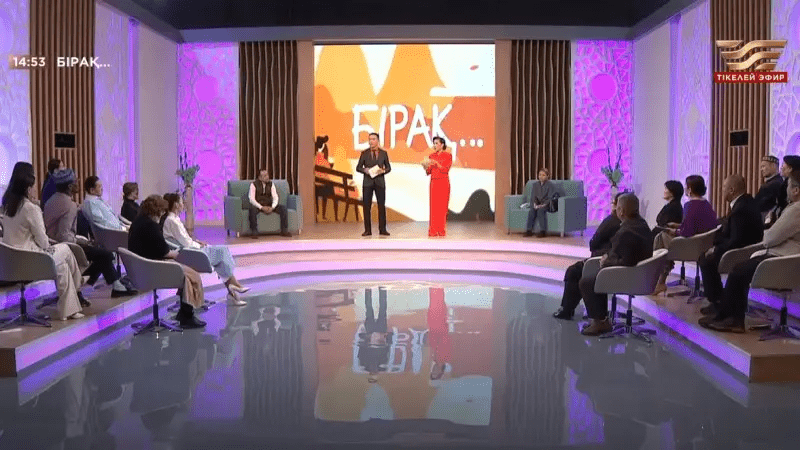
Scandal on Khabar TV Raises Discussions About Domestic Violence in Kazakhstan

A scandal which erupted on Kazakhstan's state television channel, Khabar, has caused huge public outrage. At the center of events was a woman named Gulmira, who had suffered years of abuse at the hands of her husband. Her story became the subject of discussion on the talk show, Birak, which is dedicated to family relations. On Khabar, Gulmira spoke about the eighteen years of beatings and violence she had suffered in her marriage. She ran away from her hard drinking husband with her six children, but he found her in Astana, and arranged another humiliation, with the talk show hosts secretly and without any warning bringing her husband to the studio, which caused Gulmira to break down live on air. The shows hosts even tried to reconcile the spouses, which only served to aggravate the already extremely strained situation. On social networks, the public actively discussed the abhorrent behavior of the presenters and espoused their support for Gulmira. Videos were created which commented on the show, and many media outlets spoke out in defense of the woman, emphasizing the fact that such things should not be staged on national television. As a result of the wave of indignation, the state television channel Khabar decided to stop airing the talk show Birak. The Minister of Culture and Information of Kazakhstan, Aida Balayeva, promised to shut down the talk show, stating that the problem of family violence requires serious attention. This event took place against the background of huge public attention on the trial of former Minister of the National Economy, Kuandyk Bishembayev, who is accused of murdering his wife. In such an environment, any justification for the actions of an aggressor on state TV was deemed hugely inappropriate and only served to highlight the issue of domestic violence.