• KGS/USD = 0.01144 0%
  • KZT/USD = 0.00212 0%
  • TJS/USD = 0.10456 0.19%
  • UZS/USD = 0.00008 0%
  • TMT/USD = 0.28490 0%
  • KGS/USD = 0.01144 0%
  • KZT/USD = 0.00212 0%
  • TJS/USD = 0.10456 0.19%
  • UZS/USD = 0.00008 0%
  • TMT/USD = 0.28490 0%
  • KGS/USD = 0.01144 0%
  • KZT/USD = 0.00212 0%
  • TJS/USD = 0.10456 0.19%
  • UZS/USD = 0.00008 0%
  • TMT/USD = 0.28490 0%
  • KGS/USD = 0.01144 0%
  • KZT/USD = 0.00212 0%
  • TJS/USD = 0.10456 0.19%
  • UZS/USD = 0.00008 0%
  • TMT/USD = 0.28490 0%
  • KGS/USD = 0.01144 0%
  • KZT/USD = 0.00212 0%
  • TJS/USD = 0.10456 0.19%
  • UZS/USD = 0.00008 0%
  • TMT/USD = 0.28490 0%
  • KGS/USD = 0.01144 0%
  • KZT/USD = 0.00212 0%
  • TJS/USD = 0.10456 0.19%
  • UZS/USD = 0.00008 0%
  • TMT/USD = 0.28490 0%
  • KGS/USD = 0.01144 0%
  • KZT/USD = 0.00212 0%
  • TJS/USD = 0.10456 0.19%
  • UZS/USD = 0.00008 0%
  • TMT/USD = 0.28490 0%
  • KGS/USD = 0.01144 0%
  • KZT/USD = 0.00212 0%
  • TJS/USD = 0.10456 0.19%
  • UZS/USD = 0.00008 0%
  • TMT/USD = 0.28490 0%

Viewing results 439 - 444 of 614

Optimism and Gratitude are Main Sentiments of Kazakhstan President’s New Year’s Speech

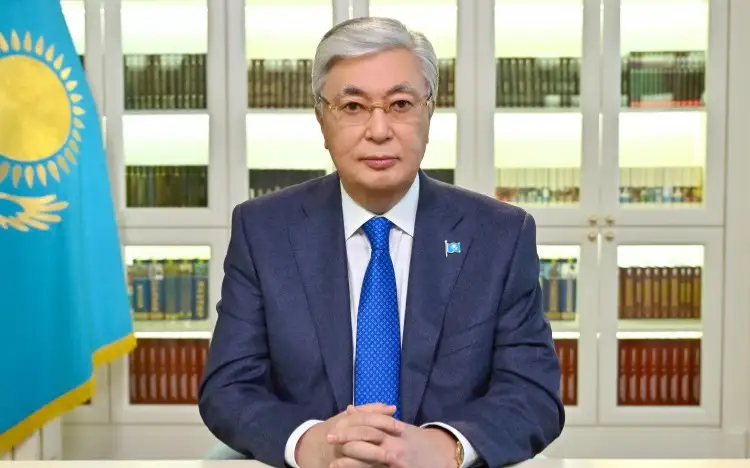
As 2023 came to a close, Kazakhstan's President Kassym-Jomart Tokayev delivered his New Year address to the population, with a focus on the country's progress as well as the main challenges it has faced over the past year. Critically, he emphasized the increased significance of rule of law in Kazakhstan and noted measures being taken to ensure its endurance. Tokayev also thanked citizens for their role in creating a Just Kazakhstan, where equal opportunities are being made available to everyone. In delineating the country's future trajectory, the President underlined the importance of reforms and modernization, while also citing ambitious projects already undertaken in education and healthcare, as well as the need to strengthen the foundation of nationhood. He expressed belief in Kazakhstan's capacity to tackle upcoming challenges and tasks, with the goal of building a prosperous and competitive state. He also cited population growth as a factor ensuring strength and prosperity. On the economic front, Tokayev highlighted the government’s successful efforts in attracting foreign investment, job creation, and support for small and medium-sized enterprises. He specifically mentioned the ongoing repatriation of illegally acquired assets, which have replenished the state's funding base and have been earmarked for beneficial causes, such as construction of new schools. Regarding foreign policy, Tokayev noted that Kazakhstan has bolstered its international standing through balanced and constructive strategies. Tokayev expressed appreciation for various professionals including teachers, health workers, engineers, farmers, military personnel, law enforcers, and volunteers, whose tireless efforts he lauded as being instrumental to the nation's progress. Tokayev concluded by urging all Kazakhstanis to value the peace and stability in their country. He extended wishes for joy, happiness, good health, and a prosperous 2024.

Kazakhstan’s Senate Speaker Highlights Major Laws Passed in 2023

Maulen Ashimbaev, the Speaker of the Senate, emphasized during the final plenary session of the chamber this year that the Parliament had passed a total of 92 laws in 2023, with significant implications for the political, economic, and social spheres of the country. Ashimbaev stated that 2023 was a year of substantial change and believed it marked a period of genuine political modernization within the framework of constitutional reforms under the President's leadership. "This year, constitutional amendments relating to Parliament were implemented. As a result of these constitutional reforms, the role of the chambers of Parliament has been enhanced. The legislative procedure has evolved, with laws being considered using new methodologies," said the Senate Speaker. He recollected that at the start of 2023, the Head of State appointed 10 Senate deputies by decree, including five nominees from the ANC for the first time. Regular elections of Senate deputies also took place in the regions, leading to a significant refreshment of the upper house of Parliament. "In January, the President issued a decree to dissolve the Mazhilis of Parliament; the Senate dutifully performed the functions of Parliament for two months," Ashimbaev recalled. "In total, Parliament passed 92 laws this year, ensuring the country's political stability and sustainable socio-economic development." The laws included constitutional legislation on judicial system issues, the prosecutor's office activities, and administrative reform matters. The adoption of the new Social Code was particularly noteworthy. Additionally, several critical laws were enacted, such as those relating to the return of illicitly obtained assets to the state and public control. "We approved the country's main financial document last month – the Republican budget for 2024-2026," concluded Maulen Ashimbaev. On December 27, 2023, the Mazhilis held its final plenary meeting of the year. Erlan Koshanov, the Speaker of the chamber, also reviewed the deputies' work over the year.

Investing in the Future: Upgrading Kazakhstan’s Heating and Power Infrastructure

As nations around the globe grapple with the urgency of climate change and the need for sustainable development, one country that stands out is Kazakhstan. With its vast natural resources and strategic location, Kazakhstan has the potential to become a leader in renewable energy and sustainable infrastructure. However, upgrading Kazakhstan's heating and power infrastructure is a significant undertaking that requires substantial time and financial investment. The Challenge Kazakhstan is no stranger to the harsh realities of tough winters. With temperatures often dropping below -30 degrees Celsius and even reaching lows of -52 degrees Celsius in some northern regions, the capacity and resilience of the country's heating infrastructure is tested annually. In a country where winter can last up to six months, maintaining a reliable heating supply isn't just a matter of comfort—it's a matter of survival. However, the extreme weather conditions put a considerable strain on Kazakhstan's heating infrastructure and lead to several challenges. Many of Kazakhstan's heating systems, built during the Soviet era, are showing their age and inefficiency, necessitating an expensive overhaul. These outdated systems often break down, leading to extended periods without heat in the coldest months. A striking example was the 2022 incident in Ekibastuz, a city known for its harsh winters, where residents endured nearly three months without heat due to a power plant failure, which subsequently sparked a government-led corruption investigation. Compounding these issues, Kazakhstan's heating sector heavily relies on fossil fuels, primarily coal. This reliance not only exacerbates environmental pollution but also leads to energy inefficiency. Due to poor insulation in buildings and obsolete heating systems, much of the produced heat is lost, demanding more energy and resources to maintain warmth in homes and businesses. The cost of heating is a significant expense for many Kazakh households, particularly those in rural areas where incomes are lower. The government provides subsidies to help offset these costs, but with energy prices rising globally, this is becoming an increasingly heavy burden on the national budget. The financial aspect of such upgrades is undoubtedly substantial. One source estimates that upgrading transmission and distribution infrastructure alone for all of Central Asia could cost between $25 billion to $49 billion. Additionally, infrastructure projects of this magnitude can take several years to over a decade to implement. For instance, Denmark began its transition to district heating systems and combined heat and power plants in the 1970s, and is still implementing improvements today. Similarly, Germany started its Energiewende (energy transition) initiative in 2000, with goals set for 2050. What Steps Have Been Taken? Efforts are made to upgrade aging systems, improve energy efficiency, and transition to more sustainable sources of energy. In 2023, Kazakhstan significantly upgraded its energy infrastructure, as reported by the Astana Times. The launch of the second Beineu-Zhanaozen gas pipeline and a new distribution pipeline in Mangystau Region improved gas supply, while the completion of the Makat-North Caucasus pipeline met regional demands. The western zone's energy network was fortified with five new power transmission lines. Renewable energy saw...

President Japarov: Kyrgyzstan Should Provide Irrigation Water to Kazakhstan

A UN resolution obliges upstream countries, including Kyrgyzstan, to provide water to downstream states, Kyrgyz President Sadyr Japarov said on December 16th at the second People’s Kurultai (Congress) in Bishkek. Answering questions from the Kurultai delegates, the president said that the water problem would be solved through the construction of so-called ten-day and daily regulation pools. Such reservoirs will allow for the accumulation of water in winter and for it to be freely shared with neighbors downstream. The president said that Kyrgyzstan does not have a sufficient number of reservoirs, and, therefore, this year there was not enough water to supply to Kazakhstan. This past summer, the southern regions of Kazakhstan experienced a severe shortage of irrigation water for their fields. The construction of such reservoirs, the president explained, will meet the needs of Kyrgyzstan and, in addition, there will also be enough water to supply to downstream neighbors. The president also announced plans to build reservoirs. The reservoir construction program will last until 2027, he said.

Kazakhstan to Reduce Dependence on Water from Neighboring Countries

Issues of modernizing water infrastructure and improving the water resources management system were discussed at a meeting of the Water Council of Kazakhstan chaired by Prime Minister, Alikhan Smailov, A post on the PM’s official website states. Minister of Water Resources and Irrigation, Nurzhan Nurzhigitov reported that Kazakhstan has 102.3 km3 of water, 54% of which is formed within the country, and the remaining 46% coming from neighboring countries. The annual consumption by economic sectors is about 25 km3 of water, of which 65% is used for agriculture, and 25% for industrial needs. To ensure the country's water security and solve the problem of shortages, a draft Comprehensive Plan for the Development of Water Resources for 2024-2030 has been developed. It provides for a number of urgent measures for the construction and reconstruction of reservoirs, and the reconstruction of hydraulic structures and irrigation systems. Implementation of the plan will increase available water resources by 3.7 cubic kilometers, and the area of irrigated land to 2.2 million hectares, as well as reduce annual losses of irrigation water by 3 cubic kilometers. In 2024-2026, it is planned to begin construction of 20 new reservoirs with a volume of 2.4 cubic kilometers in nine regions. This will increase the area of irrigated land by 250,000 hectares and reduce Kazakhstan’s dependence on neighboring countries for its water supply by an average of 25%. “We must annually introduce water-saving technologies on 150,000 hectares of irrigated lands. Now, implementation is carried out on 40-50,000 hectares per year. At the same time, in the southern regions where there is the greatest water shortage, the volume of implementation is the smallest,” said Smailov.

Recent murder in Kazakhstan draws attention to domestic violence and gender discrimination

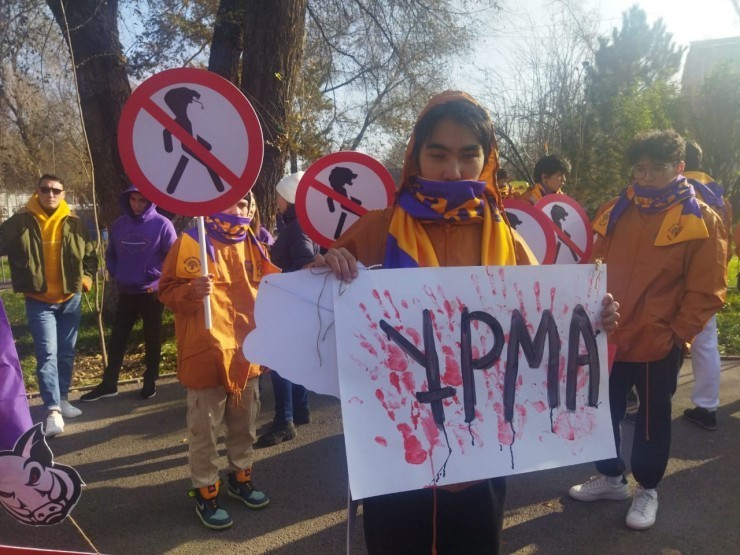
A very public tragedy in Kazakhstan put on display domestic violence at its worst. A quarrel in a restaurant in Astana on the evening of November 8th is reported to have resulted in the death of Saltanat Nukenova, the 31-year-old wife of Kuandyk Bishimbayev. Bishimbayev, who served as Minister of National Economy under former President Nazarbayev, was detained on the same day for suspected murder and remains under arrest awaiting trial. On November 11th, Saltanat was buried in Pavlodar. This appalling incident highlighted the urgent need for stronger protections against domestic violence. An authorized rally was held in Almaty in late November. Around 200 participants came out onto the square behind the Sary Arka cinema, holding posters and chanting slogans against domestic violence. The event was organized by a public movement called Zhana Adamdar and the attendees mostly included young people and students from the movement. Relatives of Saltanat Nukenova also took part. The participants wanted to raise awareness about fighting any manifestation of violence against women and children. Most of the attendees were dressed in the same style, and many of them had scarves with the inscription “Say no to the animal world,” which was also the title of the rally. Speakers at the event detailed the most resonant cases of violence in recent times while the organizers of the rally held a small flash mob and arranged an installation with mannequins in cages with animal masks on them. A minute of silence was observed in honour those who died as a result of violence. Progress in protecting women What proceeded this public tragedy hopefully presents a silver lining. A month later, on December 8, Kazakhstan's current President Kassym-Jomart Tokayev signed a Decree to strengthen human rights with concrete steps towards preventing violence and promoting gender equality. The Decree instructs Kazakhstan’s government to take systematic measures to promote equal rights and opportunities in all spheres of society, as well as to overcome all forms and manifestations of gender discrimination. The decree also encompasses legislation to deter domestic violence and promotes equal rights and safety for both men and women in the Republic of Kazakhstan, as endorsed by UN Security Council resolution 13251. It further involves legislative measures to tighten criminal liability in cases of domestic violence, which have now been implemented. These measures aim to hold perpetrators accountable and ensure that victims can get justice. Additionally, offenders of domestic violence may be required to undergo comprehensive psychological correction as part of their rehabilitation process. The Decree also asks for creating specialized units within the Ministry of Internal Affairs staffed with female officers, who can enhance the effectiveness of combating domestic violence. While the timing of the Decree coincided with the aftermath of Saltanat’s death, there are signs that these steps may have already been in the works. President Tokayev had voiced concerns about domestic violence before the current headlines emerged. At a meeting in the Ministry of Internal Affairs in June 2023, for example, he had affirmed that “comprehensive...