• KGS/USD = 0.01144 0%
  • KZT/USD = 0.00211 0%
  • TJS/USD = 0.10526 0%
  • UZS/USD = 0.00008 0%
  • TMT/USD = 0.28530 0%
  • KGS/USD = 0.01144 0%
  • KZT/USD = 0.00211 0%
  • TJS/USD = 0.10526 0%
  • UZS/USD = 0.00008 0%
  • TMT/USD = 0.28530 0%
  • KGS/USD = 0.01144 0%
  • KZT/USD = 0.00211 0%
  • TJS/USD = 0.10526 0%
  • UZS/USD = 0.00008 0%
  • TMT/USD = 0.28530 0%
  • KGS/USD = 0.01144 0%
  • KZT/USD = 0.00211 0%
  • TJS/USD = 0.10526 0%
  • UZS/USD = 0.00008 0%
  • TMT/USD = 0.28530 0%
  • KGS/USD = 0.01144 0%
  • KZT/USD = 0.00211 0%
  • TJS/USD = 0.10526 0%
  • UZS/USD = 0.00008 0%
  • TMT/USD = 0.28530 0%
  • KGS/USD = 0.01144 0%
  • KZT/USD = 0.00211 0%
  • TJS/USD = 0.10526 0%
  • UZS/USD = 0.00008 0%
  • TMT/USD = 0.28530 0%
  • KGS/USD = 0.01144 0%
  • KZT/USD = 0.00211 0%
  • TJS/USD = 0.10526 0%
  • UZS/USD = 0.00008 0%
  • TMT/USD = 0.28530 0%
  • KGS/USD = 0.01144 0%
  • KZT/USD = 0.00211 0%
  • TJS/USD = 0.10526 0%
  • UZS/USD = 0.00008 0%
  • TMT/USD = 0.28530 0%

Viewing results 127 - 132 of 192

Kazakhstan Shapes an Ambitious Future

As Kazakhstan continues on its path towards economic expansion and modernization, it has set forth a revitalization and growth vision for 2024 and beyond, underpinned by a series of ambitious reforms and strategic investments. A central part to President Kassym-Jomart Tokayev’s vision, which he also detailed in a government meeting on February 7th, is the development of a sustainable and inclusive economy driven by innovation, strategic foreign investment and proactive engagement with the global community.   Building on the 2023 growth momentum There are positive indications that Kazakhstan is on the right track, despite challenges posed by ongoing global geopolitical risks and uncertainties. Its strong economic expansion continued in 2023, as gross domestic product (GDP) increased by nearly 5% as of the third quarter. The government is aiming to accelerate the pace of growth further throughout the remainder of the decade. Tokayev said in his February 7th speech that the target was to increase economic output to $450 billion by 2029, stressing that to do this, the country will need 6% annual GDP growth.   Attracting investment To achieve this ambitious goal, the country’s leadership is currently implementing a series of reforms, which are designed to attract a substantial influx of foreign investment (of at least $150 billion in total) by adopting environmental, social and governance (ESG) principles, as well as by enhancing the country’s overall investment climate. Examples of these initiatives include “green bonds” introduced in 2017; the sustainable finance initiatives presented since 2021 via the Astana International Financial Center, and the mandatory ESG reporting framework for companies listed on the Astana International Exchange. A pivotal element in Kazakhstan’s comprehensive series of economic reforms and investment strategies is the establishment of the Investment Headquarters, which is charged with the critical mission of enhancing the investment climate within Kazakhstan while ensuring qualitatively the proper execution of investment projects. At the same time, the government is working on a new Tax Code that should comprehensively reset the dynamics between the state and the private sector. The development of this code is guided by the need for a delicate balance between creating an environment conducive to investment, and securing the necessary revenues for the national budget.   Local capacity building The strategic plan behind the reforms foresees the introduction and transfer of cutting-edge technologies, the localization of production processes, and the establishment of high value-added clusters. These clusters would be strategically focused on driving the acceleration of the manufacturing sector. Potential sectors to benefit from these clusters include green technology, finance, and agriculture. Furthermore, the legislative and institutional framework will be implemented through the enactment of a fresh law on industrial policy and the establishment of a new Ministry of Industry and Construction.   A focus on standards of living These steps represent a commitment to improving the overall well-being of the population in tandem with ensuring economic growth. Tokayev has underscored that the focus of these efforts extends beyond merely achieving macroeconomic expansion and emphasized that economic developments must have a...

Central Asia’s Mineral Wealth Can Help the West Unlock a Greener Future

Critical minerals are essential components in many of today’s rapidly growing energy technologies. From lithium in electric vehicle batteries, to copper used in wind turbines and electricity networks, these minerals are at the heart of the green transition. The demand for these minerals will increase as clean-energy technologies continue to develop and become even more widely adopted. The International Energy Agency (IEA) forecasts a significant uptick in mineral requirements for clean energy technologies. According to its Sustainable Development Scenario (SDS), the world’s total mineral demand could quadruple by 2040. Electric vehicles and battery storage are expected to account for about half of this growth over the next two decades. A few major producers dominate the global market Problematically, the global market for critical minerals is dominated by just a few key players. China controls a significant portion of overall worldwide production, not to mention 85% of the processing capacity needed to refine these minerals for manufacturing purposes. China’s dominance extends to lithium, graphite, rare earth elements and cobalt, which are all essential for clean energy technologies. Russia also holds considerable weight in the resource-extraction sector. For example, it controls 43% of the palladium market and a quarter of vanadium production. These minerals have wide-ranging applications, with palladium used in catalytic converters and vanadium in batteries. The United States is heavily reliant on mineral imports from China. This dependence poses significant economic and security risks as any supply-chain disruption could have far-reaching impacts. As a result, the U.S. has initiated the Partnership for Global Infrastructure and Investment (PGII) and the Minerals Security Partnership (MSP). The PGII is a shared G7 commitment, while the MSP drives co-operation of 13 countries and the European Union (EU). They both aim to catalyse public and private investment in responsible global supply chains of critical minerals. Fortunately, Central Asia is emerging as a key player in the global critical minerals landscape. The region is perhaps best noted for its substantial reserves of uranium, of which it is the world’s largest supplier. Less known is the fact that the region also holds 38.6% of global manganese ore reserves, 30.07% of chromium, 20% of lead, 12.6% of zinc and 8.7% of titanium, as well as significant reserves of other critical materials. Eyes turn to Kazakhstan’s special contribution While all of Central Asia is rich in these minerals, Kazakhstan is increasingly noticed as the stand-out performer. Kazakhstan is perhaps best known as the global leader in uranium production. It has the world’s largest reserves of this metal, and has been the world’s top producer for several years. Uranium is necessary for the global nuclear energy supply chain, and Kazakhstan has implemented advanced recovery techniques, making the extraction process both efficient and environmentally friendly. Kazakhstan also has significant potential in rare earth elements, and is one of the world's largest producers of chromium (used primarily in producing stainless steel and other alloys) with one of the world's largest deposits and significant mining operations in the northwest regions. The country is...

Kazakhstan at a Crossroads: Navigating Geopolitical Dynamics in Eurasia

Sharing borders with China, Kyrgyzstan, Russia, Turkmenistan and Uzbekistan, Kazakhstan is the largest landlocked country in the world and the ninth largest overall by land area. Its geography makes this country a pivotal transit hub and it is now in the process of reshaping its strategic role in Eurasia. A recent significant development is the announcement of a new railway to China, which will further enhance Kazakhstan’s position in global trade, including in China’s famous Belt and Road Initiative (BRI). Deepening its relationship with China is one way that Kazakhstan seeks to diversify its economic and political ties away from Russia. At the same time, Kazakhstan is also looking to reduce its relative dependency on China and trying to balance its relationships with other major powers. Although some Western states have lately recognised this, and various international financial institutions are also assisting in enhancing Kazakhstan’s connectivity, these actors still need to pay more focused attention to Kazakhstan and work with the country in a more constructive manner. Expanding infrastructure and regional connectivity In the past, Kazakhstan has strengthened its position as a transit corridor through investments of more than $3.5 billion in the Khorgos gateway on the Chinese border (for facilitating Chinese goods being shipped to Central Asia and Europe), and other significant investments in various railways (most recently, the Shalkar–Beyneu and Zhezkazgan–Saksaul lines), as well as in the Kuryk seaport on the Caspian Sea and in the Trans-Caspian International Transport Route (TITR). The TITR is a 6,500-km corridor that links Asia with Europe and passes through various countries including Kazakhstan, Azerbaijan, Georgia, and Turkey. The Kuryk seaport has direct access to railway tracks and is fast becoming an important multi-modal route for cargo transshipment. In May 2023, Kazakhstan and China signed 47 co-operation agreements worth $22 billion. At the time, Kazakhstan’s President Kassym-Jomart Tokayev underlined that “the full exploitation of our transport and logistics capacity is of strategic importance”. He named China, Europe, Russia, and Central Asia as targets for logistical expansion. Reviewing bilateral relations with China in October last year, Tokayev proclaimed that his initiatives “confirm Kazakhstan’s readiness to strengthen our ‘all-weather’ relations and multifaceted co-operation”. Kazakhstan’s new railways amid incipient geopolitical shifts Given the above context, the recent announcement of the third railway connection between Kazakhstan and China is an important development that will enhance freight capacity and reduce border congestion. The new 272-kilometre (km) line will run in a south-east direction from Ayagoz in eastern Kazakhstan to Bakhty on the Chinese border before continuing to Chuguchak in Tacheng prefecture. The double-track railway is expected to boost freight capacity between Kazakhstan and China by more than two thirds, raising annual carriage from 28 million to about 48 million tonnes per year after its completion in 2027. The connection is a part of the major investment in a total of 1,300 km of new railway lines that are expected to facilitate exports and contribute to the TITR’s development. In the meantime, Kazakhstan has recently flashed on the geopolitical...

Kazakhstan’s Foreign Policy: A New Year’s Outlook Under President Tokayev

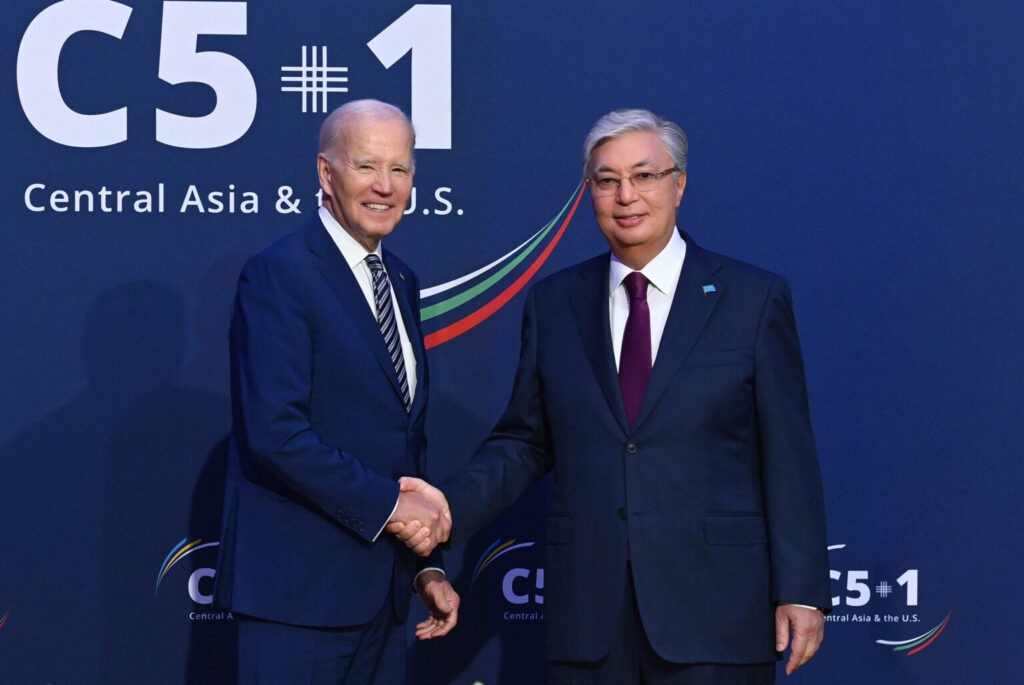
When Kassym-Jomart Tokayev became the President of Kazakhstan in 2019, he brought to the role a wealth of experience from his long diplomatic career. Amongst many responsibilities, this experience included high-level government positions such as the post of deputy foreign minister and prime minister. Navigating geopolitical challenges since 2019 Tokayev has had a high global profile, including serving as director-general of the United Nations Office in Geneva. It was therefore expected that his internationally recognised acumen would play a foundational role in defining Kazakhstan's path through the complex, and sometimes chaotically evolving, geopolitics in Central Asia and beyond. Tokayev became president at a time when Kazakhstan faced both internal and external challenges. Domestic political and administrative reforms could not wait. The country’s strategically important natural resources, such as uranium and oil, as well as its keystone geographic position at the heart of Central Asia with a long border on the Caspian Sea attracted the attention of the international community. Situated between Russia and China, Kazakhstan required a balanced and nuanced foreign policy to respond to growing interest from the European Union (EU) and the United States. Since assuming the presidency in 2019, Tokayev has enhanced the country's geo-economic context as a shaper of transit corridors. Most notable of these is the Trans-Caspian International Trade Route (TITR), which puts Kazakhstan at the centre of pivotal geopolitical dynamics as a bridge between Europe and Asia. Strengthening bilateral and multilateral partnerships The EU, recognising Kazakhstan’s importance, has deepened its engagement with the country through an Enhanced Partnership and Cooperation Agreement that entered into force in 2020. Deeper ties between Astana and Brussels, and the EU's interest in Kazakhstan, go far beyond hydrocarbon energy resources to embrace cooperation in green technologies, digital transformation and sustainable development. At the same time, Tokayev's tenure has seen Kazakhstan navigate its relationships with international superpowers amidst significant "black-swan" events like the COVID-19 pandemic and the worsening of Russia's conflict with Ukraine. His administration has skilfully maintained good ties with Russia while also adhering to international sanctions. Such an approach showcases Kazakhstan's commitment to global norms, multilateralism and international cooperation, combined with its commitment to an independent foreign policy based on national interests. Under President Tokayev's leadership, Kazakhstan has enhanced its diplomatic engagement by emphasising its strategic role in both regional and global geopolitics. His tenure has been marked by a continuing series of high-profile meetings and participation in key summits. Kazakhstan has also made crucial contributions to regional organisations, such as the Organisation of Turkic States (OTS) and the Commonwealth of Independent States (CIS). The country's involvement in these organisations underlines its commitment to regional cooperation and integration. Particularly in the OTS, Kazakhstan has emerged as a leader, facilitating discussions and promoting initiatives that align with its broader foreign policy goals. Top-level international meetings (with figures such as U.S. President Joe Biden, Russian President Vladimir Putin, Chinese Communist Party Chief Xi Jinping, UN Secretary-General Antonio Guterres and French President Emmanuel Macron) underscore Kazakhstan's central strategic importance in global...

Kazakhstan: A decree on human rights demonstrates the government is responsive to the people’s demands

Democracy in Central Asia is evolving since the Soviet Union's collapse three decades ago. Despite a history of authoritarianism, the region is showing signs of human rights improvement and increased democratic representation. New voices are emerging, impacting societal change. It's crucial to recognize this progress while still addressing human rights issues and advocating for further democratic reforms. On December 10, 2023, the world celebrated the 75th anniversary of the Universal Declaration of Human Rights (UDHR), a g seminal document that established the universal recognition of fundamental human rights. The anniversary was marked by various events and initiatives around the globe, including a significant event in Geneva. In line with this celebration, the U.S. Secretary of State Anthony Blinken announced the designation of Taliban leaders connected to restrictions on access to secondary education for women. President Kassym Jomart Tokayev of Kazakhstan also demonstrated his country's commitment to upholding human rights by signing a decree titled "On Further Measures of the Republic of Kazakhstan". This statute underlines Kazakhstan's commitment to implementing democratic reforms and integrating them into everyday public life. The Decree aligns the nation's democratic and human rights mechanisms with international standards, encouraging cooperation between the state, the United Nations (UN), and the Organization for Security and Cooperation in Europe (OSCE). It has initiated practical measures like expert-led training sessions from the UN and OSCE to implement regional political reforms. Additionally, the Decree’s Action Plan details the executive, legislative, and judicial branches' the execution of reforms in collaboration with civil society and the international community with the ultimate aim of upholding the rule of law and human rights. These initiatives are consistent with President Tokayev's promise to build a "Just and Fair Kazakhstan" that will protect marginalized groups, support union activities, uphold assembly rights, and prevent violence and torture. Building gender equality Women's rights have become a focal point globally. Kazakhstan, with its nomadic heritage, has made significant strides in narrowing the gender gap compared to many other countries. Since joining the UN’s Human Rights Council for the 2022-2024 term, the country has prioritized gender equality and women's empowerment. Kazakhstan recently moved up 15 positions in the “Global Gender Gap” index due to successful reforms in the field of gender development where it is ranked 65 out of 146 countries. The recent Decree fundamentally strengthens gender equality. The Government is instructed to take systematic measures to promote equal rights and opportunities in all spheres of society, as well as to overcome all forms and manifestations of gender discrimination. The decree also encompasses legislation to deter domestic violence and promotes equal rights and safety for both men and women in the Republic of Kazakhstan, as endorsed by UN Security Council resolution 13251. This is a significant step forward in addressing gender-based violence and discrimination, reflecting the government's commitment to promoting human rights and gender equality. Combatting domestic violence A recent, and very public, tragedy in Kazakhstan represented domestic violence at its worst. To combat domestic violence effectively, it is essential to create...

Can Kazakhstan set an example for Central Asia’s key position in the global transition to green economy?

[vc_row][vc_column][vc_column_text css="" woodmart_inline="no" text_larger="no"]If there is one Central Asian country that stood out during the COP 28 summit on climate change in Dubai in late 2023, it was Kazakhstan. Its pledges and initiatives – specifically regarding methane reductions, transition to renewable energy sources, and water security and cooperation – correspond overall to the country’s commitments to a green economy transition. More importantly, such signaling and posturing may have larger repercussions in a region of increasing geopolitical and economic importance, not the least because of its vast resources and potential in terms of growing transportation networks. *** First to consider is Kazakhstan’s announcement of a Methane Reduction Pledge which makes it part of a voluntary agreement known as the Global Methane Pledge to reduce methane emissions by 30 per cent by 2030. This is significant given that Kazakhstan is Central Asia's main oil producer as well as an important gas producer. Stressing the country’s dedication to reducing greenhouse emissions, and in alignment with international efforts to decrease non-CO2 climate super-pollutants, Kazakhstan’s President Kassym Jomart Tokayev acknowledged during his speech at COP28 that cutting methane emissions was the “quickest avenue to immediately slow the rate of global warming". This move earned him praise from the U.S. and the UK. President Joe Biden’s Special Envoy for Climate, John Kerry, issued a joint statement with Zulfiya Suleimenova, Tokayev’s Special Representative on International Environmental Cooperation, underlining the two countries’ “mutual readiness to accelerate the development and implementation of policies and projects to rapidly reduce methane emissions” over the next two years, particularly from the fossil energy industry. The U.S. also said it would work with partners “to mobilize investments to support achieving full methane mitigation potential in Kazakhstan’s oil and gas sector”, which it said will require “at least $1.4 billion in total spending through 2030.” Likewise, British Embassy in Astana posted on X (formerly known as Twitter), to give “Congratulations to President Tokayev and Kazakhstan for joining the Global Methane reduction Commitment at #COP28 in Dubai!”, adding that this was a “significant step towards a sustainable future.” Secondly, President Tokayev unveiled at COP28 an ambitious Joint Energy Transition Partnership (JETP) initiative for Kazakhstan, which will help make the country a key player in the global transition to renewable energy sources. This should be exciting news for people of Kazakhstan as their country is poised to be a major global supplier of critical minerals used in green technologies as the world decarbonises in the coming decades. A generally agreed list of these critical minerals often include lithium, cobalt and nickel (all used in the production of electric batteries), as well as rare earths (which include at least 17 elements such as neodymium, dysprosium and terbium that are necessary for magnets in wind turbines and electric vehicles), and silver (a key component for solar panel manufacturing). Kazakhstan holds the largest chrome ore reserves in the world and ranks first also in terms of their quality. It holds second place globally for uranium and silver reserves, and...