• KGS/USD = 0.01143 0%
  • KZT/USD = 0.00216 0%
  • TJS/USD = 0.10684 -0.28%
  • UZS/USD = 0.00008 0%
  • TMT/USD = 0.28571 0%
  • KGS/USD = 0.01143 0%
  • KZT/USD = 0.00216 0%
  • TJS/USD = 0.10684 -0.28%
  • UZS/USD = 0.00008 0%
  • TMT/USD = 0.28571 0%
  • KGS/USD = 0.01143 0%
  • KZT/USD = 0.00216 0%
  • TJS/USD = 0.10684 -0.28%
  • UZS/USD = 0.00008 0%
  • TMT/USD = 0.28571 0%
  • KGS/USD = 0.01143 0%
  • KZT/USD = 0.00216 0%
  • TJS/USD = 0.10684 -0.28%
  • UZS/USD = 0.00008 0%
  • TMT/USD = 0.28571 0%
  • KGS/USD = 0.01143 0%
  • KZT/USD = 0.00216 0%
  • TJS/USD = 0.10684 -0.28%
  • UZS/USD = 0.00008 0%
  • TMT/USD = 0.28571 0%
  • KGS/USD = 0.01143 0%
  • KZT/USD = 0.00216 0%
  • TJS/USD = 0.10684 -0.28%
  • UZS/USD = 0.00008 0%
  • TMT/USD = 0.28571 0%
  • KGS/USD = 0.01143 0%
  • KZT/USD = 0.00216 0%
  • TJS/USD = 0.10684 -0.28%
  • UZS/USD = 0.00008 0%
  • TMT/USD = 0.28571 0%
  • KGS/USD = 0.01143 0%
  • KZT/USD = 0.00216 0%
  • TJS/USD = 0.10684 -0.28%
  • UZS/USD = 0.00008 0%
  • TMT/USD = 0.28571 0%

Viewing results 2665 - 2670 of 5150

Two City Railway Stations Renovated in Kazakhstan

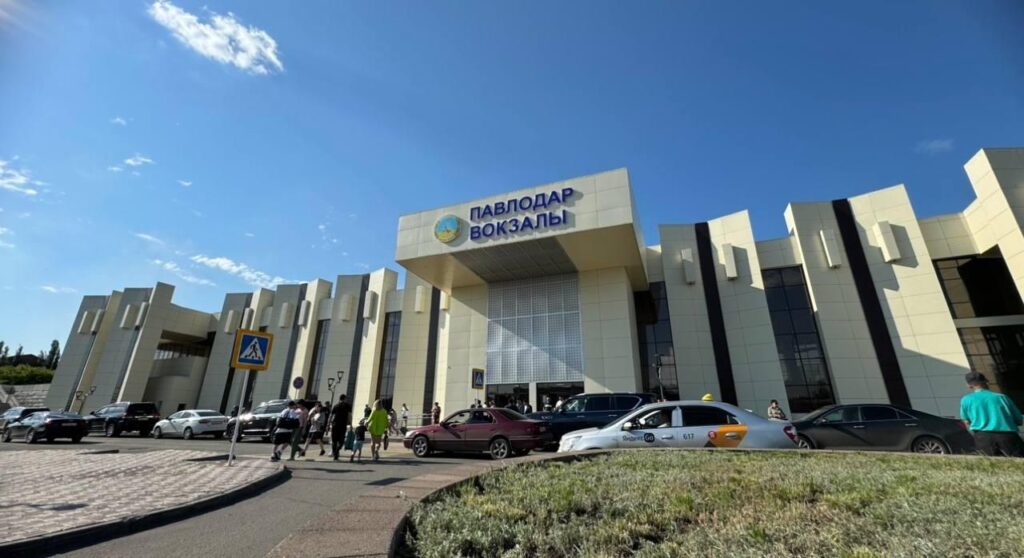
Kazakhstan’s Ministry of Transport has announced the completion of major renovation of railway stations in the southern city of Shymkent and the northern city of Pavlodar. Built in the 1960s, Shymkent railway station, used daily by several thousand passengers , had been in need of attention for some 20 years. Following major reconstruction, the building has been furnished with a new and attractive façade, an additional entrance from the city side and another exit from the platform. The number of ticket offices has increased from six to eight and coupled with extensions to the overall area, the station now has the capacity to serve 6 thousand passengers a day. Renovation of Pavlodar’s forty-year-old station, last repaired in 2004-05, was also completed this year. Lighting, ventilation, water supply and heating systems have been replaced, and both the ticket offices and old stained-glass windows, refurbished. New facilities include a storage room and pharmacy as well as elevators and lifts to aid access for travellers with mobility issues. In addition to a communal waiting room, the station boasts a separate room for women as well as a children’s play area. In Kazakhstan, a country the size of Western Europe, railways remain an important and relatively cheap mode of transport for both locals and tourists alike.    

Iran Seeks Observer Status in EEU

A note of Iran’s request to obtain observer state status in the Eurasian Economic Union (EEU) was submitted to the Eurasian Economic Commission, the EEU’s governing body, on May 27. The EEU is an economic integration bloc uniting Armenia, Belarus, Kazakhstan, Kyrgyzstan, and Russia. According Kazakhstan’s Ministry of Trade and Integration, the economic feasibility of granting such status to Iran is currently being analysed by heads of the EEU member states and following results, consultations will be held with representatives from the republic. In 2018, the EEU and Iran signed a temporary agreement leading to the formation of a free trade zone between the two parties. More recently, on December 25, 2023, EEU heads of state signed a Free Trade Agreement between the EEU and its member states, and also, with the Islamic Republic of Iran. The agreement provides for duty-free trade for about 90% of commodities, which accounts for more than 95% of mutual trade between the parties. Kazakhstan’s Ministry of Trade and Integration emphasized the great potential of furthering trade between Kazakhstan and Iran. Mutual trade amounted to $302 million last year and in December, an Action Plan was signed between Kazakhstan and Iran to increase trade turnover to $3 billion.  

Kazakhstan Mourns Murat Auezov – Intellectual, Diplomat, Activist and Patriot

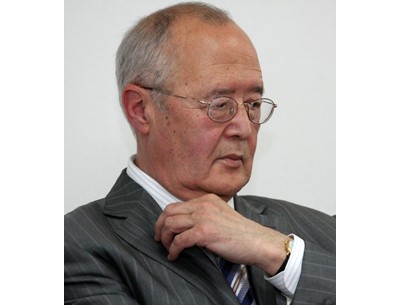
Murat Auezov was a champion of Kazakh identity and culture under Soviet rule and threw himself into Kazakhstan’s transformation after independence in 1991. He wore many hats over a long career: writer, the new country’s first ambassador to China, opposition figure, head of the national library, chief editor of the state Kazakhfilm studio. He expanded on the legacy of his father, Mukhtar Auezov, a playwright and novelist who translated literary classics into the Kazakh language and is celebrated today as an early contributor to an emerging national identity. His mother was Fatima Gabitova, a teacher with her own story of persecution during the Soviet era. Murat Auezov, 81, died on June 14 after an illness, prompting tributes from President Kassym-Jomart Tokayev and many others. In Almaty, family, friends, politicians and government officials were among hundreds of people who attended a funeral service at the National Drama Theater, which is named after Auezov’s father. Murat Auezov was “an orator, a philosopher, a historian, a culturologist, a literary scientist, an educator, and a diplomat,” said Bigeldy Gabdullin, president of the Kazakh PEN Club, a branch of the international group that promotes freedom of expression. Auezov, who was a PEN Club member, promoted Kazakh identity even as a student in Moscow during Soviet times and “awakened Kazakh writers,” Gabdullin said on Facebook. In the 1960s, Auezov was a member of the Zhas Tulpar movement, a loose-knit group of Kazakh youths who studied in Russian universities but whose devotion to Kazakh art, literature and culture often collided with Soviet ideology. “I hope his diaries will be published in English to reflect on the depth of Soviet colonialism and how it crushed people,” Diana Kudaibergen, a political sociologist whose books include Rewriting the Nation in Modern Kazakh Literature, said on the X platform. Auezov, who was pressured and monitored by Soviet authorities, was among the first Kazakh intellectuals to talk openly about collectivization, famine and the destruction of the intelligentsia in Kazakhstan in the first half of the 20th century. “In 1974, in his speech at the plenum of the Writers' Union, he stated: ‘Without covering the topic of hunger, we cannot say that we have national literature,’” read one tribute after his death. In the 1990s, Auezov was a leader of the Azamat opposition movement and sparred with the government of President Nursultan Nazarbayev, who cracked down on dissent. He then worked as head of the Kazakh branch of the foundation created by financier and philanthropist George Soros to promote democratic and social reforms around the world. As ambassador, Auezov promoted economic and cultural ties with China. Years later, though, he increasingly voiced alarm at Chinese economic inroads in Kazakhstan, which he viewed as a threat to the country’s sovereignty. In an interview, he said, “we should not forget our Turkish ancestry. No matter how difficult it is for the brotherly countries of Central Asia, it is better to achieve cooperation, even if it is necessary to make sacrifices. If we cannot achieve this, it is quite...

Kazakhstan Insurers Sign Partnership with Warren Buffett’s Company

Nomad Insurance, a company from Kazakhstan, has announced a strategic partnership with Berkshire Hathaway Specialty Insurance (BHSI), which is part of the Berkshire Hathaway holding company headed by legendary American investor, businessman and philanthropist, Warren Buffett. "BHSI, a giant in the insurance and reinsurance industry with a turnover of more than $74.6 billion, is known for its measured and cautious approach to partner selection. The company enters into partnership agreements with only one insurance partner in each of the 178 countries where it operates. This event is especially significant due to the personality of Warren Buffett, who is the chairman and CEO of Berkshire Hathaway," Nomad Insurance stated. As representative of the company, Shakir Iminov noted, this is a landmark event for Kazakhstan's insurance market, which speaks about its growing attractiveness to international investors.

The Evolution of Kazakh Ornamentation

Ornamentation, evolved over the centuries and influenced by the country’s history, is integral to Kazakhstan’s rich and unique cultural heritage. Art historian Raushan Yeschanova outlines its evolutionary path, significance to Kazakh life and society, and how it continues to develop and inspire contemporary art and culture. Origins of Kazakh Ornamentation Kazakh ornamentation emerged in ancient times, reflecting the peculiarities of nomadic life and the country’s natural environment. Simple geometric shapes and symbols were used in rituals and to decorate everyday objects, textiles, clothing, jewelry, dwellings and graves. The main components of Kazakh ornamentation were lines, curves, dots, circles, zigzags and geometric figures, arranged and intertwined to create rhythmic compositions and patterns. Abstracted from natural phenomena and zoomorphic, these early ornaments were valued both aesthetically and for their deep symbolic significance. Influence of Cultural Traditions Over time, due to exposure to other nations’ cultural traditions through trade and the passage of caravans through the country, Kazakh ornamentation became more complex and diverse. Many of its motifs share similarities with designs found in artefacts made by other Turkic-speaking peoples, including the Kyrgyz and Mongolian Alai Kazakhs. Interaction with Turkic, Mongolian, Persian and other cultures, enriched Kazakh ornaments making them more multi-layered and multifaceted. For example, the Mongolian influence is apparent in the introduction of more complex zoomorphic and plant motifs, whilst that of Persia is evident in the refinement and elegance of linear design. Among plant patterns, Raushan singles out the early "shytyrman"; a complex interweaving of geometric, horn-shaped and plant motifs. [caption id="attachment_19112" align="alignnone" width="4000"] Image Source: liveinternet.ru[/caption] Ornamentation in the Medieval Period One of the most important stages in the development of Kazakh ornamentation was the formation of the khanate and the development of urban centers during the medieval period. At this time, complex ornamental compositions including abstract patterns, plant motifs, animal images and heraldic symbols appeared in the khans’ palaces as well as religious buildings. Widespread in their application, these ornaments decorated architectural features, luxury items, jewelry, and textiles. Totemism and Symbolism in Kazakh Ornamentation Kazakh ornamentation is also closely related to the totemic beliefs of the ancient Turks. Totemic signs and symbols, often related to animals, had a deep sacred meaning. A symbol of prosperity and vitality, the ram’s horn is ubiquitous in ancient cultures from the Pacific Ocean to the Mediterranean Sea, and is widespread among both Iranian and Turkic tribes. Images of the ram and closely related animals, such as the argali and the Siberian goat, are the most common themes in ancient Eastern art. For millennia, horns have appeared in fluid, interlocking designs in Turkic artefacts, and, denoting prosperity and wellbeing in Kazakh ornamentation, are frequently seen above the doors of yurts and on ancestral graves. The bird is also a powerful symbol within Kazakh ornamentation. Representing freedom, "kus kanat" or "kus muryn" was commonly used in jewelry. Images of eagles were favored in the art of the Saks, whilst nationwide the popular abstracted image of ravens’ claws represents protection. [caption id="attachment_19113" align="alignnone" width="4000"] "Kus...

Success of Kazakhstan’s JobEscape Start-up

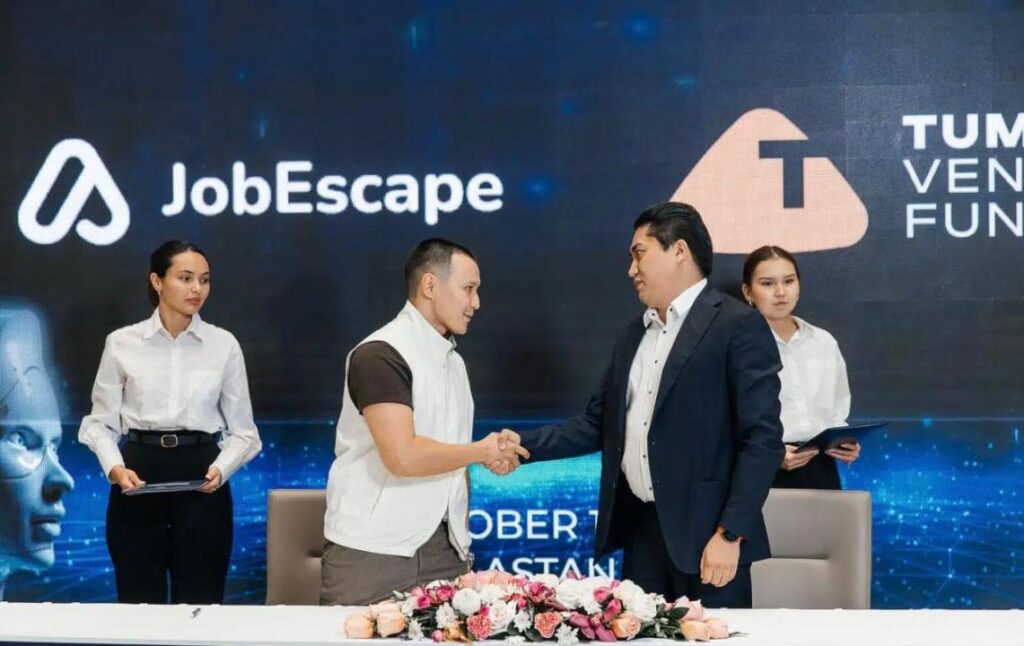
Kazakhstan’s largest venture fund, Tumar Venture LP, whose key investors are the World Bank and the Kazakh Ministry of Digital Development, Innovation and Aerospace Industry, has invested a further 250 thousand US dollars in the Kazakh start-up JobEscape. As announced by the Ministry of Digital Development on 17 June, the total investment in the project now stands at 450 thousand US dollars. JobEscape is a platform that facilitates the acquisition of new skills required to start a freelancing career, through the provision of solutions unique to freelancers and career changers, access to training and a wide range of AI tools. A global project, JobEscape has users from the USA, Canada, Australia, and European countries. Regarding funding, Aslan Sultanov, CEO of Tumar VF, stated: “We invested in JobEscape in the last round and have seen the project grow from literally $10,000 in monthly revenue to almost $1 million in annual revenue. Seeing this dynamic rise, we are confident that the start-up has the potential to grow into a billion-dollar company with roots in Kazakhstan. We are pleased to support the team in creating such a global initiative.” Similarly encouraged by the platform’s development, Miras Sovetov, CEO and co-founder of JobEscape, said: “At the moment, the company’s annual revenue is already close to $1 million. The goal is to grow to US$6 million in 2025. The product is now being widely used in Western markets due to the rapid development of products in the field of AI. Investments in this round will help the company increase its customer base and increase the number of AI tools on the platform. Investors from the UAE and Azerbaijan are already entering the project, which confirms its competitiveness in the global market. The next step will be raising money from American funds for further growth and potential exit (sale of the start-up).”