• KGS/USD = 0.01144 0%
  • KZT/USD = 0.00202 0%
  • TJS/USD = 0.10448 -0.19%
  • UZS/USD = 0.00008 0%
  • TMT/USD = 0.28490 0%
  • KGS/USD = 0.01144 0%
  • KZT/USD = 0.00202 0%
  • TJS/USD = 0.10448 -0.19%
  • UZS/USD = 0.00008 0%
  • TMT/USD = 0.28490 0%
  • KGS/USD = 0.01144 0%
  • KZT/USD = 0.00202 0%
  • TJS/USD = 0.10448 -0.19%
  • UZS/USD = 0.00008 0%
  • TMT/USD = 0.28490 0%
  • KGS/USD = 0.01144 0%
  • KZT/USD = 0.00202 0%
  • TJS/USD = 0.10448 -0.19%
  • UZS/USD = 0.00008 0%
  • TMT/USD = 0.28490 0%
  • KGS/USD = 0.01144 0%
  • KZT/USD = 0.00202 0%
  • TJS/USD = 0.10448 -0.19%
  • UZS/USD = 0.00008 0%
  • TMT/USD = 0.28490 0%
  • KGS/USD = 0.01144 0%
  • KZT/USD = 0.00202 0%
  • TJS/USD = 0.10448 -0.19%
  • UZS/USD = 0.00008 0%
  • TMT/USD = 0.28490 0%
  • KGS/USD = 0.01144 0%
  • KZT/USD = 0.00202 0%
  • TJS/USD = 0.10448 -0.19%
  • UZS/USD = 0.00008 0%
  • TMT/USD = 0.28490 0%
  • KGS/USD = 0.01144 0%
  • KZT/USD = 0.00202 0%
  • TJS/USD = 0.10448 -0.19%
  • UZS/USD = 0.00008 0%
  • TMT/USD = 0.28490 0%

Viewing results 2989 - 2994 of 4278

Kazakhstan Approves SDGs Action Plan for 2024

The seventh meeting of the Coordinating Council for Sustainable Development Goals (SDGs) took place in Astana on January 5th, chaired by the Prime Minister of Kazakhstan, Alikhan Smailov. The meeting was attended by heads of government agencies and representatives from the United Nations, the United Nations Development Program (UNDP), and the European Union. At the meeting, updating the national SDG indicators, localizing SDGs in the regions, and preparing an annual report on the implementation of SDGs was discussed. Following the symposium, the SDG Coordinating Council approved an action plan for 2024. During the meeting, Prime Minister Smailov emphasized that the primary goal of the SDGs is to improve the quality of life of Kazakhstan's citizens by implementing advanced international standards. "In September of last year, the Head of State, Kassym-Jomart Tokayev participated in the United Nations SDG Summit,” Smailov said. “During his speech, the President emphasized that achieving SDGs is a top priority for the nation. As a result, Kazakhstan is always willing to collaborate with all Member States to pursue a more just and sustainable world." The UNDP Resident Representative in Kazakhstan, Sukhrob Khojimatov, highlighted two key areas the UNDP focused on in 2023. The first was the localization of SDGs within the framework of a regional program to establish an SDG Platform for Central Asia funded by the European Union. The second was the support provided by the UNDP to the Senate of the Parliament of Kazakhstan in creating a Parliamentary Commission for monitoring the implementation of national goals and objectives in the field of sustainable development. Johannes Baur, the Head of Cooperation at the EU Delegation to Kazakhstan, emphasized that in 2024 the EU and its member states have committed to supporting Kazakhstan's transition to a carbon-neutral economy by 2060. During this year, they will launch the implementation of the Team Europe initiative, which will focus on energy, water resources, and climate change in Central Asia. The initiative will receive a budget of €20 million. This cooperation will be extended through a new bilateral mechanism to facilitate the transition to a green economy and modernize Kazakhstan's emissions trading system.
Kazakhstan and Uzbekistan to Increase Bilateral Trade

On January 5th, the Minister of Investment, Industry and Trade of Uzbekistan, Laziz Kudratov met with the Minister of Trade and Integration of Kazakhstan, Arman Shakkaliev in Tashkent. The officials discussed the implementation of investment agreements and trade contracts signed during the recent visit of the President of Kazakhstan to Uzbekistan, as well as the further development of trade and economic relations and industrial cooperation between the two countries, the Uzbek Ministry of Investment, Industry and Trade said. The parties noted a growth of bilateral trade, stating that over the past six years, trade turnover has grown almost 2.5-fold from $1.9 billion in 2016 to more than $4.6 billion in 2023. The sides agreed on a number of measures aiming to bring bilateral trade to $10 billion in the coming years. In particular, they have agreed to establish a joint working group on the removal of barriers to bilateral trade. The parties also expressed readiness to support the activities of a joint foreign trade company, UzKazTrade, which will include an online trading platform for the sale of a wide range of goods in the markets of both countries. The ministers exchanged views on the development of industrial cooperation, referring to the practical aspects of establishing an International Center for Industrial Cooperation, "Central Asia". An agreement was also reached on taking joint measures to accelerate the establishment of the center and launching its operations.

Kazakhstan Takes Sixth Position in FDI Standout Watchlist

Kazakhstan is entering 2024 with significant investment momentum, as it secures the sixth position in the Foreign Direct Investment (FDI) Standouts Watchlist for 2024, released on December 11 by the fDi Intelligence service of the Financial Times. The country's robust macroeconomic performance and continuous reforms have played a key role in making Kazakhstan one of the top FDI destinations globally. The study conducted by fDi evaluates the macroeconomic and FDI trajectories of the world's top 50 FDI destinations. It uses data from the International Monetary Fund (IMF) and the FT’s cross-border investment monitor called fDi Markets. The purpose of this comprehensive analysis is to identify countries starting the new year with a strong macroeconomic performance and impressive FDI momentum. The International Monetary Fund (IMF) has forecasted a real gross domestic product (GDP) growth of 4.6 percent for Kazakhstan in 2024, which is closely aligned with the Fund’s November projection of 4.8 percent for the year 2023. The country has been grappling with inflationary pressures, which peaked at slightly over 21 percent year-on-year in February 2023. However, measures taken by the government have helped curb this surge, and inflation was projected to stabilize around 10 percent by the end of 2023. In its October 2023 report, the IMF highlighted Kazakhstan as an example where prioritizing governance reforms and strengthening the rule of law is instrumental in driving other reforms. The IMF noted that improved governance typically plays a crucial role in pushing forward reforms by building trust and confidence in public institutions and creating a conducive business climate. The IMF also noted how Kazakhstan’s GDP has benefitted from a strong domestic demand and increased oil production attributed to the easing operational constraints affecting the Caspian Pipeline Consortium and the Tengiz oil field expansion. In Central Asia, IMF has assessed that trade and financial inflows, particularly following Russia’s conflict with Ukraine, continue to support economic activity.  However, supply-side disruptions linked to this conflict have also contributed to regional inflation. Kazakhstan's neighbor in the Caspian region, Azerbaijan, has secured the seventh position in the above-mentioned FDI watchlist for 2024 by fDi Intelligence.    

Kazakhstan Now Chairs International Fund for Saving Aral Sea

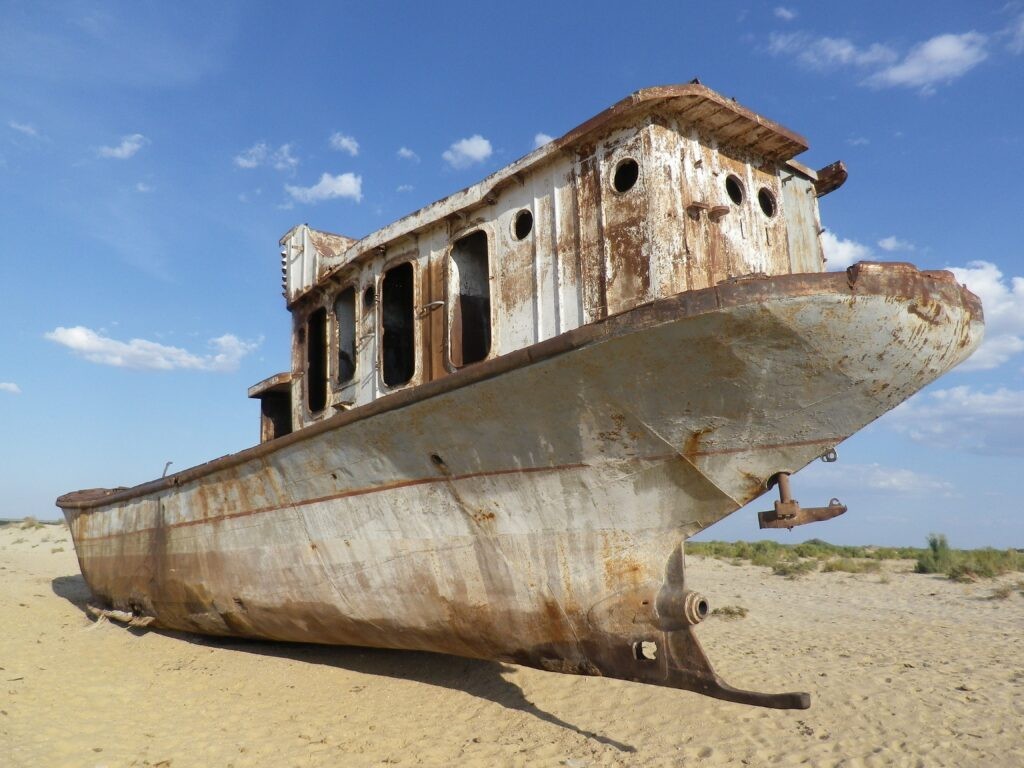
From 2024, the chairmanship of the International Fund for Saving the Aral Sea (IFAS) has passed to Kazakhstan, after President Kassym-Jomart Tokayev was elected as head of IFAS until the end of 2026, the Kazakh Ministry of Water Resources and Irrigation said. The International Fund for Saving the Aral Sea, which includes Kazakhstan, Tajikistan, Turkmenistan, and Uzbekistan, is engaged in the implementation of joint interstate environmental, scientific and practical programs and projects aimed at saving the Aral Sea and improving the environmental situation in the region, as well as solving common social and environmental problems.[/vc_column_text][vc_single_image image="12017" img_size="full" el_class="scond-image" parallax_scroll="no" woodmart_inline="no"][vc_column_text woodmart_inline="no" text_larger="no"]“We are aiming to deepen cooperation both with the states of Central Asia and other international organizations and financial institutions,” said the Minister of Water Resources and Irrigation of Kazakhstan, Nurzhan Nurzhigitov. “This year we plan to begin the second phase of the project to preserve the Northern Aral Sea, implemented together with the World Bank. Saving the Aral Sea is a task that can only be accomplished through the joint efforts of all IFAS founding states. In the next three years, we intend to achieve significant results in this direction.” Speaking in September 2023 in Dushanbe at a meeting of the Council of Heads of State–Founders of the International Fund for Saving the Aral Sea, Tokayev said that IFAS has become the most important institution facilitating regional cooperation on issues of transboundary water resources sharing, as well as solving environmental and socio-economic problems in the Aral Sea basin. Tokayev also emphasized the need to create a mechanism for long-term and sustainable cooperation for the effective use of water and energy resources in Central Asia, taking into account the interests of all countries in the region. To ensure transparency of water use in the region and strengthen the dialogue and friendship between Central Asian nations, Tokayev proposed the development of a work plan which would introduce a unified automated system of accounting, monitoring, management and distribution of water resources in the Aral Sea basin. Tokayev also called on Kyrgyzstan to resume its full participation in IFAS.

Kazakhstan Seeks to Increase Investment Attractiveness of Exploration for Hydrocarbons

On December 28th, a law “On Amendments and Additions to Certain Legislative Acts of the Republic of Kazakhstan on Subsoil Use and Ecology” was signed, which, among others, is aimed at increasing the investment attractiveness of geological exploration for hydrocarbons, encouraging investment in depleting deposits, and fixing the minimum amount of equity participation (50% or more) of the national company in the field of hydrocarbons in large deposits. In an address to the nation on September 1st, President Tokayev had stated that “Geological exploration requires special attention. In 2018, in order to replenish the mineral resource base, new legislation was adopted to manage the mining sector. However, it did not work in full. As a result, there have been no significant geological discoveries in our resource-rich country for a long time. This situation urgently needs to be rectified.” The relevant departments were then tasked with modernizing the mining sector management system as soon as possible, reducing the time-frame and procedures for approving projects by introducing comprehensive state expertise and the complete digitization of the process. The implementation of the law will give additional impetus to investment in geological exploration in the field of hydrocarbons in Kazakhstan, the Energy Ministry stated.

Twelve Regional IT-Hubs Operating in Kazakhstan

The development of regional IT hubs is one of the priorities of the Ministry of Digital Development, Innovation and Aerospace Industry of Kazakhstan, the ministry stated on January 3rd. The goal of regional IT hubs is the development of innovative projects in the regions and the training of specialists in the field of information technology. These platforms are also a space for creating local IT communities, bringing together startups and investors. The main task of regional IT hubs is to help young entrepreneurs organize startup projects. President Kassym-Jomart Tokayev also spoke about the importance of expanding the innovation ecosystem at a regional level when delivering his Address to the Nation last year. Today, 12 regional IT-hubs are officially open and successfully functioning across Kazakhstan: Abai IT Valley (Semey, Abai Oblast), Kyzylorda Hub (Kyzylorda city), Digital Jetisu (Taldylkorgan city), Zhambyl Hub (Taraz city), Oskemen IT Hub (Oskemen city), Jaiq Hub (Uralsk city), Turkistan IT Hub (Turkistan city), Qostanai IT Hub (Qostanai city), Aqtobe IT Hub (Aqtobe city), Pavlodar Hub (Pavlodar city), Aqmola IT Hub (Kokshetau city), and Terricon Valley (Karaganda city). These IT-hubs have presented 194 promising startup projects from the regions.