• KGS/USD = 0.01144 0%
  • KZT/USD = 0.00216 0%
  • TJS/USD = 0.10659 0%
  • UZS/USD = 0.00008 0%
  • TMT/USD = 0.28530 0%
  • KGS/USD = 0.01144 0%
  • KZT/USD = 0.00216 0%
  • TJS/USD = 0.10659 0%
  • UZS/USD = 0.00008 0%
  • TMT/USD = 0.28530 0%
  • KGS/USD = 0.01144 0%
  • KZT/USD = 0.00216 0%
  • TJS/USD = 0.10659 0%
  • UZS/USD = 0.00008 0%
  • TMT/USD = 0.28530 0%
  • KGS/USD = 0.01144 0%
  • KZT/USD = 0.00216 0%
  • TJS/USD = 0.10659 0%
  • UZS/USD = 0.00008 0%
  • TMT/USD = 0.28530 0%
  • KGS/USD = 0.01144 0%
  • KZT/USD = 0.00216 0%
  • TJS/USD = 0.10659 0%
  • UZS/USD = 0.00008 0%
  • TMT/USD = 0.28530 0%
  • KGS/USD = 0.01144 0%
  • KZT/USD = 0.00216 0%
  • TJS/USD = 0.10659 0%
  • UZS/USD = 0.00008 0%
  • TMT/USD = 0.28530 0%
  • KGS/USD = 0.01144 0%
  • KZT/USD = 0.00216 0%
  • TJS/USD = 0.10659 0%
  • UZS/USD = 0.00008 0%
  • TMT/USD = 0.28530 0%
  • KGS/USD = 0.01144 0%
  • KZT/USD = 0.00216 0%
  • TJS/USD = 0.10659 0%
  • UZS/USD = 0.00008 0%
  • TMT/USD = 0.28530 0%

Viewing results 3277 - 3282 of 5038

Kazakhstan to Build New Reservoirs to Reduce Dependence on Neighboring Countries

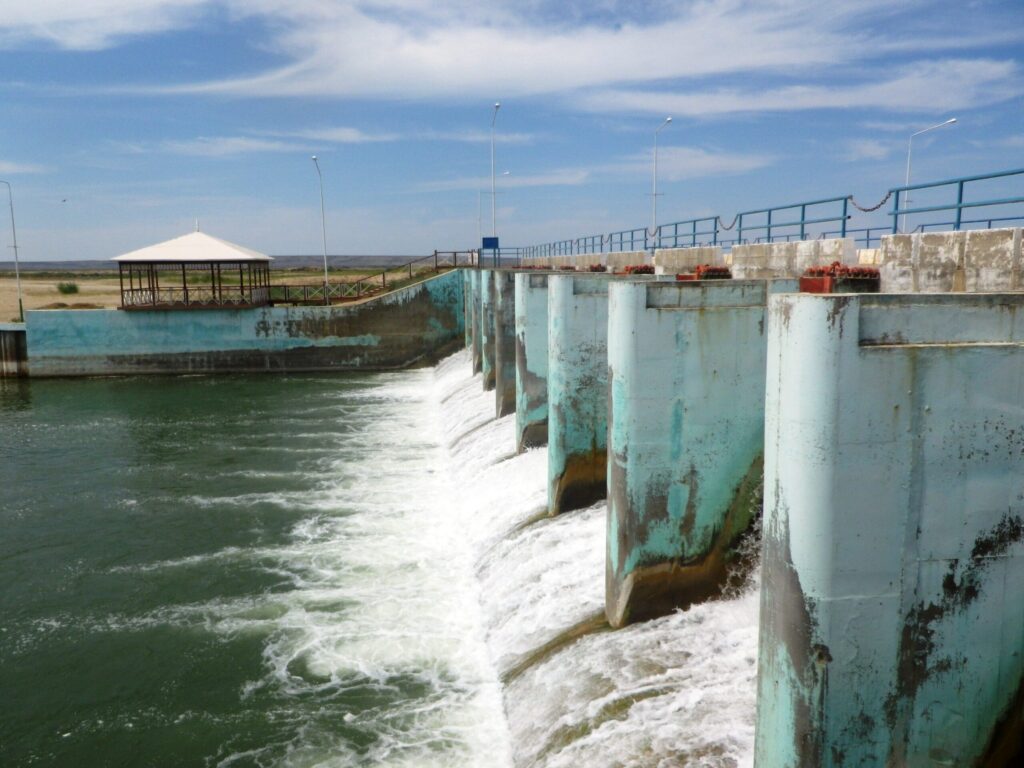
The Ministry of Water Resources and Irrigation of Kazakhstan on December 22nd said it is beginning work on the construction of nine new reservoirs out of a planned twenty to reduce Kazakhstan’s dependence on the water flow from neighboring countries by 25%. The commissioning of new reservoirs will also increase the area of irrigated land by 250,000 hectares and reduce the threat of flooding in 70 rural settlements with a population of 137,000 people. Currently, design documentation is being developed for the nine facilities, and negotiations are underway to attract investors to the construction of new reservoirs. The Ministry of Water Resources and Irrigation has developed a Comprehensive Water Development Plan for 2024-2030. The document includes measures for the construction and reconstruction of reservoirs, reconstruction of hydraulic structures and irrigation systems. “The plan will be implemented in several stages,” said the Minister of Water Resources and Irrigation of Kazakhstan, Nurzhan Nurzhigitov. “In 2024-2026, it is planned to begin construction of twenty new reservoirs with a volume of 2.4 km³ in eleven regions. The implementation of the Comprehensive Plan will increase the volume of available water resources by 3.7 km³, expand the area of irrigated land to 2.2 million hectares, reduce annual losses of irrigation water by 3 km³, and also provide water supply to 41 settlements with a population of more than 55,000 people.” Kazakhstan, especially its southern regions, is highly dependent on irrigation water flow from upstream Kyrgyzstan. This past summer, Kyrgyzstan experienced a shortage of irrigation water and was forced to reduce the water flow to Kazakhstan’s southern Zhambyl region, which negatively impacted the region’s agriculture.
Large Gas Condensate Field Put into Operation in West Kazakhstan

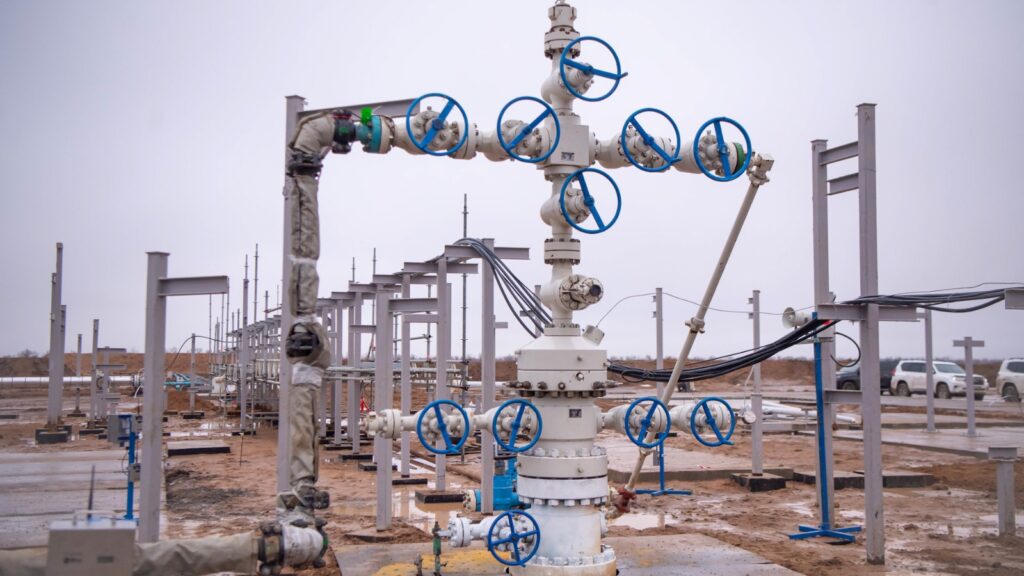
On December 21st, the Rozhkovskoye gas condensate field was put into commercial operation in the West Kazakhstan region. The Rozhkovskoye field was discovered in 2008. By 2040, the field is expected to produce 14.2 billion cubic meters of natural gas and 7.1 million tons of condensate. The field is operated by a joint venture which includes Kazakhstan’s national oil and gas company, KazMunayGas (50%), the Hungarian company, MOL Group (27.5%), and the Chinese Sinopec (22.5%). To date, about $534 million has already been invested in the field’s development. The Prime Minister of Kazakhstan, Alikhan Smailov, who took part in the launch ceremony via teleconference, emphasized the strategic importance of the project, initiated upon the instructions of the Head of State to attract investment in the exploration and development of new gas fields. Smailov added that in the medium term, the launch of several more gas projects is expected in Kazakhstan, including Urikhtau Central (Aktobe region), Western Prorva (Atyrau region), and Kalamkas (Mangistau region). “Combined, they will provide an increase in production of over 2 billion cubic meters per year. Together with international companies, 12 more promising geological exploration projects are being developed, as well as projects for the additional exploration of existing fields,” the Prime Minister said.   In his words, the growing needs of the population and industry require not only an increase in gas resources, but also the capacity for its processing. “The head of state has set the task of increasing commercial gas production to 30 billion cubic meters by 2030. In this regard, new gas processing plants will be built at the Kashagan and Karachaganak fields, as well as in the city of Zhanaozen,” Smailov said.

Kazakhstan Launches Construction of New Railroad to China

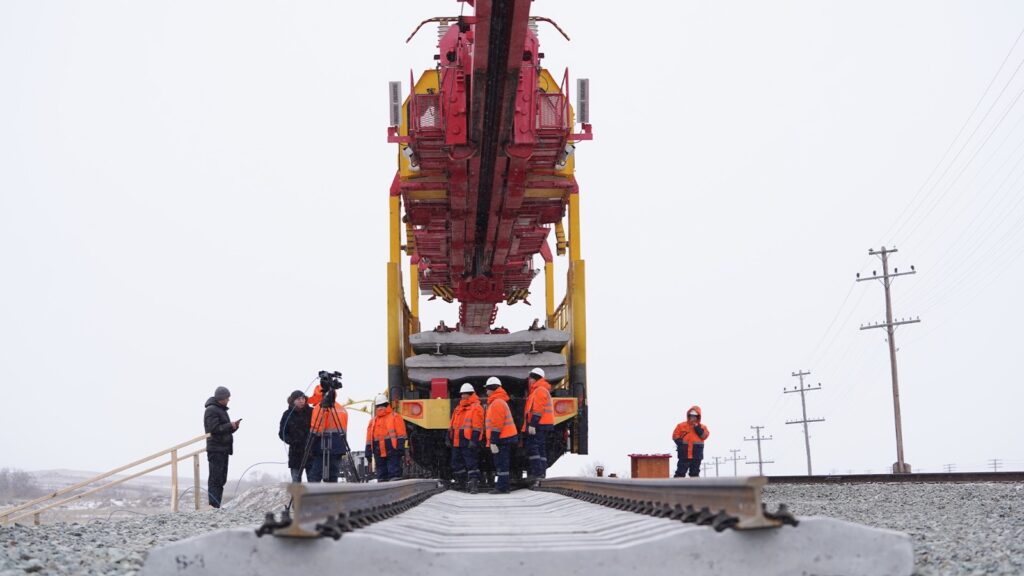
The Prime Minister of Kazakhstan, Alikhan Smailov, via a teleconference on December 20th officially inaugurated the construction of a new railway line, Bakhty-Ayagoz, with a total length of 272 km in the Abay Region of southern Kazakhstan. The project is being implemented upon the instruction of President Kassym-Jomart Tokayev to increase the transport and transit potential of Kazakhstan. The project also involves the opening of a third border crossing with China, Bakhty-Chuguchak. The railway line will increase the throughput capacity between Kazakhstan and China from 28 million to around 48 million tons, lessen the burden on the southern checkpoints, and attract additional volumes of transit. It is planned that the double-track line will begin operating in 2027. The large-scale project will be realized with the participation of a private investor on PPP principles. During the ceremony, the Prime Minister stated that last year Kazakhstan's railroads transported the largest volume of cargo since the country’s independence, which amounted to 245 billion tons/kilometer. These rates have been maintained in the current year, despite the geopolitical situation and infrastructure constraints.[/vc_column_text][vc_single_image image="12823" img_size="full" el_class="scond-image" parallax_scroll="no" woodmart_inline="no"][vc_column_text woodmart_inline="no" text_larger="no"]"Over the past five years, the volume of transit container transportation has grown 3.2-fold. Existing transit corridors are being expanded, and new ones are being opened. The Trans-Caspian International Transport Route, North-South and Southern corridors have become particularly relevant," Smailov said. At the same time, the throughput and infrastructure capacities have reached their peak. To address this strategic issue, a decision was made to implement a number of infrastructure projects in the rail industry. The new line is expected to help increase Kazakhstan's exports and the transit of goods from Russia to China and back.

Kazakhstan and Saudi Arabia on Path to Strategic Partnership

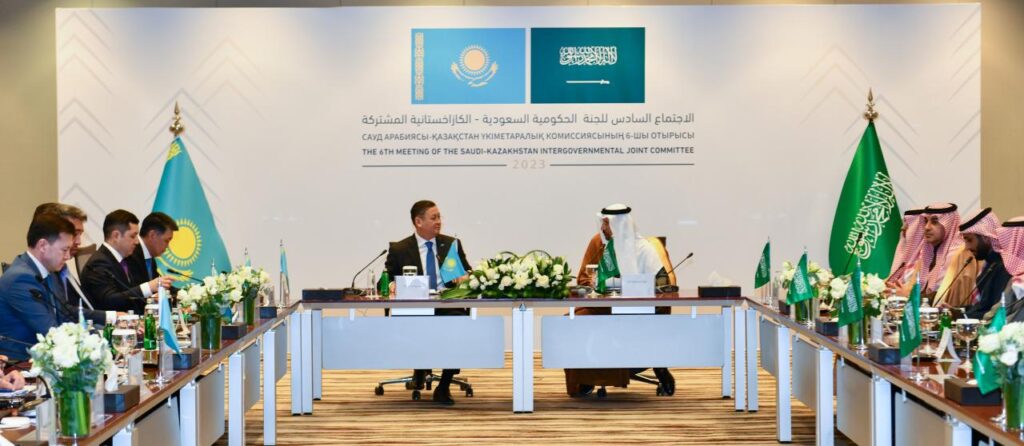
Kazakhstan and Saudi Arabia on Path to Strategic Partnership On December 20th, the sixth meeting of the Kazakh-Saudi Intergovernmental Commission on Trade, Economic, Scientific, Technical and Cultural Cooperation (IGC) was held in Riyadh. The co-chairs of the Commission are Deputy Prime Minister-Minister of Foreign Affairs of Kazakhstan, Murat Nurtleu, and Saudi Minister of Investment, Khalid bin Abdulaziz Al-Falih. As part of the IGC meeting, a Kazakh-Saudi investment round table was organized with the participation of over a hundred business representatives from the two countries. Opening the event, Foreign Minister Nurtleu noted the strategic importance of intensifying cooperation between the public and private sectors of the two countries. The minister drew attention to the enormous potential of the Saudi market for strengthening trade and economic relations, as well as the unlimited prospects for expanding investment partnerships. Nurtleu stated that both countries have significant opportunities to further deepen contacts in such sectors as green energy, food security, transport and logistics, mining, petrochemicals, agriculture, finance, and tourism. Saudi co-chairman of the IGC, Khalid Al-Falih drew attention to the interest of the Kingdom’s leadership in strengthening a diverse array of ties with Kazakhstan, which is considered the leader of the Central Asian region. “Kazakhstan is the largest country with a vast territory, rich natural resources and human capital. It is extremely important for us today to bring relations with your country to the most serious level, which involves a confidential political dialogue, mutually beneficial trade and economic ties, as well as large-scale investments in your economy,” said the Saudi minister. The event also featured speeches from the heads of over thirty large companies in the Kingdom, including such giants as Saudi Aramco and ACWA Power. The latter is already starting to implement renewable energy projects in Kazakhstan. The parties agreed to open a joint innovation hub early next year, which will allow startup projects in Kazakhstan to gain access to the markets of the Middle East and North Africa, and will help promote the brand of Kazakhstan as an IT country.

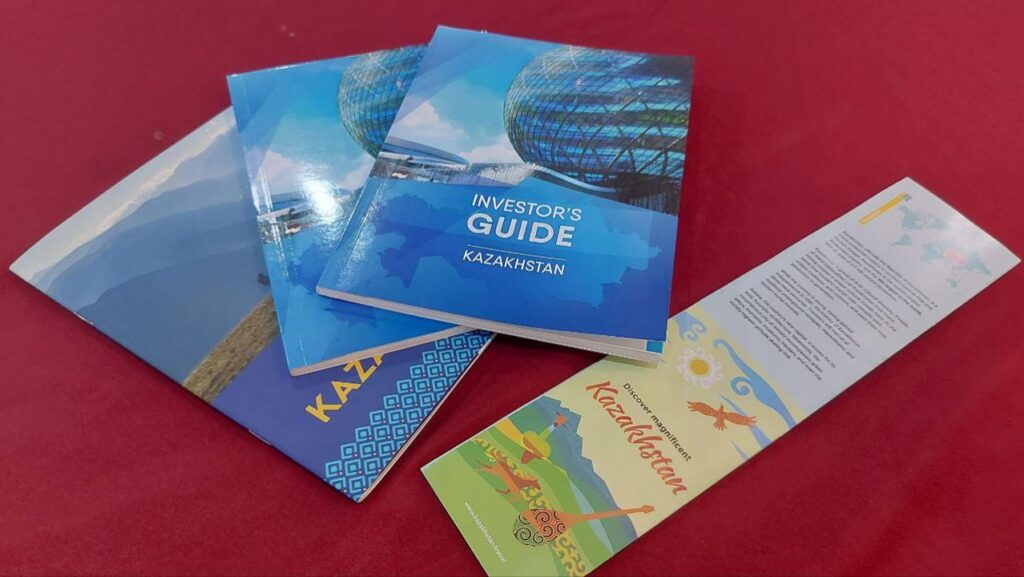
Kazakhstan’s Investment Opportunities Presented in Indonesia

Kazakhstan’s Investment Opportunities Presented in Indonesia An event was held at the Chamber of Commerce and Industry of East Java (Surabaya) on December 18th dedicated to presenting Kazakhstan’s attractive investment climate and its transport and logistics strategy. Officials from government bodies and business circles of Indonesia’s largest industrial region participated, representing sectors such as oil and gas, mining, chemicals, healthcare, wood processing, textiles, and agriculture. The Ambassador of Kazakhstan, Serzhan Abdykarimov, provided detailed insights into the successful socio-economic development of Kazakhstan. He spoke about the government’s efforts to attract foreign direct investment, legislative support for investors, the activities of the Foreign Investors Council, the Kazakh Invest national company, and the involvement of major international corporations in Kazakhstan. He also focused on the expansion of the country’s transport and logistics potential. The Ambassador stressed the effectiveness of Kazakhstan’s investment climate, including various tax incentives, preferences, and accompanying infrastructure provided by the state. A separate presentation on the transit and transport strategy of Kazakhstan was made during the meeting. This included information on the activities of 13 international corridors, sea and dry ports, railway and road networks that Indonesian entrepreneurs can utilize for trade with Kazakhstan, as well as for shipments and transit of goods between Asia and Europe. Acknowledging significant progress in the 30 years of bilateral relations between Astana and Jakarta, the Ambassador highlighted the substantial growth in bilateral trade, tourism, business contacts, and human interactions. He called on business circles in East Java to actively engage in investment and trade and economic cooperation with Kazakhstan, encouraging participation in the establishment of a Kazakhstan-Indonesia Business Council. Adik Putranto, Chairman of the Chamber of Commerce and Industry of East Java, praised the business climate in Kazakhstan. He relayed the region’s significant interest in expanding industrial and economic partnerships with Kazakhstan, considering the presence of Indonesia’s second-largest international seaport in Surabaya. In his words, Kazakhstan can serve as a transport and logistics hub and a financial center for Indonesia in Central Asia, making it highly attractive for the business community of Indonesia’s largest industrial region.

UN Declares 2026 as International Year of Volunteers for Sustainable Development on Kazakhstan’s Initiative

On December 19th, the Foreign Ministry of Kazakhstan announced that the United Nations General Assembly had adopted a resolution declaring 2026 as the International Year of Volunteers for Sustainable Development. This proposal was first introduced by President Kassym-Jomart Tokayev during the general debate of the 75th session of the UN General Assembly in 2020. Kazakhstan proposed the resolution in collaboration with several like-minded countries from various regions, including Armenia, Bolivia, Germany, Kenya, and Kiribati. In total, 54 UN member states joined the co-sponsorship of the document. The activities planned throughout the International Year are expected to significantly boost volunteer movements at national, regional, and global levels. They aim to further strengthen international cooperation on volunteering and shape key directions for future development. President Tokayev places significant emphasis on the development of volunteering in Kazakhstan, considering it a crucial component in building a "Just Kazakhstan". According to the President, volunteers play an exceptional role in strengthening a reliable partnership between the state and society. In line with the Head of State's initiative, 2020 was declared as the Year of the Volunteer in Kazakhstan, and a Road Map for the Development of Volunteering in Kazakhstan for 2021-2023 was adopted. As a result of these measures, the number of volunteers in the country has surged to 200,000 people. Additionally, Kazakhstani youth serve as UN volunteers in several countries. On July 20-21, 2023, Astana hosted the International Volunteer Forum with the participation of the Head of State, senior UN representatives, and volunteers from over 30 countries. This event underscored Kazakhstan's significant role in the global volunteer movement.