
• KGS/USD = 0.01144 0%
  • KZT/USD = 0.00215 0%
  • TJS/USD = 0.10599 -0.28%
  • UZS/USD = 0.00008 0%
  • TMT/USD = 0.28571 0%
  • KGS/USD = 0.01144 0%
  • KZT/USD = 0.00215 0%
  • TJS/USD = 0.10599 -0.28%
  • UZS/USD = 0.00008 0%
  • TMT/USD = 0.28571 0%
  • KGS/USD = 0.01144 0%
  • KZT/USD = 0.00215 0%
  • TJS/USD = 0.10599 -0.28%
  • UZS/USD = 0.00008 0%
  • TMT/USD = 0.28571 0%
  • KGS/USD = 0.01144 0%
  • KZT/USD = 0.00215 0%
  • TJS/USD = 0.10599 -0.28%
  • UZS/USD = 0.00008 0%
  • TMT/USD = 0.28571 0%
  • KGS/USD = 0.01144 0%
  • KZT/USD = 0.00215 0%
  • TJS/USD = 0.10599 -0.28%
  • UZS/USD = 0.00008 0%
  • TMT/USD = 0.28571 0%
  • KGS/USD = 0.01144 0%
  • KZT/USD = 0.00215 0%
  • TJS/USD = 0.10599 -0.28%
  • UZS/USD = 0.00008 0%
  • TMT/USD = 0.28571 0%
  • KGS/USD = 0.01144 0%
  • KZT/USD = 0.00215 0%
  • TJS/USD = 0.10599 -0.28%
  • UZS/USD = 0.00008 0%
  • TMT/USD = 0.28571 0%
  • KGS/USD = 0.01144 0%
  • KZT/USD = 0.00215 0%
  • TJS/USD = 0.10599 -0.28%
  • UZS/USD = 0.00008 0%
  • TMT/USD = 0.28571 0%

Viewing results 3295 - 3300 of 4969

Kazakhstan and Uzbekistan to Bring Mutual Trade to $10 Billion

On November 9th, Alikhan Smailov, the Prime Minister of Kazakhstan, made an official visit to Tashkent, Uzbekistan, for the 16th summit of the Economic Cooperation Organization. Prior to the event, he met with the President of Uzbekistan, Shavkat Mirziyoyev. During their meeting, Smailov extended warm greetings from the President of Kazakhstan, Kassym-Jomart Tokayev, and highlighted the strong strategic partnership between the two nations, based on trust and mutual understanding3. Smailov pointed out that "Uzbekistan is one of the largest trade partners of Kazakhstan. Our countries account for about 70% of all trade in Central Asia. At the end of last year, trade turnover increased by 30%, and for the first time reached the milestone of $5 billion. We are actively working to bring mutual trade to $10 billion”. Mirziyoyev reciprocated the sentiment, noting that the strategic agreements between Kazakhstan and Uzbekistan were being systematically realized across various sectors, including trade, transportation, and water management5. He added, “All issues we have are moving forward; I think there is not a single unresolved issue. In terms of trade, the projects we have agreed on with the President of Kazakhstan will help us reach new frontiers”. In line with these discussions, Arman Shakkaliev, Kazakhstan’s Minister of Trade and Integration, and Laziz Kudratov, Uzbekistan’s Minister of Investment, Industry and Trade, signed an agreement to regulate the activities of the International Centre for Industrial Cooperation “Central Asia”7. This center, set to be established on the border of the two countries, will house production sites, warehouses for goods and equipment storage, and transport infrastructure. The aim is to expedite cargo delivery and reduce logistics costs. The Industrial Cooperation Centre is expected to stimulate the creation of new production facilities and jobs, aid in the processing of agricultural and industrial products, and provide logistics services for goods transportation. It's hoped that the centre will enhance transport efficiency and expedite customs clearance processes. The signing of this agreement is a practical step towards the realization of the project. The launch of the Industrial Cooperation Centre is poised to serve as a catalyst for the further development of international trade and economic integration between Kazakhstan and Uzbekistan. It's also projected to contribute to increasing bilateral trade turnover to up to $10 billion.
Central Asia Particularly Vulnerable to Climate Risks, Primarily Due to Water Scarcity, Says EDB

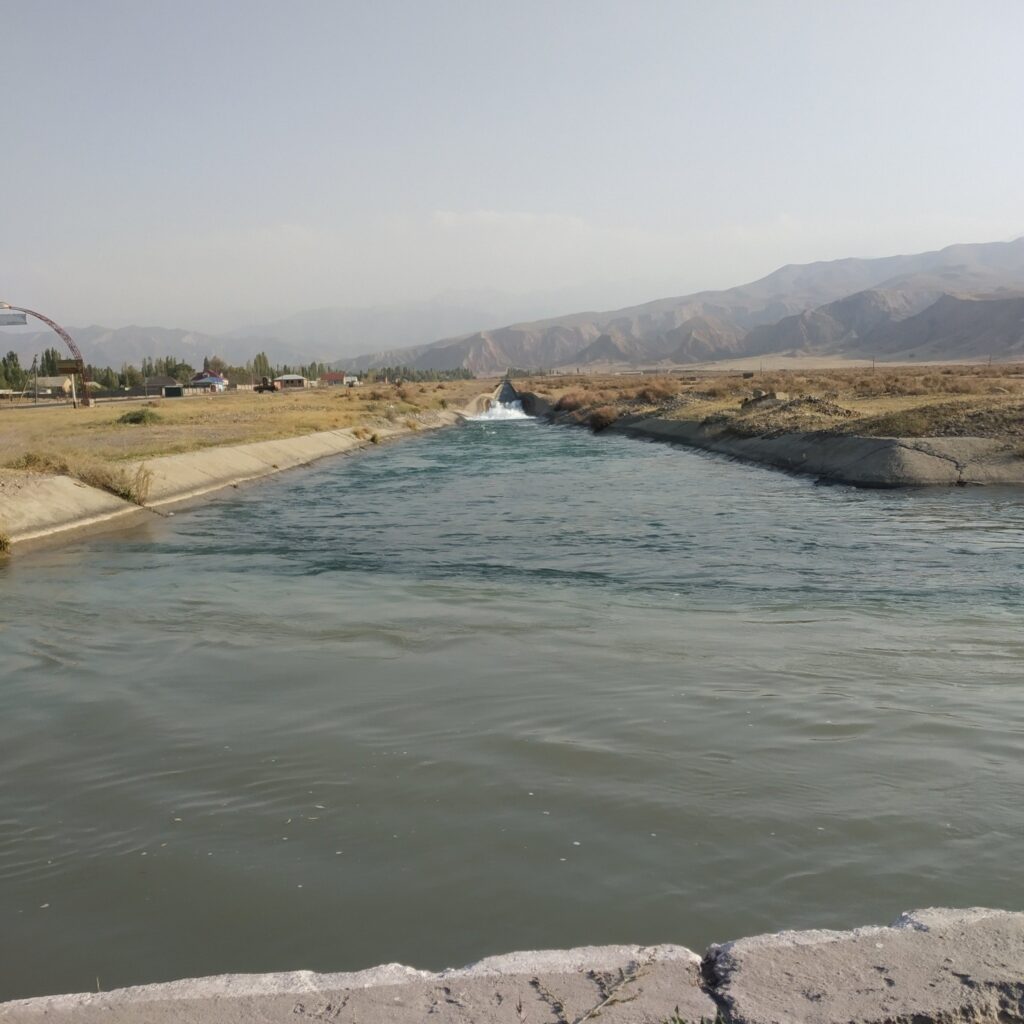
By 2050, the available resources in the Syr Darya and Amu Darya basins – the region’s two largest sources of water - situated in southern Kazakhstan and along Uzbekistan’s southern border with Turkmenistan - could decrease by 10% to 15%. Water shortages inevitably impact the region’s agricultural sector, which relies on water as a critical factor in food production, the Eurasian Development Bank (EDB) has stated in a news release. The reduction in wheat yields in seven oblasts of Kazakhstan could result in direct economic losses exceeding U$1.2 billion by 2030. These concerns were highlighted by Conrad Albrecht, Managing Director and Head of the Directorate of Sustainability at the Eurasian Development Bank (EDB) during the recent Seventh North and Central Asia Multistakeholder Forum on the Implementation of the SDGs in Almaty. “Kazakhstan, being the only Eurasian nation to have implemented a carbon pricing system, faces the additional challenge of a potential carbon tax amounting to U$250 million. Most economies in the region rely heavily on carbon-intensive industries, necessitating a transition towards more sustainable production methods”, Albrecht said. He also pointed out that the region’s carbon dioxide (CO2) emissions significantly exceed its contribution to the global economy in terms of both GDP and population. However, countries such as Armenia, the Kyrgyz Republic, Tajikistan and Uzbekistan have a share of global CO2 emissions lower than their share of the world’s population, indicating that the region’s economies are critically carbon intensive. “All countries in the Eurasian region are taking climate change extremely seriously, acknowledge their direct contribution to the global agenda and are ready to make ambitious commitments to decarbonization”, Albrecht stressed. “Nevertheless, Central Asian countries still require substantial support from multilateral development banks, and while climate finance to the region is increasing, it remains significantly smaller compared to other low- and middle-income countries”.

Promoting Sustainable Development in Central Asia: Key Highlights from the Eurasian Development Bank’s Roundtable

According to a press release issued by the Eurasian Development Bank (EDB), on November 16th, 2023, Almaty, Kazakhstan, served as the venue for a critical roundtable hosted by the EDB, titled "Promoting Sustainable Development in Central Asia". This gathering saw the participation of representatives from a wide range of international organizations and multilateral development banks. Attendees included the likes of the World Bank, the Asian Development Bank, the Asian Infrastructure Investment Bank, the Islamic Development Bank, FAO, UNIDO, UNEP, ESCAP, UNDP, the World Health Organisation, the International Fund for Saving the Aral Sea, and CICA. The agenda was packed with discussions revolving around irrigation, water challenges, environmental and social standards of international financial institutions, and case studies that showcased collaborations in project implementation12. The EDB's latest report, "Efficient Irrigation and Water Conservation in Central Asia", was introduced during the roundtable's first session. Nikolai Podguzov, Chairman of the EDB Management Board, underscored the essential interrelationship between water, food, and energy in Central Asia. He declared the development of the region’s water and energy resources as a strategic priority for the EDB. He also expressed concerns over an impending water deficit in Central Asia within the next five years, urging for collective action supported by multilateral development banks3. Tatiana Proskuryakova, the Regional Director for Central Asia at the World Bank, also spoke at the event. She emphasized the importance of sustainable development in Central Asia to international organizations and multilateral financial institutions. She revealed that the World Bank has allocated approximately a quarter of its $12 billion investment portfolio in Central Asia to water, energy, and environmental sectors. This proportion is expected to rise to almost half in the near future4. Following this, Evgeny Vinokurov, EDB Chief Economist, presented the study "Efficient Irrigation and Water Conservation in Central Asia". He proposed a ten-step solution to address the prevalent issues. The steps include establishing an International Water and Energy Consortium; fostering collaboration among multilateral banks; creating a regional cluster to produce irrigation equipment; consolidating efforts to strengthen cooperation with Afghanistan; using PPP instruments; instituting proper water accounting; gradually integrating investment charges into the tariff structure; improving land conditions; implementing digital technology, and leveraging state-of-the-art irrigation technology and laser levelling.

Kazakh Citizen Sentenced to Over Six Years for Joining Wagner Mercenary Group

The Qaraghandy regional court in central Kazakhstan sentenced a local resident, Aleksei Shompolov, to six years and eight months in prison for joining Russia's Wagner mercenary group and fighting against Ukrainian forces in May in Bakhmut, where he was injured, RFE/RL's Kazakh Service reported on November 28th. The 34-year-old, who pleaded guilty, was arrested after arriving back in Kazakhstan, where it is a crime to serve as a mercenary abroad. Shompolov's sentence was upheld on November 15th, the court said, adding that his payment from Wagner - 205,590 roubles ($2,300) – had been confiscated.

Kazakhstan Holds National Day of Mourning for Miners Killed in Fire

Kazakhstan held a National Day of Mourning on October 29th for more than 40 people killed in a coal mine fire in the central Qaraghandy region, the deadliest such accident in the country’s post-Soviet history. The death toll has now risen to 45, with the recovery of two additional bodies, rescue official Gennady Silinsky said. Some 252 people were underground at the Kostenko mine when the fire struck in the early hours of October 28th, said operating company, ArcelorMittal, the world’s second-largest steel producer. Authorities said an evacuation had been ordered after the fire broke out, but that an explosion occurred before many workers could reach safety. The blast could be felt more than two kilometers away, Silinsky told a news briefing. On October 28th, the Government of Kazakhstan confirmed the nationalization of the local branch of the steel giant, ArcelorMittal Temirtau, which operates the country’s largest steel plants and several coal and ore mines. In a statement, Prime Minister Alikhan Smailov said that the government had reached a preliminary agreement with the company's shareholders, and was now in the process of “formalizing” the nationalization. ArcelorMittal confirmed it had signed a “preliminary agreement for a transaction that will transfer ownership to the Republic of Kazakhstan”. The company said it "will commit to finalizing this transaction as soon as possible”. The Office of Kazakhstan’s Prosecutor-General announced a probe into potential safety violations at the Kostenko mine. It was the second deadly incident at an ArcelorMittal site in Kazakhstan this year, after five miners were killed in an accident at a mine in the same region in August. ArcelorMittal's operations in the resource-rich Central Asian country have regularly been accused by authorities of failing to respect safety and environmental regulations.

Scores Dead After Fire at Mine Operated by ArcelorMittal

At least 21 people were killed when a fire broke out at a mine in Kazakhstan operated by the global steel giant ArcelorMittal on October 28th, prompting President Kassym-Jomart Tokayev to order an "end to investment cooperation" with the company, RFE/RL's Kazakh Service reports. A local unit of the company, ArcelorMittal Temirtau, said in a statement that 252 people were underground at the Kostenko mine in the central Qaraghandy region when the fire struck. It said 208 miners had been evacuated, with 18 seeking medical help, while 23 people had not been accounted for. There was no immediate comment about the cause of the incident. This was the second deadly event at an ArcelorMittal site in Kazakhstan this year, after five miners were killed at a mine in the same region in August. Tokayev, who expressed condolences to the victims' families, said "the government has ordered an end to investment cooperation with ArcelorMittal”. The president said an investigative commission will be set up to determine the cause of the blaze. ArcelorMittal operates around a dozen mines in Kazakhstan. The company's operations in the resource-rich Central Asian country have regularly been accused by authorities of failing to respect safety and environmental regulations. Following the incident in August at an ArcelorMittal coal mine, Tokayev denounced the "systemic character" of accidents involving the company that he said has left more than a hundred people dead in Kazakhstan since 2006. In December 2022, Astana threatened to ban ArcelorMittal from operating in the country after a worker died in what the company labeled an accident at its factory in Temirtau.
