• KGS/USD = 0.01144 0%
  • KZT/USD = 0.00204 0%
  • TJS/USD = 0.10398 0%
  • UZS/USD = 0.00008 0%
  • TMT/USD = 0.28490 0%
  • KGS/USD = 0.01144 0%
  • KZT/USD = 0.00204 0%
  • TJS/USD = 0.10398 0%
  • UZS/USD = 0.00008 0%
  • TMT/USD = 0.28490 0%
  • KGS/USD = 0.01144 0%
  • KZT/USD = 0.00204 0%
  • TJS/USD = 0.10398 0%
  • UZS/USD = 0.00008 0%
  • TMT/USD = 0.28490 0%
  • KGS/USD = 0.01144 0%
  • KZT/USD = 0.00204 0%
  • TJS/USD = 0.10398 0%
  • UZS/USD = 0.00008 0%
  • TMT/USD = 0.28490 0%
  • KGS/USD = 0.01144 0%
  • KZT/USD = 0.00204 0%
  • TJS/USD = 0.10398 0%
  • UZS/USD = 0.00008 0%
  • TMT/USD = 0.28490 0%
  • KGS/USD = 0.01144 0%
  • KZT/USD = 0.00204 0%
  • TJS/USD = 0.10398 0%
  • UZS/USD = 0.00008 0%
  • TMT/USD = 0.28490 0%
  • KGS/USD = 0.01144 0%
  • KZT/USD = 0.00204 0%
  • TJS/USD = 0.10398 0%
  • UZS/USD = 0.00008 0%
  • TMT/USD = 0.28490 0%
  • KGS/USD = 0.01144 0%
  • KZT/USD = 0.00204 0%
  • TJS/USD = 0.10398 0%
  • UZS/USD = 0.00008 0%
  • TMT/USD = 0.28490 0%

Viewing results 613 - 618 of 880

Central Asians Continue Working in South Korea Despite Legal Issues

The authorities in the Republic of Korea have offered an option to citizens of Uzbekistan who are in the country illegally to return home without facing legal repercussions. To do this, they must voluntarily leave South Korea by February 29th to avoid being subject to deportation rules and be able to return legally in the future. According to the Agency for External Labor Migration of Uzbekistan, illegal migrants can apply for voluntary departure with the immigration service of Korea up until three working days before the expected date of departure. Applicants need to present their passport and an airline ticket. The service will then issue the migrant an identity card, with which Uzbekistani nationals will be able to return to their home country without hindrance. South Korea is one of the most popular destinations for Uzbeks, both for work and studies, with Uzbeks occupy fifth place by size of foreign diaspora in the country and numbering more than 69,000. Among them are a large number who are in Korea illegally; according to this indicator, Uzbekistan ranks third. The most popular scheme involves obtaining a D-4 visa, which is granted to foreign citizens who study the Korean language. Having received this and reached the Korean peninsula, citizens of Uzbekistan then start working and stay in the country illegally. In recent years, the Government of Uzbekistan has established regulations for legal and safe labor migration to South Korea, and at the start of 2024, the republic announced its intention to attract 100,000 Uzbeks to work in the country. Workers are required in sectors such as manufacturing, agriculture, services, and construction. To enter the South Korean workforce legally, Uzbeks need to pass language qualification exams and interviews. Labor migration to South Korea is also well established in neighboring Kyrgyzstan. Over the past 16 years, 5,000 Kyrgyz have been employed. Citizens of Kyrgyzstan can work there under a contract for four years and nine months, and receive more $2,000 per month. This year, Korea has allocated a quota for labor migrants in the amount of 3,300 people - an increase of 18% on 2023. By contrast, the issue of labor migration to South Korea from Kazakhstan is still at the negotiation stage. If the parties reach an agreement, Kazakhs will be able to work in Korea for three years - provided they successfully pass the language and professional tests. However, the lack of an agreement does not stop those who wish to earn money in Korea: according to the immigration service of Korea, since the beginning of 2023 about 7,000 Kazakh citizens have been staying in the country without labor visas. The number of companies interested in hiring illegal migrants in South Korea is constantly expanding for one simple reason: it's profitable. Migrants are not protected in any way in case of labor disputes, and they earn much lower wages than legal workers. Accordingly, the number of migrants who die working in dangerous industries is also increasing. From 2019 to 2022 alone, 61 Kazakh...

Kyrgyzstan’s Kumtor Begins Underground Gold Mining

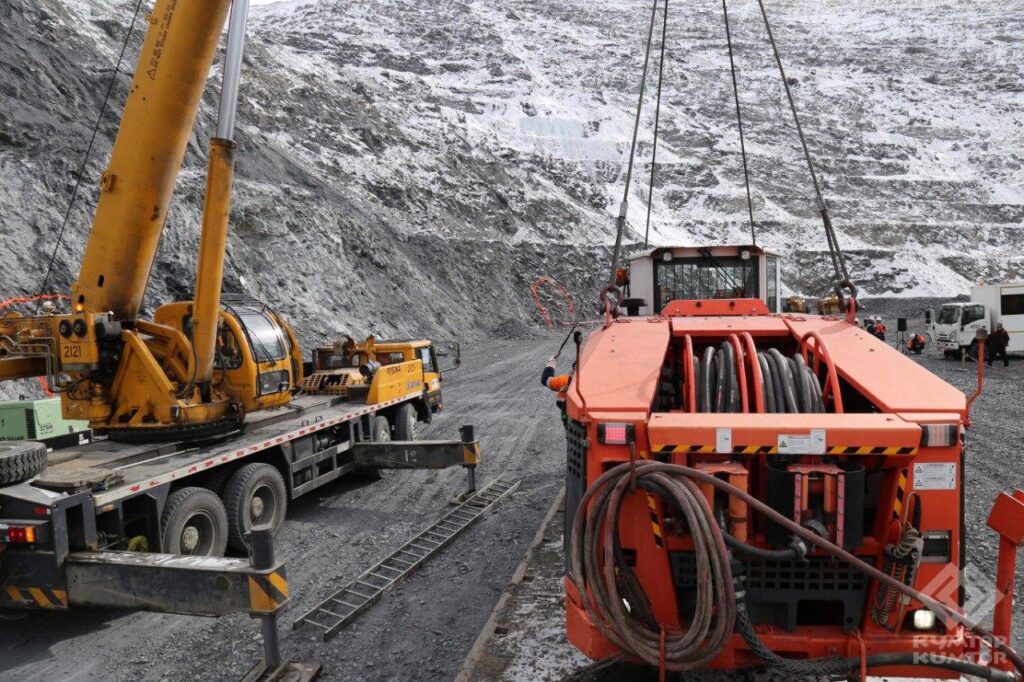
The Cabinet of Ministers of Kyrgyzstan has said that underground gold mining at Kumtor can provide hundreds of millions of additional dollars to the country's budget. The deputy head of the Kyrgyz Government, Adylbek Kasymaliev, presided over a ceremony marking the beginning of work at the mine. The Kumtor deposit is one of the ten largest gold deposits in the world. The mine is located in the Issyk-Kol region in the permafrost zone at an altitude of 4,000 meters above sea level. Revenues from Kumtor account for roughly one-third of the state budget in Kyrgyzstan, with the mine producing about 17 tons of gold per year. "The feasibility study of the underground gold mining project developed by specialists speaks about its economic efficiency. According to preliminary data, with the help of an underground mining method, it will be possible to get 115 tons of gold. Taking into account the precious metal mined at the [site] by the open-pit method, this is a big step forward," said Almazbek Baryktabasov, President of the Kumtor Gold Company. Mining underground will help the company reach gold of a higher-grade ore, he said, and as a result, the company will be able to increase its tax payments. Until its nationalization in 2021, the Kumtor mine was owned by Canadian company, Centerra Gold. Earlier, the Canadian owners tried to extract gold through shafts. However, gold prices did not render this profitable, as the shaft method is much more expensive than the open-pit mining. Over the past ten years, however, the price of an ounce of gold has risen by more than $700 and is currently trading at just over $2,000. Before Kumtor was expropriated, Centerra Gold spent approximately  $180 million dollars on research related to underground mining. Today, the authorities have allocated an additional mining site next to the one where gold ore is already being extracted. According to some reports, the new site contains a denser concentration of the precious metal per unit of ore. Currently, at Kumtor's open-pit mine, it takes one ton of processed ore and more than 40 tons of extracted waste rock to produce 5-7 grams of gold. Underground mining could double that yield. Furthermore, underground mining is not as environmentally damaging as open-pit mining. For example, one of Kumtor's main environmental concerns is the destruction of glaciers which literally hang over the edge of the open pit.

Kyrgyzstan Sees Surge In Car Imports From China

In 2023 Kyrgyzstan imported 79,131 cars worth nearly $1.2bn from China, an almost 45-fold increase compared to the 1,773 cars imported in 2022, the National Statistics Committee has reported.  The import of cars from South Korea also increased, reaching 50,397 for almost $435m.  The sharp increase in Kyrgyzstan’s car imports is largely due to the zeroing out of customs duties of the Eurasian Economic Union on the import of electric vehicles from third countries. Kyrgyzstan is a member of the EEU, together with Armenia, Belarus, Kazakhstan, and Russia.    Since the introduction of Western sanctions against Russia over its invasion of Ukraine, China has become the main supplier of new cars to the Russian Federation. Chinese vehicles are mainly exported to Russia via Central Asian countries. In total, 184,789 cars worth $2.7bn were imported into Kyrgyzstan last year, a 4.5-fold increase since 2022. At the same time, in 2023 Kyrgyzstan re-exported 8,733 cars worth $69.6m, almost nine times more than in 2022. Most of the cars were re-exported to Russia — 6,253 for $52.5m, and 2,374 cars worth $10.8m were sent to Kazakhstan.

Gold Kyrgyzstan’s Main Export Item in 2023

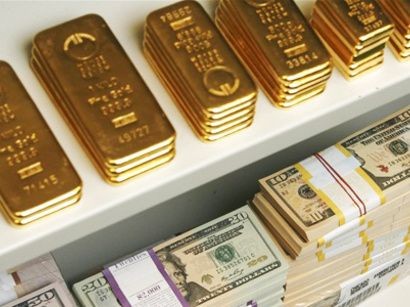
In 2023 Kyrgyzstan’s foreign trade turnover reached $15.6bn, an increase of 29.9% compared to 2022. The country’s imports grew by 26% to $12.3bn and exports increased by 46.8% to $3.3bn, the National Statistical Committee has reported.   This means that in 2023 Kyrgyzstan imported $9bn worth of goods more than exported.  Kyrgyzstan’s trade with fellow members of the Eurasian Economic Union, which also includes Armenia, Belarus, Kazakhstan, and Russia, amounted to $4.3bn. Gold accounted for the lion’s share of Kyrgyzstan's exports — 38.8% of the total. In 2023 Kyrgyzstan sold more than 20 tons of gold. Almost half of all goods imported to Kyrgyzstan last year came from China. Russia was in second place, followed by neighboring Central Asian countries, Turkey, the USA, and South Korea. 

Kyrgyzstan’s President Declares Own Multi-Million Dollar Property as Part of Asset Legalization

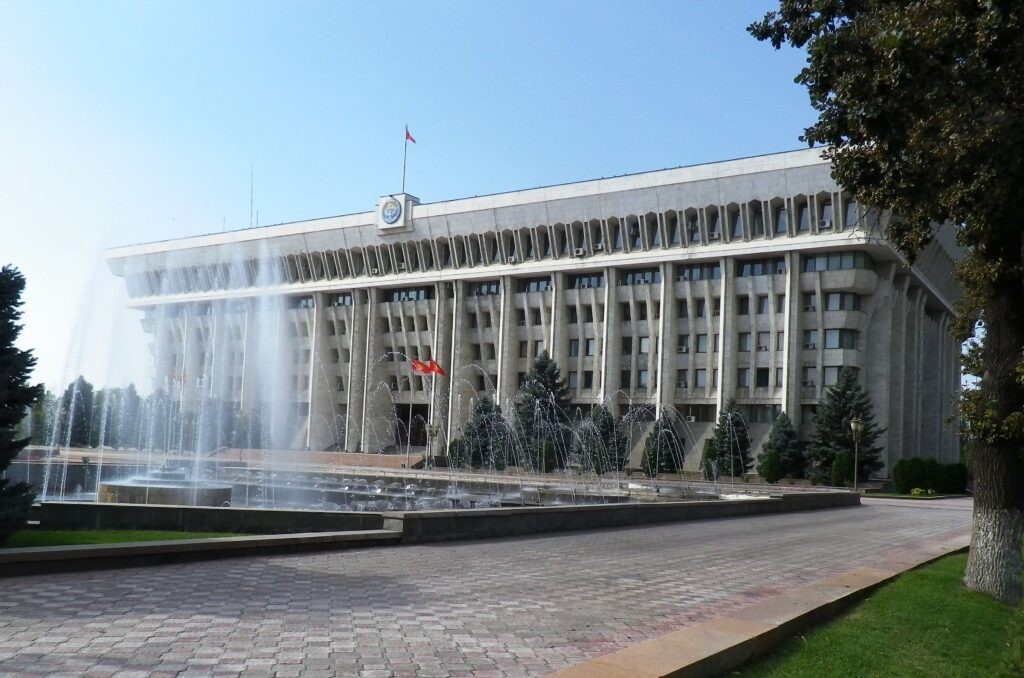
The President of the Kyrgyz Republic, Sadyr Japarov has said that he wants top business people and wealthy citizens to repatriate their assets to Kyrgyzstan instead of storing it abroad - which is why he has decided to start with himself. Last summer, Kyrgyzstan adopted a law on legalization - or declaring assets to the government - of property. According to official statements, its main goal is to transition the property and income of individuals from the shadow economy into legal economic activity through voluntary declaration of assets. The law stands until July 1st, 2024. "Voluntary legalization of and amnesty [for] assets will allow [the nation] to bring some shadow assets into legal turnover, which, as a consequence, will contribute to an increase in legal economic activity. According to the National Statistical Committee of Kyrgyzstan, the shadow economy accounts for 21% of the republic's GDP, and according to unofficial data, the shadow economy accounts for 40% of the republic's GDP. In this regard, the voluntary legalization and amnesty of assets of individuals is part of the preparatory stage of the transition to universal declaration," reads the law's background note. Image: Japarov Facebook post The president noted that all large and medium-sized business people used to register their property in someone else's name to avoid paying taxes to the state, and he was among them because he entered into politics from business. He lamented the fact that the richest citizens still keep their billions in foreign banks. Under the law, authorities guarantee that of all tax declarations previously submitted to state agencies will not be subject to prosecution. This is to give assurance to anyone seeking amnesty that the state will honor current assessments of income and property that have been legalized. The document states that if the amount a person legalizes exceeds 100 million som ($1,100,000), the submitting citizen must pay a so-called declaration payment of one million som ($11,000) to the state. "The value of my property is about 20 million dollars. I paid one million som to the state for the purpose of legalization. This is required by law. I have no savings abroad, and if I had, I would have invested them in our banks," the president wrote. Japarov said he constructed a building in the center of the capital back in 2010, but because of political persecution by the previous authorities, he had to hide the fact the multi-story building belonged to him. Now, he has registered the building under his own name. The head of state stressed that based on the law, the authorities guarantee all citizens the safety of legalized capital: "There is no other goal. There will be no questions [put] to you." The president noted that he's the first to legalize his property, despite the fact that the law came into force more than six months ago. At the end of last year, Japarov also urged owners of markets and large retail outlets to transition their assets out of the shadow economy....

Kyrgyzstan-Turkey Business Forum Held in Ankara

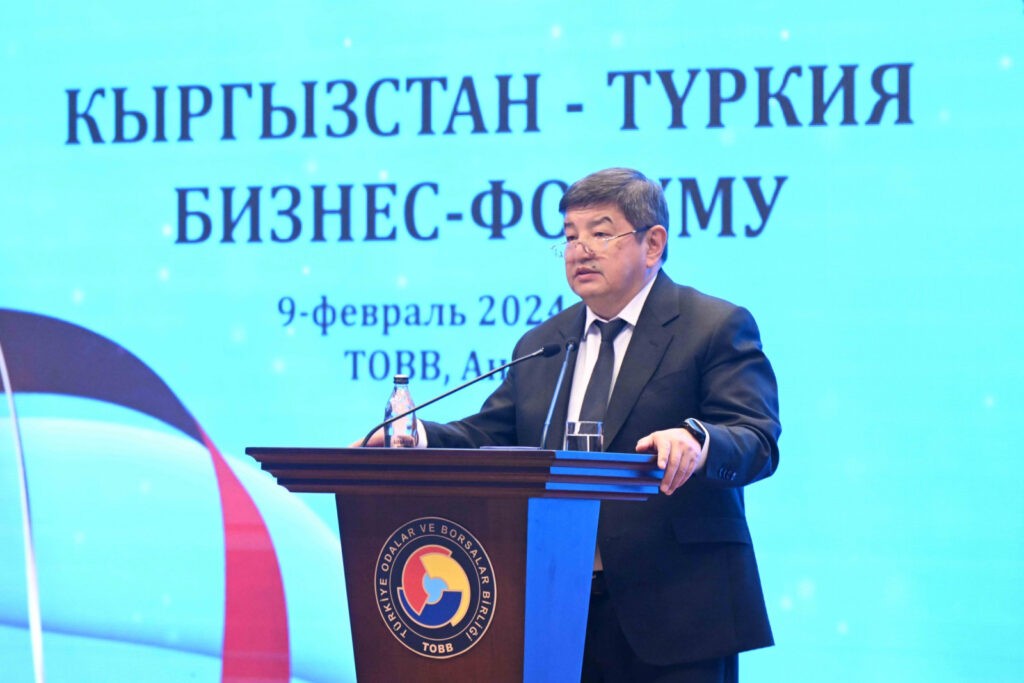
Relations between Kyrgyzstan and Turkey have reached a new level in all areas, the chairman of the Cabinet of Ministers of the Kyrgyz Republic, Akylbek Japarov said at the Kyrgyz-Turkish business forum in the Turkish capital, Ankara on February 9th. According to the Prime Minister, Turkey was the largest foreign investor in Kyrgyzstan’s economy in 2022, with investments totaling $341.6m. Between January and November 2023, trade turnover between the two countries increased again, amounting to $560.5m. Japarov added that the governments of the two countries are now working to create a Kyrgyz-Turkish Investment Fund to finance large infrastructure projects. At the forum, Kyrgyzstan’s Minister of Economy and Commerce, Daniyar Amangeldiev informed Turkish entrepreneurs about opportunities in Kyrgyzstan, highlighting tax breaks and support for investors. The forum culminated in the signing of eight cooperation documents on joint projects, among them a contract for the supply of walnuts from Kyrgyzstan to Turkey. On the same day, Japarov and Turkish Vice President, Cevdet Yilmaz co-chaired the 11th meeting of the Kyrgyz-Turkish Intergovernmental Commission on Trade and Economic Cooperation. The meeting focused on the fields of economy, investment, energy, industry, agriculture, transport, tourism, healthcare, culture, and education. At the meeting Japarov stated that the establishment of a trade mission of Kyrgyzstan in Turkey will help deepen economic ties between the two states and ensure the sustainable development of cooperation in trade and investment.