
• KGS/USD = 0.01143 0%
  • KZT/USD = 0.00205 0%
  • TJS/USD = 0.10433 0.1%
  • UZS/USD = 0.00008 0%
  • TMT/USD = 0.28577 0%
  • KGS/USD = 0.01143 0%
  • KZT/USD = 0.00205 0%
  • TJS/USD = 0.10433 0.1%
  • UZS/USD = 0.00008 0%
  • TMT/USD = 0.28577 0%
  • KGS/USD = 0.01143 0%
  • KZT/USD = 0.00205 0%
  • TJS/USD = 0.10433 0.1%
  • UZS/USD = 0.00008 0%
  • TMT/USD = 0.28577 0%
  • KGS/USD = 0.01143 0%
  • KZT/USD = 0.00205 0%
  • TJS/USD = 0.10433 0.1%
  • UZS/USD = 0.00008 0%
  • TMT/USD = 0.28577 0%
  • KGS/USD = 0.01143 0%
  • KZT/USD = 0.00205 0%
  • TJS/USD = 0.10433 0.1%
  • UZS/USD = 0.00008 0%
  • TMT/USD = 0.28577 0%
  • KGS/USD = 0.01143 0%
  • KZT/USD = 0.00205 0%
  • TJS/USD = 0.10433 0.1%
  • UZS/USD = 0.00008 0%
  • TMT/USD = 0.28577 0%
  • KGS/USD = 0.01143 0%
  • KZT/USD = 0.00205 0%
  • TJS/USD = 0.10433 0.1%
  • UZS/USD = 0.00008 0%
  • TMT/USD = 0.28577 0%
  • KGS/USD = 0.01143 0%
  • KZT/USD = 0.00205 0%
  • TJS/USD = 0.10433 0.1%
  • UZS/USD = 0.00008 0%
  • TMT/USD = 0.28577 0%

Viewing results 655 - 660 of 883

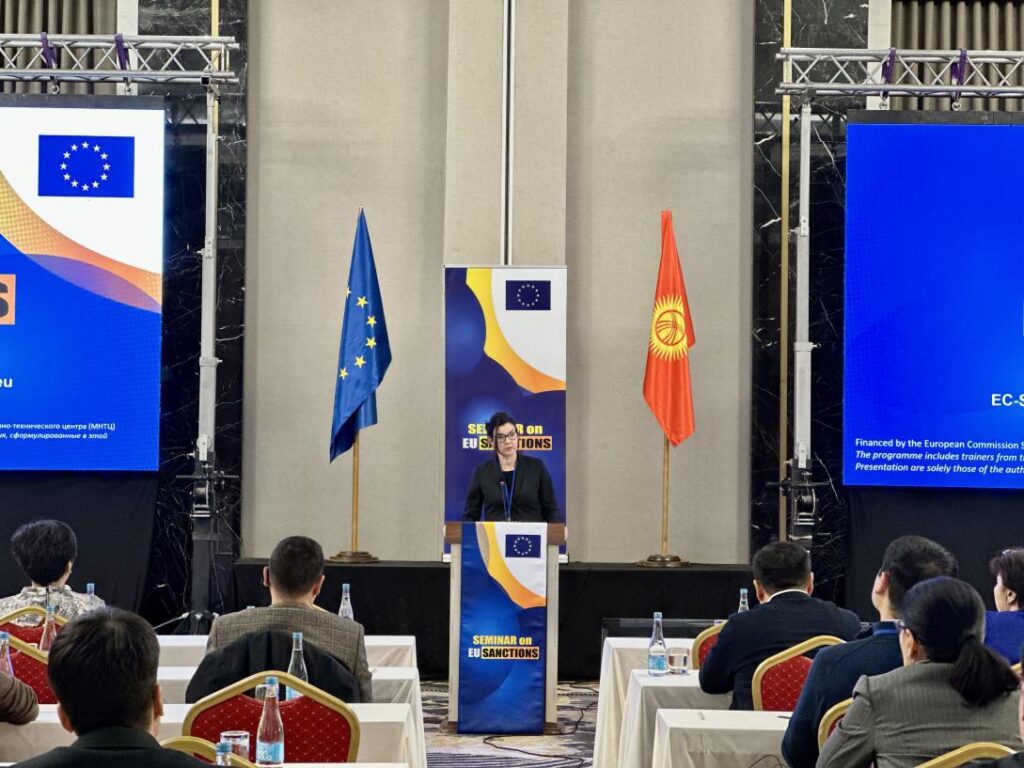
Kyrgyzstan: EU Holds Training Workshops on Sanctions Against Russia

As reported by the press and information team of the Delegation of the European Union to the Kyrgyz Republic, on November 9th and 10th, the European Union organized training workshops in Bishkek, Kyrgyzstan on EU sanctions against Russia, with support from the International Science and Technology Center (ISTC), and the Association of Certified Sanctions Specialists (ACSS). The primary aim of the workshops was to raise awareness of EU sanctions and their application, and to prevent possible circumvention of these measures. On the 9th, the meeting saw government officials gather, whilst the second day was dedicated to a workshop which targeted private operators in Kyrgyzstan interested in improving their awareness of EU sanctions. “I am delighted that so many people from the Kyrgyz authorities and the private sector chose to attend the EU Sanctions Training Seminar this week”, said the acting Head of the EU Delegation to Kyrgyzstan, Ms Lene Volkersen. “It has been great to witness the strong Kyrgyz interest in understanding how EU sanctions work. The ultimate goal of the EU’s sanctions against Russia is to undermine its ability to continue waging war against Ukraine, and we welcome that Kyrgyzstan is not willing to be used as a platform for sanctions circumvention. We look forward to continuing this dialogue with government authorities, as well as private sector”. The training workshops were conducted by a team of EU representatives and sanctions experts, and consisted of presentations and interactive question and answer sessions.

World Bank Announces New Country Partnership Framework for Kyrgyzstan

In a press release on its website, on October 31st the World Bank announced a new five-year Country Partnership Framework (CPF) for the Kyrgyz Republic that defines the strategic focus of the World Bank’s engagement with the country around job creation, natural resource management, and improving human capital outcomes. The CPF lays out a selective and flexible program for World Bank assistance. “The World Bank has been a trusted partner of the Kyrgyz Republic for the last 30 years”, said Kyrgyz Republic’s Minister of Finance, Almaz Baketaev. “The new Country Partnership Framework responds to the Kyrgyz Republic’s National Development Strategy to 2040 and the National Development Program for 2022-2026. The new partnership strategy will reinforce the efforts of the Cabinet of Ministers to modernize the economy, promote inclusive growth, and build a more prosperous future for all”. “The World Bank is proud to support the Kyrgyz Republic’s ambitious and well-articulated reform agenda”, said Tatiana Proskuryakova, the World Bank’s Regional Director for Central Asia. “Under our new Country Partnership Framework, we will support the country’s economic transformation with policy advice, technical assistance, and planned project financing of around $500 million. New investments will focus on the key priority sectors of energy, water, and agriculture to create a better and more sustainable future for the citizens of the Kyrgyz Republic”. The new CPF is centered around three core pillars aimed at delivering tangible development outcomes: increasing private sector-led job creation; improving access to sustainably managed natural resources, and enhancing human capital and economic empowerment of vulnerable population groups. The CPF also includes a strong focus on key global challenges including strengthening climate resilience and reducing emissions; closing the gender gap; supporting jobs and economic transformation; strengthening institutions; and reducing fragility risk. The World Bank’s Board of Executive Directors also approved $5 million for the technical assistance of Kambarata-1 Hydropower Plant Project. This assistance aims to support the Cabinet of Ministers of the Kyrgyz Republic in updating the Feasibility Study of the Kambarata-1 Hydropower Plant (HPP) Project, enhancing its environmental and social sustainability, and strengthening its financial and commercial frameworks. Kambarata-1 HPP is expected to be among the most cost-effective projects for expanding clean energy resources across the Kyrgyz Republic and Central Asia. It has the potential to address the country’s energy security challenges, generating significant revenues from energy exports whilst also improving downstream HPP operations and water management. “The Kambarata-1 HPP is a critically important project that has the potential to bring huge benefits in clean energy generation, regional cooperation, water security, and environmental safeguards across Central Asia”, said World Bank Regional Director for Central Asia, Tatiana Proskuryakova. “The World Bank’s technical assistance will help the Cabinet of Ministers of the Kyrgyz Republic use the country’s abundant hydropower potential for the benefit of the people and region, while strengthening the governance and financial sustainability of the energy sector”. “Kambarata-1 is a transformative greenfield regional hydropower project that will power the clean energy future of the Kyrgyz Republic and Central Asia”, added World Bank Country Manager for the Kyrgyz Republic, Naveed Hassan Naqvi. “This...

Promoting Sustainable Development in Central Asia: Key Highlights from the Eurasian Development Bank’s Roundtable

According to a press release issued by the Eurasian Development Bank (EDB), on November 16th, 2023, Almaty, Kazakhstan, served as the venue for a critical roundtable hosted by the EDB, titled "Promoting Sustainable Development in Central Asia". This gathering saw the participation of representatives from a wide range of international organizations and multilateral development banks. Attendees included the likes of the World Bank, the Asian Development Bank, the Asian Infrastructure Investment Bank, the Islamic Development Bank, FAO, UNIDO, UNEP, ESCAP, UNDP, the World Health Organisation, the International Fund for Saving the Aral Sea, and CICA. The agenda was packed with discussions revolving around irrigation, water challenges, environmental and social standards of international financial institutions, and case studies that showcased collaborations in project implementation12. The EDB's latest report, "Efficient Irrigation and Water Conservation in Central Asia", was introduced during the roundtable's first session. Nikolai Podguzov, Chairman of the EDB Management Board, underscored the essential interrelationship between water, food, and energy in Central Asia. He declared the development of the region’s water and energy resources as a strategic priority for the EDB. He also expressed concerns over an impending water deficit in Central Asia within the next five years, urging for collective action supported by multilateral development banks3. Tatiana Proskuryakova, the Regional Director for Central Asia at the World Bank, also spoke at the event. She emphasized the importance of sustainable development in Central Asia to international organizations and multilateral financial institutions. She revealed that the World Bank has allocated approximately a quarter of its $12 billion investment portfolio in Central Asia to water, energy, and environmental sectors. This proportion is expected to rise to almost half in the near future4. Following this, Evgeny Vinokurov, EDB Chief Economist, presented the study "Efficient Irrigation and Water Conservation in Central Asia". He proposed a ten-step solution to address the prevalent issues. The steps include establishing an International Water and Energy Consortium; fostering collaboration among multilateral banks; creating a regional cluster to produce irrigation equipment; consolidating efforts to strengthen cooperation with Afghanistan; using PPP instruments; instituting proper water accounting; gradually integrating investment charges into the tariff structure; improving land conditions; implementing digital technology, and leveraging state-of-the-art irrigation technology and laser levelling.
