• KGS/USD = 0.01144 0%
  • KZT/USD = 0.00212 0%
  • TJS/USD = 0.10456 0.19%
  • UZS/USD = 0.00008 0%
  • TMT/USD = 0.28490 0%
  • KGS/USD = 0.01144 0%
  • KZT/USD = 0.00212 0%
  • TJS/USD = 0.10456 0.19%
  • UZS/USD = 0.00008 0%
  • TMT/USD = 0.28490 0%
  • KGS/USD = 0.01144 0%
  • KZT/USD = 0.00212 0%
  • TJS/USD = 0.10456 0.19%
  • UZS/USD = 0.00008 0%
  • TMT/USD = 0.28490 0%
  • KGS/USD = 0.01144 0%
  • KZT/USD = 0.00212 0%
  • TJS/USD = 0.10456 0.19%
  • UZS/USD = 0.00008 0%
  • TMT/USD = 0.28490 0%
  • KGS/USD = 0.01144 0%
  • KZT/USD = 0.00212 0%
  • TJS/USD = 0.10456 0.19%
  • UZS/USD = 0.00008 0%
  • TMT/USD = 0.28490 0%
  • KGS/USD = 0.01144 0%
  • KZT/USD = 0.00212 0%
  • TJS/USD = 0.10456 0.19%
  • UZS/USD = 0.00008 0%
  • TMT/USD = 0.28490 0%
  • KGS/USD = 0.01144 0%
  • KZT/USD = 0.00212 0%
  • TJS/USD = 0.10456 0.19%
  • UZS/USD = 0.00008 0%
  • TMT/USD = 0.28490 0%
  • KGS/USD = 0.01144 0%
  • KZT/USD = 0.00212 0%
  • TJS/USD = 0.10456 0.19%
  • UZS/USD = 0.00008 0%
  • TMT/USD = 0.28490 0%

Viewing results 577 - 582 of 928

ADB Forecasts Faltering Economic Growth

The People's Republic of China (PRC) will remain the engine of growth for the world economy, even despite some slowdown. That forecast has been made by the Asian Development Bank (ADB) specialists in their report, Asian Development Outlook. Inflation is expected to decline in 2024 and 2025 after the increase in food prices in many countries over the past two years - and developing economies in the Asia-Pacific region will grow by an average of 4.9%, according to the ADB. Experts predict the highest economic growth for India: where the economy will grow by 7% this year and 7.2% next year. As for China, experts are more reserved in their forecasts: China's growth will slow to 4.8% this year and 4.5% next year. "Obviously, China will play an important role for some time to come. It still accounts for almost half of the GDP [gross domestic product] in the Asia-Pacific region," said ADB chief economist ,Albert Park. At the same time, economists also warned of possible risks: supply chain disruptions, uncertainty over U.S. monetary policy, the effects of extreme weather, and volatility in the PRC's real estate market. Inflation in developing Asia-Pacific economies is expected to fall to 3.2% this year and 3% next year as global price pressures ease and monetary policy remains tight in many countries. However, inflation in the region, with the exception of China, is still higher than before the COVID-19 pandemic. According to the bank's forecasts, economic growth in Uzbekistan will slow this year and grow slightly next year. This is because higher state-regulated prices will limit the growth of real household incomes, thus reducing demand. Economists expect a lower growth in services and agriculture. Lower remittances, fiscal space constraints, and lower global demand for Tajikistan's main exports will cause Tajikistan's economic growth to slow slightly in 2024 and 2025, the ADB said. "Tajikistan faces serious climate challenges and risks that could lead to irreversible economic, social, and environmental damage," said the ADB 's resident representative in Tajikistan, Shanny Campbell. The ADB says developing a green economy is key to the country's sustainable growth. As for its nearest neighbor, Kazakhstan, the ADB has lowered its GDP growth forecast for 2024 to 3.8%, down from 4.3% in the previous review. In 2025, the figure is expected to be 5.3%. Actual GDP growth at the end of 2023 was at 5.1%. "The growth rate of Kazakhstan's economy in 2024 will decrease against the background of slowdown in industrial growth due to stagnation in oil production and then recover in 2025 due to the growth of resource extraction at the Tengiz field and investments. Prospects for Kazakhstan's economic growth in the medium term look positive," ADB analysts said. As for developed economies globally, their growth will slow down this year: GDP growth in the U.S. will fall to 1.9% from last year's 2.5%, and in Japan, GDP will grow by 0.6% compared to 1.9% in 2023.

20,000 Families in Kyrgyzstan to Receive $1,100 Each for Entrepreneurship

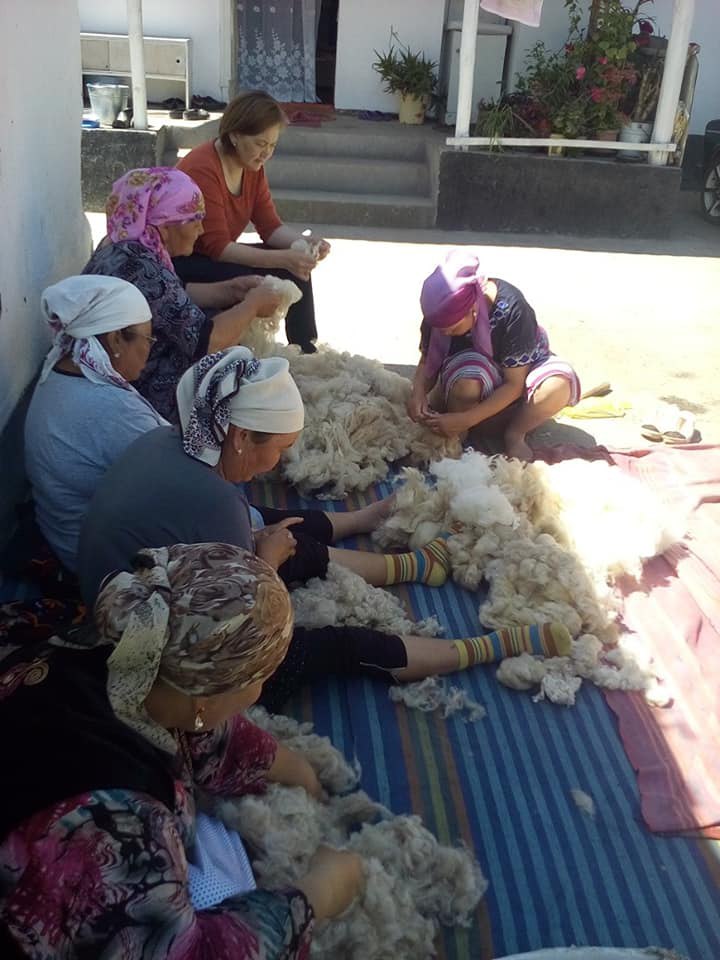
Low-income families who receive cash benefits from the state will now be able to sign a social contract with the state - as long as recipients have a real business plan, according to a report by the Ministry of Labor, Social Security and Migration of Kyrgyzstan. As part of the fight against poverty in 2024, 20,000 families will enter a social contract with the state. According to the Ministry of Labor, priority will be given to those with three or more children or people with disabilities. The ministry emphasized that the money can also be allocated to families for the development of existing businesses. Businesses will need to comply with the state program, "One Village - One Product." "It is supposed to produce from local resources, develop skills of producers in terms of business management, marketing and expanding opportunities for product sales, promoting products in local and international markets, creating local brands and increasing the value of products," the Ministry of Economy and Commerce stated in describing the program. The "One Village - One Product" project has been underway in the Issyk-Kul region for many years and is showing good results. New jobs are being created and the region is seeing increased profits, including from exporting products abroad. Previously, this project was supported by Japanese humanitarian organizations working in Kyrgyzstan. "The project helps domestic entrepreneurs to produce quality certified products exclusively from local resources. Over the last six years, thanks to the project, local producers have signed 167 export contracts totaling 238 million som," ($2,670,000) the Ministry of Economy emphasized. The Ministry of Labor, in turn, said that over the past few years it has allocated money to 13,000 low-income families who have opened their own businesses. The project produces honey, natural juices and jams from local fruits, felt products, as well as meat products. "Income from the realization of business projects in 2023 helped to improve the lives of 55,400 people, of which 33,500 are children. Eighty percent of these children previously received a need-based allowance... Now, thanks to the Social Contract program, all families earn their own income and do not need government support," the Minister of Labor, Social Development and Migration, Gulnara Baatyrova said. According to the ministry, the majority of successfully implemented projects were in the Jalal-Abad and Osh regions. According to the Ministry of Economy and Commerce, 280 products have been developed over five years that are successfully sold in domestic and foreign markets. Many of these entrepreneurs' products, although not yet produced in large volumes, are supplied to Japan, China, South Korea, the U.S. and Europe.

Kyrgyz Still Suffering From Ban on Russian Bank Cards

The head of Kyrgyzstan's cabinet of ministers, Akylbek Japarov, has told media that it wasn't his decision to terminate the interbank agreement with Russia's MIR payment system. According to him, the Interbank Processing Center (IPC) that services the Kyrgyz payment system Elkart -- which previously had a contract with the Russian MIR system -- does not belong to the government, but rather is run by commercial banks. He added that Kyrgyz authorities learned of the system's disconnection only after it occurred. Japarov commented: "Even the National Bank does not have control over the MPC, which is more than 54 percent owned by commercial banks. I assume that these commercial banks may have feared sanctions... It would be good if the MPC coordinated this issue with the cabinet, because there are more than a million of our citizens in Russia. All of them used the MIR card." Japarov emphasized that while Kyrgyz citizens benefited from MIR's presence in Kyrgyzstan, the closure of the system will have almost no effect on Russians. He said that work is already underway to find alternatives. On April 5 the IPC informed the Kyrgyz public about the shutdown of MIR "in order to minimize [the risk of] secondary sanctions" by the United States. Many travel companies in Kyrgyzstan have sounded the alarm -- about 90% of all tourists coming to Kyrgyzstan are from Russia.

Kyrgyzstan Remains Import-Dependent

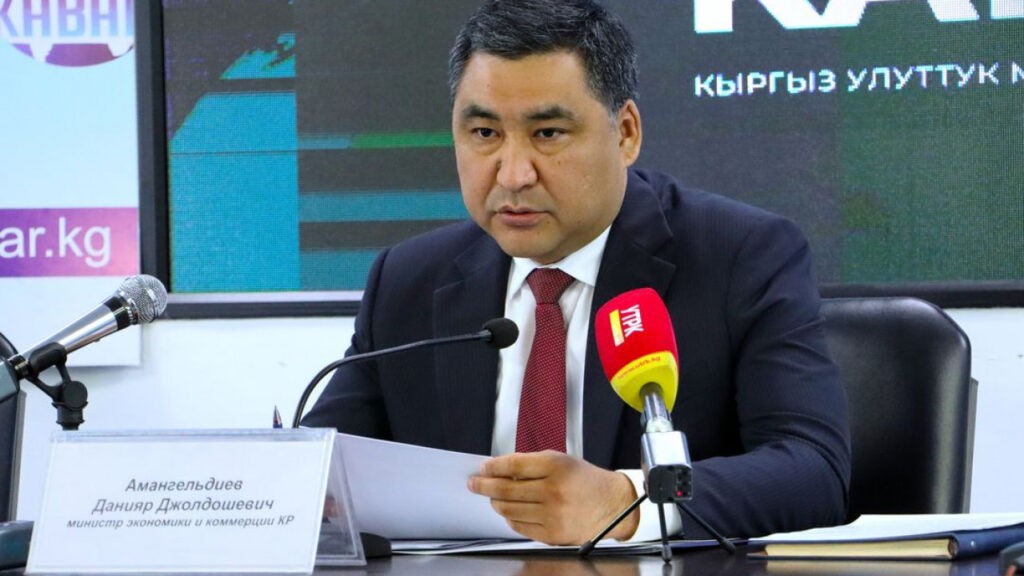
At a press conference on April 11, Minister of Economy and Commerce of the Kyrgyz Republic Daniyar Amangeldiev reported that amounting to $2.255 billion in January- February, Kyrgyzstan’s foreign trade turnover had increased by a 28.3% compared to the previous year. Kyrgyzstan’s exports increased by 18.4% to $307.5 million and imports rose by 30%, to $1.947 billion. At the beginning of the year, Kyrgyzstan’s trade with fellow members of the Eurasian Economic Union (EAEU) — Armenia, Belarus, Kazakhstan, and Russia — amounted to $482.7 million, illustrating a fall of 17.9% compared to the same period in 2023. Most of the country’s trade with the EAEU was with Russia (69.4%) and Kazakhstan (28.2%). Compared to January-February 2023, Kyrgyzstan’s trade with other countries grew 1.5-fold and reached $1.8 billion.

Kyrgyz Taxi Drivers to Continue Working in Russia

Kyrgyz officials attended a meeting in Moscow and persuaded Russian lawmakers to withdraw a draft document that would ban Kyrgyz citizens from working as taxi drivers. Following the terrorist attack at the Crocus City Hall near Moscow on March 22, Russian State Duma representatives prepared a bill to ban foreigners from working in the passenger transport industry using their home countries' driver's licenses. The unprecedented decision came against the background of an acute shortage of taxi drivers and public transport workers. The capital region alone lacks 80,000 drivers. In an interview with Kyrgyz state media, Jogorku Kenesh (Supreme Council) representative Marlen Mamataliyev said the parliamentary delegation held a number of talks with members of various Russian State Duma factions. At one such meeting, Kyrgyz representatives presented their arguments to their Russian counterparts to have the bill withdrawn before the committee's discussions. "We explained that Kyrgyzstan has tightened the issuing of driving licenses and, even, the president's niece was able to get a driving license only on the fifth attempt. We also suggested exchanging databases of drivers. This would allow Russian law enforcement agencies to track the authenticity of driver's licenses," Mamataliyev said. According to him, Russian colleagues listened to them and put the bill on hold. After arriving in Kyrgyzstan, the deputies instructed the Interior Ministry to speed up the creation of a unified database of driver's licenses and give Russian law enforcement agencies access to it. However, one of the authors of the bill, Duma deputy Yaroslav Nilov, told the media that no one had contacted him. "I am the author of this bill and no one has held any negotiations with me... I believe that the issue of safety should be a priority for our country, including this driving with a national driving license," he said. The Russian MP believes that if Kyrgyz citizens work in freight or passenger transport, they should have Russian-style driver's licenses like citizens of other countries. The exception is citizens of Belarus, another Eurasian Economic Union (EAEU) state, alongside Kyrgyzstan. Nilov admitted the possibility of a simplified procedure for issuing Russian driver's licenses to citizens of Kyrgyzstan, but not its complete cancellation. Citizens of the EAEU can drive cars in member states using their domestic driver's license. However, not all countries allow such drivers to get a job. According to official data, about a million Kyrgyz citizens live in Russia today, and many of them continue to work in taxi transportation and municipal public transport using Kyrgyz driving licenses.

Kyrgyzstan Ranked 6th Largest Importer of Chinese Cars

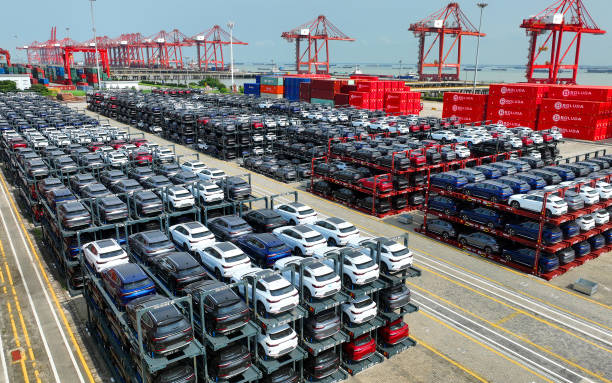
According to China’s customs statistics, in January-February 2024, Kyrgyzstan imported cars from China worth $510.3 million. Rising from 43rd place in 2023, Kyrgyzstan was ranked the world’s 6th largest buyer of Chinese cars at the beginning of this year. Only 5 countries exceeded Kyrgyzstan’s expenditure on Chinese cars in the same period: Russia, $1.5 billion; Belgium, $1.1 billion; UK, $1 billion; Mexico, $660 million; and Brazil, $590 million. As reported by Kyrgyzstan’s National Statistics Committee, in 2023 Kyrgyzstan imported 79,131 cars worth around $1.2 billion from China, an almost 45-fold increase compared to the 1,773 cars imported in 2022. One of the key reasons for the recent steep rise in Kyrgyzstan’s importation of Chinese cars is the war in Ukraine. As a result of Western sanctions, China has fast become Russia’s main supplier of new cars, a large percentage of which are re-exported to the country by Central Asia, especially Kyrgyzstan.