Viewing results 223 - 228 of 341
On January 3rd at 18:00, Bishkek entered the top ten cities globally with the highest levels of air pollution, clocking in at number seven according data compiled by AirNow, which reports air quality using the official U.S. Air Quality Index (AQI). According to the website, at this time the city was marked as "unhealthy", with an aAQI of 158. An air quality monitoring station has been installed on the territory of the U.S. Embassy in Kyrgyzstan, which updates information every hour. The Air Quality Index is divided into six categories reflecting the level of health hazards. An AQI value above 300 is considered dangerous, whilst a value below 50 is considered good.
On December 30th, Kyrgyz President Sadyr Japarov signed a Decree “On recognizing the snow leopard as a national symbol of the Kyrgyz Republic,” the presidential press service has reported. The snow leopard has the status of a rare or endangered species in 12 countries. This animal is an indicator of the stability and health of the mountain ecosystem, which occupies a third of the globe. The loss of snow leopards from the wild would risk upsetting the delicate ecological balance, which would have detrimental effects on various animal species and humans. “In the culture of the ancient Kyrgyz people, the snow leopard personified greatness, nobility, courage, courage and endurance. Therefore, according to legends, the leopard was the totem animal of the great Manas,” the presidential press service reported. The poem "Manas" is one of the greatest works of Kyrgyz folklore, and is included in the list of masterpieces of the oral and intangible cultural heritage of humanity by UNESCO, as well as in the Guinness Book of Records as the most voluminous epic in the world. Kyrgyzstan is an active participant in global wildlife conservation programs. At the first International Forum on Snow Leopard Conservation in Bishkek in 2013, with the support of representatives of 12 snow leopard range countries and the international community, the Bishkek Declaration on the Protection of the Snow Leopard was unanimously adopted and the Global Snow Leopard and Ecosystem Protection (GSLEP) Program was approved. In order to further state support for initiatives to preserve the snow leopard and its ecosystem in the Kyrgyz Republic, the presidential decree instructed the Cabinet of Ministers of the Kyrgyz Republic to take measures to protect the snow leopard population and as its ecosystem, and to take measures to popularize the new national symbol.
Kyrgyzstan's Agriculture Minister, Askarbek Janybekov, addressed journalists at a press conference, indicating plans to potentially establish a Ministry of Water Management in the country by the conclusion of 2024. "Now, there is a need to create a separate department for water issues. We must take our time. It will be a big organization. Therefore, we will consider it in stages, and we think at the end of next year we will create such a ministry," he said. Janybekov highlighted that discussions on this matter had surfaced in the Jogorku Kenesh and the recent National Kurultai. Previously, MP Emil Toktoshev had advocated for such an initiative.
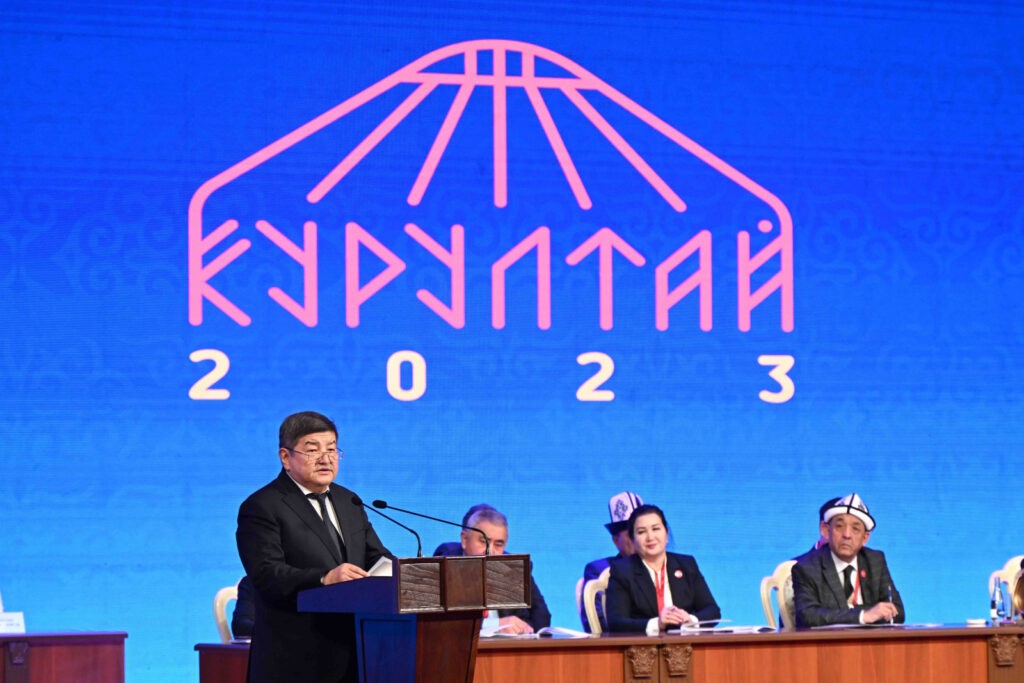
A UN resolution obliges upstream countries, including Kyrgyzstan, to provide water to downstream states, Kyrgyz President Sadyr Japarov said on December 16th at the second People’s Kurultai (Congress) in Bishkek. Answering questions from the Kurultai delegates, the president said that the water problem would be solved through the construction of so-called ten-day and daily regulation pools. Such reservoirs will allow for the accumulation of water in winter and for it to be freely shared with neighbors downstream. The president said that Kyrgyzstan does not have a sufficient number of reservoirs, and, therefore, this year there was not enough water to supply to Kazakhstan. This past summer, the southern regions of Kazakhstan experienced a severe shortage of irrigation water for their fields. The construction of such reservoirs, the president explained, will meet the needs of Kyrgyzstan and, in addition, there will also be enough water to supply to downstream neighbors. The president also announced plans to build reservoirs. The reservoir construction program will last until 2027, he said.
In 2026, Kyrgyzstan will reach a surplus in the power generation sector and begin exporting electricity, Akylbek Japarov, the Chairman of the Cabinet of Ministers-Head of the Administration of the President of the Kyrgyz Republic, said on December 15th at the People's Kurultai (an assembly of representatives of the public from all regions of the country). The prime minister said that in order to eliminate shortages of electricity, five small hydroelectric power plants of 71 MW each, five solar power plants, and a second hydroelectric unit at the Toktogul hydroelectric power plant were put into operation in 2023. In 2024, the country’s power generation capacity will increase by 178 MW, with 25 small hydroelectric power plants and another hydroelectric unit at Toktogul being put into operation. Solar power plants with a capacity of 700 MW and the hydroelectric power station Bala-Saruu with a capacity of 5 MW will also be commissioned in the Talas region. The head of the Cabinet of Ministers focused on the implementation of these large energy projects. “Preparatory work for Kambarata HPP-1 is being completed: tunnels, roads, lines,” Japarov said. “Negotiations are underway with the World Bank on the first phase of its construction. The design of the Kazarman, Kokomeren, Chatkal cascades, and the Kemin-Torugart line with a capacity of 500 kilovolts will begin. In 2024, work on the Kyrgyz part of the CASA-1000 [electricity transmission] project will be completed. In two years, the Kulanak hydroelectric power plant will start operating. In 2026, we will reach a surplus in the energy sector and begin exporting electricity.” The Chairman of the Cabinet of Ministers also said that in 2024, Kyrgyzstan will begin exporting coal to China from four deposits, and a coal enrichment plant will be built in the Naryn region by 2025.
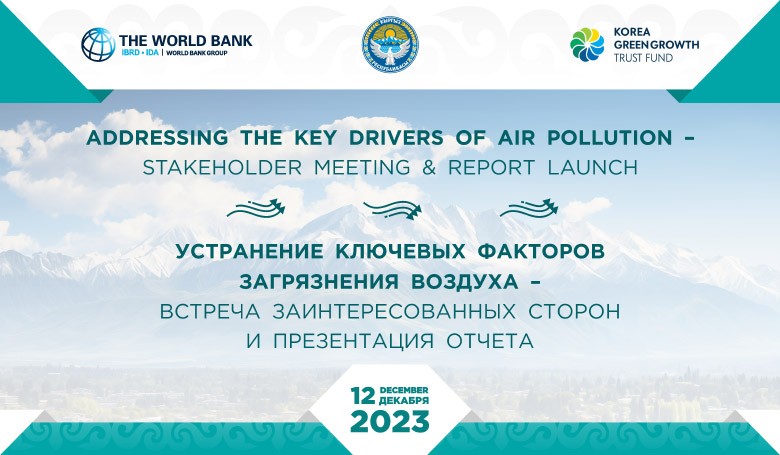
The World Bank and the Ministry of Natural Resources, Ecology and Technical Supervision (MNRETS) of the Kyrgyz Republic on December 12th hosted a stakeholder meeting to launch the World Bank's new report, Air Quality Analysis for Bishkek: PM2.5 Source Apportionment and Emission Reduction Measures, according to a statement on the World Bank website. The World Bank conducted this study in close coordination with MNRETS Hydrometeorological Service (Kyrgyzhydromet) under the Ministry of Emergency Situations and Bishkek Municipality to evaluate the air quality in Bishkek, focusing on PM2.5 pollution. Exposure to fine inhalable particles (PM2.5 with a diameter of 2.5 micro-meters or less) poses serious health risks, including respiratory infections, cancer, cardiovascular diseases, and premature deaths. In Bishkek, the average annual PM2.5 concentrations in 2022 surpassed the WHO guideline value of 5 µg/m3 by nearly sevenfold. During the last several winters, average daily concentrations of PM2.5 were often above 200 µg/m3, surpassing the WHO guideline of 15 µg/m3 by more than 13 times and placing Bishkek among the world’s most polluted cities. The losses caused by air pollution in Bishkek are estimated to be equivalent to 1.2% of the Kyrgyz Republic’s GDP, while air pollution at country level is estimated cost 5.1% of the GDP. In line with priorities and recommendations identified in the study, the World Bank jointly with MNRETS, KyrgyzHydromet and Bishkek Municipality has prepared a $50 million Kyrgyz Republic Air Quality Improvement Project to help the country reduce air pollution and the adverse effects it has on public health and the economy. This project is expected to not only directly benefit residents of Bishkek by improving the city’s air quality, but will also support the establishment of a sound Air Quality Management System that will drive policy actions for air quality improvement, aiming to mitigate the impact of air pollution on public health and economic development across the country.