• KGS/USD = 0.01144 0%
  • KZT/USD = 0.00200 0%
  • TJS/USD = 0.10468 -0.1%
  • UZS/USD = 0.00008 0%
  • TMT/USD = 0.28571 0%
  • KGS/USD = 0.01144 0%
  • KZT/USD = 0.00200 0%
  • TJS/USD = 0.10468 -0.1%
  • UZS/USD = 0.00008 0%
  • TMT/USD = 0.28571 0%
  • KGS/USD = 0.01144 0%
  • KZT/USD = 0.00200 0%
  • TJS/USD = 0.10468 -0.1%
  • UZS/USD = 0.00008 0%
  • TMT/USD = 0.28571 0%
  • KGS/USD = 0.01144 0%
  • KZT/USD = 0.00200 0%
  • TJS/USD = 0.10468 -0.1%
  • UZS/USD = 0.00008 0%
  • TMT/USD = 0.28571 0%
  • KGS/USD = 0.01144 0%
  • KZT/USD = 0.00200 0%
  • TJS/USD = 0.10468 -0.1%
  • UZS/USD = 0.00008 0%
  • TMT/USD = 0.28571 0%
  • KGS/USD = 0.01144 0%
  • KZT/USD = 0.00200 0%
  • TJS/USD = 0.10468 -0.1%
  • UZS/USD = 0.00008 0%
  • TMT/USD = 0.28571 0%
  • KGS/USD = 0.01144 0%
  • KZT/USD = 0.00200 0%
  • TJS/USD = 0.10468 -0.1%
  • UZS/USD = 0.00008 0%
  • TMT/USD = 0.28571 0%
  • KGS/USD = 0.01144 0%
  • KZT/USD = 0.00200 0%
  • TJS/USD = 0.10468 -0.1%
  • UZS/USD = 0.00008 0%
  • TMT/USD = 0.28571 0%

Viewing results 535 - 540 of 878

Russia Detains Suspects with Tajik Passports – Death Toll Rises to 133

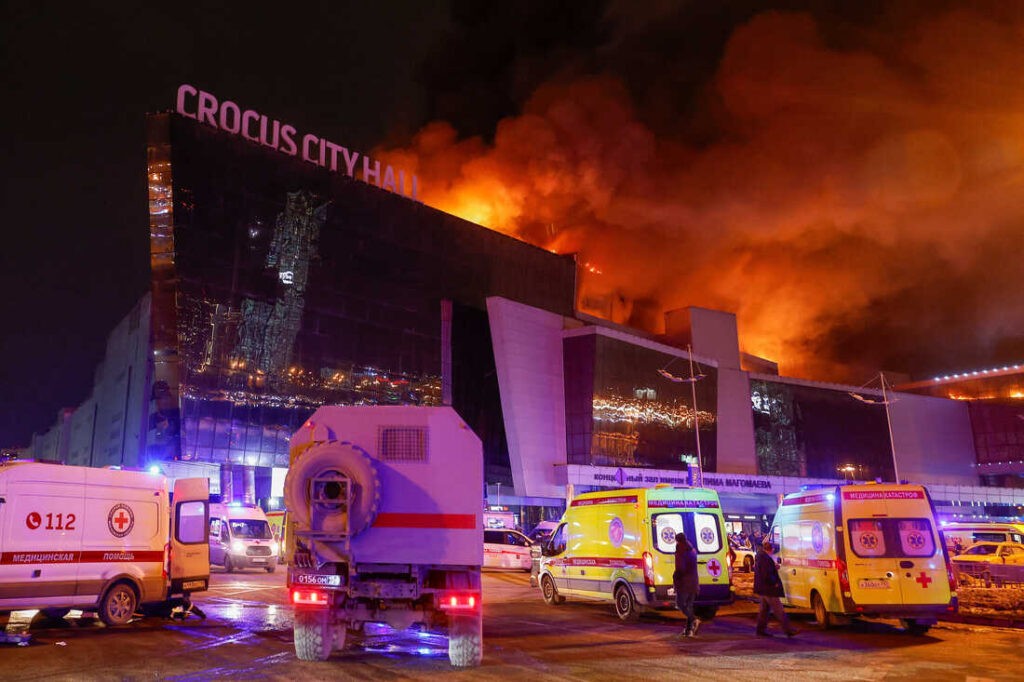
Russia has announced the arrest of eleven individuals, including four who are suspected of carrying out a deadly shooting at a concert hall near Moscow, marking the most lethal incident of its kind in the country in two decades. The attack, which resulted in the death of 143 people and counting, according to state TV, was claimed by the Islamic State militant group. However, Russian authorities are trying to forge a potential connection to Ukraine, despite strong denials from Ukrainian officials regarding any involvement. The death toll was later revised to 133. The Federal Security Service (FSB) of Russia has reported the apprehension of the "four terrorists" as they were allegedly attempting to cross into Ukraine, repeatedly mentioning that the suspects had connections within Ukraine. They are currently being transported to Moscow for further investigation. Maria Zakharova, a spokeswoman for the Russian Foreign Ministry, expressed on Telegram that the suspects had intended to flee to Ukraine to evade capture, stating, “Now we know in which country these bloody bastards planned to hide from pursuit.” In response to Moscow’s attempts to pin the atrocity on Ukraine and bolster waning support for Putin’s war, Andriy Yusov, a spokesman for Ukrainian military intelligence, refuted the claims of Ukraine's involvement, emphasizing his nation’s focus on defending its sovereignty and targeting military objectives, not civilians. He dismissed the FSB's assertion regarding the suspects' intended escape to Ukraine as another fabrication by Russian intelligence services. No evidence has been presented to support the theory of a Ukrainian link. Russian lawmaker Alexander Khinshtein revealed that the assailants had escaped in a Renault vehicle, which was later identified by police in the Bryansk region, approximately 210 miles southwest of Moscow. Upon refusal to comply with police instructions to stop, the vehicle was searched, uncovering a pistol, an assault rifle magazine, and passports from Tajikistan. In a video shown on state TV, a suspect stated that he had been paid 500,000 roubles ($5,425) by unknown people via Telegram to carry out the atrocity.
Central Asian States Respond to Moscow Attacks

ALMATY, Kazakhstan – Central Asian countries have denounced the attack on a Moscow concert hall that killed more than 60 people, with Kazakhstan offering the help of its law enforcement agencies to Russia if needed. The Islamic State group claimed responsibility for the mass shooting on Friday night. “Kazakhstan strongly condemns the terrorist act against civilians in Moscow," Kazakh President Kassym-Jomart Tokayev said in a statement. He expressed condolences in a message to Russian President Vladimir Putin and urged United Nations member states to unanimously condemn the attack. Uzbek President Shavkat Mirziyoyev also sent condolencesto relatives of the dead and wishes for the quick recovery of the injured. More than 140 people were injured, according to Russian authorities. Video recorded by witnesses showed several gunmen roaming the concert hall, opening fire on civilians. A large blaze also broke out at the building during the attack. Uzbekistan “firmly condemns this act of terrorism directed against civilians, and the organizers and executors of this crime will be assured of the inevitability of punishment,” the president’s press service said. The claim of responsibility could not be immediately confirmed, and it was unclear whether there was a link to Islamic State extremists in Afghanistan. On Feb. 27, Russian Defense Minister Sergei Shoigu spoke of threats coming from extremists in Afghanistan and prioritized “ensuring military security in the Central Asian strategic area.” Shoigu said the number of Islamic State militants in Afghanistan had increased by 15% in the past year. He said their key objectives were to spread radical ideology and to conduct subversive activities on the southern borders of the Collective Security Treaty Organization. The organization, CSTO, is a Russian-led security alliance that includes Belarus, Kazakhstan, Kyrgyzstan, and Tajikistan. Image above credit: Reuters

Kyrgyz Parliament Developing a Russian-Kyrgyz Legislative Dictionary

Last summer, the Kyrgyz Republic adopted a law on the official state language, according to which all civil servants must speak Kyrgyz, and speak only the state language in Parliament and the ministries. As one of the members of the working group in Parliament notes, a lot of international terms have appeared in legal practice today, and civil servants - sometimes not knowing their exact meaning in Kyrgyz - use the terms in their work, often incorrectly, causing potentially grave misunderstandings. "The main purpose of the initiative is to eliminate confusion in the terms used in the application of legal acts - bringing them into a unified system," said Nurlan Azygaliev, Deputy Speaker of the Parliament. Another member of the working group, the Chairman of the State Commission on Language, said the initiative would have a positive impact on the development of the Kyrgyz language as a whole. After officials develop a dictionary for legislative acts, they will work on creating an explanatory Russian-Kyrgyz dictionary of legal terms. "These issues should have been given attention since the first years of independence. We all need to work together in this direction," said State Language Commission Chairman, Melis Murataliyev. Several years ago, Kyrgyz President Sadyr Japarov urged officials to switch to Kyrgyz language documents. As the president noted, if officials remain indifferent, the Kyrgyz language will not develop. The head of the republic cited statistics that indicate ministries and agencies of Kyrgyzstan use Kyrgyz language only in 10-15% of the documents in circulation. The rest of the documents are printed in Russian. "These indicators should not be less than 50%," Japarov emphasized. According to the law adopted by the president, the Kyrgyz language should be used also for administrative dealings such as court proceedings, concluding international agreements, and conducting elections. It should also be used in more common communication in education, science and culture, as well as in the media and other areas. Today, Kyrgyzstan's mass media must publish more than half of all their publications in the state language. According to the republic's constitution, the authorities are also obliged to support the development of other languages spoken in the country. "Kyrgyzstan adheres to the principle of the free use of languages of representatives of all ethnic groups living on the territory of the country, and guarantees the creation of conditions for the development of these languages. Every citizen has the right to create conditions for the preservation, study and development of his or her native language," the law stipulates. Currently, most state orders, decrees and administrative legal acts, especially in the capital, Bishkek, are issued in Kyrgyzstan's de jure official language - Russian.

Montana Farmer Pleads Guilty to Cloning Endangered Kyrgyz Argali Sheep

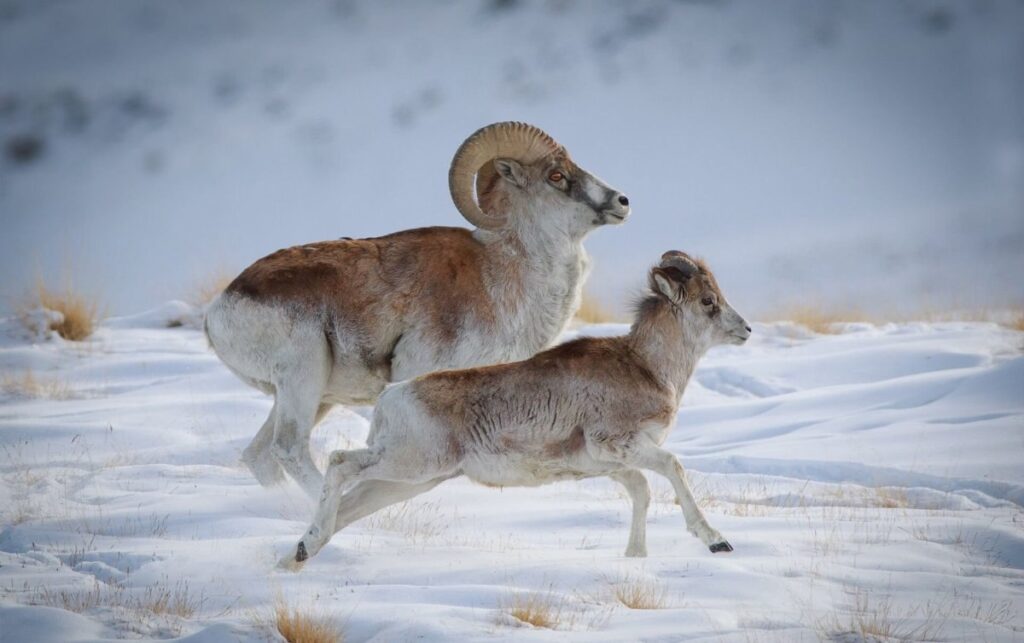
As reported by the Daily Montanan an 80-year-old farmer from Montana, Arthur "Jack" Schubarth, has pleaded guilty to federal charges for violating the Lacey Act, which prohibits the sale, transportation and purchase of wild animals between American states. In 2013, Schubarth illegally brought part of an argali sheep which had been killed in the Kyrgyz mountains into the U.S. and paid a laboratory to create cloned embryos from the animal's DNA. The embryos were then implanted into sheep on his farm and in time, he succeeded in raising a genetically pure argali, which he named Montana's Mountain King. Used to impregnate other sheep, the ram's sperm produced fairly large hybrids. In a statement to the paper, assistant U.S. Attorney General Todd Kim said, "It was a bold plan to create large hybrids of sheep for sale and hunting as trophies... By implementing this scheme, Schubarth violated international law and the Lacey Act, which protect the viability and health of local animal populations," According to investigators, Schubarth conspired with five individuals to sell hybrid offspring to Texas and Minnesota under the guise of domestic sheep from New Mexico. The sheep hybrids led to healthy profits in the field of hunting. In 2020, a farmer sold one of Mountain King's sons and 11 sheep containing a quarter of his genetics for $23,000 after obtaining a fake export license. The plea agreement states that the market value of all such sheep sold by Schubarth reached half a million dollars. The Argali, also known as a Marco Polo, is the largest ram on earth. Reaching up to two meters in length, with a height at the withers of 120 centimetres, an adult can weigh 180 kilograms. The breed is also valued for its large, curled horns and in Kyrgyzstan, is protected as an endangered species. However, once a year, authorities issue about 70-80 licenses to cull the population; an activity popular with foreign hunters and a lucrative source of income for the state. Whilst the fine for illegal killing of an argali is around $15,000, the official rate charged to licenced hunters is around $10,000. Speaking to the Times of Central Asia, Askar Davletbayev, an ecologist with the Kyrgyz National Academy of Sciences, stated, "According to the law, one percent of the total argali population can be shot but we try to shoot no more than 0.5 percent. According to the data, there are now about 19,000 of these animals in the country. Since the situation isn't critical, the current level of hunting can be maintained." During the autumn hunting season, many argali living on the Sarychat-Ertash Nature Reserve in the Issyk-Kul region migrate to areas around the nearby Kumtor gold mine. Scientists explain this as a way in which the animals try to protect themselves from both hunters and predators. Because the gold mine's territory cannot be accessed without approval, hunting is forbidden. Furthermore, since the local dump provides ample food for predators, the argali are left in peace. On more than one...

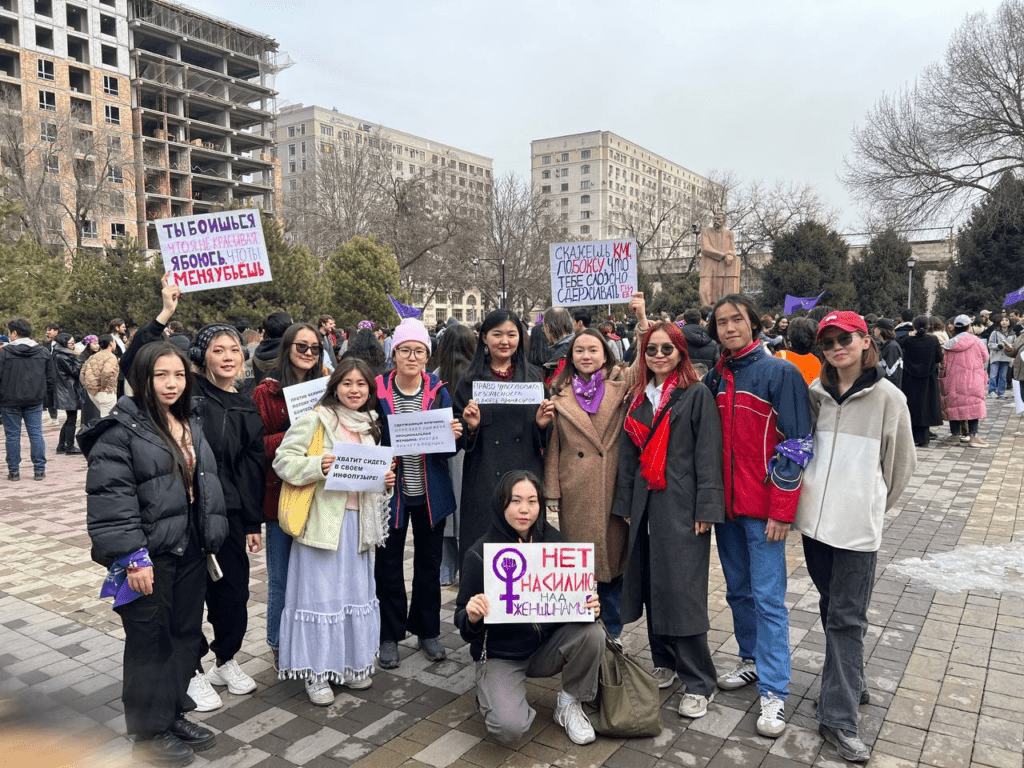
“You’re Afraid I’m Not Beautiful; I’m Afraid You’ll Kill Me” – Women Rally in Bishkek

On International Women's Day on March 8th, hundreds of people took to the streets of Bishkek to participate in the annual march for women's rights. Under the slogan "A woman's life is a mirror of the time," the march started from the monument to revolutionary fighters on Chui Avenue and ended in Gorky Square on Isanov Street. The marchers carried placards and made calls for an end to violence against women, to ensure their freedom and protect freedom of speech. One of the speakers was Asel Nogoibayeva, who said she had first-hand experience of domestic violence. Her words left a lasting impression, as did her call for the police to address the problems of domestic violence. Marches on March 8th in support of women's rights have become an annual tradition in Bishkek, with the main theme always for the authorities to pay attention to women's issues. "I went with a double-sided poster that said: ‘You’re afraid I’m not beautiful; I’m afraid you’ll kill me’ and on the other side, ‘Only a human being can give birth to a human being,’” Saraya, a participant at the rally told TCA. “I also printed out some posters that I handed out." Saraya said that the march went exactly as planned with no deviations and expressed her joy at the increase in the number of participants, including girls with their boyfriends, which is a testament to the expanded audience and impact of the event. "Of course, marching is not the only way to influence people,” she said. “It doesn't work if once a year you walk around with placards and then forget about it. Businesses, for example, have different ways of attracting customers - social media, word of mouth, banners, etc. A march is like an advertising campaign, periodically loudly and announcing itself so that people don't forget it. Only women’s rights are not a business – they’re a struggle for justice."

Climate Change Threatens Kyrgyzstan With Potential Energy Crisis

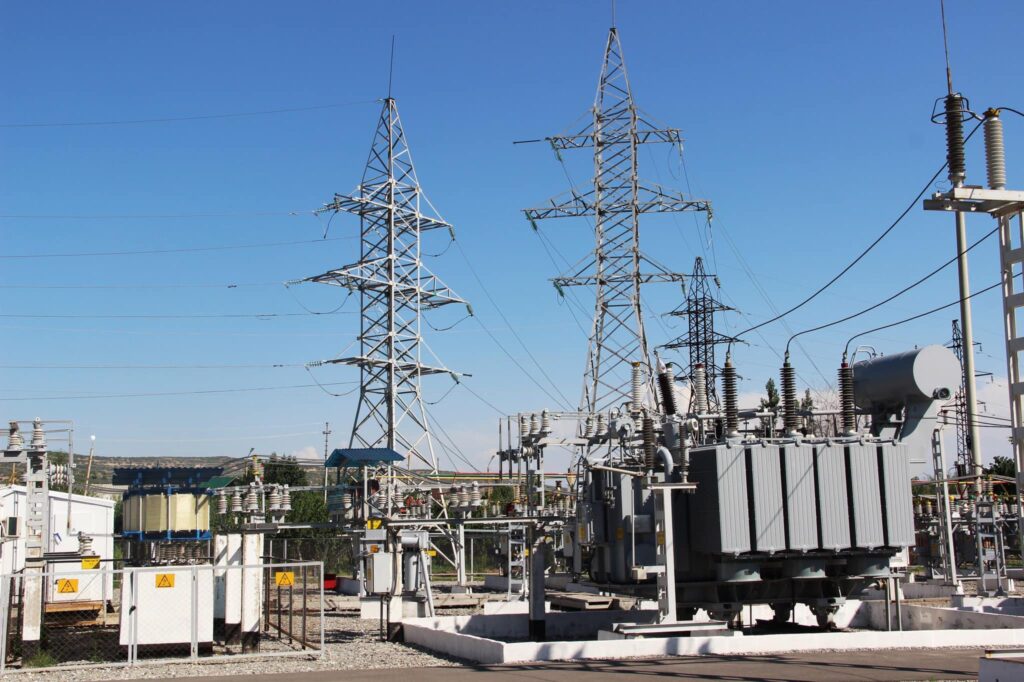
With electricity serving as Kyrgyzstan's main source of heating for a third of the country's population, national power consumption is tripling during the winter months, according to the Kyrgyz Energy Ministry. The ministry has drafted a law requiring "efficient and rational" use of electricity. Also, according to the draft law, authorities should develop efficient ways to generate electricity that take into account global climate change. "At present, the shortage of domestic energy resources and constantly rising prices for imported hydrocarbons are constraining factors in increasing production and fully meeting the needs of the population and the real sector of the republic's economy in the power grid," reads the background to the draft law. According to the ministry, the country's leadership has laid out the task of creating conditions for introducing progressive technologies, equipment and materials into Kyrgyzstan's energy sector that can ensure a qualitative improvement in the efficiency of domestic energy consumption. The background to the draft law states that in order to achieve this, the first priority is a system of strict record-keeping of electricity consumption by private companies and the population. The Ministry of Energy investigated and found that 35% of Kyrgyz people use electricity for space heating in winter. That's because electricity is cheaper than traditional energy resources such as gas and coal. Officials argue that the low level of electricity tariffs for the population does not incentivize energy conservation. International observers have repeatedly said that increasing the price of electricity is a necessity, but the country's authorities don't want to take unpopular measures. The Ministry of Energy believes that if every citizen is concerned about saving electricity and using it rationally, the country's dependence on power imports will be reduced. As the Times of Central Asia has previously reported, Kyrgyzstan has a serious imbalance in its energy system, despite the country's large water reserves. Electricity consumption grows by six% every year, forcing the authorities to import electricity from neighboring countries during the winter. But by the 2030s, the situation could seriously deteriorate. That's because most of the country's hydroelectric power plants, which generate 78% of Kyrgyzstan's electricity, are located on the Naryn River. Climate scientists predict that the flow of Kyrgyzstan's main river will decrease by 15-50% after 2030. That means the already low water levels in Kyrgyzstan's largest reservoirs could become even lower. This year, Kyrgyz authorities seriously intend to begin construction of a new large power plant, Kambarata-1, which will also be located on the Naryn River. The cost of the project is more than $3 billion. The new draft law from the Ministry of Energy notes that the Kyrgyz energy sector is highly vulnerable because the main power facilities depend on the flows of only one river. And the persistently warmer temperatures brought by climate change could worsen the industry's already considerable problems. That's why more small hydropower plants (HPPs) need to be built in Kyrgyzstan. Kyrgyz President Sadyr Japarov has repeatedly said that for energy security, more small HPPs need to be...