• KGS/USD = 0.01144 0%
  • KZT/USD = 0.00207 0%
  • TJS/USD = 0.10415 -0.19%
  • UZS/USD = 0.00008 0%
  • TMT/USD = 0.28571 0%
  • KGS/USD = 0.01144 0%
  • KZT/USD = 0.00207 0%
  • TJS/USD = 0.10415 -0.19%
  • UZS/USD = 0.00008 0%
  • TMT/USD = 0.28571 0%
  • KGS/USD = 0.01144 0%
  • KZT/USD = 0.00207 0%
  • TJS/USD = 0.10415 -0.19%
  • UZS/USD = 0.00008 0%
  • TMT/USD = 0.28571 0%
  • KGS/USD = 0.01144 0%
  • KZT/USD = 0.00207 0%
  • TJS/USD = 0.10415 -0.19%
  • UZS/USD = 0.00008 0%
  • TMT/USD = 0.28571 0%
  • KGS/USD = 0.01144 0%
  • KZT/USD = 0.00207 0%
  • TJS/USD = 0.10415 -0.19%
  • UZS/USD = 0.00008 0%
  • TMT/USD = 0.28571 0%
  • KGS/USD = 0.01144 0%
  • KZT/USD = 0.00207 0%
  • TJS/USD = 0.10415 -0.19%
  • UZS/USD = 0.00008 0%
  • TMT/USD = 0.28571 0%
  • KGS/USD = 0.01144 0%
  • KZT/USD = 0.00207 0%
  • TJS/USD = 0.10415 -0.19%
  • UZS/USD = 0.00008 0%
  • TMT/USD = 0.28571 0%
  • KGS/USD = 0.01144 0%
  • KZT/USD = 0.00207 0%
  • TJS/USD = 0.10415 -0.19%
  • UZS/USD = 0.00008 0%
  • TMT/USD = 0.28571 0%

Viewing results 109 - 114 of 126

Civil Liberties Worsening in Kyrgyzstan Says Civicus Monitor

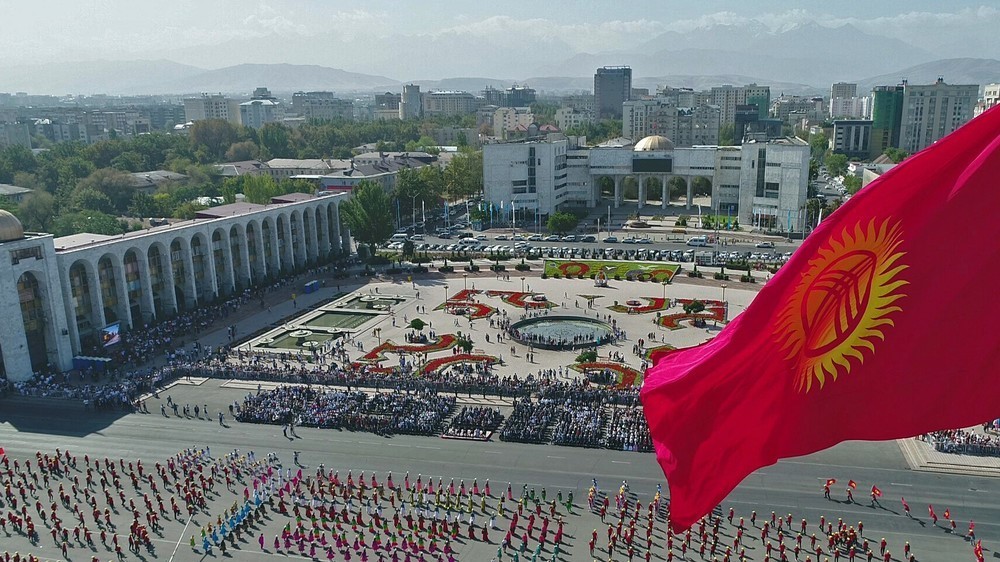
This year, Kyrgyzstan became one of the seven countries whose annual ranking in terms of civil liberties worsened. This is according to the report, "People's Power under Attack - 2023" published by global civil society alliance, Civicus Monitor. The methodology applied by Civicus Monitor sees countries divided into five categories depending on the points scored: countries with open (free) civil space, narrowed (freedoms are partially limited), partially closed (oppressive civil liberties), suppressed and closed. Kyrgyzstan scored 40 out of 100 points, and was therefore classified as a State with a suppressed (repressed) civil space. Since 2018, the republic has been included in the category of countries with a partially closed civil space. The reasons for this downgrade were the promotion of draft laws restricting the activities of NGOs and the media, increased pressure on independent media, criminal prosecution of civil society activists, journalists and other critics of the government, and long-term ban on peaceful assemblies in the central districts of Bishkek. Neighbors in the region also received relatively low ratings, with Turkmenistan (8 points), Tajikistan (12 points) and Uzbekistan (18 points) classified as countries with a closed civil space, whilst Kazakhstan (27 points) was classified as a state with a suppressed civil space. According to the authors, almost a third of humanity now lives in countries with a closed civil space. This is the highest percentage (30.6%) living in the most restrictive environment since the first Civicus Monitor report in 2018. Only 2.1% of people live in open states where civil space is both free and protected. This is half as much as six years ago, the report says.
Kyrgyzstan: EU Holds Training Workshops on Sanctions Against Russia

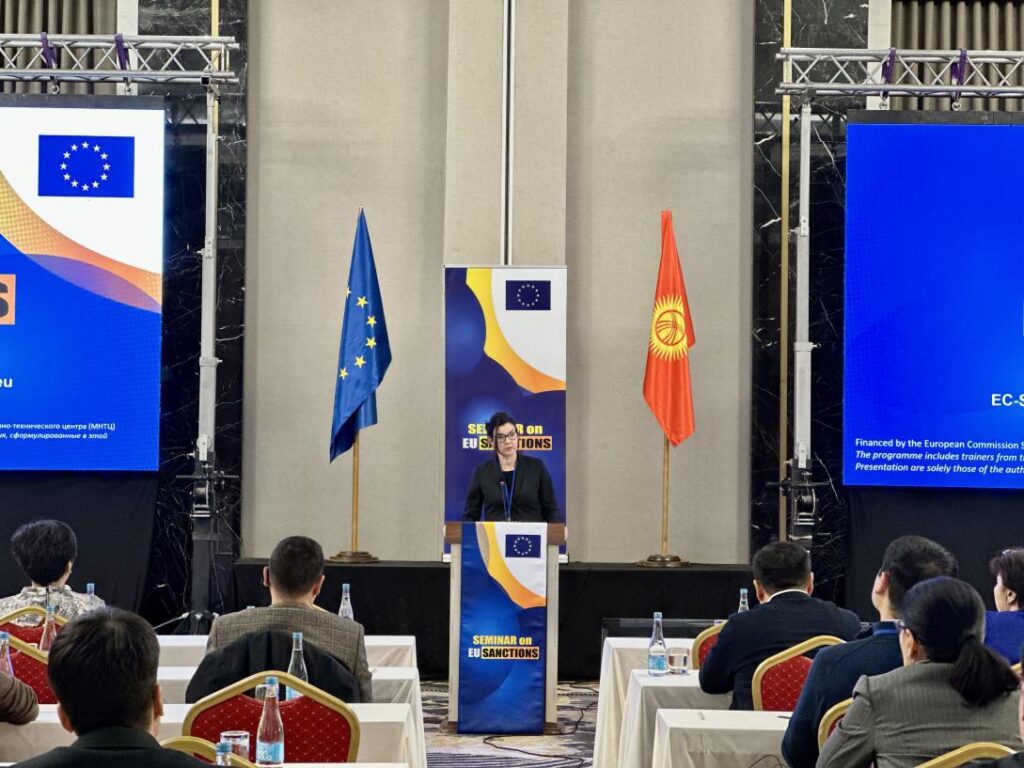
As reported by the press and information team of the Delegation of the European Union to the Kyrgyz Republic, on November 9th and 10th, the European Union organized training workshops in Bishkek, Kyrgyzstan on EU sanctions against Russia, with support from the International Science and Technology Center (ISTC), and the Association of Certified Sanctions Specialists (ACSS). The primary aim of the workshops was to raise awareness of EU sanctions and their application, and to prevent possible circumvention of these measures. On the 9th, the meeting saw government officials gather, whilst the second day was dedicated to a workshop which targeted private operators in Kyrgyzstan interested in improving their awareness of EU sanctions. “I am delighted that so many people from the Kyrgyz authorities and the private sector chose to attend the EU Sanctions Training Seminar this week”, said the acting Head of the EU Delegation to Kyrgyzstan, Ms Lene Volkersen. “It has been great to witness the strong Kyrgyz interest in understanding how EU sanctions work. The ultimate goal of the EU’s sanctions against Russia is to undermine its ability to continue waging war against Ukraine, and we welcome that Kyrgyzstan is not willing to be used as a platform for sanctions circumvention. We look forward to continuing this dialogue with government authorities, as well as private sector”. The training workshops were conducted by a team of EU representatives and sanctions experts, and consisted of presentations and interactive question and answer sessions.

Jailed Former Minister’s Son Extradited from Turkey

The Kyrgyz State Committee of National Security announced on October 17 that Kemelbek Kutmanov, the son of incarcerated former Natural Resources Minister Dinara Kutmanova, has been extradited from Turkey to face corruption charges, according to RFE/RL’s Kyrgyz Service. Kyrgyz President Sadyr Japarov had disclosed in July that Kutmanov was detained in Turkey at the request of Bishkek, linking him to alleged misappropriation of funds at the Kumtor gold mine. Kutmanov, suspected of involvement in the embezzlement, is the son of Dinara Kutmanova, who held the position of natural resources minister from May 2021 until March of the current year. She herself was arrested in July on suspicion of participating in the embezzlement, an accusation she has denied.

OSCE Campaign on Youth Crime Prevention and Integrity Reaches 1.5 Million People

The OSCE awareness campaign on youth crime prevention and integrity, launched in June 2023, achieved the milestone of reaching one and a half million young people across Kyrgyzstan, the OSCE has stated in a press release. Featuring some of Kyrgyzstan’s leading influencers, bloggers, artists, youth activists and athletes, the campaign showcases the stories of these local celebrities and how they pursued their passions, built successful businesses and gave back to their communities, all while adhering to the values of lawfulness and integrity. The campaign features Aigerim Akylbekova, a Kyrgyz journalist and activist, who reflects on her upbringing and the challenges of her childhood marked by high levels of unemployment. Aigerim shares how in the pursuit of a better life, some people opted for shortcuts, relying on bribery and corrupt activities. “Since childhood I believed that I could achieve everything on my own without resorting to nepotism or bribes,” Aigerim says. “Often, people choose unjust ways to excel in life. Many do this out of desperation – coming from a life of difficulty. Still, this sets us all back. Change can only begin with zero tolerance for dishonesty and corruption,” she adds. Meerim Tolepbergen, a Kyrgyz blogger with over one million Instagram followers, is also actively involved in the campaign. She discusses the key factors contributing to youth crime, drawing from her own experience as child of migrants. Children separated from their parents often grapple with self-doubt and may seek support from potentially harmful peer groups, she says, leading to possible involvement in organized crime. Meerim underscores the significance of addressing this issue and choosing a different path. The stories of Meerim and Aigerim, alongside the others in the campaign, aim to inspire and guide young people in Kyrgyzstan by offering real-life positive examples of those who have achieved their goals through legal, ethical, and productive methods.

Armenian PM to Stay Away from CIS Summit in Bishkek

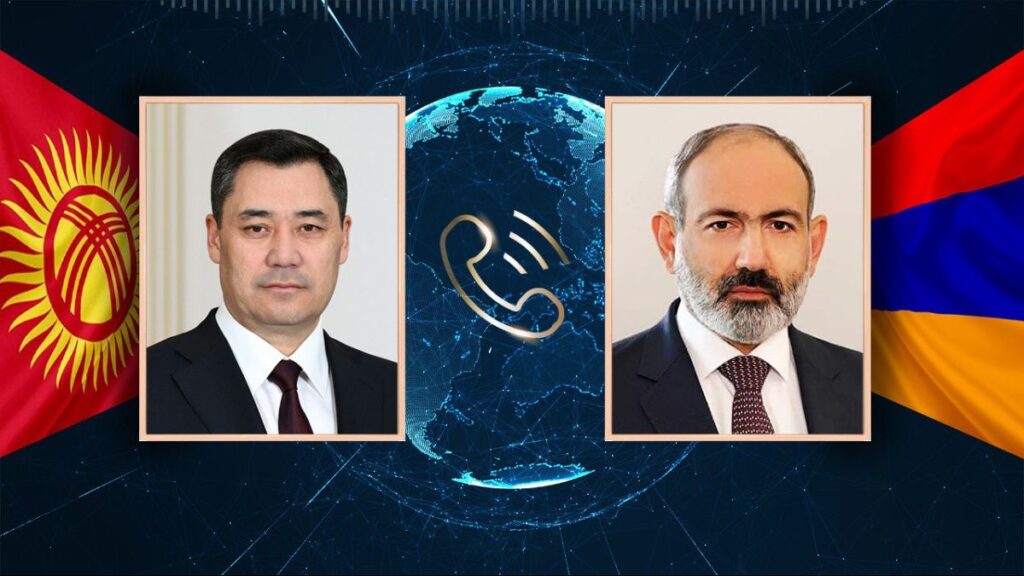
As reported by RFE/RL, Armenian Prime Minister Nikol Pashinyan has opted out of the upcoming summit of the Council of the Leaders of the Commonwealth of Independent States (CIS), slated to be held in Bishkek, the capital of Kyrgyzstan, on October 13. According to the Kyrgyz presidential office on October 10, Pashinyan conveyed to Kyrgyz President Sadyr Japarov his inability to attend the gathering during a phone conversation. This absence underscores a widening gap between Yerevan and Moscow, particularly as Russian President Vladimir Putin is set to participate in the summit. Earlier, Armenia had announced the non-participation of its troops in the ongoing military exercises led by the Russia-led Collective Security Treaty Organization (CSTO) in Kyrgyzstan.

Authorities Close Religious Institutions in Batken Region

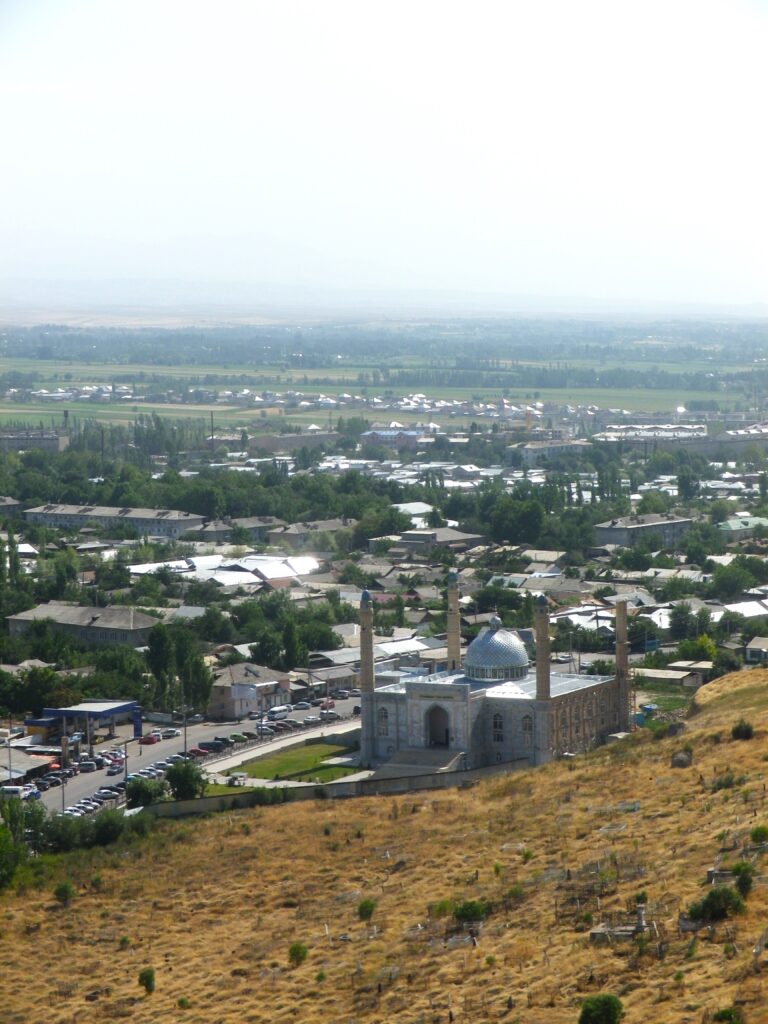
On October 10th, Kyrgyzstan’s State Committee of National Security - comprising representatives from the State Committee of National Security, the Emergency Ministry, the Interior Ministry, Health Ministry, the Grand Mufti's office, other state entities and the regional government stated that it had closed 32 mosques and five religious schools in the southern region of Batken. This came following an assessment examining the potential presence of radical Islamic ideology and extremist viewpoints within the religious institutions. Situated on the southern slope of Solomon’s Throne in Osh, Kyrgyzstan’s largest mosque has the capacity to hold 20,000. Built in the 2010s with funds from Saudi Wahhabis, it was inaugurated by former President Atambayev, who, like other regional leaders before him, had been wooed by promises of Saudi money. Sunni supremacists wishing to revert to the seventh-century ways of Mohammed, Wahhabi missionaries first arrived in Central Asia in 1912, setting up cells in Tashkent and the Fergana Valley. Declaring holy war not only on the West, but also on other Muslims, the Wahhabis labelled all who disagreed with them heretics. Having suffered lean times under the Communists, now they were back and loaded with oil money. Of the Osama Bin Laden school of thought, their goal is to destroy secularism and create a region-wide caliphate based on Sharia law, this despite the fact there has never been an Islamic state in Central Asia. Amongst the Wahhabi’s affiliates are the Islamic Movement of Uzbekistan, formed in the early nineties by Tohirijon Yuldashev, a twenty-four-year-old college drop-out, and Juma Namangani, an ex-Soviet paratrooper turned train robber. Raising funds by kidnapping Japanese geologists and American mountaineers, in 2000 the IMU briefly took Osh, holding its mayor for ransom and coming within striking distance of its goal of seizing Tashkent. With the IMU largely absorbed into the Afghan Taliban, ignored warnings of the impending 9/11 attacks on America are said to have emanated from Yuldashev, who like Namangani, has since been killed. Looking to engage those alienated by state-appointed imams, who as a recent recruit noted, offer only ‘prayers for a bigger cotton harvest and instructions for how to go to the bathroom properly,’ the IMU are currently calling for a jihad in Southern Kyrgyzstan. With the IMU mainly moved into Afghanistan and Pakistan, in June of 2014, after swearing allegiance to ISIS, the organization claimed responsibility for the attack on Jinnah International Airport in Karachi, Pakistan, which left 36 dead. There are currently upwards of two thousand ISIS recruits from Central Asia, with the movement's hierarchy focused on recruiting more disaffected Uzbeks.