• KGS/USD = 0.01144 0%
  • KZT/USD = 0.00212 0%
  • TJS/USD = 0.10432 0%
  • UZS/USD = 0.00008 0%
  • TMT/USD = 0.28490 0%
  • KGS/USD = 0.01144 0%
  • KZT/USD = 0.00212 0%
  • TJS/USD = 0.10432 0%
  • UZS/USD = 0.00008 0%
  • TMT/USD = 0.28490 0%
  • KGS/USD = 0.01144 0%
  • KZT/USD = 0.00212 0%
  • TJS/USD = 0.10432 0%
  • UZS/USD = 0.00008 0%
  • TMT/USD = 0.28490 0%
  • KGS/USD = 0.01144 0%
  • KZT/USD = 0.00212 0%
  • TJS/USD = 0.10432 0%
  • UZS/USD = 0.00008 0%
  • TMT/USD = 0.28490 0%
  • KGS/USD = 0.01144 0%
  • KZT/USD = 0.00212 0%
  • TJS/USD = 0.10432 0%
  • UZS/USD = 0.00008 0%
  • TMT/USD = 0.28490 0%
  • KGS/USD = 0.01144 0%
  • KZT/USD = 0.00212 0%
  • TJS/USD = 0.10432 0%
  • UZS/USD = 0.00008 0%
  • TMT/USD = 0.28490 0%
  • KGS/USD = 0.01144 0%
  • KZT/USD = 0.00212 0%
  • TJS/USD = 0.10432 0%
  • UZS/USD = 0.00008 0%
  • TMT/USD = 0.28490 0%
  • KGS/USD = 0.01144 0%
  • KZT/USD = 0.00212 0%
  • TJS/USD = 0.10432 0%
  • UZS/USD = 0.00008 0%
  • TMT/USD = 0.28490 0%

Viewing results 187 - 192 of 379

Dangerous Afghan Sodas Seized in Kyrgyz Stores

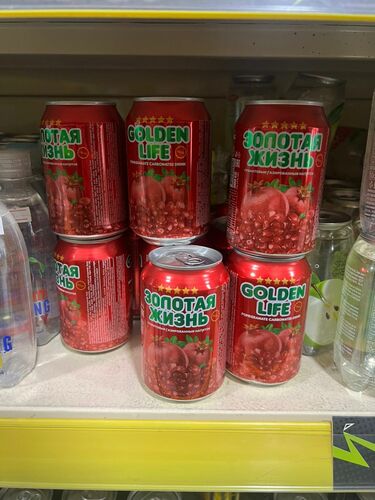
An unscheduled inspection to detect and seize from circulation the non-alcoholic carbonated pomegranate drink, “Golden Life” produced in Afghanistan was conducted in Bishkek. Earlier, the Ministry of Health of the Kyrgyz Republic reported that the Department of Disease Prevention and State Sanitary and Epidemiological Surveillance ordered that this drink be withdrawn from sale everywhere. Afghan-made sodas contain the dye azorubin E 122, which can negatively impact children's activity and attention spans. According to the Center for State Epidemiological Surveillance, 58 retail outlets, trading and market complexes were checked. The heads of enterprises were handed 65 sanitary prescriptions requiring them to withdraw these products from sale and return them to suppliers and resellers. In total, 7,356 cans of the drink were withdrawn. The heads of trade networks were instructed to prohibit the sale of this product in the future.

British Publisher Promotes Kyrgyz Artists

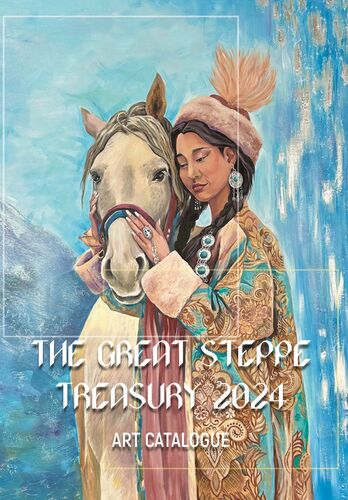
The second issue of 'The Great Steppe Treasury', released in July by British publisher Hertfordshire Press, includes the addition of work by three artists from Kyrgyzstan: Seid Atambaev, Larisa Pak, and Gulmira Ayipova. The art catalogue which promotes the diversity of Eurasia's contemporary art, culture, and creativity, represents 24 artists from the UK, Kyrgyzstan, Lithuania, Belarus, Kazakhstan, Russia, Germany, and Crimea. Regarding the second edition, publisher Marat Akhmedjanov commented,  “We are glad to be able to give artists from Kyrgyzstan the opportunity to share their creativity with an international audience through our unique project. And we especially admire how Seid Atambaev, as a deputy, combines his political activities with promoting his country through creativity, demonstrating the variety of ways to support the growth and representation of Kyrgyzstan." Copies of the catalogue will be sent to significant galleries in the UK and plans are in place for participants to present their work in Glasgow, London, Almaty, Minsk, St. Petersburg, and Batumi.

Rise in Kyrgyzstan Foster Families

At the beginning of July, records showed that 218 children without parental care were being raised by 110 foster families in Kyrgyzstan; an increase of 29% compared to the previous year. Active in promoting fostering as a far better alternative to orphanages , the Kyrgyz Ministry of Labor reports, "A foster or adoptive family is a trained family that provides upbringing for children in difficult life situations for a certain period of time, based on a contract with the state. Citizens between the ages of 30 to 65 are eligible to apply to become foster parents and to ensure the safety and wellbeing of their charges, receive specialist training as well as monthly checks by social service employees.  Contracted by the state, they also receive an allowance of $80 a month until the orphans come of age. According to the Ministry of Social Services, "If applicants have one or two children, they can only foster three. If foster parents have no children of their own, they can raise up to five toddlers or teenagers from three to 16 years of age." Beneficial on many levels, fostering provides children with both a secure base and opportunities to master a trade, work in agriculture or follow a profession, to enable them to lead independent lives as adults.    

Saudi Islamic Development Bank Increasing Its Presence in Central Asia

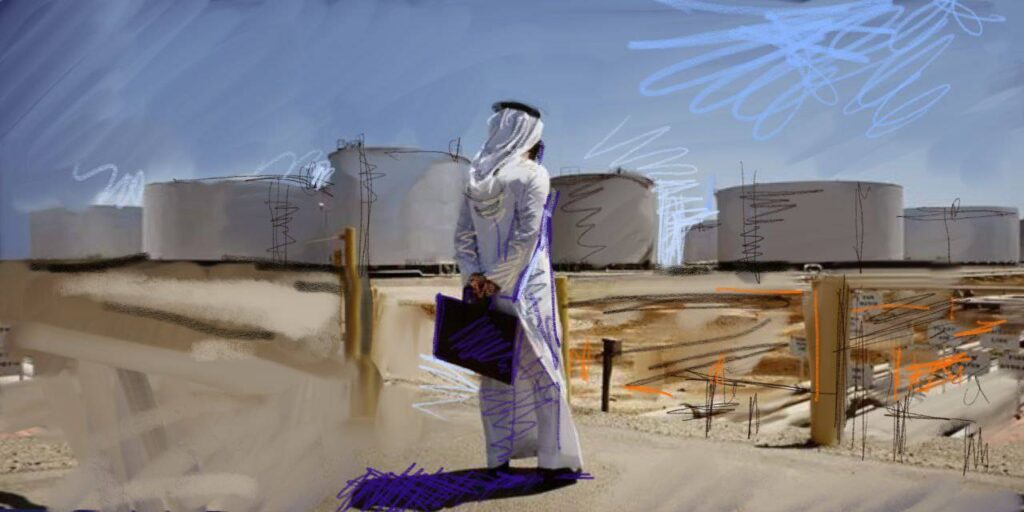
The Saudi-based Islamic Development Bank (IDB) has been particularly active in Central Asia so far in 2024. The growing IDB role is part of Central Asian region’s foreign policy shift toward the Arab world as financial backers to replace Russia, which is devoting huge attention and resources to its war in Ukraine, and China, which is increasingly reluctant to spend large sums of money in Central Asia after pouring in tens of billions of dollars there during the last 25 years. Some of the Central Asian governments owe China substantial amounts of money that they are unlikely to be able to pay for possibly decades. The Central Asian states have been members of the IDB for many years. Kyrgyzstan was first, joining in 1993, followed by Turkmenistan in 1994, Kazakhstan in 1995, Tajikistan in 1996, and Uzbekistan in 2003. One of the IDB’s three regional offices is in Almaty, Kazakhstan (the other two are in Kuala Lumpur, Malaysia and Rabat, Morocco).  The IDB has been dealing individually with the five Central Asian countries on a wide range of projects and programs in recent months. Energy Resources In February, Tajik Minister of Economic Development and Trade Zavqi Zavqizoda announced a deal was reached for the IDB to provide $250 million to Tajikistan. Zavqizoda said $150 million of that would go toward construction of the Rogun hydropower plant (HPP).  The Rogun HPP was a Soviet-era project. Construction started in 1976 but was discontinued shortly after the Soviet Union collapsed. Tajikistan restarted work on the HPP in 2008. Tajik President Emomali Rahmon has repeatedly said that building the HPP with a planned 3600 MW capacity will make the country energy independent and even allow Tajikistan to bring in extra revenue exporting electricity to neighboring countries.  In its 28 years as an IDB member, Tajikistan had received some $620 million from the IDB, so the $250 million announced in February 2024 represents a significant jump in IDB financial help. Not surprisingly, when IDB President Muhammad Al-Jasser visited Kyrgyzstan in June, Kyrgyz President Sadyr Japarov sought IDB investment in the Kambar-Ata-1 HPP, another decades-old project with a multi-billion-dollar price tag that has barely made any progress in being realized during the 33 years Kyrgyzstan has been independent. Al-Jasser did not commit to IDB financing for the Kyrgyz HPP. However, less than a week after Al-Jasser was in Kyrgyzstan, the IDB was one of several international financial organizations that signed on at a conference in Vienna to be a members of a coordination donors’ committee for the Kambar-Ata-1 projects. At a meeting in Istanbul in February, the IDB reaffirmed its support for the Central Asia-South Asia-1000 (CASA-1000) project that aims to export electricity from HPPs in Kyrgyzstan and Tajikistan to Afghanistan and Pakistan. Kyrgyz Energy Minister Taalaybek Ibrayev met with Al-Jasser in June during the latter’s visit to Kyrgyzstan to discuss funding for Kyrgyzstan’s section of CASA-1000. Not Only Energy In June, the IDB pledged up to $2 billion in funding for improvements to water management...

Kyrgyzstan and Russia to Expand Cooperation Across the Board

On July 10, the 25th meeting of the Intergovernmental Kyrgyz-Russian Commission on Trade, Economic, Scientific, Technical and Humanitarian Cooperation, was held in the Russian city of Krasnoyarsk, co-chaired by the Chairman of the Cabinet of Ministers of the Kyrgyz Republic Akylbek Japarov and Deputy Prime Minister of the Russian Federation Alexey Overchuk. Aimed at strengthening cooperation between Kyrgyzstan and Russia, the agenda focused on developing trade and economic relations, increasing bilateral trade turnover, and creating favourable conditions for investments and joint ventures. The parties also discussed issues related to developing scientific and technical cooperation, expanding humanitarian ties, including in education, culture, and healthcare, as well as joint projects in tourism and transport. Referencing the fact stated that in 2023, trade turnover between Kyrgyzstan and Russia reached $3 billion, and in the first four months of 2024, had already exceeded $1 billion, showing an increase of 30%, Akylbek Japarov announced the mutual goal to increase the Kyrgyz-Russian trade to up to $5 billion. Given the two countries’ intention to increase the share of mutual settlements in national currencies, the head of the Kyrgyz Cabinet invited the largest state-owned banks of Russia, such as Sberbank, VTB, Vnesheconombank, and Gazprombank, to open branches in Kyrgyzstan. On the same day, Akylbek Japarov also spoke at the meeting of the 11th Kyrgyz-Russian Interregional Conference in Krasnoyarsk. Regarding Kyrgyz-Russian cultural and humanitarian interaction, Japarov said that the past three years had seen a “breakthrough in the education sector.” In particular, he noted an agreement concluded last year, on Russia’s construction of nine new schools in Kyrgyzstan; one in each of its seven regions and two in the cities. Further to signing a Decree on the establishment of a branch of the Lomonosov Moscow State University in the Kyrgyz city of Karakol, the president expressed his appreciation of the increase in budget-paid places for Kyrgyzstan citizens studying in Russian universities to 1,000.

EDB to Finance Mountain Resort in Kyrgyzstan

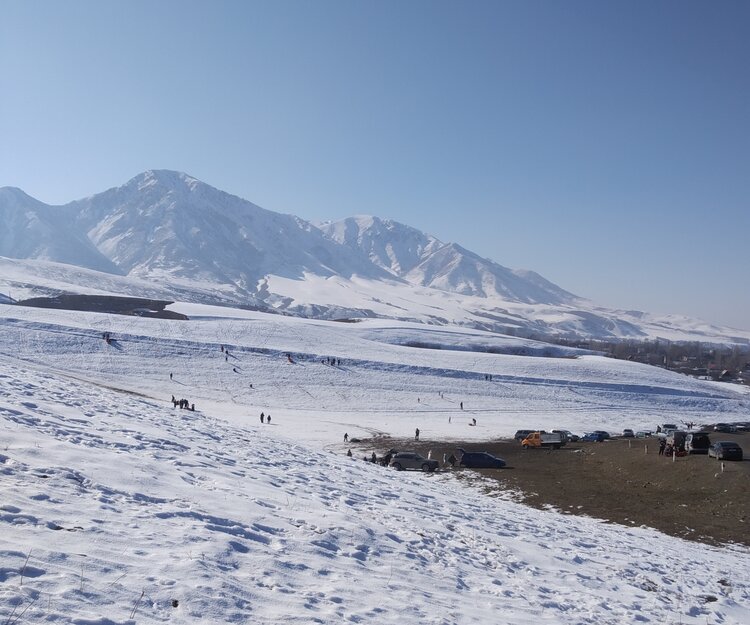
On July 10, the National Investment Agency under the President of the Kyrgyz Republic, Vasta Discovery LLC, and the Eurasian Development Bank (EDB) signed a trilateral Memorandum of Cooperation on the construction of the Baytik mountain resort, an all-season tourism cluster in Kyrgyzstan’s northern Chui region. The EDB will act as the project’s creditor but the amount of the planned investment has yet to be declared. Following the signing of the agreement, Sergey Ignatov, EDB’s Senior Managing Director stated, "As a multilateral development bank, the EDB performs its investment activities so as to contribute to the economic growth of its member countries, the expansion of trade and economic ties, and the development of integration processes in the Eurasian space. Apart from its obvious integration potential, the Baytik Mountain Resort project is also expected to contribute to the development of tourism, an important sector of the Kyrgyz economy, which will have a positive impact on related industries and cultural exchange in Eurasia, and will become a significant growth point in this region." Talantbek Imanov, Director of the National Investment Agency highlighted the fact that the Baytik Mountain Resort represents the first foray into cooperation in Kyrgyzstan’s  tourism infrastructure and outlining the project, announced: "The future resort includes 15 cable cars, 36 ski slopes exceeding 57 km, 4 tourist villages and a ski complex that meets the requirements of international top class competitions, including the Olympic Games and World Cup alpine skiing and snowboarding events.” The Baytik Mountain Resort will be constructed and developed by Vasta Discovery, a company with extensive experience in implementing large-scale tourism infrastructure projects. Emphasizing his company’s firm commitment to the project, Sergey Bachin, CEO of Vasta Discovery confirmed, "We are confident that there will be domestic demand for the resort and its services and that it will also become an important attraction for foreign tourists and inspire them to visit Kyrgyzstan."