• KGS/USD = 0.01143 0%
  • KZT/USD = 0.00205 0%
  • TJS/USD = 0.10433 0.1%
  • UZS/USD = 0.00008 0%
  • TMT/USD = 0.28577 0%
  • KGS/USD = 0.01143 0%
  • KZT/USD = 0.00205 0%
  • TJS/USD = 0.10433 0.1%
  • UZS/USD = 0.00008 0%
  • TMT/USD = 0.28577 0%
  • KGS/USD = 0.01143 0%
  • KZT/USD = 0.00205 0%
  • TJS/USD = 0.10433 0.1%
  • UZS/USD = 0.00008 0%
  • TMT/USD = 0.28577 0%
  • KGS/USD = 0.01143 0%
  • KZT/USD = 0.00205 0%
  • TJS/USD = 0.10433 0.1%
  • UZS/USD = 0.00008 0%
  • TMT/USD = 0.28577 0%
  • KGS/USD = 0.01143 0%
  • KZT/USD = 0.00205 0%
  • TJS/USD = 0.10433 0.1%
  • UZS/USD = 0.00008 0%
  • TMT/USD = 0.28577 0%
  • KGS/USD = 0.01143 0%
  • KZT/USD = 0.00205 0%
  • TJS/USD = 0.10433 0.1%
  • UZS/USD = 0.00008 0%
  • TMT/USD = 0.28577 0%
  • KGS/USD = 0.01143 0%
  • KZT/USD = 0.00205 0%
  • TJS/USD = 0.10433 0.1%
  • UZS/USD = 0.00008 0%
  • TMT/USD = 0.28577 0%
  • KGS/USD = 0.01143 0%
  • KZT/USD = 0.00205 0%
  • TJS/USD = 0.10433 0.1%
  • UZS/USD = 0.00008 0%
  • TMT/USD = 0.28577 0%

Viewing results 253 - 258 of 361

Kyrgyzstan’s Military Blasts Mountains With Anti-Aircraft Guns for Avalanche Safety

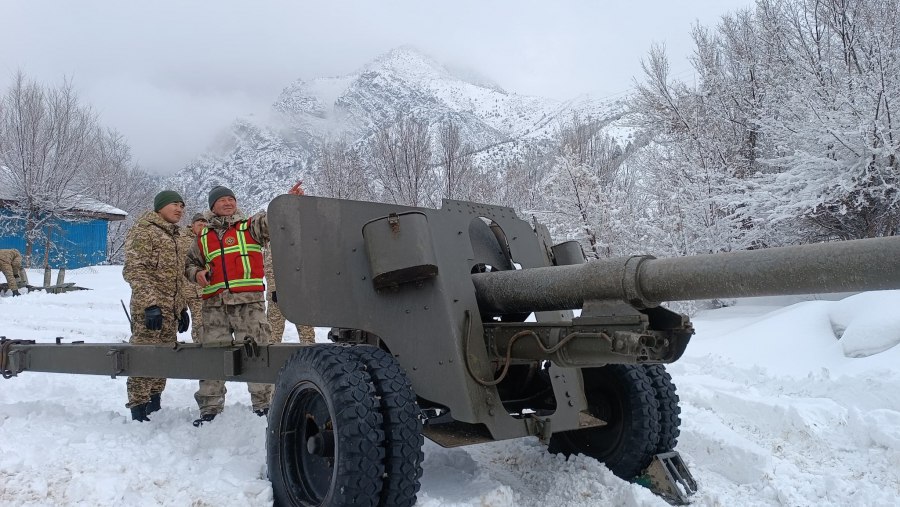
The country's hydro-meteorological center recently announced a storm warning, with worsening weather conditions in the mountains and the risk of avalanches. To ensure the safety of citizens, the military, together with rescuers and public utilities, are working to clear snow. Unstable weather is expected for almost all of February, according to forecasts. That means avalanches are to be expected. Kyrgyzstan's main cities, Bishkek and Osh are connected by a single 620-kilometer highway that passes through picturesque but dangerous mountain passes. It's here in the Too Ashuu and Ala Bel passes that many accidents occur. Multiple avalanches have occurred in the past few days, and temporary restrictions on the passage of heavy trucks have been put in place on some sections of the road, whilst other sections are completely closed until the threat is eliminated, according to the Ministry of Transport. Therefore, the military have been deployed. "Today the task force of the Ministry of Emergency Situations of the Kyrgyz Republic and artillery of the Ministry of Defense of the Kyrgyz Republic fired on the 247th, 255th and 250th kilometers of the Bishkek-Osh highway. As a result, 23,230 cubic meters of snow were dislodged," the Kyrgyz Emergencies Ministry said. According to rescuers, the shelling was delivered by a Soviet-made KC-19 anti-aircraft gun with live fragmentation projectiles. The gun's range is up to 15 kilometers.

Two New tourist Stops Open on Kyrgyzstan’s Silk Road

Two new tourist stops have been opened in the south of Kyrgyzstan. One is beside the famous Uzgen Minaret, built almost a thousand years ago; the other is in the village of Barpy, on the highway between Bishkek and Osh.  Stops like these exist to allow travelers to rest, charge electric cars and gadgets, have something to eat and drink, and take a shower. Kyrgyzstan’s first dedicated tourist stop was opened last spring in the town of Kemin in the north of the country, on the way to Issyk-Kul Lake. There are now four places for tourists to stop in the south of Kyrgyzstan — Barpy, Uzgen, Kara-Kul, and Jalal-Abad. Two others are currently being built in the Issyk-Kul Region.

Central Asia’s First Center for the Support of Women and Girls to Open in Kyrgyzstan

Women whose rights are violated at home and at work will now be able to receive protection at a special center, according to the Kyrgyz Republic's Ministry of Labor, Social Security and Migration. It will be the first such center in Central Asia in support of female victims of violence, and will offer women and girls free psychological and legal assistance, as well as medical examinations. "When the one-stop shop opens, women and girls will receive all necessary services in one place, namely investigative and forensic medical examinations, as well as legal and psychological assistance," Deputy  Minister of Labor, Social Security and Migration, Zhanyl Alybayeva said at a meeting with international organizations and human rights activists. Alybayeva stated that the UN Office on Drugs and Crime is providing technical support for the center's opening. According to statistics, the number of cases of domestic violence against women in Kyrgyzstan today remains high. In 2022, according to official data, 8,620 cases of domestic violence against women were registered, and in the first 10 months of 2023, there were more than 8,000 instances. The majority of those who contacted law enforcement are women between the age of 18 and 34. At the end of last year, parliament ratified the international convention on the eradication of violence and harassment in the field of labor. A draft law "on amendments to some legislative acts of the Kyrgyz Republic in the field of protection and defense against family, sexual and gender violence" was also put forward. In their debate, MPs noted that most women who suffer from violence do not turn to law enforcement, and therefore the real figures are almost certainly much higher. The new bill also stipulates that perpetrators of violence within the family must temporarily leave the dwelling they share with the victim. "After an act of violence within the family, victims usually move out to acquaintances or to crisis centers, and then the family collapses," MP Dinara Ashimova said. "With this bill, we propose that it should be the accused who has to leave. Even when he returns, there will be a greater likelihood that the spouses will reconcile and the family will be preserved." Currently, ratification of the international convention is awaiting President Japarov's signature.

Bishkek Plans A Cable Car Line

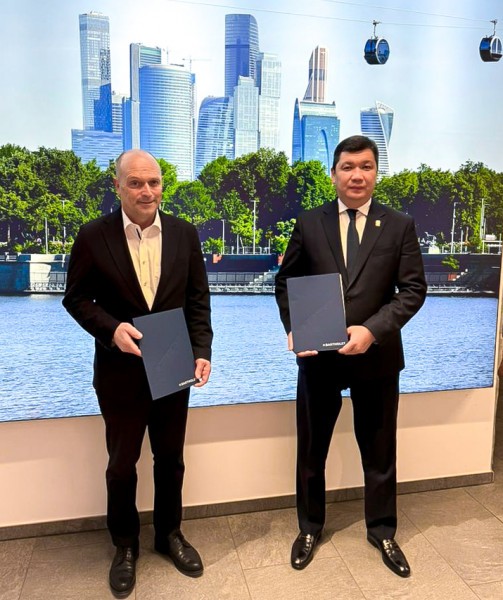
Following Tashkent in neighboring Uzbekistan, Kyrgyzstan’s capital Bishkek is planning to build a cable car line to help solve the city’s transport problems.  On January 30th in Flums, Switzerland, Bishkek’s mayor Aibek Junushaliev met with Roland Bartholet, the CEO of the engineering company Bartholet Maschinenbau AG. The parties signed an agreement and approved a plan to build a cable car line in Bishkek. The city of Bishkek’s press service called the agreement an important step in the modernization of its urban infrastructure, aimed at providing comfortable transport options for people in the city. Last month the city of Tashkent and the Chinese company Beijing North Bartholet Ropeway Technology agreed on a project to introduce a cable car service in the Uzbek capital. Beijing North Bartholet Ropeway Technology is a joint venture with Bartholet Maschinenbau AG. 

World Bank Provides Additional Support For Rural Water Services In Kyrgyzstan

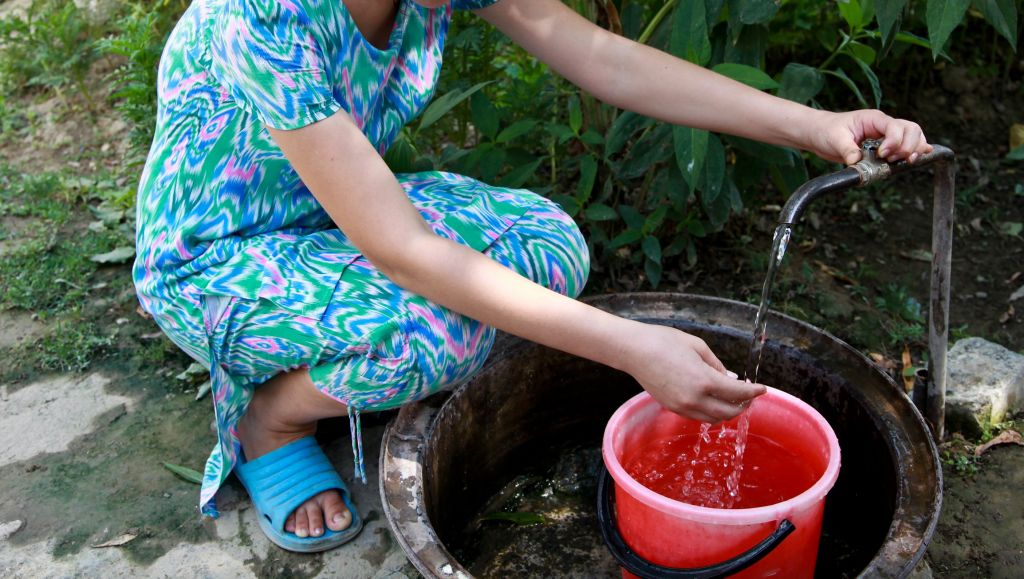
On January 31st the World Bank’s executive board approved $7.64m in additional financing for its ‘Sustainable Rural Water Supply and Sanitation Development’ project in Kyrgyzstan. This funding tops up the World Bank’s earlier commitment of $59.5m for the project, aimed at improving water supply and sanitation services in rural communities. Naveed Hassan Naqvi, the World Bank’s country manager for Kyrgyzstan, said that the project will improve the quality of life of rural citizens, especially women, children and the most vulnerable, and will bring a major decrease in water-borne diseases. The total combined investments under the project are expected to reach 94 villages in the Osh, Chui and Issyk-Kul regions, and directly benefit some 200,000 people, the World Bank said. The project funds the construction and rehabilitation of 57 climate-resilient water supply subprojects, aiming to enhance both climate adaptation and mitigation by diversifying water supply sources, increasing storage capacity, replacing key assets and installing water meters. It will also retrofit sanitary facilities in 99 social institutions and provide small grants to 1,350 households to upgrade their sanitation facilities.  The project will also enhance national and local institutional capacity for sustainable service delivery and climate-informed sector reforms, including the revision of water supply and sanitation laws. Odete Muximpua, the World Bank’s senior water supply and sanitation specialist, commented: “The second additional financing will address the financing gap caused by increased construction material prices as a result of the economic crisis. It will also allow for an increase in the size of grants to poor households in all project villages to finance the upgrades of their sanitation facilities.”

Why Do People in Kyrgyzstan Refuse Seasonal Vaccinations?

In Kyrgyzstan more than 22,000 refusals of seasonal vaccinations were registered last year, according to the director of the Republican Center for Immunoprophylaxis, Gulbara Ishenapysova. She told journalists at a press conference that 40% of those who refuse doubt that vaccines against flu, measles and other seasonal diseases are of good quality -- while almost half do not want to be vaccinated for religious reasons. The Ministry of Health fears that an influx of infections from abroad could occur at any moment. For example, diphtheria cases are now being registered in Europe, and polio has not yet been defeated in Afghanistan and Pakistan. Doctors in Kyrgyzstan, said Ishenasypova, must be prepared for these diseases. Last year, nine children died of complications from measles in the Republic. Doctors emphasize that all of them had not been vaccinated. Meanwhile, parents refusal to vaccinate their children is punishable. Unvaccinated children may not be admitted to kindergarten or school. Furthermore, an article enshrined in the constitution assigns criminal liability to parents who deliberately fail to seek medical help in cases where a disease harmed a child. "In 2022, we lost a child to tetanus, and in 2023, we lost nine children to measles. If an unjustified refusal led to a fatal outcome, then it is intentional harm to the child's health, and liability under the law is provided for," the Republican Center for Immunoprophylaxis stressed. The rate of refusal of seasonal vaccinations has decreased over the past five years. The Center cited statistics which indicate that the largest group to refuse vaccinations -- those who do so for religious reasons -- is decreasing. Seven or eight years ago, 78% of the total number to refuse did so on religious grounds; today, that figure is down to 48%. "The Spiritual Administration of Muslims of Kyrgyzstan urges parents not to refuse vaccination for allegedly religious reasons. The question of benefits and harms of vaccination belongs to medicine. Therefore, in this situation, the decision on Shariah will be made taking into account the opinion of medicine. Islam is not against vaccinations if there is a conclusion from the Ministry of Health on the safety of the drug," said the head of the information department of the Spiritual Administration of Muslims of Kyrgyzstan.