• KGS/USD = 0.01144 0%
  • KZT/USD = 0.00208 0%
  • TJS/USD = 0.10396 -0.29%
  • UZS/USD = 0.00008 0%
  • TMT/USD = 0.28490 0%
  • KGS/USD = 0.01144 0%
  • KZT/USD = 0.00208 0%
  • TJS/USD = 0.10396 -0.29%
  • UZS/USD = 0.00008 0%
  • TMT/USD = 0.28490 0%
  • KGS/USD = 0.01144 0%
  • KZT/USD = 0.00208 0%
  • TJS/USD = 0.10396 -0.29%
  • UZS/USD = 0.00008 0%
  • TMT/USD = 0.28490 0%
  • KGS/USD = 0.01144 0%
  • KZT/USD = 0.00208 0%
  • TJS/USD = 0.10396 -0.29%
  • UZS/USD = 0.00008 0%
  • TMT/USD = 0.28490 0%
  • KGS/USD = 0.01144 0%
  • KZT/USD = 0.00208 0%
  • TJS/USD = 0.10396 -0.29%
  • UZS/USD = 0.00008 0%
  • TMT/USD = 0.28490 0%
  • KGS/USD = 0.01144 0%
  • KZT/USD = 0.00208 0%
  • TJS/USD = 0.10396 -0.29%
  • UZS/USD = 0.00008 0%
  • TMT/USD = 0.28490 0%
  • KGS/USD = 0.01144 0%
  • KZT/USD = 0.00208 0%
  • TJS/USD = 0.10396 -0.29%
  • UZS/USD = 0.00008 0%
  • TMT/USD = 0.28490 0%
  • KGS/USD = 0.01144 0%
  • KZT/USD = 0.00208 0%
  • TJS/USD = 0.10396 -0.29%
  • UZS/USD = 0.00008 0%
  • TMT/USD = 0.28490 0%

Viewing results 265 - 270 of 370

U.S. Peace Corps to Help Develop Sustainable Tourism

Seven U.S. Peace Corps Response Eco-Tourism Volunteers arrived in Bishkek on January 15th to help promote sustainable tourism in partnership with the local non-profit Kyrgyz Community Based Tourism Association (KCBTA). After completing their training, the volunteers will work with CBT partners to develop nature-based tours, assist in creating effective marketing strategies to attract domestic and international tourists, establish guidelines and best practices to minimize the impact of tourism on local ecosystems, and help local partners improve their English language skills, the U.S. Embassy in Kyrgyzstan said. The Volunteers will undergo two weeks of intensive training, which includes Kyrgyz language classes and cross-cultural competence training before deploying for twelve months to KCBTA offices in Kochkor, Toktogul, Arslanbob, Naryn, Karakol, Osh, and Bishkek as eco-tourism marketing specialists. “Community Based Tourism Associations throughout the country are glad to welcome response volunteers. We hope that these volunteers will support us in improving our ecotourism offerings to attract a wide range of tourists to Kyrgyzstan,” Asylbek Rajiev, the Executive Director of the Kyrgyz Community Based Tourism Association said. The response volunteers will complement the 35 English language education volunteers currently serving in Kyrgyzstan.
Organ Transplantation Developing in Kyrgyzstan

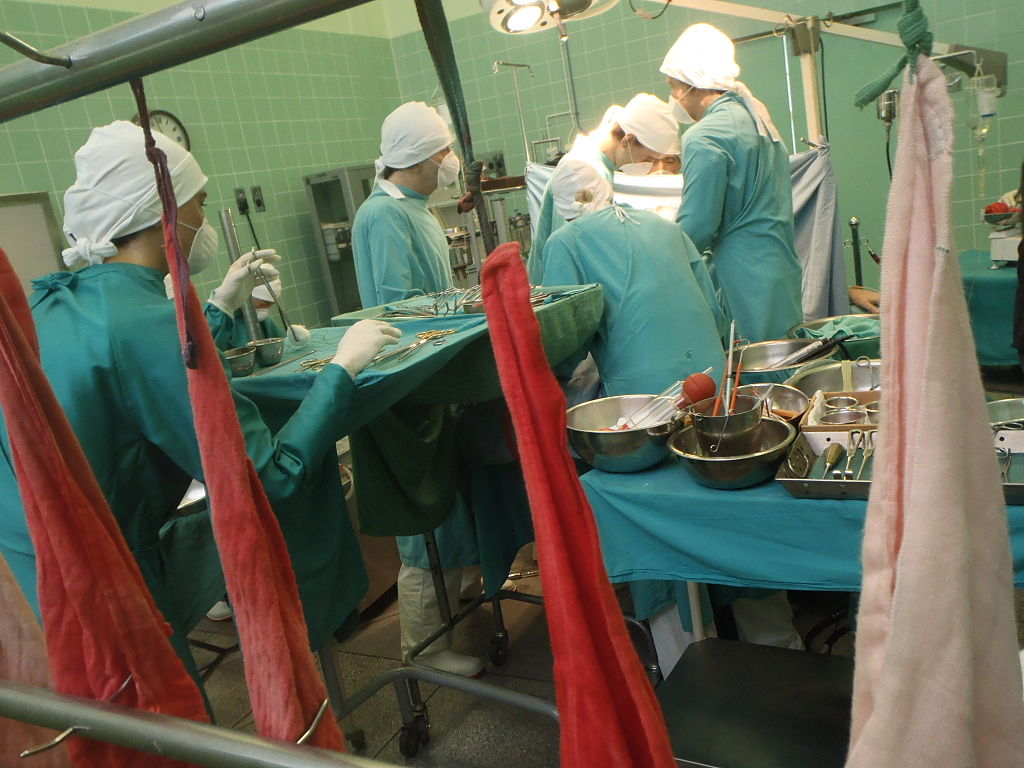
Kyrgyz President Sadyr Japarov has signed a law on the protection of citizens' health, according to which private and state clinics can now transplant internal organs, but on one condition. On the instructions of the President, while considering the draft law "On Protection of Citizens' Health in the Kyrgyz Republic," the Parliament of the Republic considered additional norms that provide for the removal of organs from a living donor, but only if the donor "is genetically related to the recipient." According to the law, a genetic link is defined as a relationship between persons who share common ancestors up to great-grandparents. Despite the fact that this law has not yet entered into force, last week Kyrgyz Health Minister, Alymkadyr Beishenaliev traveled to Turkey, where, according to the press center of the Ministry of Health of the Kyrgyz Republic, he took part in a liver transplant operation. He also discussed the development of bilateral Kyrgyz-Turkish cooperation on liver and bone marrow transplantation in Kyrgyzstan with the rector of the Turkish university where the operation took place. It had earlier been agreed between the presidents of the two countries agreed that Turkey will help Kyrgyzstan in this matter. "Sadyr Japarov has set a task on the need to solve the issue of liver and bone marrow transplantation in Kyrgyzstan in a short period of time, which has not been solved for many years," Beishenaliyev said. In turn, his Turkish counterpart noted that Turkey is ready to help Kyrgyzstan organize the work of the transplantology department, train specialists, and conduct joint operations in Bishkek on liver and bone marrow transplantations. Liver transplant operations have been carried out in Kyrgyzstan before, with Kyrgyz doctors being assisted by colleagues from Belarus, Russia, and Turkey. Since 2016, Kyrgyz doctors have performed around fifty kidney transplant operations. However, the law on organ transplantation which was adopted in 2001 is outdated. Kyrgyz doctors prepared additions to it, in particular on organ donation and the transplantation of bone marrow, kidneys and liver, but for about five years, the issue has stagnated. It was only in August 2023 that, for the first time, Kyrgyz doctors conducted a successful kidney transplant unaided. In addition, equipment has now been purchased to analyze the compatibility of donor organs. Previously, patients had to travel to neighboring countries to find out if they were compatible with the donor. If liver transplants start to be performed in Kyrgyzstan on a permanent basis, the operation will cost about $10,000. Abroad, such an operation costs $50-60,000.

New Flag of Kyrgyzstan Raised in Ala-Too Square

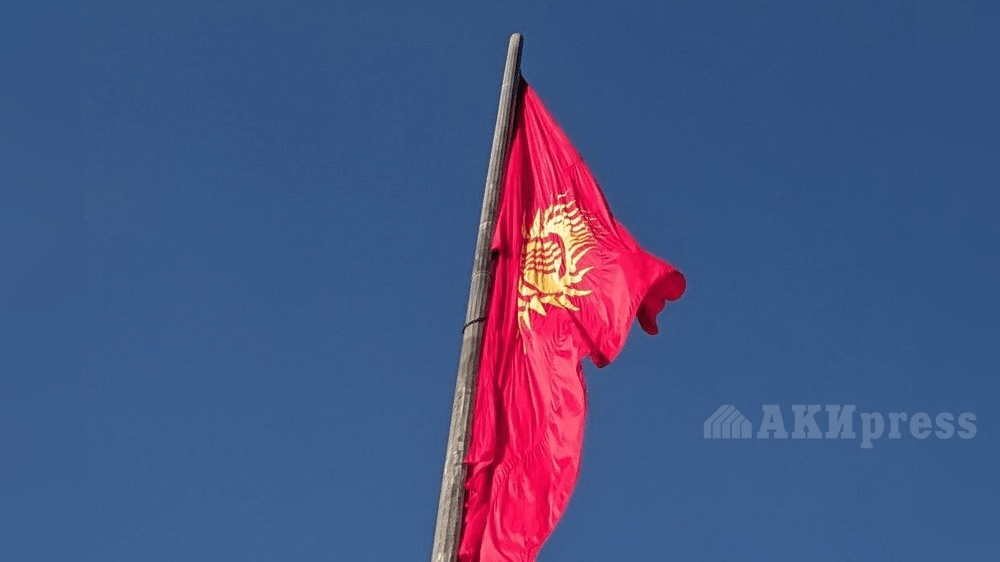
On January 1st, 2024, the new flag of Kyrgyzstan was raised in Ala-Too Square. Photos of the updated flag were shared by the AKIpress News Agency. On December 22nd, President Sadyr Japarov signed a law “On State Symbols of the Kyrgyz Republic,” which was adopted to improve the country’s flag. In particular, the adopted law changed the shape of the sun’s rays on the flag of Kyrgyzstan from wavy to straight. Earlier, at the People's Kurultai, Japarov had stated that changing the flag was his personal initiative, and also added that the state would not bear the costs.[/vc_column_text][vc_single_image image="13481" img_size="full" el_class="scond-image" parallax_scroll="no" woodmart_inline="no"][vc_column_text woodmart_inline="no" text_larger="no"]Several rallies protesting the change have been held since the proposal in October. Also on December 22nd, Human Rights Watch (HRW) urged the Kyrgyz authorities to drop all charges against activist Aftandil Jorobekov, and to release him after he was arrested for openly protesting changes to Kyrgyzstan’s national flag and charged with calls for mass disorder and civil disobedience. In a statement, HRW said that the charges brought against Jorobekov “violate his freedom of expression and right to peaceful assembly.” The 39-year-old activist was detained on December 7th, a day after he voiced his disapproval of the bill and announced his plan to hold a peaceful protest in Bishkek’s Gorky Park on December 9th. “Criticizing the government and calling for peaceful protest is not the equivalent of stoking mass unrest, and it is certainly not criminal,” Sultanalieva said. “The Kyrgyz authorities should drop this absurd case against Jorobekov, and uphold his right to free speech and peaceful assembly.” Meanwhile, many politicians, activists, and public figures in Kyrgyzstan continue to question the idea to change the national flag. Prominent Kyrgyz athlete and two-time world wrestling champion Jolaman Sharshenbekov wrote on Twitter on December 21st that he will continue raising the country’s old national flag at international tournaments and competitions. The head of the country’s State Committee of National Security, Kamchybek Tashiev, immediately commented on Sharshenbekov’s post, threatening unspecified repercussions for athletes who “even try” to raise anything other than the amended national flag at sports events. “The law is adopted, and we, the citizens, must obey,” Tashiev wrote.

Snow Leopard Becomes National Symbol of Kyrgyzstan

On December 30th, Kyrgyz President Sadyr Japarov signed a Decree “On recognizing the snow leopard as a national symbol of the Kyrgyz Republic,” the presidential press service has reported. The snow leopard has the status of a rare or endangered species in 12 countries. This animal is an indicator of the stability and health of the mountain ecosystem, which occupies a third of the globe. The loss of snow leopards from the wild would risk upsetting the delicate ecological balance, which would have detrimental effects on various animal species and humans. “In the culture of the ancient Kyrgyz people, the snow leopard personified greatness, nobility, courage, courage and endurance. Therefore, according to legends, the leopard was the totem animal of the great Manas,” the presidential press service reported. The poem "Manas" is one of the greatest works of Kyrgyz folklore, and is included in the list of masterpieces of the oral and intangible cultural heritage of humanity by UNESCO, as well as in the Guinness Book of Records as the most voluminous epic in the world. Kyrgyzstan is an active participant in global wildlife conservation programs. At the first International Forum on Snow Leopard Conservation in Bishkek in 2013, with the support of representatives of 12 snow leopard range countries and the international community, the Bishkek Declaration on the Protection of the Snow Leopard was unanimously adopted and the Global Snow Leopard and Ecosystem Protection (GSLEP) Program was approved. In order to further state support for initiatives to preserve the snow leopard and its ecosystem in the Kyrgyz Republic, the presidential decree instructed the Cabinet of Ministers of the Kyrgyz Republic to take measures to protect the snow leopard population and as its ecosystem, and to take measures to popularize the new national symbol.

“Walking the Silk Road” Chinese Cultural Exhibition Held in Bishkek

A recent exhibition in Bishkek, titled "Walking the Silk Road, Allowing Cultures to Integrate," centered on the Belt and Road Initiative (BRI) and showcased Chinese culture. Kyrgyz Deputy Prime Minister Edil Baisalov, Charge d'Affaires of the Chinese Embassy in Kyrgyzstan Li Baojie, representatives from educational institutions of both Kyrgyzstan and China, and business delegates attended the event, as reported by Xinhua. Deputy Prime Minister Baisalov emphasized the transformative impact of the BRI on the region, including Kyrgyzstan, stating, "It has actually had a huge impact on the political and economic situation around the world." Charge d'Affaires Li highlighted over a decade of fruitful cooperation between Kyrgyzstan and China within the BRI framework. Li emphasized the importance of cultural interaction and exchange within the initiative, noting that exhibitions like this provide opportunities for the Kyrgyz people to gain a deeper insight into Chinese traditional culture and customs, fostering stronger mutual understanding. The exhibition, organized by the Kaifeng Management Committee of the Pilot Free Trade Zone of China (Henan) and the Kyrgyzstan-China Friendship Association, showcased stone carving reflecting the Spring and Autumn period, wood carving themed on "New Year's Pictures," and intricate paper-cutting artistry.

ADB and Kompanion Bank to Boost Financing of Women-Led and Small Businesses in Kyrgyzstan

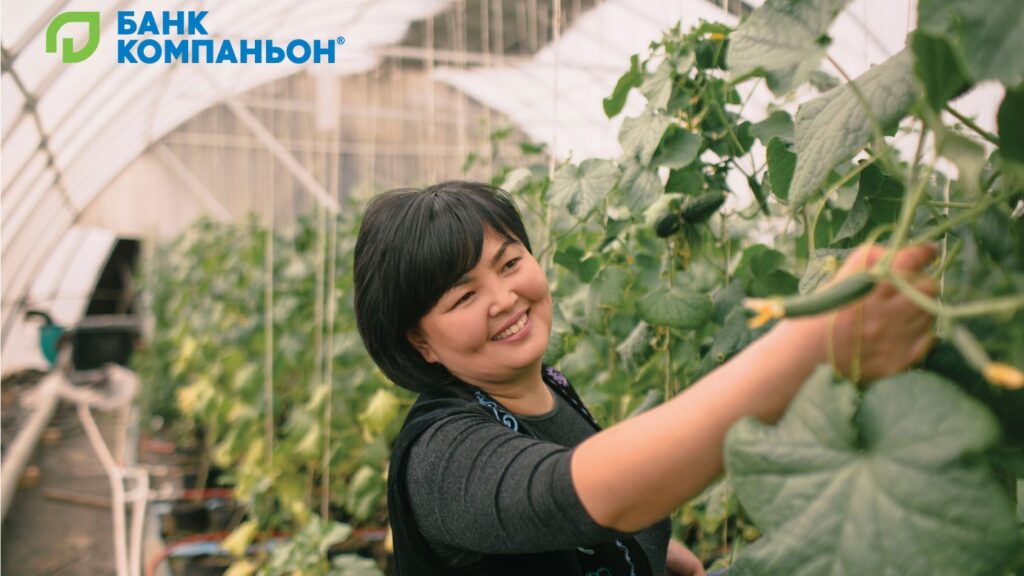
As reported in a news release on its website, on December 28th the Asian Development Bank (ADB) and Kompanion Bank Closed Joint Stock Company on December 28th signed off a loan of up to $5 million in local currency financing to boost micro, small, and medium-sized enterprises (MSMEs) in Kyrgyzstan, especially those owned or led by women. Established in 2004, Kompanion Bank is one of the large commercial banks in the Kyrgyz Republic and dominates the MSME market through its wide network with 93 branches across the country. More than half of Kompanion’s portfolio is with micro and small enterprises. “Women account for about a third of entrepreneurs in the Kyrgyz Republic, but they nevertheless face significant challenges in accessing financial services and credit,” said ADB Director General for Private Sector Operations, Suzanne Gaboury. “This partnership with Kompanion Bank will help bridge the financing gap for women-led small businesses, as well as provide a strong case for the sustainability of local currency lending to these companies.” To strengthen development impact and address finance and bankability constraints, transactions incorporate a credit guarantee from the Asian Development Fund’s (ADF) Private Sector Window facility (PSW) of up to $2.3 million. ADB will also provide technical assistance to Kompanion Bank to enhance its digital capabilities and operational efficiency. “We are happy to be a partner with ADB in this initiative to support micro and small entrepreneurs in the Kyrgyz Republic. We believe that our experience in the MSME market will allow us to make a significant impact on the local economy, and we look forward to working closely with ADB for the benefit of our clients and the community,” said Kompanion Bank CEO, Margarita Cherikbaeva. ADB will also help Kompanion Bank to develop a gender action plan to promote gender equality and women’s empowerment in its business activities. Key activities will include increasing the number of women borrowers and delivering training on improved agricultural practices and digital and financial literacy for female clients.