• KGS/USD = 0.01144 0%
  • KZT/USD = 0.00206 0%
  • TJS/USD = 0.10415 -0.19%
  • UZS/USD = 0.00008 0%
  • TMT/USD = 0.28571 0%
  • KGS/USD = 0.01144 0%
  • KZT/USD = 0.00206 0%
  • TJS/USD = 0.10415 -0.19%
  • UZS/USD = 0.00008 0%
  • TMT/USD = 0.28571 0%
  • KGS/USD = 0.01144 0%
  • KZT/USD = 0.00206 0%
  • TJS/USD = 0.10415 -0.19%
  • UZS/USD = 0.00008 0%
  • TMT/USD = 0.28571 0%
  • KGS/USD = 0.01144 0%
  • KZT/USD = 0.00206 0%
  • TJS/USD = 0.10415 -0.19%
  • UZS/USD = 0.00008 0%
  • TMT/USD = 0.28571 0%
  • KGS/USD = 0.01144 0%
  • KZT/USD = 0.00206 0%
  • TJS/USD = 0.10415 -0.19%
  • UZS/USD = 0.00008 0%
  • TMT/USD = 0.28571 0%
  • KGS/USD = 0.01144 0%
  • KZT/USD = 0.00206 0%
  • TJS/USD = 0.10415 -0.19%
  • UZS/USD = 0.00008 0%
  • TMT/USD = 0.28571 0%
  • KGS/USD = 0.01144 0%
  • KZT/USD = 0.00206 0%
  • TJS/USD = 0.10415 -0.19%
  • UZS/USD = 0.00008 0%
  • TMT/USD = 0.28571 0%
  • KGS/USD = 0.01144 0%
  • KZT/USD = 0.00206 0%
  • TJS/USD = 0.10415 -0.19%
  • UZS/USD = 0.00008 0%
  • TMT/USD = 0.28571 0%

Viewing results 271 - 276 of 361

President Japarov: Kyrgyzstan Should Provide Irrigation Water to Kazakhstan

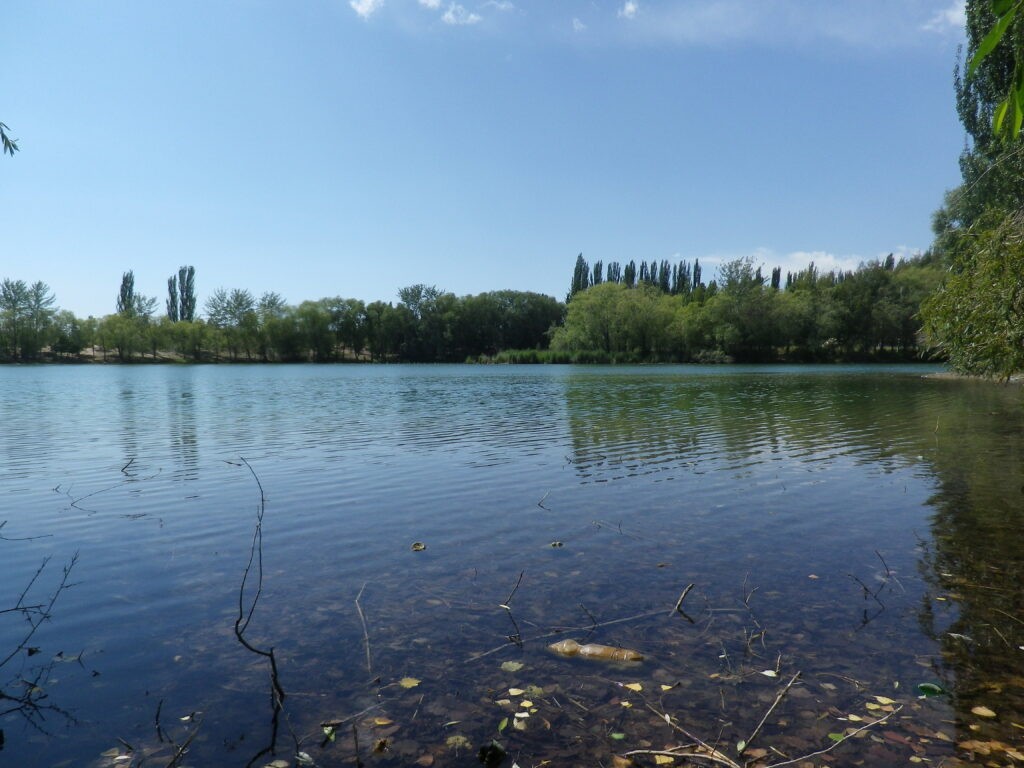
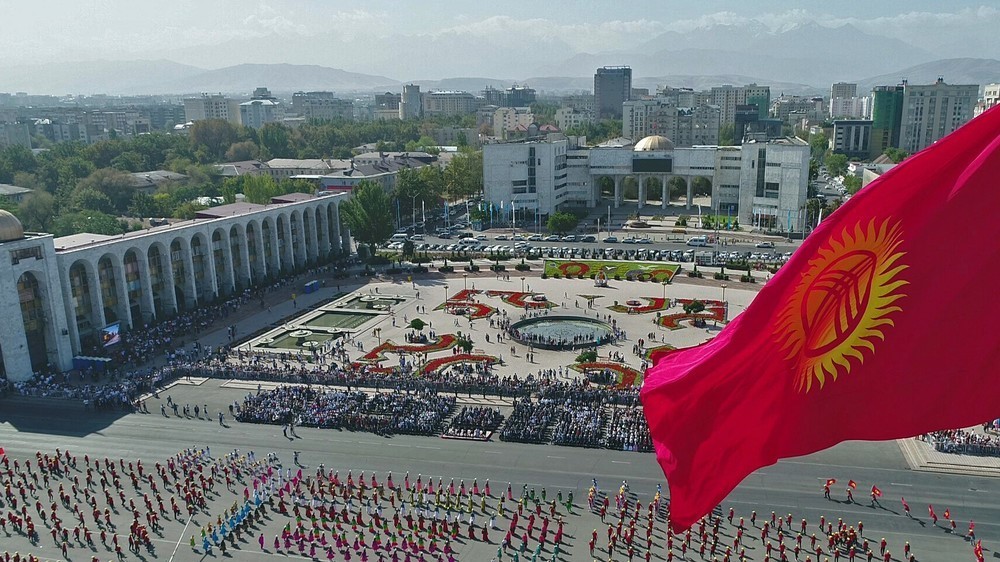
A UN resolution obliges upstream countries, including Kyrgyzstan, to provide water to downstream states, Kyrgyz President Sadyr Japarov said on December 16th at the second People’s Kurultai (Congress) in Bishkek. Answering questions from the Kurultai delegates, the president said that the water problem would be solved through the construction of so-called ten-day and daily regulation pools. Such reservoirs will allow for the accumulation of water in winter and for it to be freely shared with neighbors downstream. The president said that Kyrgyzstan does not have a sufficient number of reservoirs, and, therefore, this year there was not enough water to supply to Kazakhstan. This past summer, the southern regions of Kazakhstan experienced a severe shortage of irrigation water for their fields. The construction of such reservoirs, the president explained, will meet the needs of Kyrgyzstan and, in addition, there will also be enough water to supply to downstream neighbors. The president also announced plans to build reservoirs. The reservoir construction program will last until 2027, he said.

Length of U.S. Visas for Kyrgyz Citizens Set to Increase

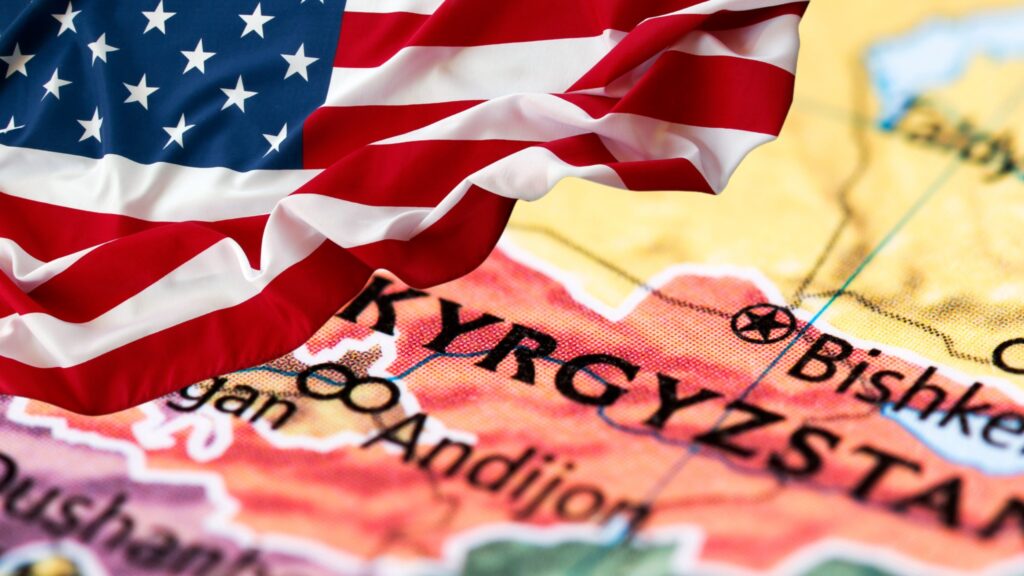
The duration of American visas for citizens of Kyrgyzstan is set to increase from five to ten years, marking a significant development reported by the Embassy of the Kyrgyz Republic in the USA. The Embassy disclosed that Baktybek Amanbayev, the head of the Kyrgyz diplomatic mission, conducted a meeting on December 13th with Brandon McNerney, the director of the Office of Visa Affairs at the Consular Bureau of the US Department of State. The primary agenda revolved around discussions aimed at enhancing visa relations between the two nations. During the meeting, Ambassador Amanbayev reiterated the appeal to expedite considerations for extending the validity period of tourist and business visas from five to ten years, alongside reducing consular fees for Kyrgyz Republic citizens. This plea, previously discussed with US authorities, was reinforced by Amanbayev during this encounter. Brandon McNerney provided an optimistic outlook, stating that the issue is in its final stages of evaluation within relevant US authorities, with a positive decision anticipated imminently. The American side pledged to officially notify the Kyrgyz authorities of their decision in the near future. Additionally, Amanbayev pressed for simplified visa acquisition processes for Kyrgyzstani students enrolled in US educational institutions. Moreover, he proposed exploring opportunities for legal employment of Kyrgyz citizens in sectors facing labor shortages within the United States. The American representatives agreed to delve into these matters during the annual bilateral consultations. This push for extended visa durations follows earlier discussions on the topic. Kyrgyzstan's parliamentary deputies Akylbek Tumonbayev, Balbak Tulobayev, Karim Khanjeza, and Emil Toktoshev engaged in talks with Ambassador Leslie Viguery regarding visa extensions to the United States. Ambassador Amanbayev also held discussions with John Pommersheim, Deputy Assistant Secretary of State for Central and South Asian Affairs, seeking to expedite this visa extension process. These concerted efforts signal a potential boon for Kyrgyz citizens aspiring to visit or reside in the United States, fostering closer bilateral ties between the two nations.

World Bank to Help Kyrgyzstan Reduce Air Pollution

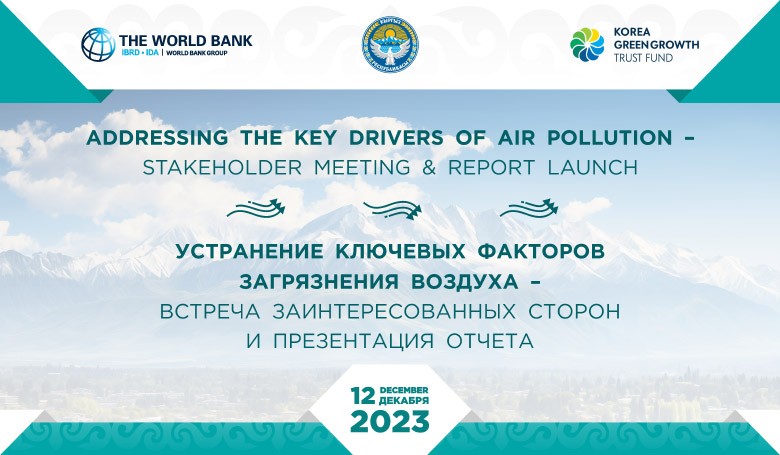
The World Bank and the Ministry of Natural Resources, Ecology and Technical Supervision (MNRETS) of the Kyrgyz Republic on December 12th hosted a stakeholder meeting to launch the World Bank's new report, Air Quality Analysis for Bishkek: PM2.5 Source Apportionment and Emission Reduction Measures, according to a statement on the World Bank website. The World Bank conducted this study in close coordination with MNRETS Hydrometeorological Service (Kyrgyzhydromet) under the Ministry of Emergency Situations and Bishkek Municipality to evaluate the air quality in Bishkek, focusing on PM2.5 pollution. Exposure to fine inhalable particles (PM2.5 with a diameter of 2.5 micro-meters or less) poses serious health risks, including respiratory infections, cancer, cardiovascular diseases, and premature deaths. In Bishkek, the average annual PM2.5 concentrations in 2022 surpassed the WHO guideline value of 5 µg/m3 by nearly sevenfold. During the last several winters, average daily concentrations of PM2.5 were often above 200 µg/m3, surpassing the WHO guideline of 15 µg/m3 by more than 13 times and placing Bishkek among the world’s most polluted cities. The losses caused by air pollution in Bishkek are estimated to be equivalent to 1.2% of the Kyrgyz Republic’s GDP, while air pollution at country level is estimated cost 5.1% of the GDP. In line with priorities and recommendations identified in the study, the World Bank jointly with MNRETS, KyrgyzHydromet and Bishkek Municipality has prepared a $50 million Kyrgyz Republic Air Quality Improvement Project to help the country reduce air pollution and the adverse effects it has on public health and the economy. This project is expected to not only directly benefit residents of Bishkek by improving the city’s air quality, but will also support the establishment of a sound Air Quality Management System that will drive policy actions for air quality improvement, aiming to mitigate the impact of air pollution on public health and economic development across the country.

U.S. and Central Asian Countries Focus on Protecting Rights of People with Disabilities

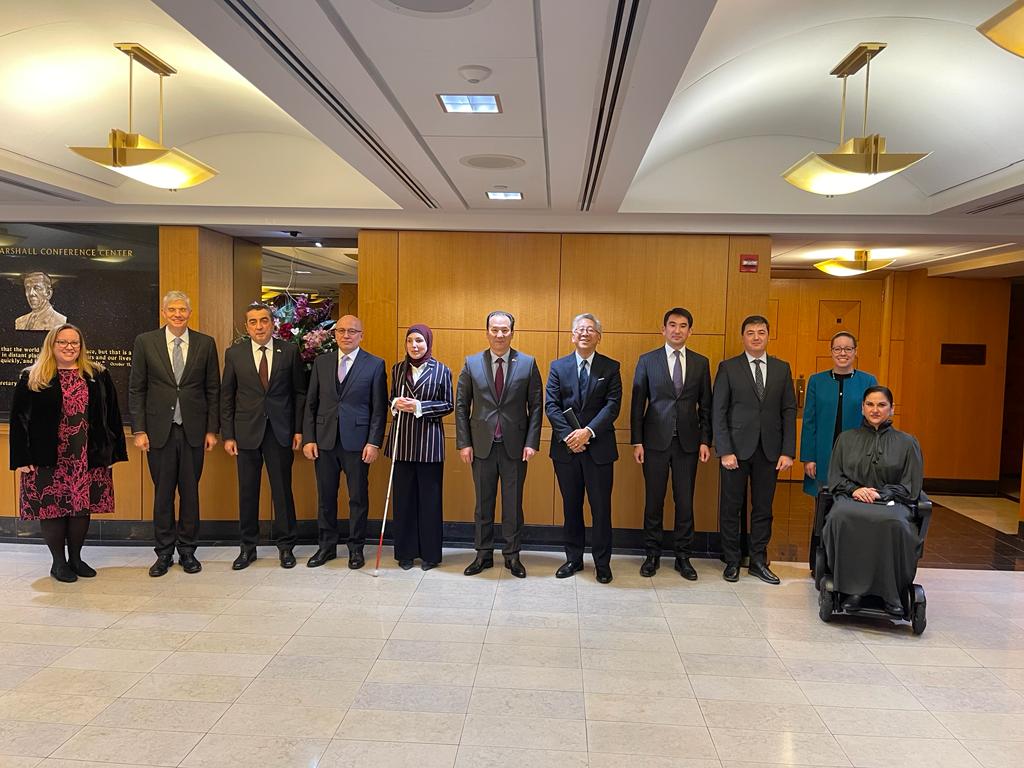
On December 11th, the U.S. Department of State hosted a meeting of representatives of C5+1 countries dedicated to protecting the rights of people with disabilities and finding practical solutions to their problems. The C5+1 diplomatic platform represents the U.S. Government’s holisitc approach to Central Asia, jointly engaging all five Central Asian nations. The meeting was attended by Sara Minkara, Special Adviser to the President of the United States on the International Rights of Persons with Disabilities, Donald Lu, Assistant Secretary of State, Deputy Assistant Secretary John Mark Pommersheim, and representatives of government agencies of the USA. The Ambassadors of Kazakhstan, Kyrgyzstan, Tajikistan, and Uzbekistan to the United States also spoke during the meeting, which was moderated by Minkara, who shared her experience and recommendations on ensuring protection of the rights of persons with disabilities. U.S. Assistant Secretary of State, Donald Lu stressed the importance of increasing cooperation within the C5+1 format on the rights of persons with disabilities in a multilateral format. Following the meeting, the participants agreed on joint actions in this direction.

Civil Liberties Worsening in Kyrgyzstan Says Civicus Monitor

This year, Kyrgyzstan became one of the seven countries whose annual ranking in terms of civil liberties worsened. This is according to the report, "People's Power under Attack - 2023" published by global civil society alliance, Civicus Monitor. The methodology applied by Civicus Monitor sees countries divided into five categories depending on the points scored: countries with open (free) civil space, narrowed (freedoms are partially limited), partially closed (oppressive civil liberties), suppressed and closed. Kyrgyzstan scored 40 out of 100 points, and was therefore classified as a State with a suppressed (repressed) civil space. Since 2018, the republic has been included in the category of countries with a partially closed civil space. The reasons for this downgrade were the promotion of draft laws restricting the activities of NGOs and the media, increased pressure on independent media, criminal prosecution of civil society activists, journalists and other critics of the government, and long-term ban on peaceful assemblies in the central districts of Bishkek. Neighbors in the region also received relatively low ratings, with Turkmenistan (8 points), Tajikistan (12 points) and Uzbekistan (18 points) classified as countries with a closed civil space, whilst Kazakhstan (27 points) was classified as a state with a suppressed civil space. According to the authors, almost a third of humanity now lives in countries with a closed civil space. This is the highest percentage (30.6%) living in the most restrictive environment since the first Civicus Monitor report in 2018. Only 2.1% of people live in open states where civil space is both free and protected. This is half as much as six years ago, the report says.

Korea Helps Build Firefighting Station in Cholpon-Ata, Kyrgyzstan

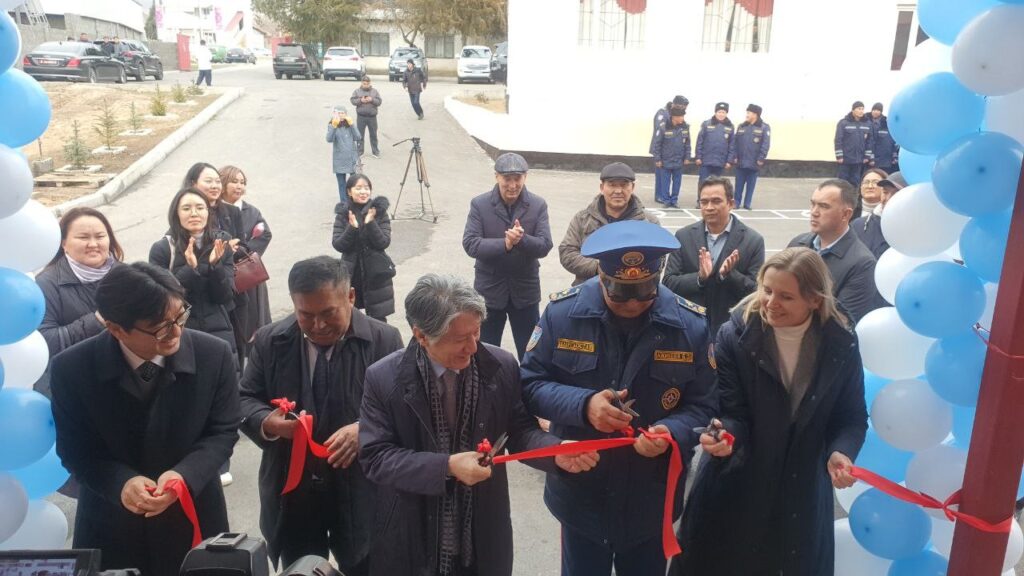
On December 8th, a landmark ceremony was held in the city of Cholpon-Ata to mark the successful completion of the construction of a fire and rescue station built by cooperation between the Ministry of Emergency Situations of the Kyrgyz Republic, the Government of the Republic of Korea, the Korean International Cooperation Agency (KOICA), and the United Nations Development Programme (UNDP), the UNDP website stated. The Plenipotentiary Representative of the Kyrgyz President in the Issyk-Kul region, the Minister of Emergency Situations of the Kyrgyz Republic, the Ambassador Extraordinary and Plenipotentiary of the Republic of Korea to the Kyrgyz Republic, KOICA Country Director, and the UNDP Resident Representative attended the ceremony. This construction is part of a broader initiative to construct four fire and rescue stations across Kyrgyzstan, with the other three to be in Bishkek, Osh, and Suzak (Jalal-Abad region). The collaboration aims not only to bolster the Kyrgyz Republic's disaster management capabilities with the supply of modern firefighting equipment and machinery, and to enhance the overall quality of firefighting services. Along with technical assistance, the UNDP improved the working conditions of firefighters, mainstreamed gender equality, expanded universal access to fire services, and ensured adherence to sustainable development principles. Boobek Azhikeev, the Minister of Emergency Situations of the Kyrgyz Republic, noted the project's timeliness, given the annual increase in the number of fires. “Major fires around the world, which have claimed many lives and turned mountain forests into ash, are once again calling for firefighters and rescuer services in Kyrgyzstan to strengthen their efforts,” he said. “As part of our cooperation, we have successfully implemented the initial stages of a grant project to increase the capacity of the fire and rescue service with a total amount of $8 million.” The Ambassador of the Republic of Korea to the Kyrgyz Republic, Mr. Lee Won-jae stated that “since establishing diplomatic relations in 1992, Korea and Kyrgyzstan have expanded cooperation in various fields, and we hope that exchanges and cooperation between the two countries will expand and deepen in the future. The Korean government plans to continue to strengthen development cooperation to assist Kyrgyzstan's socioeconomic development and improve the quality of life of its people.” Ms. Alexandra Solovieva, the UNDP Resident Representative, emphasized the importance of disaster risk reduction and climate emergency response. “We joined hands to expand access to more than 400,000 people to receive timely assistance in case of emergencies,” she stated. “We worked to reduce incident response times by providing modern equipment and technology that play a key role in saving the lives of people in the Issyk-Kul region.” While the Cholpon-Ata fire and rescue station is now operational, construction in Bishkek, Osh, and Suzak is progressing and is expected to be completed by next year.