• KGS/USD = 0.01144 0%
  • KZT/USD = 0.00211 0%
  • TJS/USD = 0.10460 0%
  • UZS/USD = 0.00008 0%
  • TMT/USD = 0.28571 0.28%
  • KGS/USD = 0.01144 0%
  • KZT/USD = 0.00211 0%
  • TJS/USD = 0.10460 0%
  • UZS/USD = 0.00008 0%
  • TMT/USD = 0.28571 0.28%
  • KGS/USD = 0.01144 0%
  • KZT/USD = 0.00211 0%
  • TJS/USD = 0.10460 0%
  • UZS/USD = 0.00008 0%
  • TMT/USD = 0.28571 0.28%
  • KGS/USD = 0.01144 0%
  • KZT/USD = 0.00211 0%
  • TJS/USD = 0.10460 0%
  • UZS/USD = 0.00008 0%
  • TMT/USD = 0.28571 0.28%
  • KGS/USD = 0.01144 0%
  • KZT/USD = 0.00211 0%
  • TJS/USD = 0.10460 0%
  • UZS/USD = 0.00008 0%
  • TMT/USD = 0.28571 0.28%
  • KGS/USD = 0.01144 0%
  • KZT/USD = 0.00211 0%
  • TJS/USD = 0.10460 0%
  • UZS/USD = 0.00008 0%
  • TMT/USD = 0.28571 0.28%
  • KGS/USD = 0.01144 0%
  • KZT/USD = 0.00211 0%
  • TJS/USD = 0.10460 0%
  • UZS/USD = 0.00008 0%
  • TMT/USD = 0.28571 0.28%
  • KGS/USD = 0.01144 0%
  • KZT/USD = 0.00211 0%
  • TJS/USD = 0.10460 0%
  • UZS/USD = 0.00008 0%
  • TMT/USD = 0.28571 0.28%

Viewing results 295 - 300 of 491

Eurasian Connectivity Comes One Step Closer at the 2024 CAMCA Forum in Bishkek

The wider Eurasia region took another step towards cooperation and connectivity last week, as the 10th annual CAMCA Regional Forum was held in Bishkek. CAMCA – standing for Central Asia, Mongolia, the Caucasus and Afghanistan – is an initiative to accelerate dialogue between governments, private enterprises and media figures from these ten nations. Organized by the Washington, D.C.-based Central Asia-Caucasus Institute and the Rumsfeld Foundation, this year’s Forum – the first such event to take place in Kyrgyzstan – featured over 300 delegates across its two days, and presented insights from over 70 speakers. Attendees came from 25 countries in total. Professor Frederick Starr, the Central Asia-Caucasus Institute’s chairman, used his opening address to call on the countries of the region to start preparing for a future within a cohesive international bloc. Dr Starr reasoned that Russia and China, imperial powers that have traditionally had a controlling presence in Central Asia, may see their global influence wane in the coming decade. This would give the countries of Central Asia, and their neighbors, more space to create projects that serve their economies directly. A leading CAMCA regional project is the ‘Middle Corridor’ trade route, which bypasses Russia to transport goods more efficiently between Europe and China. Discussions are also taking place concerning the creation of single business and tourist visas for the whole Central Asia region. The importance of collaboration between countries in the Caucasus and Central Asia to mitigate the impact of climate change has never been so great. Addresses by senior members of the Kyrgyz government highlighted the progress that Kyrgyzstan has made since the administration of president Sadyr Japarov began its work in 2021. The country’s deputy prime minister Edil Baisalov reported that Kyrgyzstan is on track to double its GDP to $30 billion by 2030, while the minister for digital development, Nuria Kutnaeva, spoke about the rapid digitalization of the country’s government services.  In a noticeably warm and collaborative atmosphere, the event nonetheless highlighted the barriers that prevent the ten countries from forming a tangible ‘CAMCA’ space in the present. A key goal is the harmonization of their legislation and policy directions; however, no delegates from Tajikistan could travel to Bishkek for the Forum, as otherwise solid relations between Tajikistan and Kyrgyzstan are still strained by a dispute over their common border. Likewise, Armenian voices were also absent this time, in light of several of the sessions featuring Azerbaijani speakers and talking points. The event featured only one guest from Turkmenistan.  Even in these conflicts, however, Central Asian diplomacy is at work. The conflict on the Kyrgyz-Tajik border, mainly in Tajikistan’s Vorukh district, is being resolved through negotiations between the two countries’ governments, which would have been unthinkable even five years ago. Meanwhile, Kazakhstan is acting as a mediator between Baku and Yerevan in the aftermath of the war in Nagorno-Karabakh. Other topics on the agenda included security priorities for Central Asia, digital innovation in business, cooperation with Afghanistan, transitions in global energy markets, and infrastructure projects...
Water Shortages in Kyrgyzstan’s Cities Despite Full Reservoirs

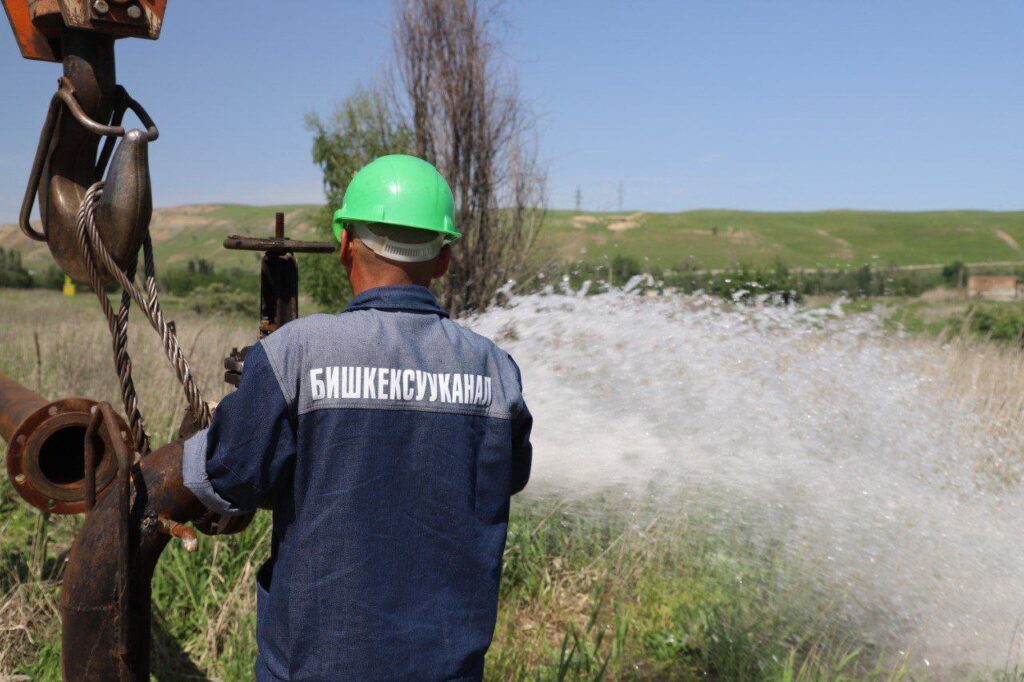
Due to a shortage, Kyrgyz authorities have banned the use of drinking water to irrigate cities' gardens and orchards. Implemented in Bishkek and Osh, the ban which operates during daytime hours, is set to run until the end of the summer. In a report to TCA,  Erlan Timurov, chief public relations specialist for Bishkekgorvodokanal, the company in charge of drinking water in Bishkek, stated: "Every year, Bishkekvodokanal produces about 145 million cubic meters of drinking water, around  48m cubic meters of which are lost as a result of  illegal connections to our networks and leaks caused by worn-out infrastructure" The situation is similar in southern Kyrgyzstan and in Osh, utility companies in the course of monitoring levels, regularly identify and cut off water supplies to those illegally  connected to the system. "The average daily consumption of drinking water in residential areas increases fivefold in summer," explained Timurov. "Most of this increase is spent on watering vegetable gardens and filling swimming pools. As a result, some residents experience water shortages." Ironically, the water deficit is developing against a backdrop of overflowing local reservoirs caused partly by abnormal weather melting mountain glaciers. Under the circumstances, the Tien Shan High Mountain Research Centre at the Institute of Water Problems and Hydropower in Kyrgyzstan blames cities' water shortages on irrational use. "In the 1980s , collective and state farms universally introduced the so-called sprinkler system. Back then,  500 to 1,000 cubic meters of water were required to irrigate one hectare.  Today, that has risen to  2 to 3 thousand cubic meters. The problem is that we have lost many technologies and do not know how to use water effectively," claimed  the scientific center. Drip irrigation used worldwide, is now being introduced in Kyrgyzstan. However, because  it's expensive, the percentage of Kyrgyz farmers using this type of irrigation is extremely small and the majority  continue their habit of using drinking water in their fields, gardens, and orchards using outdated irrigation systems .

Mass Brawl Between Citizens of Pakistan and Bangladesh Reported in Bishkek

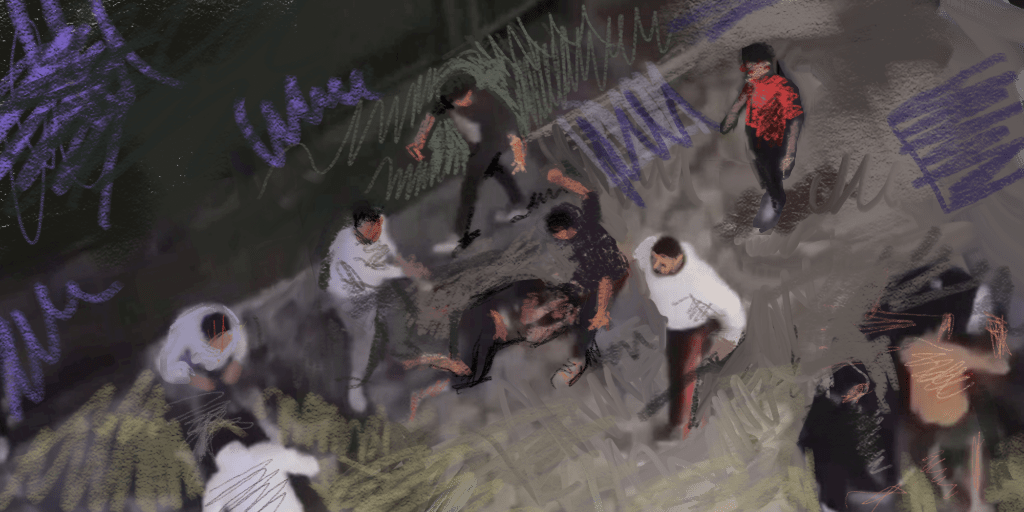
Bishkek police have detained 36 foreigners after a mass brawl, as reported by the Ministry of Internal Affairs of the Kyrgyz Republic. According to law enforcement, on June 11th, a mass brawl was reported between Pakistani and Bangladeshi citizens after a verbal altercation, following which participants involved in the scuffle were taken to a police station to clarify the incident's circumstances. Administrative protocols were drawn up for 16 foreigners who violated the rules of residence in Kyrgyzstan. One of the participants in the brawl was found guilty under the article “Petty Hooliganism.” The court fined him 5,500 KGS ($60). Two more people were arrested for three days for being in a state of alcoholic intoxication. TCA previously reported that on May 17th, riots occurred in the capital of Kyrgyzstan, provoked by a conflict between residents and medical students from abroad. Since these tragic events, the authorities have been employing a dual approach of attempting to sooth relations abroad whilst conducting raids on places where foreigners reside.

Kyrgyzstan Introduces Temporary Ban on Deputies’ International Travel

Deputies of the Jogorku Kenesh have been restricted from taking foreign trips until the summer vacation. Speaker Nurlanbek Shakiev announced this at a parliamentary session, 24.kg reports. According to him, the deputies must hold five more plenary sessions before the recess. "There are many bills important for the fate of the country and the population. We must have time to consider them. Therefore, I ask you to participate in the Parliament sessions actively. Foreign travel has been restricted since Monday, except for several important events. We will not go anywhere. We are actively working for three weeks,” Shakiev said. The Kyrgyz parliament goes on summer vacation on July 1st, and deputies will return to work on September 1st.

Kyrgyzstan’s Eco-Activists Question Official Data on Rare Animals

According to the state gold mining company Kumtor,  operating near the Sarychat-Ertash high-mountain reserve, the number of red-listed animals has increased significantly as a result of ecological  improvements to their environment.  Local ecologists, however, believe that the data has been intentionally exaggerated. In its report, Kumtor said, "Annual monitoring of the state of biodiversity, conducted by the company, allows us to accurately track the ecological situation on the ground. Care for ecology and the environment is also evident in the increasing numbers of argali, ibex, and snow leopards. For example, the number of argali in the Sarychat-Ertash reserve increased from 750 to 2,500, making it the country's largest population. Capricorns, argali, and snow leopards have also increased in number." Environmental scientists at the National Academy of Sciences of Kyrgyzstan (NAS KR) state that whilst a rough count of red-listed animals in hunting farms and state nature reserves shows an increase in all argali and snow leopard subspecies,  the state authorities have not provided an accurate calculation for 14 years. "All hunting farms of the republic every year give the state structures data on the number of argali, ibex, and other red-listed animals. According to their data, the number of animals is growing, but how much this data can be believed remains a question. They are interested parties and may present distorted data,” Askar Davletbayev, an ecologist with the National Academy of Sciences, told The Times of Central Asia. In Kyrgyzstan, the state protects argali and snow leopards. During the hunting season, however, authorities issue a yearly license to shoot the animals. A popular and lucrative  sport, it attracts visitors from all over the world who willingly pay around 10 thousand dollars to bag an argali. According to eco-activist Vlad Ushakov, the fact that predatory animals living on high mountain ranges have begun to descend to the lower reaches to hunt, has also impacted the figures. "This does not speak of an increase in snow leopards but rather a lack of prey; the forage base has been undermined. In the gorges, where wild animals traditionally used to graze, there is now mass grazing. The snow leopard will not voluntarily change its natural habitat. Ten years ago, we were told there were 300-350 leopards in Kyrgyzstan; today, the same figures apply. Perhaps these are just invented figures with no basis,” Ushakov explained to TCA.

Two Arrested Over Calls for Milk Riots in Kyrgyzstan

In the Issyk-Kul region, citizens suspected of calling for mass riots have been detained; this was reported by 24.kg citing the State Committee for National Security (GKNB) press center. According to the GKNB, two citizens used WhatsApp messenger to agitate local farmers and organize riots in groups with over a thousand participants, calling for blockades and taking milk truck drivers hostage. These actions are related to the seasonal decrease in milk prices due to its low-fat content. Experts confirmed the presence of calls to organize mass riots in the audio recordings. A criminal case has been opened, and an investigation is underway. The GKNB urged citizens to observe public order and not to give in to provocations spread through social networks.