• KGS/USD = 0.01144 0%
  • KZT/USD = 0.00216 0%
  • TJS/USD = 0.10659 0%
  • UZS/USD = 0.00008 0%
  • TMT/USD = 0.28530 0%
  • KGS/USD = 0.01144 0%
  • KZT/USD = 0.00216 0%
  • TJS/USD = 0.10659 0%
  • UZS/USD = 0.00008 0%
  • TMT/USD = 0.28530 0%
  • KGS/USD = 0.01144 0%
  • KZT/USD = 0.00216 0%
  • TJS/USD = 0.10659 0%
  • UZS/USD = 0.00008 0%
  • TMT/USD = 0.28530 0%
  • KGS/USD = 0.01144 0%
  • KZT/USD = 0.00216 0%
  • TJS/USD = 0.10659 0%
  • UZS/USD = 0.00008 0%
  • TMT/USD = 0.28530 0%
  • KGS/USD = 0.01144 0%
  • KZT/USD = 0.00216 0%
  • TJS/USD = 0.10659 0%
  • UZS/USD = 0.00008 0%
  • TMT/USD = 0.28530 0%
  • KGS/USD = 0.01144 0%
  • KZT/USD = 0.00216 0%
  • TJS/USD = 0.10659 0%
  • UZS/USD = 0.00008 0%
  • TMT/USD = 0.28530 0%
  • KGS/USD = 0.01144 0%
  • KZT/USD = 0.00216 0%
  • TJS/USD = 0.10659 0%
  • UZS/USD = 0.00008 0%
  • TMT/USD = 0.28530 0%
  • KGS/USD = 0.01144 0%
  • KZT/USD = 0.00216 0%
  • TJS/USD = 0.10659 0%
  • UZS/USD = 0.00008 0%
  • TMT/USD = 0.28530 0%

Viewing results 367 - 372 of 505

Russia to Allocate Over $23 Million for Remediation of Uranium Tailings in Kyrgyzstan

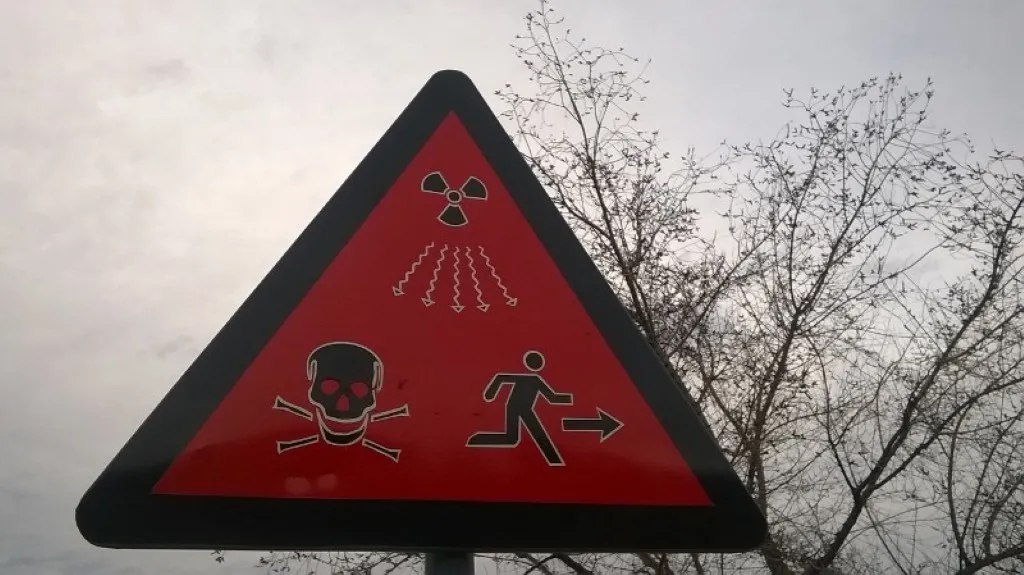
Kyrgyz members of parliament have approved an agreement between Kyrgyzstan and Russia on funds for the remediation of sites contaminated with uranium tailings. The ratification corresponds to a previous deal by the Kyrgyz government and Russian state company Rosatom under the framework of a Commonwealth of Independent States (CIS) program to rehabilitate territories affected by uranium production. Kyrgyz Deputy Emergency Situations Minister Azamat Mambetov, speaking at the session of the Kyrgyz parliament, described the details of the agreement with Russia regarding the uranium tailings ponds. "At our request, the Russian Federation will allocate an additional 2.141 million rubles ($23.1 million). According to the draft agreement submitted for approval, these funds will be used for work and delivery of equipment, [and] they are exempt from taxes. Five facilities in Kyrgyzstan will be rehabilitated," Mambetov said. According to the deputy minister, these are three tailing dumps left over from uranium mining in western Kyrgyzstan, and two tailing dumps in the south of the country. According to some sources, the first Soviet atomic bomb was filled with uranium mined in the south of Kyrgyzstan in the Batken region. It should be noted that the tailings dumps in Chatkal district (western Kyrgyzstan) currently threaten the ecology of not only Kyrgyzstan, but also of neighboring Uzbekistan. The Chatkal River, which flows near the tailings dams, is a transboundary river that flows into one of Uzbekistan's reservoirs -- and from which Tashkent and the Tashkent region draw their drinking water. Mr. Mambetov said that today the reclamation of uranium tailings sites in southern Issyk-Kul region and in Naryn region is almost completed. When the interstate program for reclamation of territories was drawn up in 2013, these tailings were considered the most problematic. According to Rosatom, 450,000 cubic meters of radioactive waste were concentrated in the Naryn region when work began. The work there is complicated by the fact that there is the risk of landslides in the area of the tailing dump. However, Russian specialists promise to fully complete the reclamation process by August 2024. The volume of accumulated radioactive waste in the Issyk-Kul region is 150 thousand cubic meters. Uranium mining there was conducted from 1952 to 1966. After the mining was completed, the surface of the site was covered with a special layer of soil. But over time, the ground has been eroded by surface waters and the site began to pose a threat to the local environment once again. The works there should also be completed this year. Recall that Lake Issyk-Kul, located just a few hundred meters from the facility, is Kyrgyzstan's main tourist attraction. According to the Kyrgyz Ministry of Emergency Situations, there are 92 burial sites of toxic and radioactive substances in the country. Of these, 23 tailings sites contain uranium elements, while the remaining ones contain radioactive rock residues, heavy metals and cyanide. The total volume of poisonous and hazardous substances is 2.9 million cubic meters. As reported by Rosatom, there are currently more than 40 large legacy nuclear...
Artificial Intelligence to Monitor Kyrgyzstan’s Glacial Lakes to Prevent Outburst Flooding

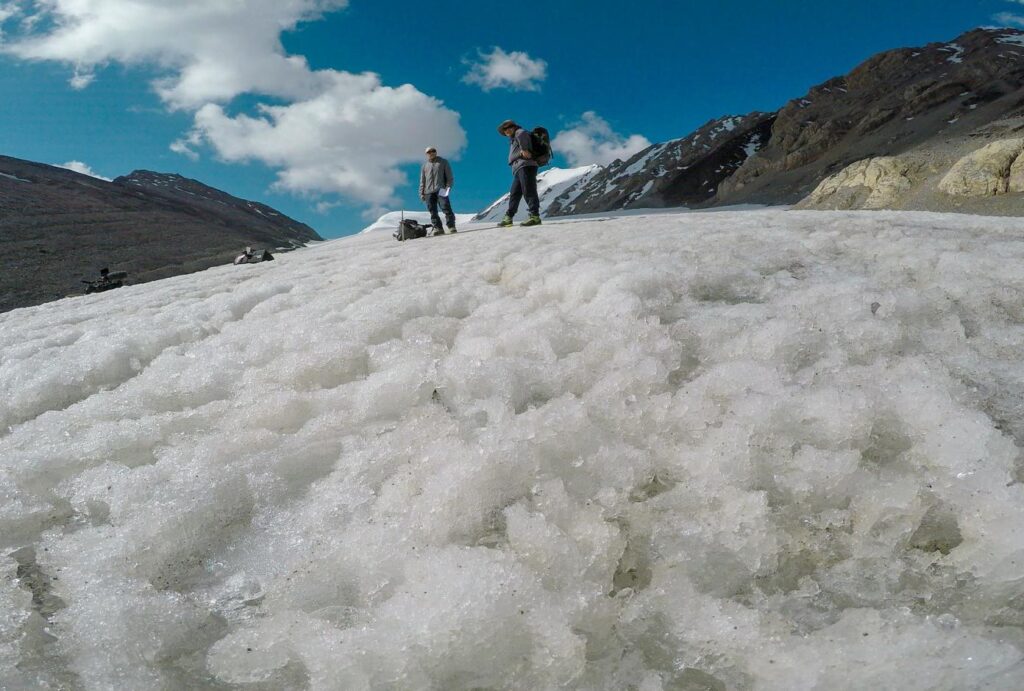
In Kyrgyzstan, an innovative IT module will monitor for glacial lake outburst floods (GLOFs) and provide early warnings about their outbursts to prevent natural disasters, according to the United Nations Development Program (UNDP). The new IT module with artificial intelligence (AI) was shown to Kyrgyz officials as part of a program titled "Reducing Risks and Vulnerability From Glacial Lake Outburst Floods in Kyrgyzstan by Strengthening the National Disaster Monitoring System and Community Adaptive Capacity". According to the UNDP, Kyrgyzstan faces the threat of more than 300 high-mountain lakes bursting -- a threat fully attributed to climate change and permafrost degradation. International experts say the instability of natural dams and melting ice pose a risk to the population, infrastructure and the environment. The last serious flooding due to a breach of a high mountain glacial lake occurred in July 2022 in the mountains of the Issyk-Kul region. "By harnessing the power of innovation and collaboration, we are paving the way for sustainable progress. Through proactive risk identification, assessment and vigilant monitoring, we are not only preventing crises, but also laying the foundation for economic prosperity and community resilience. The use of artificial intelligence in monitoring emergency forecasting not only marks an important milestone for Kyrgyzstan, but also sets a precedent for the entire Central Asian region," said Alexandra Solovieva, the UNDP Resident Representative in Kyrgyzstan. This innovative module, as the specialists emphasized, combines AI technology with the use of machine-learning processes to improve the accuracy of forecasts, and provides timely information to effectively reduce the risks of lake outbursts. The IT module calculates the surface area of the lake, assesses the state of the ice cover, makes an analysis, and assesses the risks of lake breakthrough -- and in case of potential threats, warns the relevant government agencies. "The unified system of integrated monitoring and forecasting of emergency situations is an invaluable tool to protect the life of the population and the environment. Expansion and addition of functionality on glacial lake monitoring with integration with satellite and meteorological data will ensure timely, accurate data collection, data analysis and disaster forecasting," said Deputy Minister of Emergency Situations Edelbek Kulmatov. At the presentation of the IT module in Bishkek, specialists also introduced the mobile application developed for it . With its help, Kyrgyz EMERCOM specialists will be able to monitor glacial lakes in real time and receive all the necessary data. The IT module was purchased with the financial support of the Government of Japan through the UNDP.

The C5+1 Concept: The Idea Behind This Week’s B5+1 Forum in Almaty

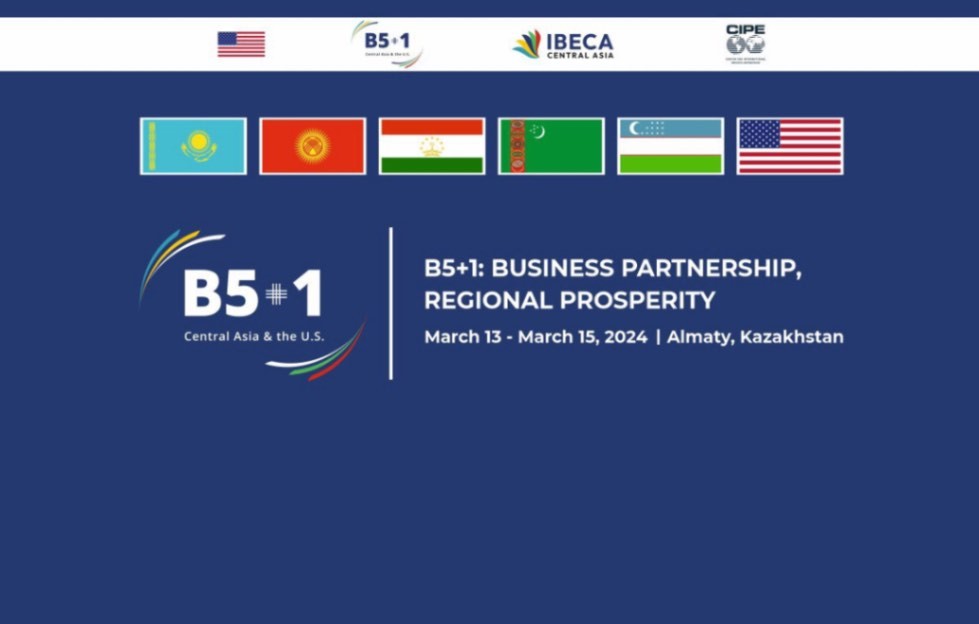
Recognizing that the Central Asia region could benefit more from initiatives in global security, business and trade if its countries strengthened their cooperation in key areas, the Center for International Private Enterprise (CIPE) created the ‘C5+1’ platform last year for just this purpose. The Center’s 5+1 group features the governments of the five Central Asian republics – Kazakhstan, Uzbekistan, Kyrgyzstan, Tajikistan and Turkmenistan – plus the United States, whose State Department and international chambers of commerce are central to the platform’s work. An inaugural C5+1 Summit was held in September 2023, on the sidelines of the 78th session of the UN General Assembly in New York. At this high-level meeting, the presidents of each of the Central Asian nations joined US president Joe Biden in dialog on enhancing the region’s stability and prosperity through economic, energy, and security partnerships within the C5+1 framework.  Building on this start made by C5+1, CIPE is now launching the ‘B5+1’ format, focused on cooperation in the global business context. The inaugural B5+1 Forum will take place this week in Kazakhstan’s business capital of Almaty, and will include presentations and panel discussions with policy makers from the United States, Central Asia and several other countries. On 14 and 15 March leaders from the public sector will discuss Central Asia’s economic integration, international trade and investment alongside dozens of influential private companies.  The B5+1 Forum will pick up where the C5+1 Summit left off in exploring opportunities for American companies in Central Asia. This potential lies in key sectors such as critical minerals, renewable energy and manufacturing. The Almaty event will also continue the conversation on enhancing regional connectivity via the Trans-Caspian International Transport Route, also known as the Trans-Caspian Corridor. At a time of geopolitical upheaval and disruption of existing supply chains, international investment in this trade route is being sought through the Partnership for Global Infrastructure and Investment. The B5+1 Forum forms part of CIPE’s program called “Improving the Business Environment in Central Asia” (IBECA). CIPE themselves are affiliated to the US Chamber of Commerce – the catalyst behind the B7 and B20 platforms – and receive funding from the US Department of State.  The establishment of B5+1 is closely aligned with commitments made during the C5+1 Summit last September, and outlined in a document called the New York Declaration. The upcoming Forum aims to deliver on two key commitments in the declaration.   The Times of Central Asia will be in attendance at the B5+1 Forum on 14-15 March, and will be publishing insight and analysis from the event.

US Policymakers and Central Asian Business Leaders Gather in Almaty for the CIPE B5+1 Forum

Cooperation and trade with Central Asia still holds much unrealized potential. The region is developing fast and offers opportunities for companies and agencies, both international and local. As the global geopolitical landscape changes and supply chains are disrupted, the importance of Central Asia as a business and transit hub, through initiatives such as the Trans-Caspian Corridor, is growing.  There are therefore great incentives for the five countries of the region – Kazakhstan, Uzbekistan, Kyrgyzstan, Tajikistan and Turkmenistan – to find ways to function as a single integrated market, in order to capitalize on opportunities for foreign and local companies, and attract more international investment and business.  For this reason the Center for International Private Enterprise (CIPE) is inviting policymakers from Central Asia, the United States and other countries to its B5+1 Forum this week. On 14 and 15 March in Kazakhstan’s business capital of Almaty, leading minds from the public sector will discuss Central Asia’s economic integration, international trade and investment, alongside dozens of high-profile private companies.  An event on 14 March entitled “Looking within Central Asia” will introduce the objectives and expected outcomes of the B5+1 format. Presentations by representatives of Kazakhstan’s Ministry of National Economy, the Caspian Policy Center, the US Department of State and Kyrgyzstan’s Ministry of Economy and Commerce will give business-focused perspectives on improving economic integration and the investment climate.  The discussion on 15 March will center on the theme of “Central Asia’s place in the world economy”. Talks from representatives of the US-Kazakhstan Business Council, the American-Uzbekistan Chamber of Commerce and the European Bank for Reconstruction and Development (EBRD) will give an international perspective on promoting trade and investment flows in Central Asia. The B5+1 Forum forms part of CIPE’s program “Improving the Business Environment in Central Asia” (IBECA). CIPE themselves are affiliated to the US Chamber of Commerce – the catalyst behind the B7 and B20 platforms – and receive funding from the US Department of State.  The establishment of B5+1 is closely aligned with commitments outlined in a document called the New York Declaration to strengthen the republics' economic relations, and improve the business environment for regional economic integration and investments. The upcoming Forum aims to deliver on two key commitments in the declaration.   The Times of Central Asia will be in attendance at the B5+1 Forum on 14-15 March, and will be publishing insight and analysis from the event.

World Bank Group Landmark Visit to Central Asia

The World Bank Group Board of Executive Directors has concluded a landmark visit to Kazakhstan, Kyrgyzstan, and Tajikistan. The Board reported that it had welcomed the opportunity to observe first-hand, Central Asian developments in tackling climate change within the prism of the water-energy nexus, the private sector’s growing address of green issues, and gender equality. Ten executive directors met with high-ranking officials and local stakeholders to discuss ongoing and future support provided by the International Development Association (IDA) to Kyrgyzstan and Tajikistan, and in Kazakhstan, focused on the World Bank Central Asia regional program. In Kyrgyzstan, the delegation attended a meeting with President Sadyr Japarov, Akylbek Japarov the Cabinet of Ministers chairman, and other officials. Visits were made to World Bank-funded project sites for water and sanitation, education, and disaster risk management, as well as a MIGA-guaranteed smart farm of hydroponic greenhouses and IFC agri-food processing projects. In addition to discussions with Tajikistan’s president Emomali Rahmon and his cabinet, the delegation toured the Rogun hydropower plant site and World Bank-financed projects on early childhood development and the improvement of health services. A meeting also took place with IFC investment beneficiaries in Dushanbe. The visit to Kazakhstan, included a World Bank-financed oncology centre, and a tour of the Almaty Airport, an IFC project site. The World Bank Group's key objectives in Central Asia are fostering robust recovery from recent crises, enhancing climate resilience, creating jobs, and protecting the countries’ most vulnerable populations. Dominique Favre, the World Bank’s Executive Director for Switzerland, who also represents the constituencies of Azerbaijan, Kazakhstan, the Kyrgyz Republic, Poland, Serbia, Tajikistan, Turkmenistan, and Uzbekistan, praised the regions’ progress and reiterated the company's commitment to helping Central Asian countries tackle ongoing challenges, particularly concerning water, energy, and agriculture.

A New Railway Project for China, Kyrgyzstan and Uzbekistan

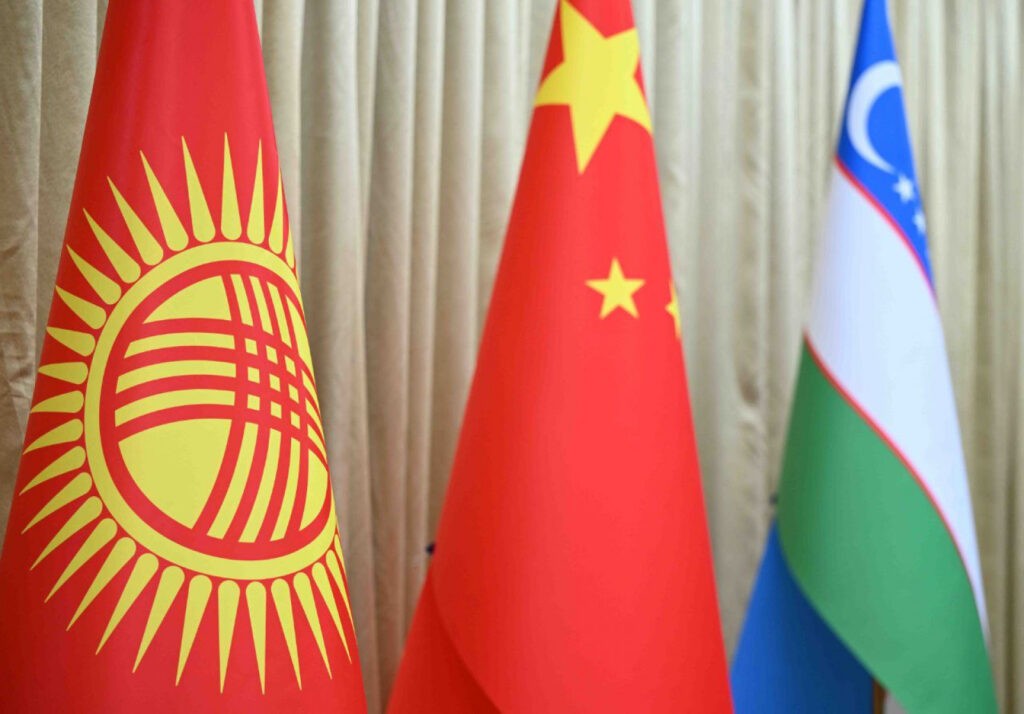
On March 1st, Akylbek Japarov Chairman of the Cabinet of Ministers of the Kyrgyz Republic, Abdulla Aripov Prime Minister of Uzbekistan and Ma Xingrui Communist Party Secretary of China’s western Xinjiang Uygur Autonomous Region, met in Kashgar (Xinjiang) to discuss the construction of the China-Kyrgyzstan-Uzbekistan railway. Japarov first praised the incentive for its potential to strengthen the development of trade and economic cooperation between the three countries and reported that a jointly funded feasibility study of the project had already been developed and approved. Uzbekistan’s Prime Minister Aripov expressed his country’s interest in developing multimodal transport routes to support the joint construction of the China-Kyrgyzstan-Uzbekistan railway. Addressing the insufficient throughput capacity of the Irkeshtam checkpoint on the Kyrgyz-Chinese border, Japarov stated, “increasing the volume of cargo throughput at the Irkeshtam checkpoint is an issue relevant to both the Kyrgyz and Chinese sides, as well as the Uzbek side. It is therefore important that all checkpoints are modernized and equipped with updated means of customs control.” He then reported that new customs inspection complexes at the Irkeshtam and Torugart checkpoints to be installed this year, will allow up to 125 vehicles per hour to cross the border, and added that the Kyrgyz side aims to increase the throughput capacity of these checkpoints to 1,000 vehicles per day. In the interest of developing trade and economic ties, the Secretary of Xinjiang’s Party Committee welcomed the Kyrgyz Prime Minister's proposals and supported his stance that Xinjiang is perceived as a gateway to China from Kyrgyzstan and in turn, several other Central Asian countries.