• KGS/USD = 0.01143 0%
  • KZT/USD = 0.00205 0%
  • TJS/USD = 0.10724 0.09%
  • UZS/USD = 0.00008 0%
  • TMT/USD = 0.28571 0%
  • KGS/USD = 0.01143 0%
  • KZT/USD = 0.00205 0%
  • TJS/USD = 0.10724 0.09%
  • UZS/USD = 0.00008 0%
  • TMT/USD = 0.28571 0%
  • KGS/USD = 0.01143 0%
  • KZT/USD = 0.00205 0%
  • TJS/USD = 0.10724 0.09%
  • UZS/USD = 0.00008 0%
  • TMT/USD = 0.28571 0%
  • KGS/USD = 0.01143 0%
  • KZT/USD = 0.00205 0%
  • TJS/USD = 0.10724 0.09%
  • UZS/USD = 0.00008 0%
  • TMT/USD = 0.28571 0%
  • KGS/USD = 0.01143 0%
  • KZT/USD = 0.00205 0%
  • TJS/USD = 0.10724 0.09%
  • UZS/USD = 0.00008 0%
  • TMT/USD = 0.28571 0%
  • KGS/USD = 0.01143 0%
  • KZT/USD = 0.00205 0%
  • TJS/USD = 0.10724 0.09%
  • UZS/USD = 0.00008 0%
  • TMT/USD = 0.28571 0%
  • KGS/USD = 0.01143 0%
  • KZT/USD = 0.00205 0%
  • TJS/USD = 0.10724 0.09%
  • UZS/USD = 0.00008 0%
  • TMT/USD = 0.28571 0%
  • KGS/USD = 0.01143 0%
  • KZT/USD = 0.00205 0%
  • TJS/USD = 0.10724 0.09%
  • UZS/USD = 0.00008 0%
  • TMT/USD = 0.28571 0%

Viewing results 49 - 54 of 396

Kyrgyzstan Launches Development of English Law-Based Dispute Resolution Center

The Kyrgyz Ministry of Justice and the British Embassy in Kyrgyzstan have signed a memorandum to establish an International Center for Dispute Resolution based on English law within the newly designated Special Financial Investment Territory “Tamchy.” The initiative follows legislation signed by President Sadyr Japarov establishing the Tamchy zone, a special legal and regulatory jurisdiction located in the Issyk-Kul region. The zone is designed to attract both domestic and foreign investment by offering tax incentives and a favorable business environment, particularly in sectors such as manufacturing, tourism, wellness, and transport infrastructure. A central component of the initiative is the creation of an international arbitration and dispute resolution center operating under English common law, a legal system based on judicial precedent and widely used in major financial hubs like London, Dubai, and Singapore. Under the memorandum, the British Embassy will support the Kyrgyz government by helping to engage a team of legal consultants to assist in implementing English law within the centre’s framework. The aim is to build a transparent, neutral, and internationally credible mechanism for resolving investment and commercial disputes in Kyrgyzstan. Government officials described the center as a strategic step toward building a modern, rule-based platform for impartial dispute resolution. By integrating English common law principles, Kyrgyzstan aims to enhance investor confidence, ensure legal predictability, and strengthen its position as a competitive and secure destination for international capital.

Kyrgyz Authorities to Confiscate Vehicles Damaging Mountain Ecosystems

Kyrgyz President Sadyr Japarov has ordered law enforcement and environmental agencies to begin fining and in severe cases, confiscating vehicles used in a manner that damages mountain ecosystems, particularly in nature reserves and alpine pastures. In a social media post featuring a video of individuals riding quad bikes through mountainous terrain, reportedly within a protected area, Japarov called on the Ministries of Internal Affairs and Natural Resources to take immediate action. “Those driving gasoline-powered vehicles in mountain reserves and pastures should have them confiscated,” the president declared. Japarov said such incidents are occurring nationwide, with the reckless use of off-road vehicles and quad bikes leading to the destruction of fragile slopes and pastureland. “As seen in the video, quad bikes tear up slopes, burn grass, and destroy pastures. Most often these are our youth, but also adults and tourists. Despite existing roads, some choose to drive onto pastures, carving new tracks and damaging the natural landscape,” he said. He emphasized that this behavior degrades mountain ecosystems by trampling vegetation, damaging soil, and accelerating erosion. The president has directed the government to draft legislation authorizing the police and the Ministry of Nature to issue fines and seize vehicles used in ecologically harmful ways. “Where the road ends, continue on foot or horseback. Nature is our shared heritage, and we must preserve it for future generations,” he added. Japarov also called on local authorities to help identify violators and enforce ecological protection measures. Following the president’s directive, the Ministry of Natural Resources, Ecology and Technical Supervision, in coordination with local police, detained a group of individuals operating quad bikes in mountain areas. “They were informed about environmental safety rules, nature conservation, and relevant legislation,” the ministry said. The offenders were each fined 5,500 KGS (approximately $60).

Kyrgyzstan Snap Election: Democracy on Edge or Politics as Usual?

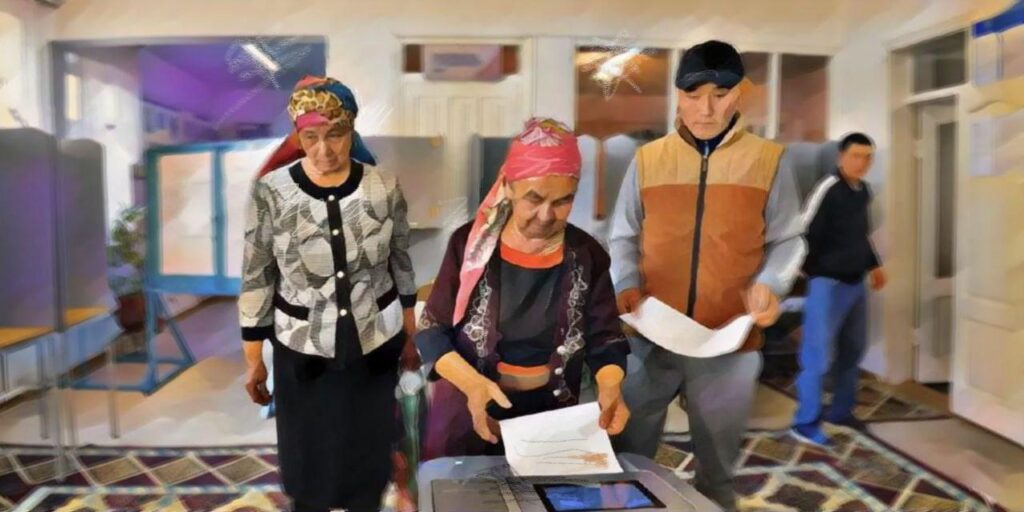
On September 25, Kyrgyzstan’s parliament voted to dissolve itself, clearing the way for snap elections. As previously reported by The Times of Central Asia, deputies approved the dissolution by an 84–0 vote, with five abstentions and one absence. The election will now take place on November 30, under revised electoral rules. The new system divides the country into 30 constituencies, each of which elects three deputies, at least one of whom must be a woman. Lawmakers justified the move by pointing to the costs and logistical burdens of overlapping parliamentary and presidential campaigns, arguing that holding parliamentary elections a year early would streamline preparations and reduce the administrative strain. Critics, however, have suggested the real motivation is political, noting that pro-government blocs stand to benefit from locking in deputies under the new majoritarian system by mobilizing local administrative resources, especially after years of pressure on opposition groups and independent media. “Regarding the early elections, I fully support this decision,” Eldar Turatbek, founder of the Legalize political party, told The Times of Central Asia. “There is no point in waiting another year until the end of the 7th convocation’s term, especially when you consider that after the 2020 revolution, most deputies spent a year in temporary status anyway. In essence, they have already ‘worked off’ their five-year term.” Japarov’s Centralization of Power The dissolution also fits into a broader cycle of political reshuffles across the region. Both Kyrgyzstan and Kazakhstan have undergone rapid personnel and institutional changes in recent months, with Bishkek’s early vote reflecting President Sadyr Japarov’s emphasis on electoral timing, and, analysts argue, designs to cement his grip on power. The step arrives in a political environment that has grown markedly more centralized since Japarov’s rise during the turmoil of 2020. New restrictions on online media and internet traffic have narrowed the space for civil society, measures the government frames as necessary to restore order and promote national values. Rights advocates, however, warn of democratic backsliding in a country once seen as the most pluralistic in Central Asia. Opposition journalist Bolot Temirov offered a blunt assessment as to the reasons why the authorities are holding early parliamentary elections. “In recent years, the president’s entourage and the head of the State Committee for National Security have acquired money, and now want to show off their deputy badges,” he told TCA. “Kamchybek Tashiyev will try to get as many of his people into parliament as possible to strengthen his position in the confrontation with Sadyr Japarov and his team. Mandates have long since become a commodity, and parliamentary seats are for sale.” International IDEA has recorded a decline in civil liberties and checks on executive authority under the current administration, and Kyrgyzstan’s trajectory makes this moment especially significant. The country has experienced three revolutions since independence - in 2005, 2010, and 2020 - each triggered by discontent over corruption, contested elections, and concentrated presidential power. These upheavals reshaped institutions but also entrenched a cycle of volatility that continues to cast a...

Central Asia and Regional Integration: Logistics, Water, Energy

Central Asia is undergoing a profound transformation, where questions of domestic development and the region’s ability to act in a coordinated way are coming to the forefront. For many years, Central Asian states were viewed as fragmented, each pursuing separate strategies that often put them in competition. Today, however, shared challenges and growing interdependence are making gradual convergence increasingly likely. The region now confronts common pressures such as water scarcity, energy imbalances, environmental degradation, and the fallout of instability in Afghanistan -- issues that no single country can effectively address in isolation. Increasingly, regional platforms such as the Interstate Commission for Water Coordination (ICWC) are being leveraged to mediate water-energy tradeoffs, while joint initiatives in transport, transit, and energy infrastructure foster new integration. Moreover, leading actors like Kazakhstan and Uzbekistan are pushing coordinated strategies -- modernizing rail and aviation links, coordinating transboundary water allocations, and exploring nuclear cooperation -- that point toward a more interconnected regional future. Shared Challenges and Points of Convergence The region faces problems that no country can solve alone. These include water shortages, energy imbalances, environmental risks, and instability in Afghanistan. Such challenges can be seen as both threats and opportunities, since they also represent areas of overlapping interest. Joint action in these fields can deliver more than fragmented national strategies. Water is particularly important, remaining one of the most sensitive issues in interstate relations. Yet it also offers opportunities for coordinated action through existing regional platforms, such as the Interstate Commission for Water Coordination of Central Asia. The “water for energy” model is increasingly seen as a practical tool, already under discussion and applied in bilateral and multilateral projects. Environmental issues are similarly shared. The disappearance of the Aral Sea, land degradation, air pollution, and glacier melt create threats that transcend national borders. Joint monitoring, data exchange, and coordinated adaptation measures, particularly within the United Nations Regional Centre for the Sustainable Development Goals for Central Asia and Afghanistan, opened in August 2025 in Almaty, could become a new direction for regional cooperation. Afghanistan remains another risk factor that affects the security of the entire region. At the same time, transportation and energy projects linking Central Asia with South Asia through Afghan territory can turn a challenge into an opportunity. Reducing instability and integrating Afghanistan into regional trade and transit networks serves the interests of all Central Asian states. Kazakhstan and Uzbekistan as leading forces To understand how closer integration might work in practice, it is useful to examine the strategies of the region’s two key players: Astana and Tashkent. The major agreements concluded by Kazakhstan and Uzbekistan with the United States in transport and aviation should be viewed not as isolated deals, but as evidence of the complementary strengths of the two largest economies in Central Asia. Kazakhstan signed its largest locomotive contract to date with U.S. company Wabtec, a $4.2 billion agreement for 300 TE33A freight locomotives to be assembled at the Wabtec Kazakhstan plant in Astana, along with servicing support. This will modernize...

Japarov Orders Death Penalty for Rape of Minors

Kyrgyz President Sadyr Japarov has ordered the drafting of legislation to reinstate the death penalty for the most serious crimes against children and women, following national outrage over the murder of a teenage girl. The presidential press office announced that Japarov has instructed Murat Ukushev, head of legal affairs in the presidential administration, to prepare amendments making the rape of minors, and rape followed by murder, punishable by death. The move is significant given that Kyrgyzstan abolished capital punishment in law in 2007. In a statement published on Facebook, presidential spokesman Askhat Alagozov referred to the “brutal murder” of a young girl named Aisuluu, noting the wave of public anger the case provoked. “Crimes committed against children and women should not go unpunished,” he wrote, adding that Japarov has taken personal responsibility for ensuring legal and law enforcement reforms. In neighboring Uzbekistan, lawmakers have also moved to tighten penalties for crimes involving minors. The Uzbek Senate recently approved a law raising the minimum age of criminal responsibility from 13 to 14, while also lengthening prison terms for sexual offenses involving children. In March, a bill was proposed to criminalize the possession of child pornography. Japarov’s push to reintroduce the death penalty marks a sharp break from the region’s general move toward abolition. Uzbekistan ended executions in 1999, and Kyrgyzstan formally codified its abolition in 2007, according to the Asia-Pacific Human Rights Information Center.

Japarov and Tokayev’s High-Level Reshuffles Usher in a New Political Season

Kyrgyzstan and Kazakhstan recently witnessed high-level political developments that drew attention beyond their borders. In Kyrgyzstan, the national parliament self-dissolved, while Kazakhstan underwent a series of administrative reshuffles. Though both events were driven by reform-oriented policies, observers have offered sharply contrasting interpretations. In Kyrgyzstan, the initiative to dissolve the Jogorku Kenesh (parliament) was led by a group of 32 deputies headed by Speaker Nurlanbek Turgunbek uulu. They cited logistical and financial concerns over the proximity of the next parliamentary and presidential elections, scheduled for November 2026 and January 2027, respectively. Holding two major elections in such a short span, they argued, would pose political and economic challenges. As a result, early parliamentary elections will now take place on November 30, under revised electoral rules. The new system divides the country into 30 constituencies, each electing three deputies. Political parties may nominate only one candidate per district, and the overall number of deputies will remain at 90. However, the majority of seats are now expected to go to independents, reducing the dominance of political parties in the electoral process. Some Kazakh observers, long accustomed to viewing Kyrgyzstan as a “democratic island” in the region, interpreted these changes as a move toward greater political openness. Former diplomat and public figure Kazbek Beysembayev contrasted Kyrgyzstan’s reforms with Kazakhstan’s political trajectory, where authorities are reportedly planning to eliminate single-mandate districts in favor of a fully party-based electoral system. He warned this would further consolidate the ruling party’s dominance. “Such a move might be acceptable if laws on political party registration had first been liberalized. But that hasn’t happened,” Beysembayev argued. However, not all analysts share this optimistic view. Central Asia expert Arkady Dubnov sees the Kyrgyz move as a calculated maneuver by the ruling elite. He argues that a political duumvirate, composed of President Sadyr Japarov and State Committee for National Security (SCNS) chief Kamchybek Tashiev, has increasingly consolidated control. According to Dubnov, the early elections are designed to cement this grip on power. “By extending the gap between the parliamentary and presidential elections to 14 months, the authorities are creating space for a politically engineered campaign,” Dubnov explained. “This may pave the way for General Tashiev’s eventual rise to the presidency. His image as the real power broker, from resolving the border conflict with Tajikistan to renaming his hometown Jalal-Abad to Manas, has been solidified. President Japarov would likely retain influence within a reconfigured leadership structure.” In Kazakhstan, meanwhile, administrative reshuffles have continued, drawing significant attention, particularly the replacement of Foreign Minister Murat Nurtleu with seasoned diplomat Yermek Kosherbayev. The change followed speculation in early September that Nurtleu had been detained by the National Security Committee, a claim that proved false but nevertheless added intrigue to his removal from the Foreign Ministry. He has since been appointed presidential aide for international investment and trade cooperation. Political analyst Daniyar Ashimbayev acknowledged that this role is technically a demotion but argued it still reflects political trust. “Tokayev doesn’t typically reappoint officials who have committed serious...