
• KGS/USD = 0.01144 0%
  • KZT/USD = 0.00211 0%
  • TJS/USD = 0.10523 0%
  • UZS/USD = 0.00008 0%
  • TMT/USD = 0.28530 0%
  • KGS/USD = 0.01144 0%
  • KZT/USD = 0.00211 0%
  • TJS/USD = 0.10523 0%
  • UZS/USD = 0.00008 0%
  • TMT/USD = 0.28530 0%
  • KGS/USD = 0.01144 0%
  • KZT/USD = 0.00211 0%
  • TJS/USD = 0.10523 0%
  • UZS/USD = 0.00008 0%
  • TMT/USD = 0.28530 0%
  • KGS/USD = 0.01144 0%
  • KZT/USD = 0.00211 0%
  • TJS/USD = 0.10523 0%
  • UZS/USD = 0.00008 0%
  • TMT/USD = 0.28530 0%
  • KGS/USD = 0.01144 0%
  • KZT/USD = 0.00211 0%
  • TJS/USD = 0.10523 0%
  • UZS/USD = 0.00008 0%
  • TMT/USD = 0.28530 0%
  • KGS/USD = 0.01144 0%
  • KZT/USD = 0.00211 0%
  • TJS/USD = 0.10523 0%
  • UZS/USD = 0.00008 0%
  • TMT/USD = 0.28530 0%
  • KGS/USD = 0.01144 0%
  • KZT/USD = 0.00211 0%
  • TJS/USD = 0.10523 0%
  • UZS/USD = 0.00008 0%
  • TMT/USD = 0.28530 0%
  • KGS/USD = 0.01144 0%
  • KZT/USD = 0.00211 0%
  • TJS/USD = 0.10523 0%
  • UZS/USD = 0.00008 0%
  • TMT/USD = 0.28530 0%

Viewing results 271 - 276 of 2473

Kyrgyzstan’s Sugar Market: a Story of Revival

According to the Kyrgyz Ministry of Water Resources, Agriculture, and Processing Industry, which oversees national food security through agricultural production monitoring, domestic production now fully covers the nation’s sugar needs, turning what was once a chronic import dependency into a cautious success story of agro-industrial revival. Soviet Legacy In Soviet times, despite Kyrgyzstan’s southern position and thanks to large quantities of glacier water, the republic grew a large quantity of sugar beets. Kyrgyzstan’s sugar-beet fields fed a network of processing plants that supplied not only the republic itself but also part of the wider region. The collapse of that system in the 1990s left the sector fragmented: beet acreage shrank, equipment aged, and the country increasingly turned to imported raw cane sugar and white sugar, often refined abroad. With the continued operations of the Kaindy-Kant sugar factory and the relaunch of the Koshoi factory in 2017, a partial turnaround began in the late 2010s, backed by development funds and state support. The explicit goal was to rebuild a domestic value chain and reduce exposure to price swings and supply disruptions in neighboring markets. A story of tariffs For much of the 2010s and early 2020s, Kyrgyz sugar plants depended on raw cane sugar imports, which they processed into refined sugar for the domestic market. When Kyrgyzstan joined the Eurasian Economic Union (EAEU) in 2015, it adopted the bloc’s Common Customs Tariff but secured a sugar-specific concession. For five years after accession, the country could import up to 100,000 tons of raw cane sugar per year, on condition that the resulting white sugar remained in Kyrgyzstan and was not re-exported into other EAEU states. Once that transition period expired in 2020, Bishkek continued to receive targeted support. In 2022, the Eurasian Economic Commission (EEC) extended 0% customs duty on imports of white sugar and raw cane sugar into Kyrgyzstan until 31 October 2022. In 2023, the EEC again introduced duty-free quotas for raw cane sugar, allowing designated volumes to enter Kyrgyzstan at zero duty for refining. These measures effectively subsidized the input costs of Kyrgyz refineries, helping them stay afloat at a time when many local farmers still preferred other crops and when cheap finished sugar from larger EAEU producers was flooding the market. Reaching self-sufficiency Since 2020, sugar beet production has roughly doubled. In 2024, officials reported that farmers harvested more than 620,000 tons of sugar beet. When processed, it was enough to meet the estimated annual domestic sugar requirement of about 120,000 tons of sugar. By late 2024, the government declared that Kyrgyzstan had fully covered its sugar demand from domestic production, a status it confirmed again for the first nine months of 2025. Sugar now stands among six “socially important” food products for which domestic output is deemed sufficient to secure food security, alongside potatoes, milk, meat, vegetables and eggs. Kyrgyzstan now aims to raise annual sugar production to 200,000 tons by 2030. Caught between protection and competition Bishkek’s tariff and subsidy policy has walked a fine line:...

Kyrgyzstan Elections 2025: Short Campaign, High Stakes

Campaigning for seats in Kyrgyzstan’s upcoming parliamentary elections is underway, and it is already shaping up to be a race unlike anything seen before in Kyrgyzstan. The 467 candidates competing for the 90 seats in parliament have only 20 days to make their cases to voters in their districts. Kyrgyz President Sadyr Japarov’s government has vowed to keep these elections clean and fair, and threatened severe punishment for those who attempt to cheat in any way. Uneven Electoral Landscape The country is divided into 30 voting districts, and in each district, the three candidates who receive the most votes will win seats. The level of competition varies, depending on the district. Electoral district 11, which is Manas city (formerly Jalal-Abad), has 155,023 eligible voters. Only five candidates are running in the district, three of whom are women. According to new election rules, a woman (or a man) must win at least one of the three seats available in each district. Name recognition is always important, and especially so in elections with many newcomers seeking seats in parliament. One of the candidates in District 11 is Shairbek Tashiyev, the brother of the current head of the State Committee for National Security (GKNB), Kamchybek Tashiyev. He is almost certain to win one of the seats. In electoral district 19 in Kyrgyzstan’s northern Chuy Province, with 138,373 eligible voters, there are 25 candidates competing. The two districts with the largest number of voters, district 15 in the Aksy area of western Kyrgyzstan with 160,218 voters, and district 28 in the Zhety-Oguz area of eastern Kyrgyzstan with 160,181 voters, have, respectively, 15 candidates and 17 candidates. In the districts where there are 15 or more candidates, the three winners might only receive around 10,000 votes, or even less. The candidates are out meeting with voters, but many are relying on social networks to promote their image and spread their message. Domestic television stations, ElTR and UTRK, are airing candidate debates that “will be distributed regionally, depending on the candidates' electoral districts.” Not Running Eleven of the current 90 deputies in parliament have opted not to run for reelection. Among them are Iskhak Masaliyev - currently in the Butun (United) Kyrgyzstan Party but previously the long-time head of Kyrgyzstan’s Communist Party - the son of Absamat Masaliyev, who was first secretary of the Communist Party of the “Kirghizia” Soviet Socialist Republic from 1985 until independence in August 1991. Another current member of parliament who is not running is Jalolidin Nurbayev, whose attempt to register was rejected due to two criminal cases having previously been opened against him, one in 2006, the other in 2021.” A new election rule prohibits people whose cases were “terminated on non-rehabilitating grounds” from being eligible to hold public office. Effectively, this means that any case against them has been closed without declaring the person innocent, but without restoring their reputation, even though they are no longer being prosecuted. Members of organized criminal groups and their family members have won seats...

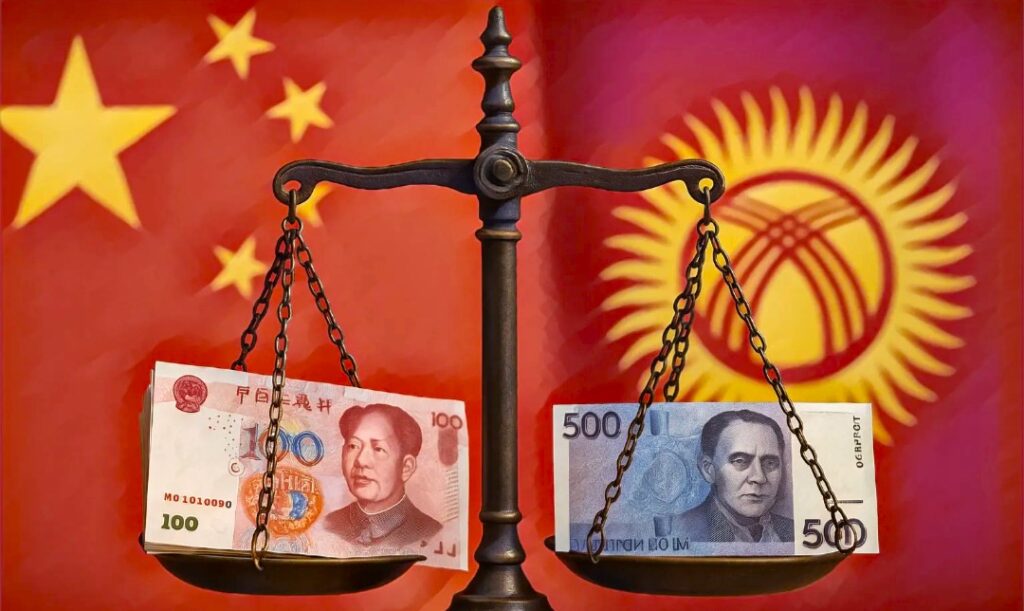
Balancing Act: Kyrgyzstan’s Strategy to Manage Chinese Debt

In recent years, China’s economic engagement across Eurasia has become increasingly diverse and complex. What began with large-scale infrastructure projects under the Belt and Road Initiative has expanded into a wide range of sectors, including critical minerals, energy, pharmaceuticals, and textiles. Alongside these investments, China has also deepened its soft power presence through Luban Workshops, educational exchanges, and media cooperation with regional countries. While this growing influence strengthens China’s position as a major development partner, it has also raised public concern about debt dependency. Kyrgyzstan illustrates this issue more clearly than most. In 2022, more than 40% of the country’s official external debt was owed to China. This heavy reliance has sparked debate over whether the relationship creates long-term vulnerabilities that could limit economic independence and policy flexibility. The scale of the debt has generated several layers of concern within Kyrgyz society. Many worry that national resources are being redirected from essential public needs toward debt repayment. Others fear that financial obligations could eventually lead to asset-for-debt arrangements or serve as a tool of political influence. Kyrgyz governments have therefore explored various ways to ease their debt burden, but with limited success. Direct Negotiations with China and Innovative Approaches The first approach has been to negotiate directly with China for relief. However, these talks have mostly produced temporary payment deferrals rather than genuine debt reduction. In November 2020, China Eximbank agreed to postpone $35 million in loan repayments until the period between 2022 and 2024. The agreement remained purely commercial, requiring a 2% fee on the deferred amount and likely continued interest payments. This arrangement differs from the more concessional restructuring models often offered by multilateral lenders or Paris Club members, which are designed to restore debt sustainability and support economic reform. Chinese state lenders such as the Eximbank tend to approach debt through a commercial logic, emphasizing the protection of contracts and the profitability of Belt and Road projects. As a result, debt forgiveness is considered an unattractive option from the perspective of Chinese financial institutions. Kyrgyzstan has also experimented with more innovative ideas. The government proposed that creditors forgive part of its debt in exchange for investments in environmental and climate-related projects. These initiatives, often described as debt-for-nature swaps, would redirect funds from debt service toward renewable energy, reforestation, or carbon reduction programs. Although several European partners expressed interest, China declined to participate in 2024. China’s reluctance reveals an important feature of its lending philosophy. Despite its growing global presence, Chinese state banks continue to prioritize financial security and measurable returns over experimental or non-monetary arrangements. Even when Beijing publicly supports global climate cooperation, its institutions remain cautious about initiatives that fall outside traditional commercial frameworks. Kyrgyzstan’s New Debt Management Strategies Kyrgyzstan’s approach to managing its external debt is undergoing a gradual but meaningful transformation. The government has introduced new policies and sought diversified financial partnerships in an effort to strengthen fiscal stability and reduce dependency on any single creditor. One of the most significant steps has been...

Kyrgyzstan Launches Autumn Sowing of Winter Crops on 250,000 Hectares

Kyrgyzstan has launched its autumn sowing campaign, with winter crops expected to cover 250,000 hectares, according to the Ministry of Water Resources, Agriculture, and Processing Industry. To date, over 81,000 hectares, approximately one-third of the planned area, have already been sown with wheat and barley. “Sowing is underway in all regions of the country. The necessary agricultural equipment has been deployed, and a sufficient amount of seed material has been provided to meet the targets,” the ministry said. Experts note that work is proceeding within optimal agrotechnical timelines, with the campaign scheduled for completion by the end of November. In the Chui and Issyk-Kul regions, more than 40% of the targeted areas have already been sown, despite the campaign beginning only a month ago. In an experimental effort, one farm in the Chui region sowed 50 hectares with the Canadian wheat variety “Jersey,” known for its high yield and grain quality. Farmers state that adherence to agrotechnical standards, including timely soil preparation and the application of modern cultivation techniques, is crucial for achieving strong harvests. In the Talas region, farmers have already cultivated more than a third of the targeted sowing area. Other regions across the country are also progressing on schedule.

Kyrgyz National Bank Conducts Largest Currency Intervention of 2025

To stabilize the som exchange rate, the National Bank of the Kyrgyz Republic (NBKR) carried out its largest currency intervention of 2025, selling nearly $174 million on the foreign exchange market. According to the NBKR, $65.3 million was sold on the day of the transaction, with an additional $108.6 million sold under deferred payment terms. This marks the bank’s sixth intervention of the year and its most substantial by volume. In previous months, the NBKR intervened with $158.3 million in April, $81.5 million in September, and $38 million in October. The regulator emphasized that the som remains a floating currency and that interventions are undertaken solely to limit excessive volatility and ensure market stability. Throughout 2025, the NBKR has only conducted dollar sales, without any reverse interventions to repurchase foreign currency. This pattern reflects sustained demand for foreign currency and active trade flows within the country. As a result of these actions, the som has remained stable, with the exchange rate holding just above 87 soms per $. Since the beginning of the year, the NBKR’s total foreign currency sales have exceeded $590 million. Over the past five years, the bank has carried out 99 interventions, selling nearly $3 billion on the market.

New Flight to Link Almaty and Kyrgyzstan’s Karakol Ski Resort

As the winter tourism season approaches, Kyrgyzstan’s state-owned Asman Airlines has announced the launch of a new regular flight connecting Almaty, Kazakhstan’s largest city, with the Kyrgyz town of Karakol, home to the country’s most popular ski resort. The Karakol-Almaty-Karakol route is set to begin operations on December 5, with flights scheduled every Friday and Sunday. The flight time is approximately 35 minutes. Asman Airlines will operate the Dash 8 Q400, a Canadian-made short-haul turboprop aircraft that can carry up to 80 passengers and has a range of up to 2,000 kilometers. Karakol is the highest ski resort in Central Asia, located at an altitude of 3,040 meters in the Tien Shan Mountains. The resort offers panoramic views of the surrounding peaks and nearby Lake Issyk-Kul. Situated just 7 kilometers from Karakol and 400 kilometers from Bishkek, it features ski trails suitable for both professional athletes and beginners. The ski season runs from December to March. The new air route is expected to significantly improve access to Karakol for weekend travelers from Kazakhstan’s commercial capital. In a related development, Kazakhstan and Kyrgyzstan have further enhanced air connectivity with the launch of a direct flight linking their capitals, Astana and Bishkek. On November 10, Kazakhstan’s Vietjet Qazaqstan operated its inaugural flight on the Astana-Bishkek route. The service runs twice a week, on Mondays and Thursdays. Officials anticipate that the new flights will promote tourism, business, and cultural exchange between the two neighboring countries.
